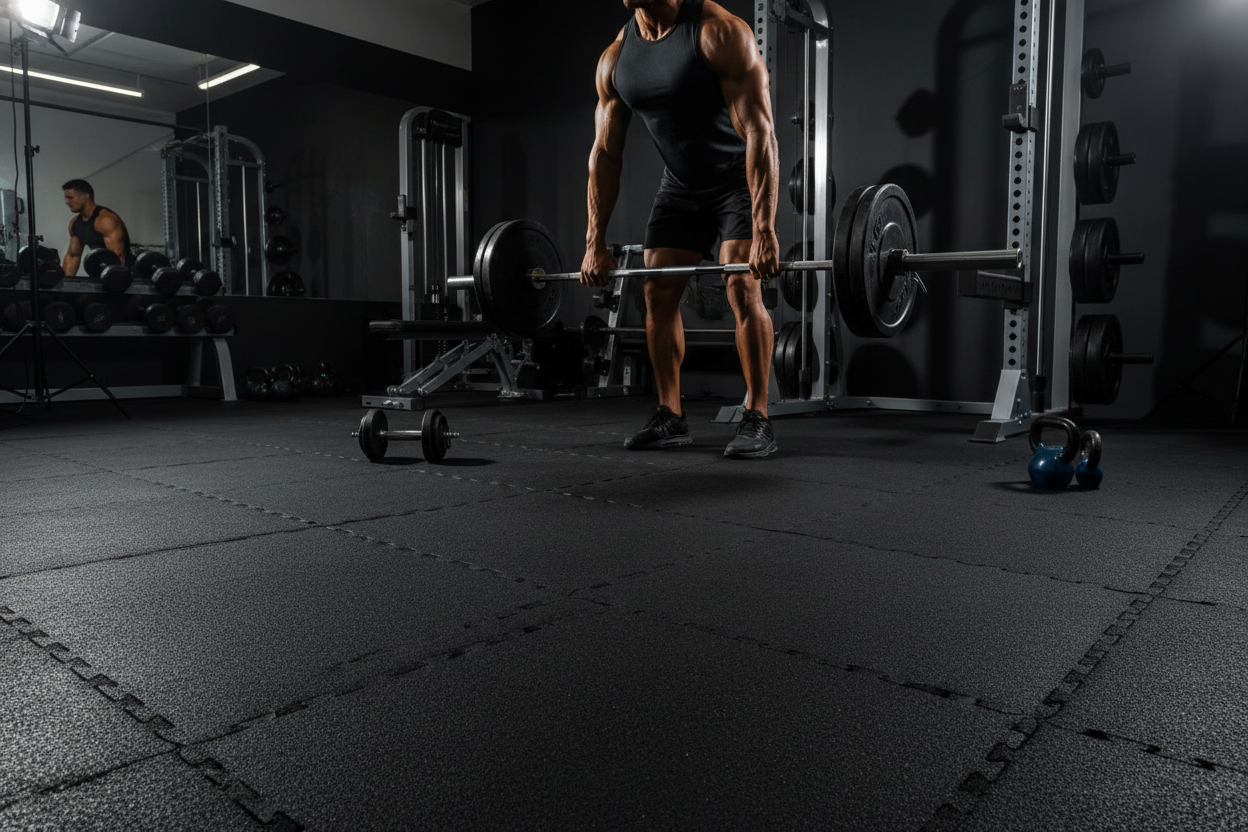
The Smith Machine Safety Catch Guide: Lift Heavy Without a Spotter
You are lying on the bench, staring at the ceiling. You want to add another 10 pounds to the bar, but the gym is empty, and there is no one around to spot you. This is the exact moment where most lifters make a choice: play it safe and stall progress, or risk getting pinned under the bar.
If you are using a Smith machine, you don't have to choose. The smith machine safety catch is your mechanical spotter. It doesn't get distracted by a text message, and it doesn't touch the bar before you actually fail. Yet, walking through most commercial gyms, I see these crucial mechanisms sitting unused at the bottom of the frame while people lift heavy above them. Let's fix that setup so you can train to failure without fear.
Key Takeaways
- The Catch vs. The Hook: Do not confuse the rotating hooks attached to the bar with the adjustable safety catches (stops) on the vertical rails. The catches are your true failsafe.
- The One-Inch Rule: For pressing movements, set the safety catch one to two inches below your full range of motion (chest level when arched).
- Test Before Loading: Always perform a "dry run" with an empty bar to ensure the catch height allows full depth but stops the bar before it crushes you.
- Spring Maintenance: Check the locking pins or springs on the catches before every set; worn-out equipment can slip under max loads.
Understanding the Mechanism: More Than Just a Hook
Many lifters assume the "twist-and-hook" motion of the Smith bar is the safety feature. It isn't. Under heavy load, when your muscles are failing, your wrists might not have the strength or coordination to rotate that bar backward into the slots.
The real hero is the adjustable safety stop—often a spring-loaded pin or a heavy-duty metal block that slides up and down the vertical guide rods. This is the physical barrier that prevents the bar from descending past a specific point. Think of it as a rack pull setting, but for saving your ribcage.
How to Set the Safety Catch Correctly
Positioning this mechanism is an art form. If you set it too high, you clang the metal on every rep, killing your tension and annoying everyone in the gym. Set it too low, and it acts as a decoration rather than a safety device.
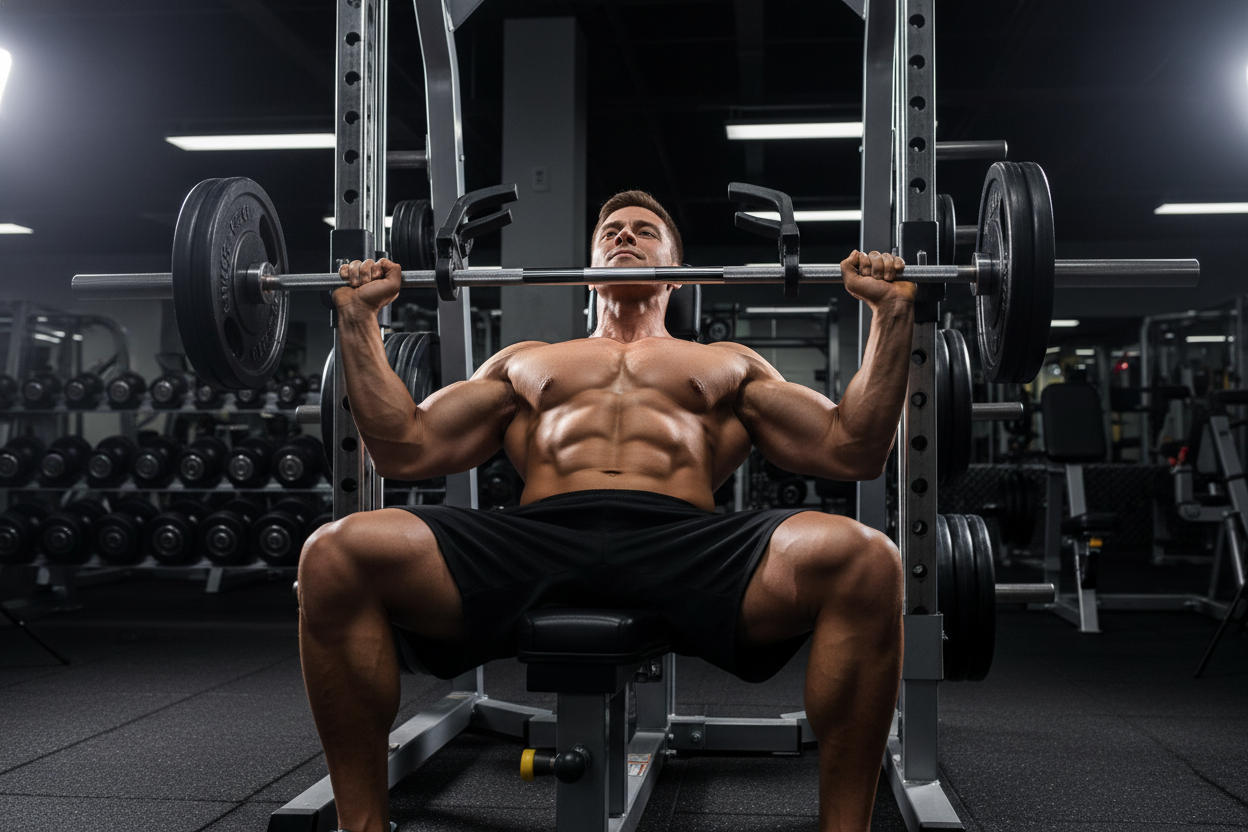
For Bench Press
Lie on the bench and arch your back as you would during a set. Lower the empty bar to your chest. Note the position of the bar relative to the side rails. Sit up and adjust the safety catches so they are roughly one inch below that bottom position.
The Science: When you fail a rep, you naturally lose your arch and flatten your back against the bench. That one-inch gap disappears, and the bar lands on the safety catch rather than compressing your sternum. You can then slide out from under the bar comfortably.
For Squats
The setup for squats requires a bit more precision. You want the catch set just below your parallel point (or your maximum depth). Perform a rep with the empty bar, pause at the bottom, and visually mark the nearest locking hole on the rail.
If you set this incorrectly, you risk "bottoming out" forcefully. Hitting the stops hard with heavy weight on your spine can cause spinal compression because the machine doesn't absorb shock—your vertebrae do.
Common Mistakes That Kill Progress
Ignoring the "Dry Run"
Never assume you know the hole number. Smith machines vary by manufacturer (Hammer Strength, Cybex, Matrix). Hole 7 on one machine might be Hole 10 on another. Always test the depth with zero weight before loading plates.
Trusting the Twist
I cannot stress this enough: do not rely on your ability to re-rack the bar during a failed rep. When your triceps give out, your wrist stability often goes with them. If you miss the hook, gravity takes over. If the smith machine safety catch isn't set, there is nothing stopping that bar until it hits the floor or your body.
My Personal Experience with Smith Machine Safety Catch
I have a specific memory that changed how I use this machine. I was training alone late at night, doing close-grip bench presses to torch my triceps. I was confident—maybe arrogant—and didn't bother adjusting the stops, which were sitting at the very bottom of the rails.
On my last rep, my triceps didn't just fatigue; they quit. I tried to rotate the bar to hook it, but my wrists were shaking too much to catch the slot. The bar came down fast. I managed to roll it down my torso to my hips, but the knurling scraped a layer of skin off my stomach, and I had to do the "shame roll" to get out from under it.
The worst part wasn't the bruise; it was the specific, hollow clank-clank-clank sound of the bar bouncing on my hip bones while I struggled. It’s a sound you don't forget. Since then, I don't care if I'm lifting just the bar or 300 lbs—I set the catches. That metal-on-metal click when I test the bottom position is now the most reassuring sound in my training session.
Conclusion
The Smith machine often gets a bad reputation in the functional fitness world, but for hypertrophy and training to failure safely, it is unmatched—provided you use it right. The safety catch is the difference between a productive session and a potential injury. Take the extra ten seconds to adjust the stops. Your future self will thank you.
Frequently Asked Questions
Can the smith machine safety catch fail?
While extremely rare, mechanical failure can happen if the equipment is poorly maintained. Always check that the pin is fully engaged in the hole and that the spring mechanism isn't stuck. If the catch looks bent or the pin looks sheared, do not use that machine.
Does the bar weigh anything on a Smith machine?
Yes, but it's often counterbalanced. While a standard Olympic bar is 45 lbs, a Smith machine bar can feel like anywhere from 15 to 25 lbs depending on the pulley system. Don't calculate your max based solely on plate weight; factor in the starting resistance of the machine.
Should I rest the bar on the safety catch between reps?
Generally, no. This is called "dead-stop training." While it is a valid technique for building explosive power (concentric-only training), for standard muscle building, you want to keep tension on the muscle. Touch the chest (or reverse direction just before the catch) rather than resting the bar on the stops.