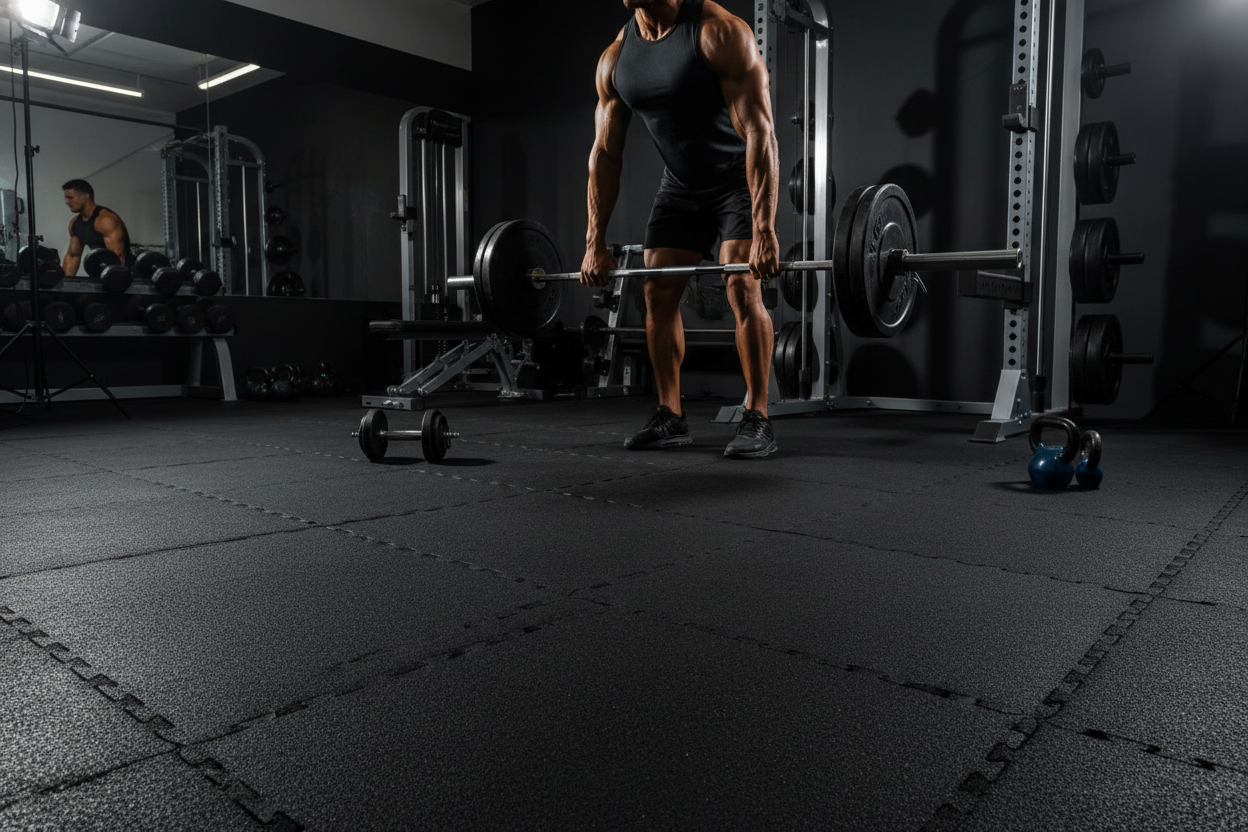
Heavy Duty: Are 1 inch thick rubber mats Worth the Investment?
If you have ever winced while dropping a heavy deadlift in your garage, fearing the dreaded sound of cracking concrete, you already know the importance of proper flooring. For home gym owners pushing serious weight, standard foam tiles or thin stall mats simply will not cut it. Enter the heavy-duty solution: 1 inch thick rubber mats.
Whether you are building a commercial-grade powerlifting setup in your basement or trying to soundproof a second-story apartment gym, choosing the right foundation is critical. This guide breaks down exactly what you need to know before investing in premium flooring, and whether the upgrade is truly necessary for your training style.
Key Takeaways
- Maximum Subfloor Protection: Provides the necessary shock absorption to protect concrete from heavy barbell drops and repeated impacts.
- Superior Sound Dampening: Drastically reduces vibration and noise, making them ideal for shared living spaces or early morning workouts.
- Heavy but Stable: A standard 4x6 foot mat weighs around 100 pounds, meaning they will not shift or separate underfoot during dynamic movements.
- Long-Term Durability: Resists tearing, compression, and gouging significantly better than thinner alternatives.
Why Thickness Matters: The Buying Guide
When outfitting a home gym, flooring is often an afterthought. Many people default to 1/2-inch or 3/4-inch horse stall mats to save money. While those are fine for general fitness, a true one inch thick rubber mat is engineered specifically for high-impact environments.
Shock Absorption vs. Density
The primary job of your flooring is to absorb the kinetic energy of dropped weights. At a full inch thick, these mats dissipate force outward rather than downward into your subfloor. Look for vulcanized rubber, which offers higher density, zero porosity, and superior water resistance compared to recycled crumb rubber bound with polyurethane.
Space Planning and Installation
Planning for these mats requires a bit of logistical foresight. Because they are incredibly dense, standard 4x6 foot 1 rubber mats can weigh between 90 and 110 pounds each.
Maneuvering in Tight Spaces
If you are outfitting a basement gym with tight corners or stairs, you will absolutely need a partner to help move them. When measuring your space, remember that rubber expands and contracts slightly with temperature changes. Leave a 1/4-inch gap around the perimeter of your room to prevent buckling during humid summer months in a garage gym setting.
Durability and Maintenance
Premium rubber flooring is a "buy once, cry once" investment. With proper care, they will easily outlast most of your fitness equipment and provide a stable lifting platform for decades.
Cleaning and Odor Management
New rubber mats often come with a distinct "tire shop" smell. To speed up the off-gassing process, mop them with a mild solution of water and a pH-neutral cleaner, then ensure plenty of cross-ventilation. Avoid harsh chemicals like bleach or petroleum-based cleaners, which can degrade the rubber over time.
From Our Gym: Honest Take
We recently retrofitted our main testing facility with these thicker mats, and the difference in acoustics is night and day. Dropping a 405-pound deadlift on standard 3/4-inch mats used to rattle the windows; the 1-inch upgrade absorbed the blow with a dull, satisfying thud.
That said, I have to be honest: installing them was a brutal workout in itself. Wrestling 100-pound slabs of floppy rubber into perfect alignment took two of us all afternoon. Also, if you plan to do a lot of barefoot training, note that the textured surface on some high-density mats can be slightly abrasive on the skin. But for heavy lifting, the grip and stability are absolutely unmatched.
Frequently Asked Questions
Are 1 inch thick rubber mats overkill for a home gym?
If you only use dumbbells, resistance bands, or a treadmill, yes, they are likely overkill. However, if you perform Olympic weightlifting, heavy deadlifts, or frequently drop kettlebells, the extra thickness is essential for protecting your foundation and minimizing noise.
How do I cut a one inch thick rubber mat to fit my space?
You will need a sharp utility knife, a straight edge, and a lot of patience. Score the mat repeatedly rather than trying to cut through it in one pass. Placing a 2x4 wooden board under the cut line helps open the seam as you slice, making the job significantly easier.
Do I need plywood under 1 rubber mats?
In most garage gym setups with a solid concrete slab, a 1-inch mat provides enough protection on its own for standard heavy lifting. If you are dropping elite-level Olympic weights (500+ lbs) regularly, building a dedicated lifting platform with a plywood base underneath the rubber is still recommended.