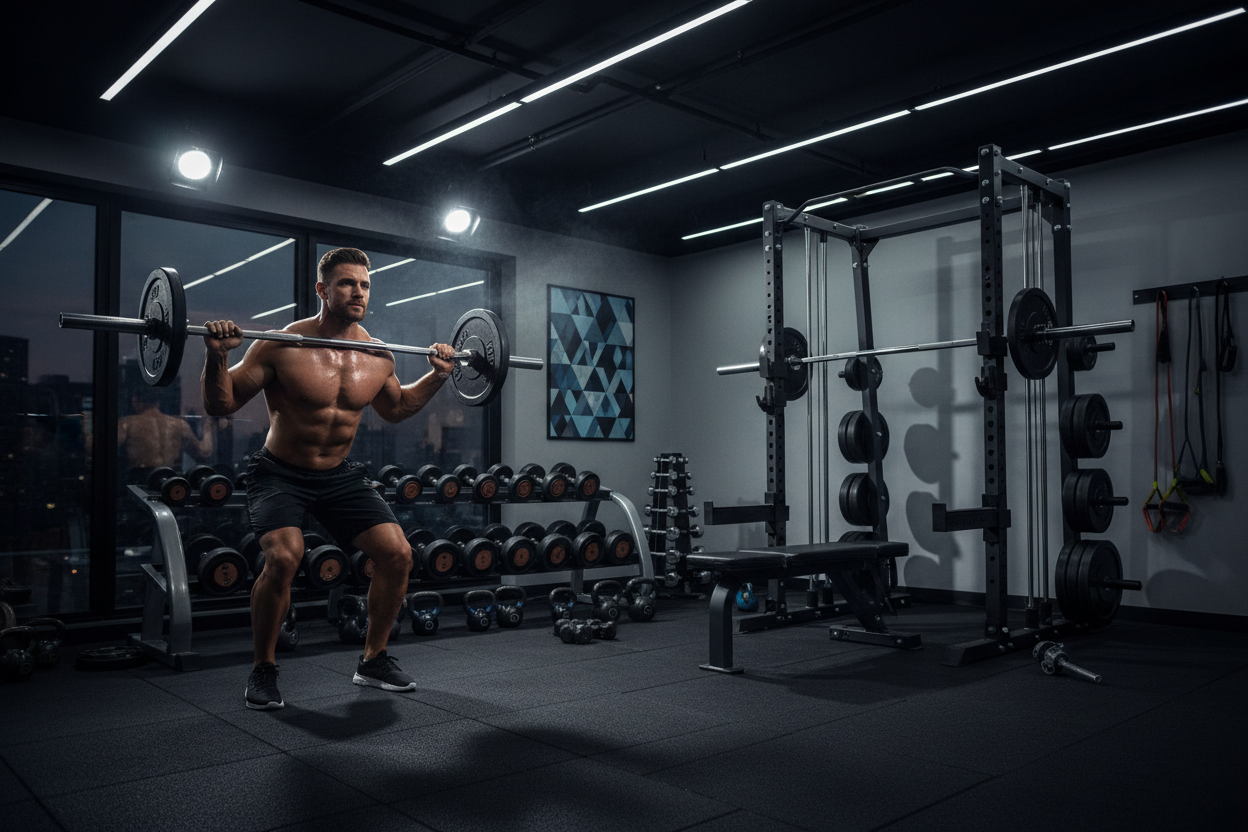
The Single Best Exercise for Big Thighs: A Hypertrophy Guide
You have probably tried everything to grow your legs. You’ve done endless extensions, pressed thousands of pounds on the sled, and maybe even skipped walking for a few days due to soreness. Yet, the mirror doesn't show the mass you want. The search for the best exercise for big thighs often leads to confusion because everyone claims their secret variation is the magic bullet.
Here is the truth: leg growth isn't about muscle confusion. It is about mechanical tension and range of motion. If you want to fill out your jeans, you need to master one movement pattern above all others and execute it with surgical precision.
Quick Summary: The Essentials
If you are looking for the short answer on how to stimulate maximum growth, here are the core pillars of leg hypertrophy:
- The King Mover: The High-Bar Back Squat is mechanically superior for quad development due to increased knee flexion.
- The Stability Alternative: The Hack Squat is arguably the best workout for big thighs if your lower back limits your barbell squat.
- Range of Motion: Partial reps yield partial results. Deep knee flexion stretches the muscle fibers under load.
- Progressive Overload: You must add weight or reps over time; volume drives size.
The Undisputed King: High-Bar Back Squat
When analyzing biomechanics, the high-bar back squat stands out as the best exercise for large thighs. Unlike the low-bar squat, which is popular in powerlifting for maximizing leverage and glute involvement, the high-bar position forces your torso to stay upright.
Why It Works
An upright torso forces your knees to travel further forward over your toes. This increases the degree of knee flexion. The more your knee bends under load, the more the quadriceps are stretched and recruited. This deep stretch is the primary driver of hypertrophy.
The Setup
Place the bar on top of your traps (not your neck). Keep your feet shoulder-width apart. As you descend, focus on pushing your knees forward and out, sitting your hips straight down rather than back. This isolation of the quad muscle belly is what makes this the best exercise to grow thighs efficiently.
The "Stability" Contender: The Hack Squat
While the barbell squat is iconic, we have to look at the science of stability. Your muscles can only produce maximum force when your body feels stable. If you are wobbling or worrying about your lower back, your brain limits the output to your legs.
This is where the machine Hack Squat shines. Because your back is braced against a pad, you eliminate the stability requirement. This allows you to drive 100% of your effort directly into the quadriceps. For pure bodybuilding purposes, many coaches argue this is actually the best workout for big thighs because you can take every set to absolute failure safely.
Execution: How to Force Growth
Selecting the exercise is only half the battle. How you perform the rep dictates the result. Most gym-goers bounce the weight or cut the depth short.
Control the Eccentric
The lowering phase (eccentric) causes the most muscle damage, which signals repair and growth. Take three full seconds to lower the weight. If you drop like a stone, you are cheating yourself out of gains.
Pause at the Bottom
To ensure you aren't using momentum, pause for a split second at the bottom of the movement. This removes the "stretch reflex" (the bounce) and forces your thigh muscles to generate all the power to get the weight back up.
My Training Log: Real Talk
I want to be honest about what it actually feels like to prioritize the high-bar squat. It isn't glamorous. I remember a specific training block where I decided to leave my ego at the door and focus entirely on depth rather than weight.
The hardest part wasn't the burning in the legs; it was the psychological panic at the bottom of the hole. When you are sitting truly "ass-to-grass," there is a split second where you feel trapped. The bar feels like it's crushing your traps into the floor, and the knurling—even through a t-shirt—leaves a raw, red abrasion on the skin that stings when you shower later.
I also noticed that my lower back pump was significantly less than when I used to low-bar squat, but the "waddle" walking out of the gym was worse. There is a specific shakiness in the vastus medialis (the teardrop muscle) after a set of high-bar squats that feels like your knee is going to buckle backward. That specific instability is how I knew I finally hit the muscle right.
Conclusion
Building massive legs requires a tolerance for discomfort. Whether you choose the High-Bar Squat or the Hack Squat, the principles remain the same: full depth, slow tempo, and adding weight over time. Stop looking for shortcuts and start loving the heavy lifting.
Frequently Asked Questions
How often should I train legs for maximum growth?
For most lifters, training legs twice a week is the sweet spot. This allows you to accumulate enough volume to stimulate the best exercise for big thighs while giving your central nervous system 48 to 72 hours to recover between sessions.
Can I grow big thighs without heavy weights?
Yes, but only to a point. You can induce hypertrophy with lighter weights and higher reps (15-20 range) by taking sets to failure. However, mechanical tension is a major growth factor, so incorporating some heavy work (6-10 reps) is usually more efficient for size.
What if squats hurt my knees?
Knee pain often comes from poor mobility or lack of control, not the exercise itself. However, if you have structural issues, the Leg Press or Hack Squat are excellent alternatives. They stabilize the joint and allow you to adjust foot placement to find a pain-free range of motion while still hitting the target muscles.