The Reality of Home Weight Training Women Need to Hear
I remember looking at my living room floor, staring at a pair of 5lb neoprene dumbbells, and realizing why I wasn't seeing any changes. The fitness industry has spent decades lying to us, suggesting that home weight training women need to focus on 'toning' with high-rep pulses that barely burn more calories than folding laundry. If you are tired of the constant 'burn' that results in zero muscle definition, it is time to change the way you look at your living room workout.
- Stop buying weights that look like toys; if it’s pink and plastic, it’s probably too light.
- Your floor is your foundation—protect it before you break your tiles or your ankles.
- Real strength requires rest; 30 seconds of breathing isn't enough to recover for a heavy set.
- Progressive overload is the only metric that actually matters for long-term results.
The 'Pink Dumbbell' Marketing Trap
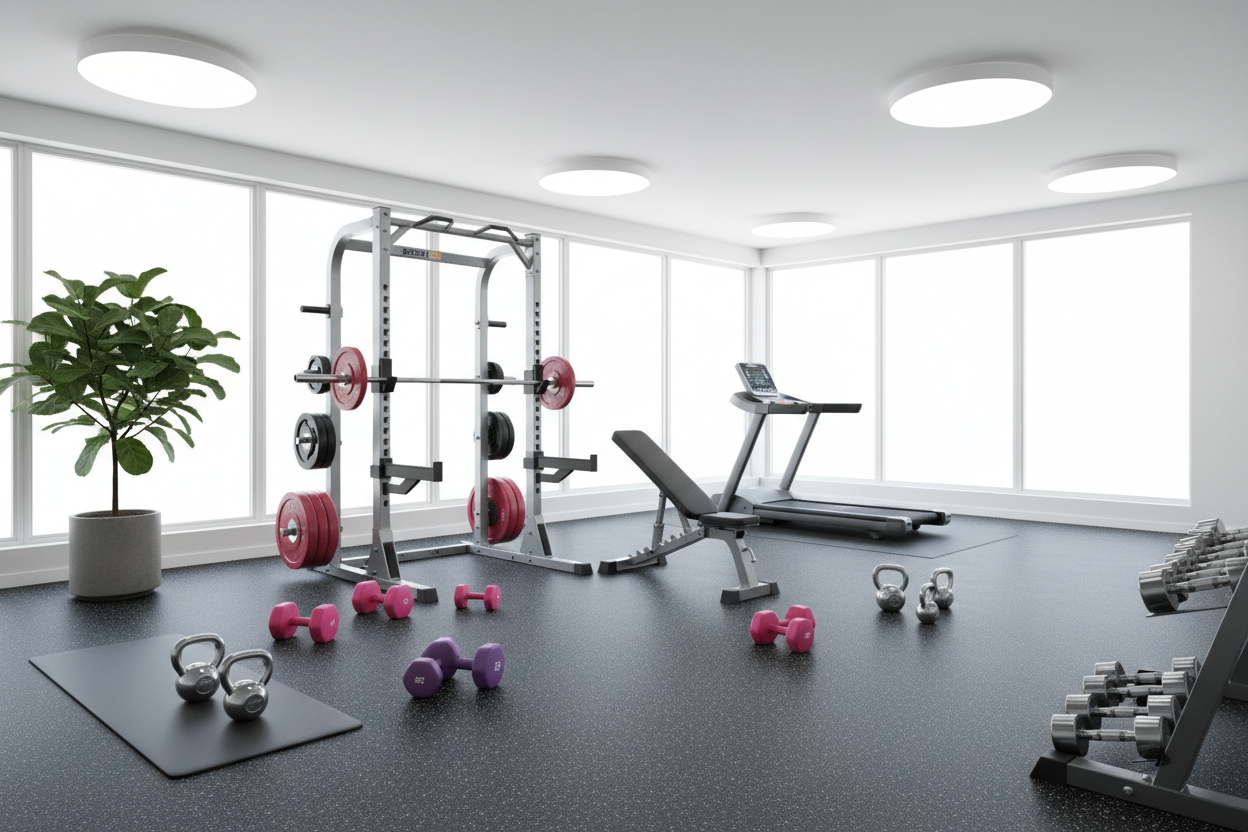
The fitness industry loves to sell women the idea of 'long, lean muscles.' It’s a marketing myth designed to keep you buying light equipment and 15-minute subscription apps. Physics doesn't care about your gender; muscle growth requires tension and load. When you stick to the 3lb and 5lb weights, you aren't challenging your central nervous system or your muscle fibers. You're just doing cardio with a slightly heavier hand.
Breaking free from this mindset means accepting that you need to lift things that feel heavy by the 8th or 10th rep. You won't wake up looking like a pro bodybuilder by accident—that takes years of specific caloric surpluses and grueling volume. What you will do is build the metabolic engine that makes 'toning' actually possible. You need to Stop Overcomplicating At Home Weight Training for Beginners and focus on the big movements: squats, hinges, pushes, and pulls.
Influencers will tell you that you need five different types of resistance bands and a pilates ball to get a workout. They’re wrong. Most of those movements are fluff designed to look good on camera. A basic linear progression—adding a little more weight or one more rep every week—is far more effective than 'confusing the muscle' with a new 20-minute booty-blast routine every day. Real strength is boring, repetitive, and incredibly effective.
What a Real Living Room Lifting Setup Requires
You don't need a 1,000-square-foot garage gym, but you do need gear that doesn't max out after two weeks. If you’re serious about home weight training women often find that adjustable dumbbells are the best ROI. I’ve tested the PowerBlocks and the Nuobells extensively. While the PowerBlocks feel like you're holding a toaster, they are nearly indestructible. The Nuobells feel like a real gym dumbbell but have plastic internal components that can't handle being dropped. Pick your poison, but make sure they go up to at least 50 lbs per hand.
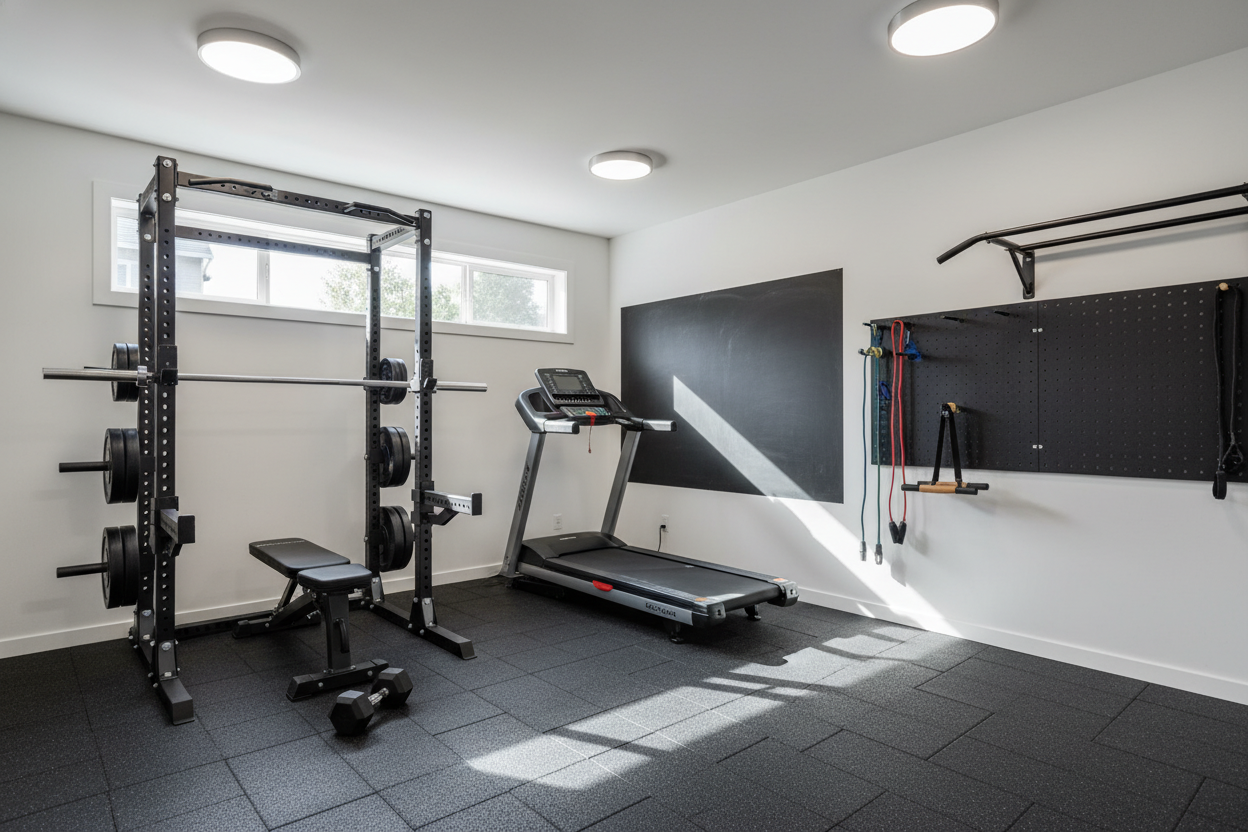
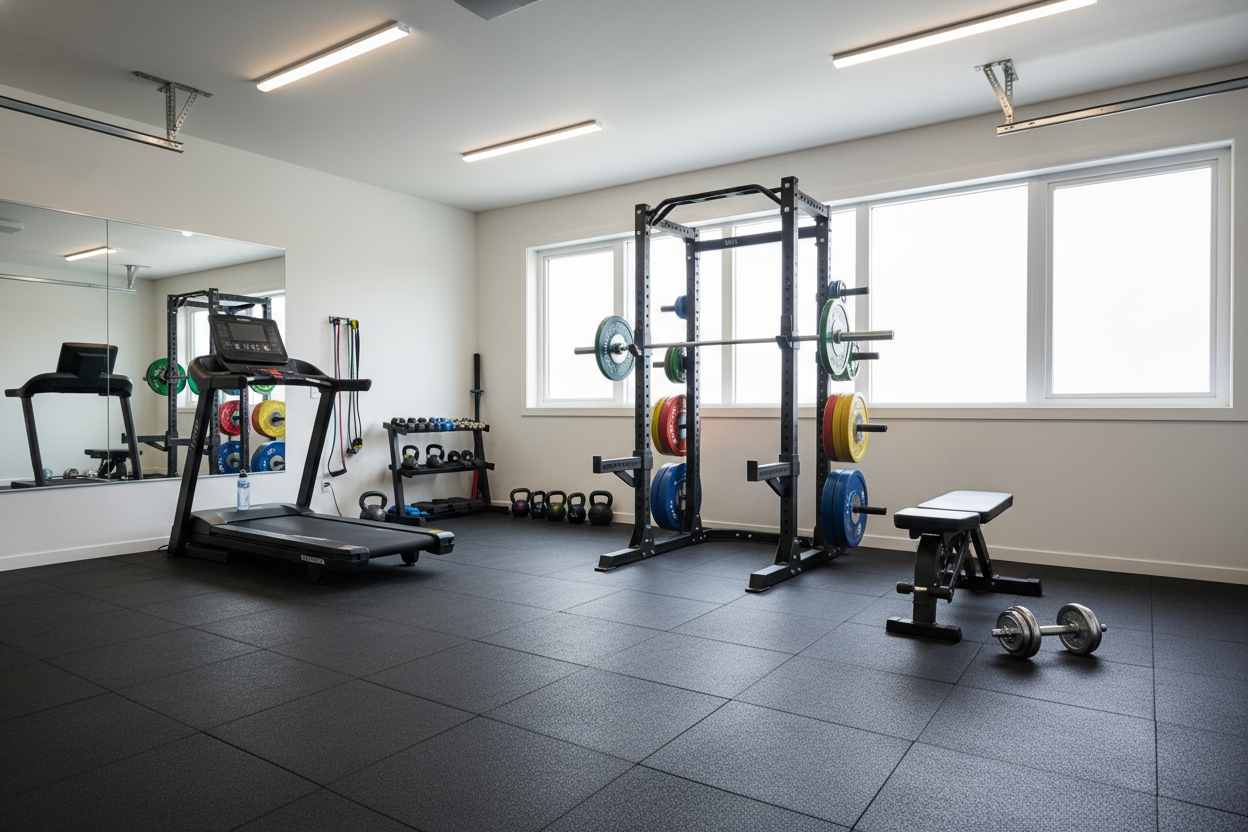
A 52.5-lb max per handle might sound intimidating now, but for a goblet squat or a Romanian deadlift, you will outgrow 20-lb weights in a matter of months. If you have the space, a short-barbell set (6 feet instead of the standard 7) can fit in most spare rooms and allows for much heavier loading on your posterior chain. You also need a place to work that isn't your carpet. Defining a dedicated, non-slip training zone with a Large Exercise Mat For Home Gym is the difference between a focused session and a disorganized one.
Don't waste money on 'home gym' kits that come with 10 different attachments. You need a solid bench—one that doesn't wobble when you're trying to press—and a way to track your numbers. A simple notebook is better than 90% of the apps out there. If you can't see that you did 40 lbs for 8 reps last week, you won't know to try for 9 reps today. That is the secret sauce the marketing teams won't tell you.
Fixing Your Floor Before You Load the Weight
Physics is a jerk when it comes to hardwood and heavy weights. I’ve seen enough cracked tiles and dented floorboards to know that 'being careful' isn't a strategy. When you start performing heavy lower-body movements, you’re putting hundreds of pounds of pressure through a very small surface area—your feet. Standard yoga mats are too thin and too squishy; they’ll shift under you during a lateral lunge, which is a one-way ticket to a rolled ankle.
You need a high-density rubber surface that absorbs impact and provides enough friction for your shoes to grip. I recommend a 6X8Ft Exercise Mat Yoga Mat Gym Flooring For Home Workout because it provides enough stride length for walking lunges and enough width for a wide-stance sumo deadlift. At 7mm or 8mm thick, it’s the sweet spot between protecting the subfloor and not feeling like you’re standing on a marshmallow. If your floor is stable, your lift is stable.
Ditching the 45-Minute Sweat Circuits
We’ve been conditioned to think that if we aren't gasping for air, we aren't working out. In the world of strength, breathless is often the enemy of progress. If you’re huffing and puffing, your lungs will give out before your glutes do. To build muscle, you need to lift a weight that is heavy enough to require 2 to 3 minutes of rest between sets. Yes, you read that right. Sit down. Drink water. Let your ATP stores replenish.
When you transition from cardio-lifting to structured strength sets, your workouts might feel 'easier' at first because your heart rate isn't pegged at 170 bpm. But the soreness the next day will tell a different story. You have to Stop Copying Commercial Gyms for At Home Weight Training and their machine-heavy splits. At home, full-body sessions 3 times a week are usually the gold standard. It allows for maximum recovery and ensures you’re hitting every muscle group frequently enough to see a change.
How to Safely Push Your Limits Solo
The biggest fear I hear from women training at home is: 'What if I can't get the weight back up?' If you're using dumbbells, the answer is simple—you drop them to the side. This is why that floor protection I mentioned earlier is so important. Learning how to fail a rep is a skill. It removes the fear and allows you to actually push to the point of muscle fatigue, which is where the growth happens.
Tracking progressive overload is your safety net. If you know you safely hit 10 reps last session, attempting 11 today isn't a wild gamble; it’s a calculated risk. For home trainees, I always suggest stopping 'one rep shy of failure.' This means you finish the set when you know the next rep would be ugly. You don't need a spotter if you have discipline and a solid set of rubber-coated weights.
Personal Experience: My Apartment Gym Disaster
When I first started training at home, I tried to save money by using those cheap, sand-filled plastic weights. I was doing a set of overhead presses in my second-story apartment when the plastic casing on a 15-lb weight cracked. Sand went everywhere—my rug, my hair, my eyes. It was a mess, but the real mistake was thinking I could get 'strong' with gear that was literally falling apart. I eventually invested in a real set of cast-iron plates and a 6x8 mat. The difference in my confidence was immediate. I stopped worrying about the equipment and started worrying about my form. My advice? Buy it once, buy it right.
FAQ
Will lifting heavy weights make me look bulky?
No. Most women lack the testosterone levels to 'accidentally' get huge. Lifting heavy will make you look firm and defined—the look most people call 'toned.'
How much weight should I start with?
It depends on the movement. Most beginners can start with a pair of 10lb or 15lb dumbbells for upper body and 20lb to 25lb for lower body exercises like squats.
Do I really need a dedicated mat?
If you value your joints and your security deposit, yes. Carpet is slippery and hardwood is unforgiving. A high-density mat is the most underrated piece of equipment you can buy.