The Real Answer to: How Can I Gain Muscle Without Gaining Fat
I remember scrolling through old-school bodybuilding forums at 2 AM, convinced that the only way to get big was to eat everything that wasn't nailed down. I followed the 'advice' and spent six months shoveling peanut butter and pasta into my face. I got stronger, sure, but I also grew a spare tire that took me twice as long to lose. If you are currently asking how can i gain muscle without gaining fat, you are already ahead of where I was. You've realized that looking like a powerlifter in a permanent off-season isn't the goal.
- Keep your calorie surplus small—think 200 to 300 calories over maintenance.
- Prioritize protein to ensure those calories go to repair, not storage.
- Focus on progressive overload with heavy compound movements.
- Don't chase the 'pump' at the expense of actual mechanical tension.
The 'Dirty Bulk' is a Scam (And Why You Fell For It)
The fitness industry loves a dirty bulk because it’s easy. It’s a lot easier to tell someone to eat 5,000 calories and 'get huge' than it is to explain the nuance of nutrient partitioning. But here is the cold truth: your body has a physiological ceiling on how much lean tissue it can build in a day. Once you hit that cap, every extra calorie from that 'mass gainer' shake is just being deposited into your fat cells. You aren't building more muscle; you're just getting better at being heavy.
I’ve seen guys in my own garage gym circle fall for this year after year. They think they need to 'gain mass without fat' by eating 'clean,' but then they eat 4,000 calories of sweet potatoes and chicken breasts. Guess what? Your body doesn't care if the surplus comes from brown rice or a cheeseburger; if the energy isn't used for repair or immediate movement, it’s stored. To truly gain muscle mass without gaining fat, you have to stop viewing food as a reward for training and start viewing it as a precise tool.
The dirty bulk is essentially a shortcut to a long, miserable cutting phase. You spend three months 'bulking' and then four months trying to find your abs again. That’s seven months of your life just to potentially net two pounds of muscle. It’s an inefficient, frustrating cycle that usually ends with you looking exactly the same as you did a year ago, just with more stretch marks.
The Boring Math of Body Recomposition
The secret to how to build muscle without getting fat isn't a magic supplement; it’s a concept called 'maingaining' or a controlled lean bulk. You need to find your maintenance calories—the amount where your weight stays dead steady—and then add a tiny buffer. We are talking 200 to 300 calories. That is literally a single protein bar or a large apple with a bit of almond butter. It feels boring because it doesn't involve 'cheat days' or epic eating challenges, but it is the only way to ensure you gain muscle mass not fat.
When I finally stopped trying to force-feed my way to a 405-lb squat, I focused on how to build slim muscle without getting blocky. I realized that by staying within a stone's throw of my maintenance calories, my body was forced to use its own stored fat for energy while using the incoming protein to repair the muscle fibers I was breaking down in the rack. This is how you increase muscle mass without gaining fat without feeling like a bloated mess every morning.
You have to be patient. On a dirty bulk, the scale moves fast, which gives you a false sense of accomplishment. On a lean bulk, the scale might only move a pound or two a month. But that pound is almost entirely lean tissue. If you want to know how to gain muscle mass without getting fat, you have to get comfortable with the slow crawl of the scale and the steady improvement of your physique in the mirror.
Lifting Heavy vs. Lifting Stupid
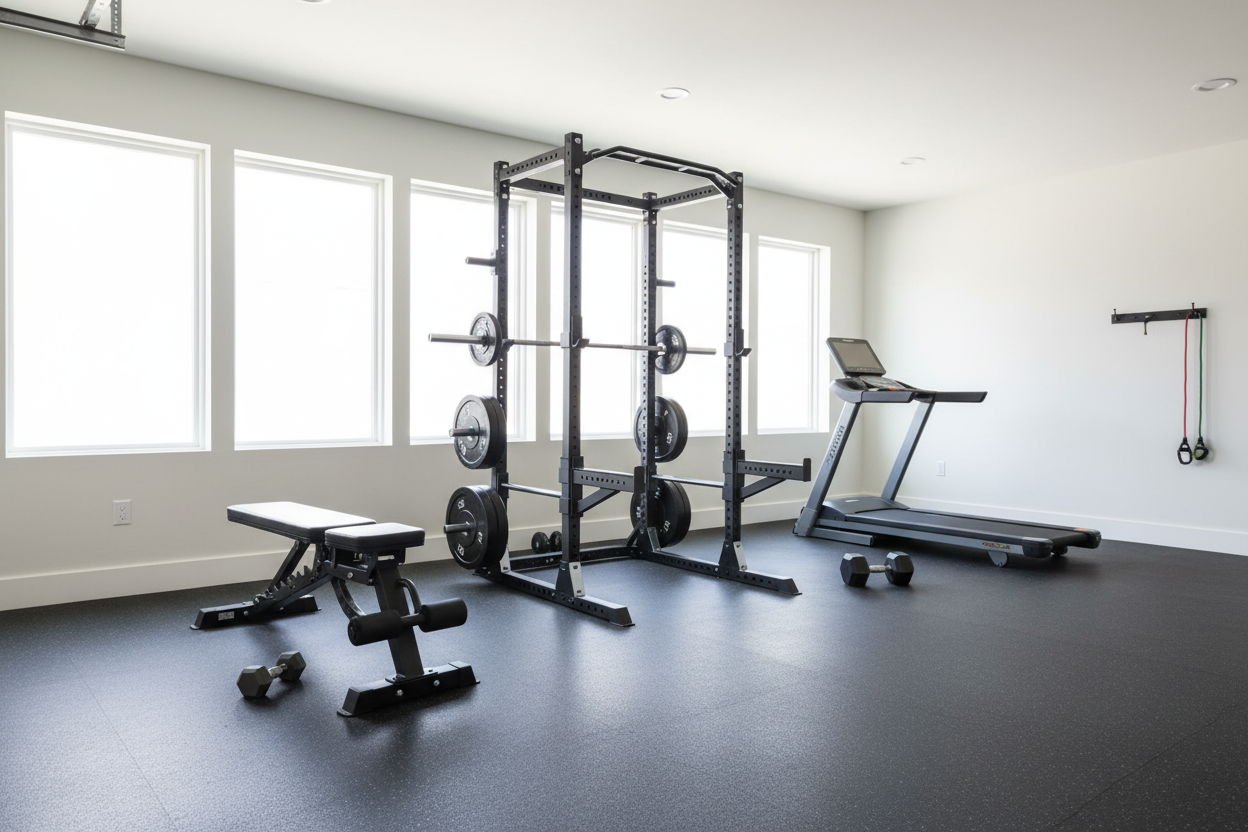
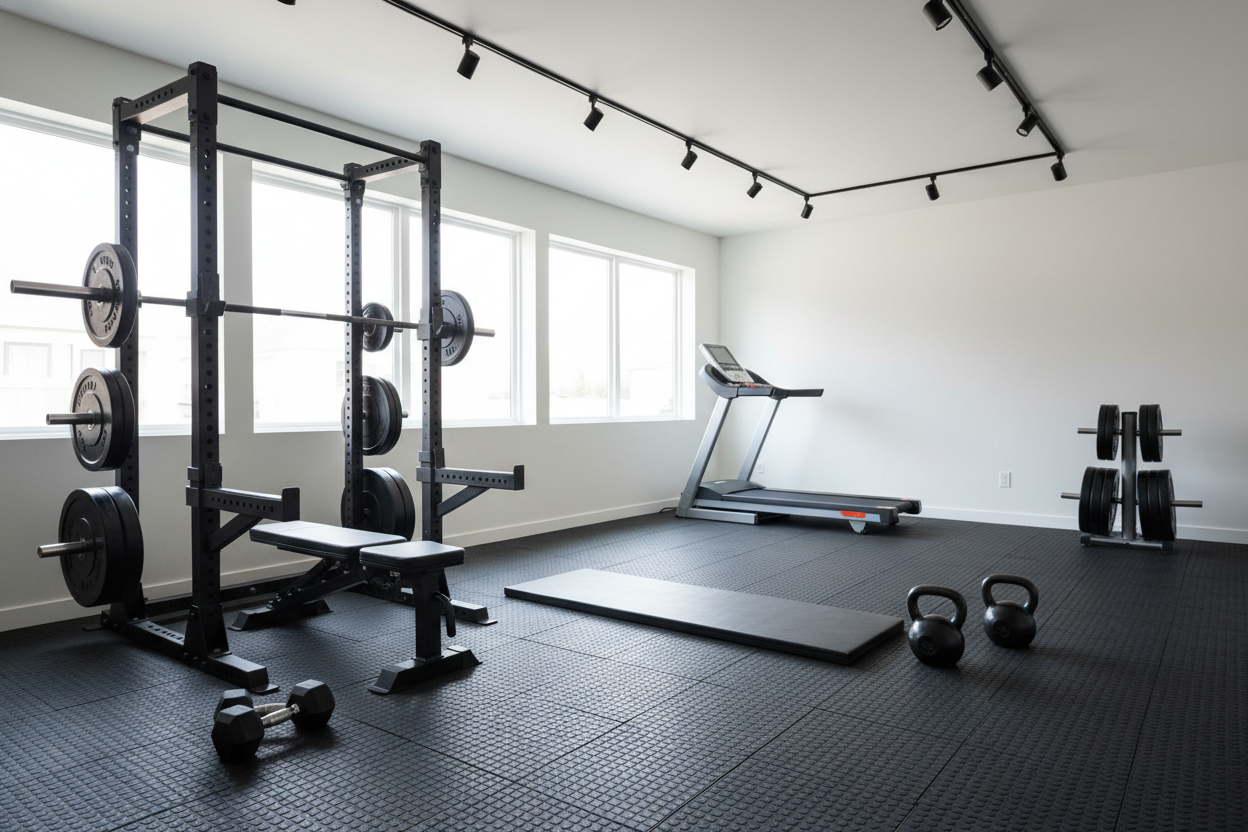
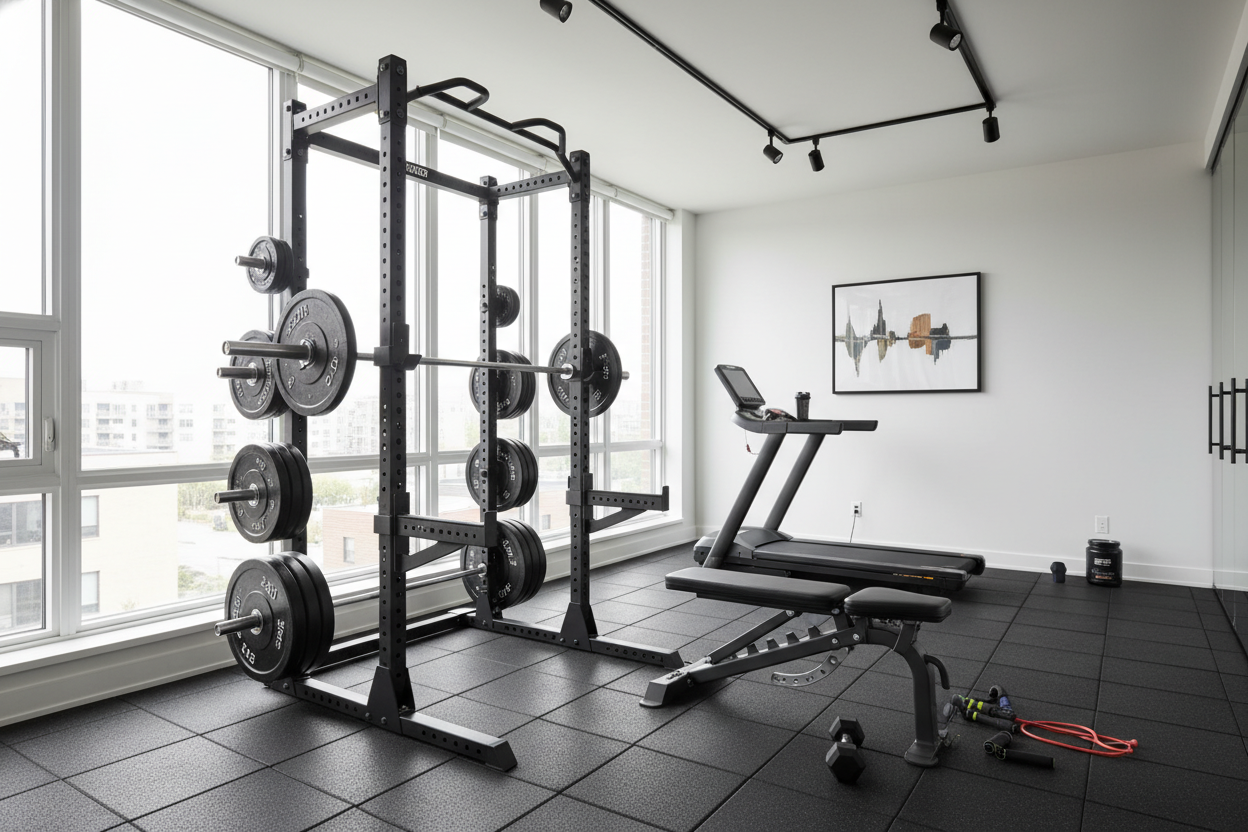
If you want to tell your body to partition nutrients into your biceps instead of your belly, you have to give it a reason. That reason is mechanical tension. You can't just 'exercise'; you have to train. This means you need a solid weight set and bench that allows you to perform the big rocks of hypertrophy: squats, presses, rows, and deadlifts. If you aren't adding a rep or five pounds to the bar every week or two, you aren't giving your body a reason to grow.
I’ve tested a lot of gear, and you don't need a 20-piece circuit to make this work. Even if you’re tight on space, you can find ways to gain muscle mass on the floor using floor presses and heavy weighted glute bridges. The goal is to move enough weight that your nervous system screams for reinforcements. When you eat in a slight surplus after a session like that, your body prioritizes sending those amino acids to the damaged muscle fibers. That is how you gain muscle but not fat.
Progressive overload is the signal. If the signal is weak, the calories go to storage. If the signal is loud—meaning you are pushing your limits on a 300-lb Olympic bar—the calories go to construction. Most people fail because they train at 60% intensity and eat at 110% capacity. Reverse that. Train at 90% intensity and eat at 105% capacity.
Why High Reps Won't Keep You Lean
There is a persistent myth that high reps 'burn fat' or 'tone' the muscle. This is absolute nonsense. If you're doing 20+ reps with light weight, you're mostly building muscular endurance, not the dense myofibrillar hypertrophy required to gain muscle mass without fat. To gain muscle no fat, you need to stay in the 6-12 rep range for the majority of your lifts. This range provides the optimal balance of tension and metabolic stress. Light weights don't signal the body to keep muscle during a lean phase; heavy weights do. Your body is an efficiency machine—if it doesn't think it needs that expensive muscle tissue to lift heavy stuff, it will happily burn it off or refuse to build it in the first place.
Your Protein Target is Non-Negotiable
If calories are the energy for the construction site, protein is the actual brick and mortar. You can get the math right on your surplus, but if your protein is low, you will fail to gain muscles without fat. I aim for at least 1 gram of protein per pound of body weight. Why? Because protein has the highest thermic effect of food (TEF). Your body burns significantly more energy processing a steak than it does a bowl of white rice. This makes it much harder to store protein as body fat compared to fats or carbs.
A high-protein diet also keeps you satiated. One of the hardest parts of learning how to build muscle and not fat is resisting the urge to overeat. When you are slamming 200 grams of protein a day, you aren't nearly as tempted by the office donuts. It’s the ultimate 'cheat code' for nutrient partitioning. It ensures that when you do hit that slight calorie surplus, you have the building blocks ready to turn that energy into new muscle fibers rather than just filling up your adipocytes.
Personal Experience: My 'Aha' Moment
The biggest mistake I ever made was thinking my 'hardgainer' status gave me a license to eat like a dumpster. I once spent three months on a 'mass gain' program where I drank a 1,200-calorie shake every night before bed. I gained 20 pounds. When I finally stripped the fat off, I realized I had only gained about three pounds of actual muscle. I had wasted months of effort and a lot of money on groceries just to look worse in a t-shirt. Now, I keep my surplus tight, my protein high, and my weights heavy. My progress is slower on paper, but I haven't had to 'cut' in three years because I never let the fat accumulate in the first place.
FAQ
Do I need cardio to stay lean while bulking?
You don't *need* it for fat loss if your calories are dialed in, but 20 minutes of low-intensity steady-state cardio (LISS) a few times a week helps with nutrient partitioning and heart health. It keeps your metabolism 'hot' without adding too much recovery stress.
How do I know if I'm gaining fat or muscle?
The mirror and the tape measure are better than the scale. If your waist circumference is staying the same but your weight is creeping up and your lifts are getting stronger, you are successfully gaining muscle mass but not fat.
Can I gain muscle and lose fat at the same time?
Yes, it's called body recomposition. It usually happens for beginners, people returning from a long break, or those with a higher starting body fat percentage. It requires eating at exactly maintenance or a tiny deficit while hitting high protein targets.