The Quiet Home Workout Necessities That Won't Get You Evicted
I remember living in a third-floor walk-up with floors so thin I could hear my neighbor’s microwave beep. Trying to stay in shape there was a nightmare. Every time I set a dumbbell down, I felt like I was triggering a localized earthquake. You want to train hard, but you don't want to be the person whose ceiling fan shakes the apartment below every time you finish a set. Finding the right home workout necessities is about more than just finding what is on sale; it is about physics and acoustics.
Quick Takeaways
- Urethane coating is the only way to kill the 'clack' of metal plates.
- High-density pads are mandatory if you value your security deposit.
- Avoid anything with a motor or a heavy flywheel; the vibrations travel through floor joists.
- Bodyweight suspension systems offer the highest intensity-to-noise ratio.
Why Most 'Must-Have' Gear Fails the Apartment Test
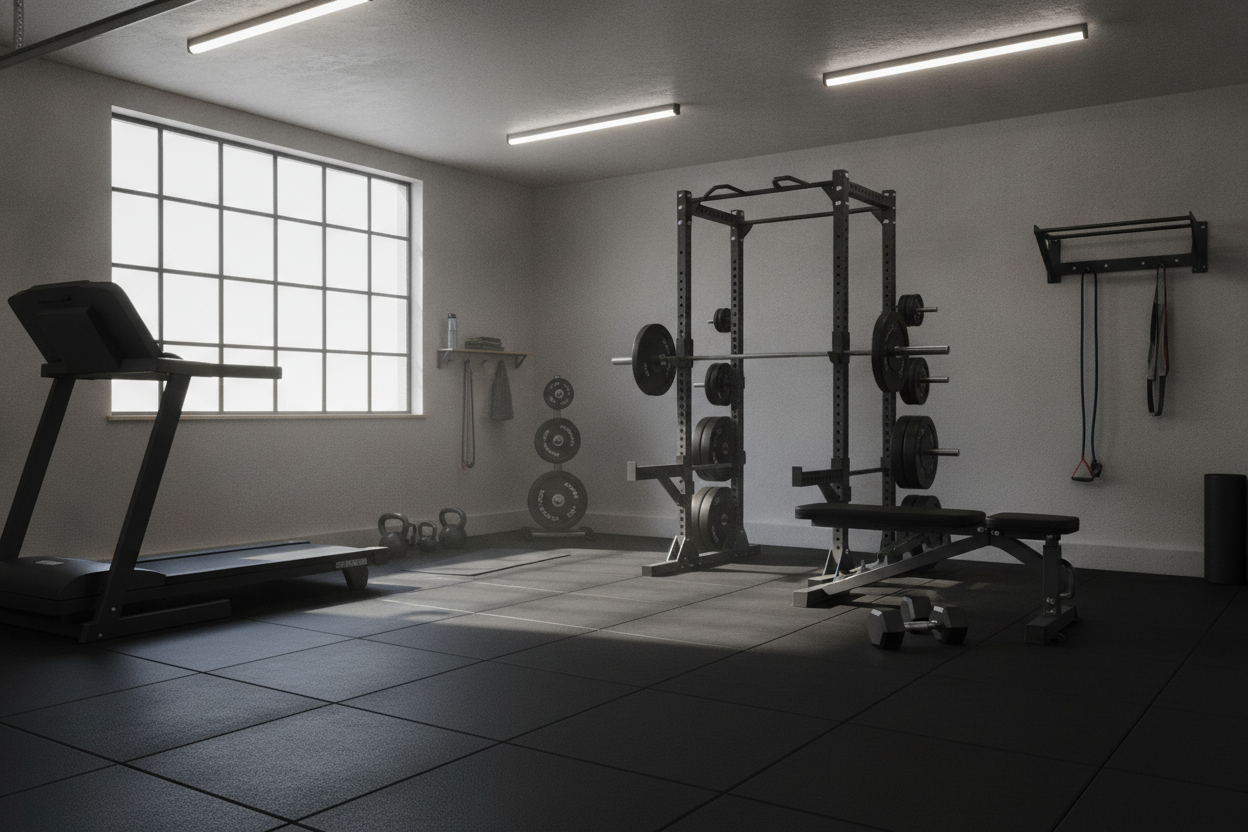
Most 'best of' lists for home gyms are written by people with garages or basements. They recommend 300-pound Olympic barbell sets and cast-iron bumper plates. In a shared building, that is a recipe for a noise complaint or an actual eviction notice. The problem isn't just the sound of the weight hitting the floor; it is the low-frequency vibration. When a heavy barbell hits a floor, that energy travels through the building's frame like a drum. Your neighbors don't hear a 'thud'—they feel a shudder in their living room.
Standard cardio machines are just as bad. A cheap treadmill might seem like one of those workout at home essentials, but the rhythmic pounding of your feet creates a mechanical resonance that can be heard three floors down. Even a spin bike with a heavy flywheel creates a hum that can drive people crazy through a shared wall. If you are training in an apartment, you have to prioritize gear that dampens impact rather than amplifying it.
The Core Home Workout Necessities for Shared Spaces
You do not need a 1,000-square-foot facility to get strong. You need a few specific pieces of gear that maximize tension while minimizing the footprint and the decibels. These are the home workout necessities that actually fit into a modern life.
Urethane-Coated Adjustable Dumbbells
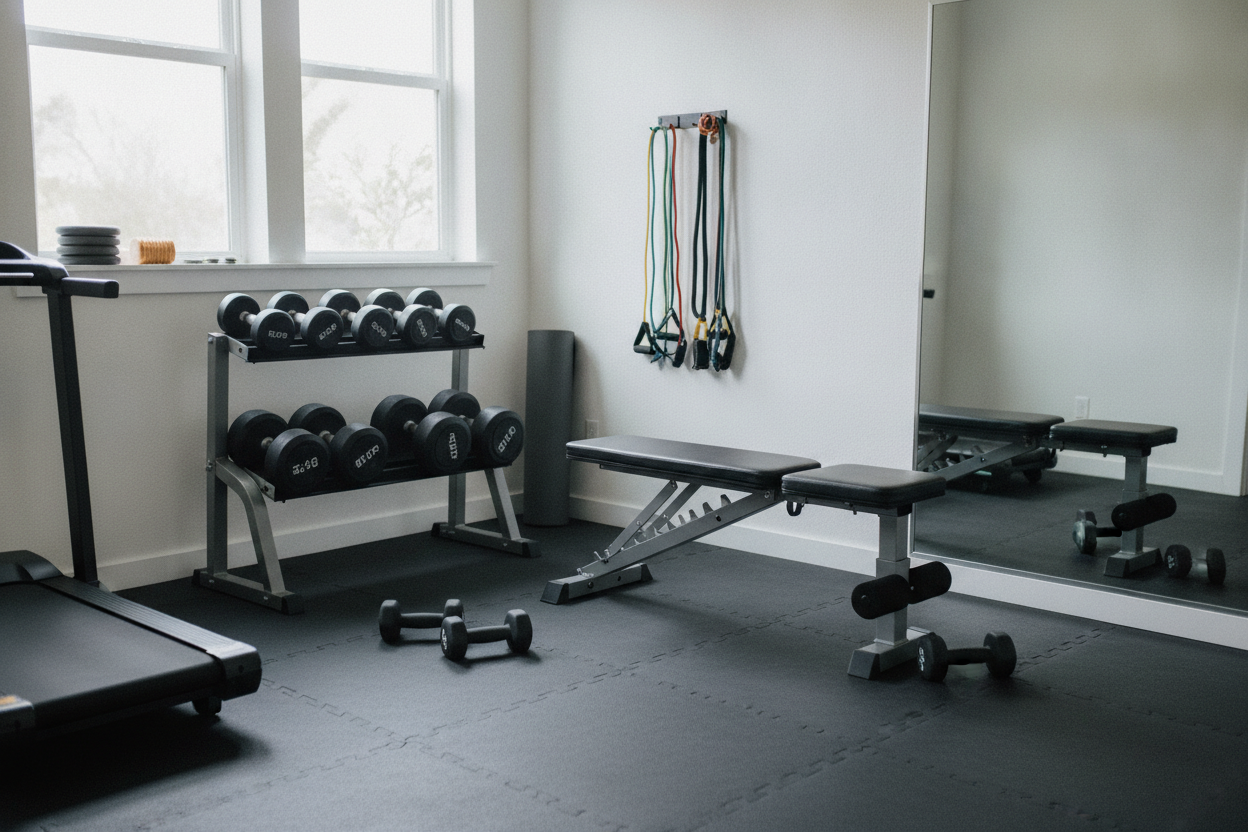
Forget the old-school spinlock dumbbells with the metal plates that rattle every time you move. They are loud, clunky, and the collars always loosen mid-set. If you want a quiet workout, look for urethane-coated adjustable dumbbells like the PowerBlock Pro series or high-end Nuobells. Urethane doesn't just protect the floor; it deadens the sound of the internal weight selection mechanism. You can change from 10 pounds to 50 pounds in seconds without the metallic 'clink' of cast iron. It makes a massive difference when you are training at 6:00 AM while your partner is still sleeping in the next room.
High-Density Crash Pads
If you plan on doing anything heavier than a lateral raise, you need crash pads. These are thick, high-density foam blocks that act as silencers for your weights. I use a pair of 4-inch thick pads for my dumbbell rows and floor presses. Even if you aren't 'dropping' the weights, having a soft, shock-absorbing surface to set them down on eliminates the vibration that usually travels through the floorboards. They are some of the most underrated workout essentials for home because they allow you to train with intensity without holding your breath during every eccentric phase.
A Heavy-Duty Suspension Trainer
A suspension trainer is the ultimate stealth weapon. It weighs about two pounds, fits in a drawer, and uses your own body weight to create brutal resistance. Because your feet or hands stay in the straps, there is zero impact on the floor. You can hammer your lats, hamstrings, and core without making a single sound. I prefer a model with a dedicated door anchor that has a thick foam puck to prevent scuffing the paint. It is the only way to get a 'gym-quality' back workout in a space where you can't bolt a pull-up bar to the wall.
Workout At Home Essentials You Should Completely Avoid
Do not waste your money on a cheap treadmill. Unless you are spending $3,000+ on a commercial-grade unit with massive shock absorbers, it is going to sound like a jackhammer to your neighbors. I also tell people to be wary of kettlebells if they have hardwood floors. One sweaty palm during a swing and you are looking at a $500 floor repair bill. Kettlebells are great, but they are high-risk for small spaces.
Also, stay away from those 'no-screw' doorframe pull-up bars that rely on leverage. I’ve seen them rip the decorative molding right off the wall or leave permanent black scuffs on the frame. If you can't bolt it into a stud, don't trust it with your body weight. Stick to suspension trainers or a dedicated power tower if you have the floor space.
Pairing Your Quiet Gear With the Right Routine
Having the gear is only half the battle. If you try to do CrossFit-style AMRAPs with burpees and box jumps in a second-floor apartment, you are still going to get a knock on the door. You need a plan that focuses on controlled movements. This means slowing down your eccentrics and using 'stop-and-go' reps to ensure you never lose control of the weight. If you are just starting out, looking for the best at home workout programs for beginners can help you find a structure that emphasizes form over explosive noise.
Space management is also key. You don't want to be tripping over your couch mid-set. Spend some time setting up for virtual success by clearing a dedicated 6x6 foot area. Even a small corner can feel like a professional gym if you organize your gear properly and have a clear line of sight to your screen for following along with programming.
How to Make Gains Without Dropping Weights
The secret to building muscle with 'quiet' weights is time under tension. You don't need a 300-pound barbell if you know how to use tempo. Try a 4-second descent on your goblet squats or a 2-second pause at the bottom of your chest presses. This makes 50-pound dumbbells feel like 80 pounds, and it ensures you are setting the weight down softly rather than crashing it. Pre-exhaustion is another great tool; do a set of push-ups to failure before moving to your dumbbells. You'll get more out of less weight, which is the golden rule of apartment lifting. You can get absolutely shredded in a 500-square-foot studio if you stop thinking like a powerlifter and start thinking like a technician.
FAQ
Will adjustable dumbbells break if I drop them?
Most high-end adjustable dumbbells are built to be sturdy, but they aren't meant to be slammed. Dropping them can damage the internal locking pins. Use your crash pads and set them down with control.
How thick should my floor mats be?
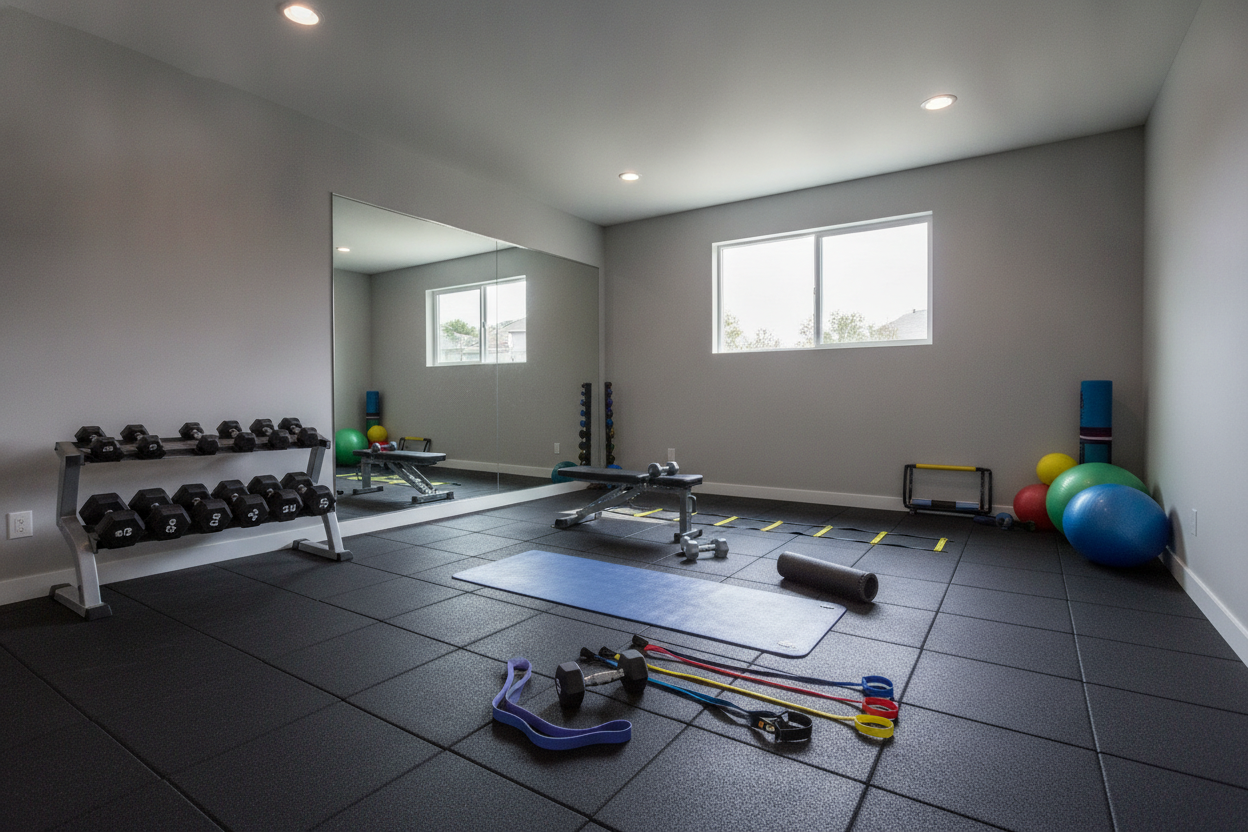
For an apartment, a standard 1/4-inch yoga mat isn't enough. Look for 1/2-inch or 3/4-inch interlocking rubber tiles. If you're doing heavy work, layer a crash pad on top of those tiles.
Is a suspension trainer enough for leg day?
It is surprisingly effective. Single-leg squats (pistol squats) using the trainer for balance will torch your quads without needing a massive squat rack.