The Problem With Every Lifting Routine Reddit Swears By
I spent three hours last night looking at a spreadsheet for a program called nSuns. I wasn't even at the gym. I was lying in bed, calculating my hypothetical 1RM for a front squat I haven't performed in six months. This is the black hole of finding a lifting routine reddit suggests—you spend more time "optimizing" than actually moving weight. We’ve all been there: scrolling r/Fitness at 2 AM, convinced that if we just find the right percentage-based progression, we’ll magically add 50 pounds to our bench by Tuesday.
The truth is, your home gym is gathering dust while you debate the merits of Bulgarian Split Squats versus Lunges in a comment thread. I’ve owned three different power racks and more barbells than I have friends, and I can tell you that the best program is the one you actually do. Reddit loves a good spreadsheet, but spreadsheets don't build calluses. If you're more worried about the perfect RPE than you are about the 45-pound plate you just dropped on your toe, your priorities are skewed.
Quick Takeaways
- Reddit routines often prioritize theoretical volume over practical recovery.
- Spreadsheet obsession leads to "paralysis by analysis" instead of physical progress.
- Foundational movements are more important than complex progression models.
- Most home gym owners need a plan that fits their specific gear, not a generic template.
- Consistency beats "optimal" programming every single time.
The Optimization Trap of the Fitness Wiki
The r/Fitness wiki is a goldmine of information, but it is also a graveyard of consistency. It’s designed by people who live to train, for people who think they want to live to train. You’ll see guys debating whether 3x5 is better than 5x5 for forty-five comments. Meanwhile, the guy with the biggest total in the room is probably doing a basic 5/3/1 variation he wrote on a napkin in 2014. The "wiki obsession" creates a culture where if you aren't doing the exact prescribed assistance work, you're "doing the program wrong."
I’ve seen lifters get so bogged down in the math of a lifting routine reddit recommends that they skip the gym because they didn't have their phone to track the percentages. That’s insane. If you can't walk into your garage, look at a barbell, and know what you need to do to get stronger, the program is too complicated. Optimization is for elite athletes who have squeezed every drop of progress out of the basics. For the rest of us with a rack in the garage, it’s just a distraction from the hard work of adding weight to the bar.
The problem with these online boards is the echo chamber. Someone posts a massive transformation and credits a specific Reddit program. Suddenly, everyone thinks that program is the holy grail. They ignore the fact that the guy was 19, eating 4,000 calories a day, and had no job. If you try to run that same volume while managing a mortgage and a career, you aren't going to get "optimized"—you’re going to get injured.
Why the Weight Lifting Routine Reddit Loves Might Fail You
A weight lifting routine reddit users love usually assumes you are a 22-year-old college student with zero joint pain and eight hours of sleep. It doesn't account for the 40-hour work week, the kid waking up at 3 AM, or the fact that your garage is 40 degrees in January. These programs are often high-volume, high-frequency monsters like the 6-day PPL (Push/Pull/Legs). While PPL is great on paper, it’s a logistical nightmare for a real person with a life outside the gym.
If you miss one day of a 6-day split, the whole week feels ruined. You spend the next three days trying to "make up" for the missed volume, which leads to 2-hour sessions that leave you fried. Most of these internet routines also assume you have access to a full commercial gym. They call for cable crossovers, leg extensions, and pec deck flies. If you’re working with a power rack and a barbell, you’re constantly having to find "substitutions" that aren't quite the same, leading to more frustration and less focus.
Recovery capacity is the most ignored variable on Reddit. The "more is better" mentality is toxic. I’ve seen people recommend Smolov Jr. for bench press to beginners. That is a recipe for shoulder surgery. Your central nervous system doesn't care about what the subreddit says is "optimal." It cares about the stress you're putting on it. If your weight lifting routine reddit choice is making you dread going into the garage, it’s failing you, regardless of how many upvotes it has.
Stripping Down the Noise: Focus on What Actually Drives Progress
Stop worrying about "optimal" rep ranges and accessory volume. If you want to get strong and look like you actually lift, you need to master the big movements. This starts with understanding basic weight lifting moves and how they apply to your body. Whether it's a low-bar squat or a conventional deadlift, the mechanics matter more than the spreadsheet. If your form looks like a folding lawn chair, a 5% increase in weekly volume won't save your spine.
Progressive overload is the only law that matters. You don't need a complex undulating periodization model to get from a 135-lb bench to a 225-lb bench. You need to add weight to the bar or do more reps with the same weight. It’s unsexy. It’s boring. It doesn't make for a good Reddit thread. But it works. I’ve spent years chasing the "new" way to train, only to realize my best gains came when I just focused on getting my 5-rep max up on the big four lifts.
Mastering the fundamentals also means knowing when to push and when to pull back. Reddit programs are often rigid. They tell you to add 5 pounds every session. But what if you didn't sleep? What if you're stressed? A real lifter knows how to use auto-regulation. They know that a "heavy" triple today might be 20 pounds less than it was last week, and that’s okay. Learning to listen to your body is a skill that no internet template can teach you.
How to Build a No-BS Plan for Your Garage
If you want a plan that actually works in a home gym environment, you need to strip the fat. Most of us don't have two hours to spend in the garage every evening. You need a quick weight lifting routine that hits the major muscle groups and gets you out the door. Think 3 or 4 days a week, focusing on one main lift per session followed by two or three meaningful accessories. That’s it.
Take the core principles of something like 5/3/1. It uses sub-maximal training, so you aren't redlining every workout. It’s sustainable. You can do your main sets in 20 minutes and spend the rest of your time on things that actually matter to you, like pull-ups or dips. The beauty of a home gym is the efficiency—don't ruin it by trying to follow a bloated 2-hour bodybuilding split you found on a forum. If you can't get it done in 45-60 minutes, you're doing too much "junk volume."
Adapt the program to your equipment. If you don't have a lat pulldown, do pull-ups. If you don't have a leg press, do more squats or lunges. Don't overthink the substitutions. The goal is to create enough stimulus for growth without burning out. A simple A/B split where you alternate between squat/bench and deadlift/overhead press is enough to take most people from "weak" to "strong" over the course of a year. Consistency over intensity, every single time.
The Gear You Actually Need (It's Less Than They Say)
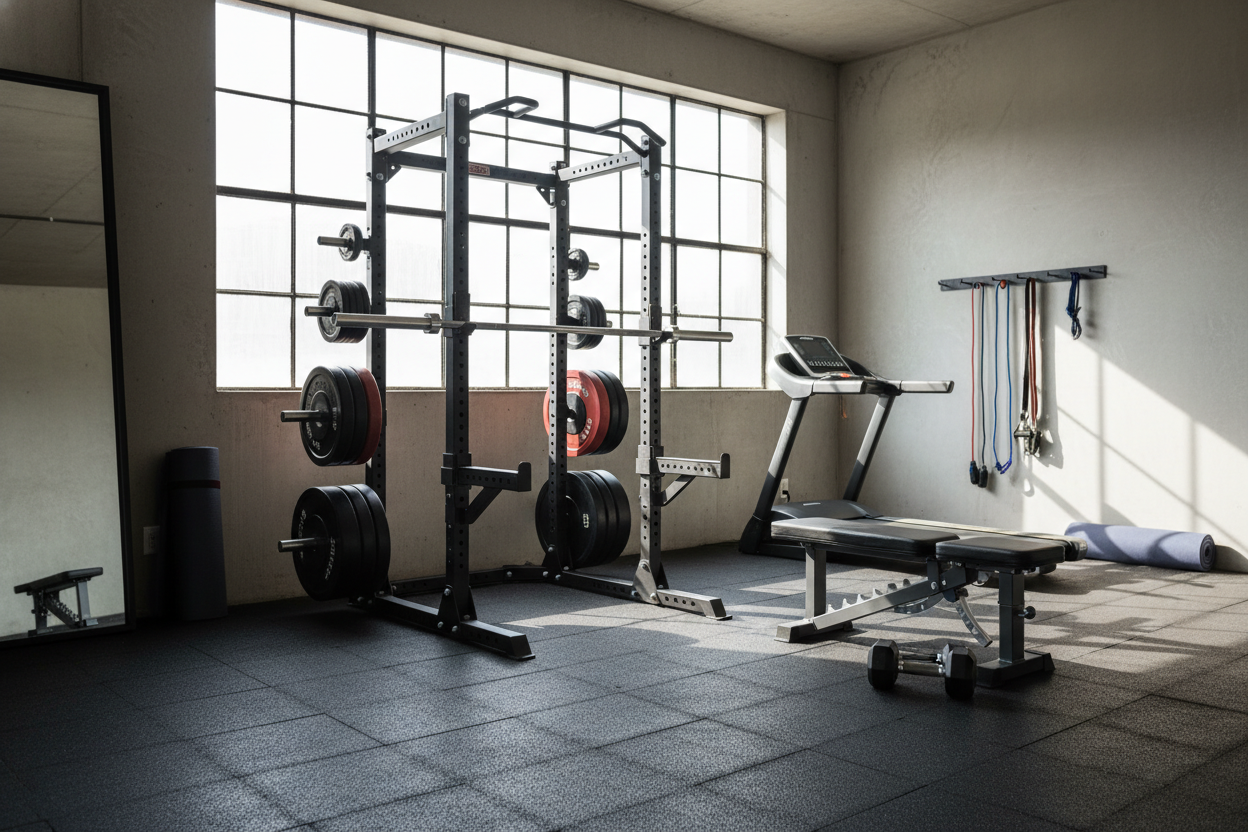
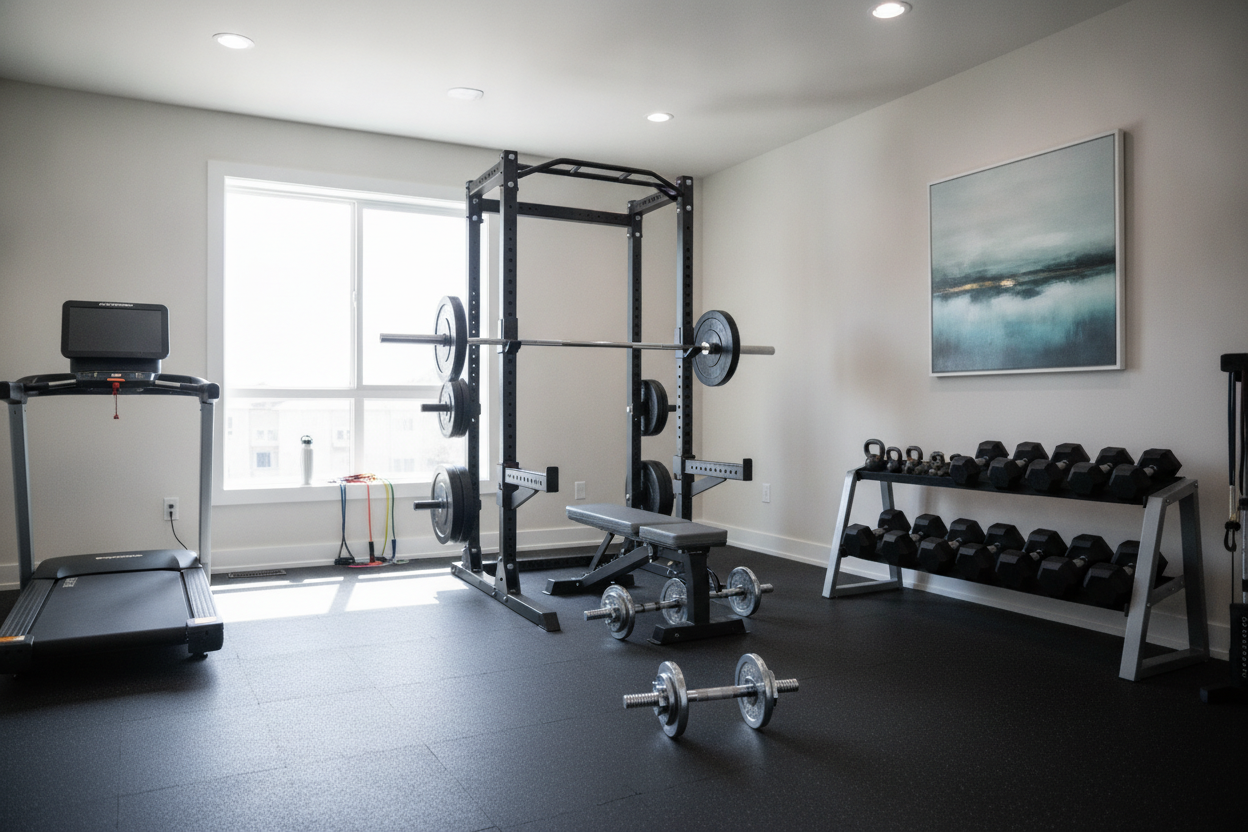
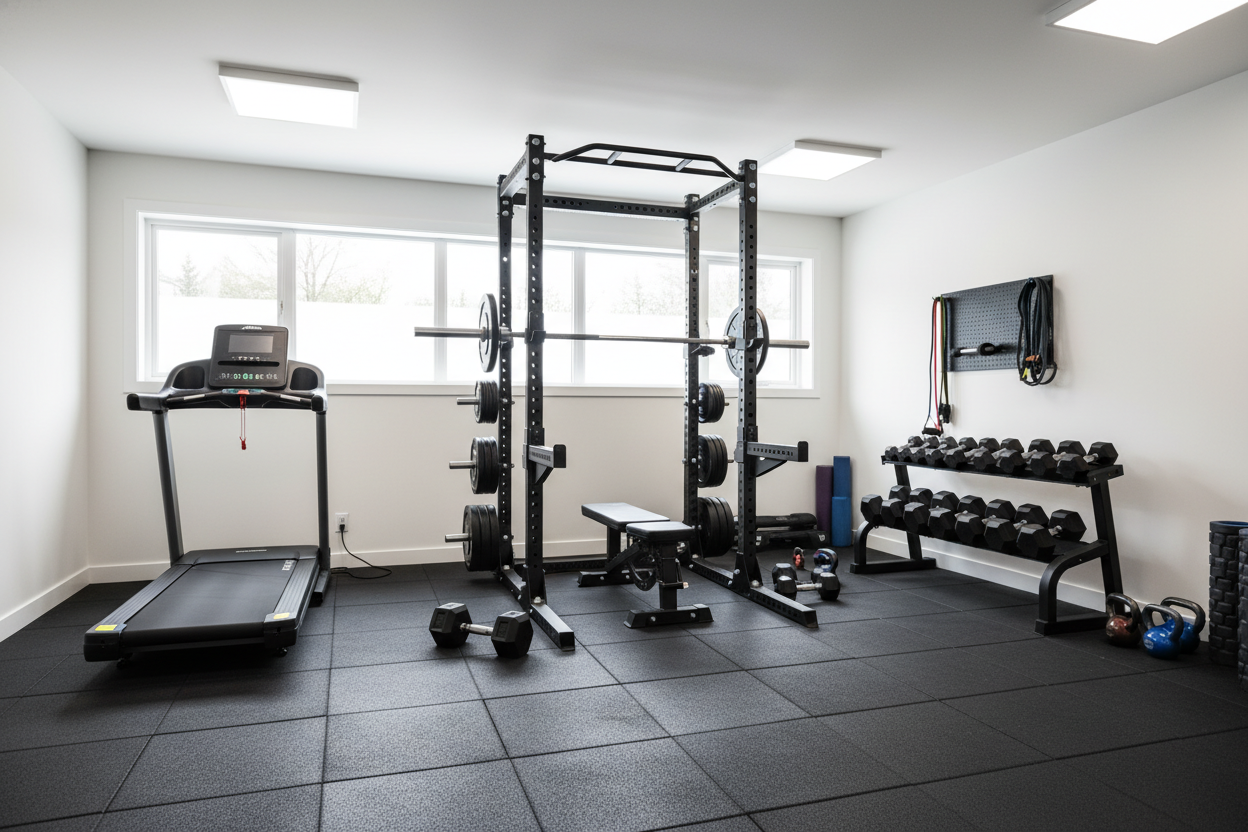
Message boards will convince you that you need five specialty bars, a functional trainer, and a specialized deadlift platform to see results. That’s just gear-acquisition syndrome talking. I love a good piece of equipment as much as anyone, but you need to start with reliable basic strength equipment. A solid power rack, a high-quality barbell with decent knurling, and enough iron to make you sweat are the 90% that gets you results.
The one place you shouldn't skimp is your bench. I’ve used cheap, narrow benches that felt like they were going to tip over during a heavy set. It’s a safety hazard and it kills your confidence. Invest in a heavy-duty adjustable weight bench with a high weight capacity—look for something rated for at least 800-1,000 lbs. You want a wide pad that supports your shoulders and a frame that doesn't wobble when you're setting up for a press. That stability allows you to actually focus on the lift instead of worrying about the equipment failing.
Forget the gimmicks. You don't need the latest vibration plate or a $500 set of adjustable kettlebells if you haven't mastered the barbell. Build your foundation first. Once you can squat 315 and deadlift 405, then you can start looking at the fancy stuff. Until then, your money is better spent on more plates and maybe a good pair of lifting shoes. Keep it simple, keep it heavy, and stop reading the forums for a while.
Personal Experience: The Spreadsheet Burnout
I once tried to run a high-volume Reddit program called "Building the Monolith" while working a 50-hour week and moving into a new house. On paper, the program looked "optimal" for growth. In reality, I lasted about two weeks before my lower back felt like it was made of dry kindling. I was so obsessed with hitting the prescribed reps in the spreadsheet that I ignored the fact that I was exhausted and under-recovered. I should have just done two heavy sets and gone to bed. I ended up tweaking my back on a set of squats I had no business doing that day, which set my training back by two months. The lesson? A spreadsheet doesn't know how you feel; only you do.
FAQ
Is the Reddit PPL good for beginners?
It can be, but 6 days a week is a huge commitment. Most beginners are better off with a 3-day full-body routine. It allows for more recovery and is much easier to stick to long-term. If you miss one day on a 3-day split, it’s no big deal. If you miss one on a PPL, your whole rotation gets messed up.
Do I need a power rack for these routines?
If the routine involves heavy squats and bench presses, yes. A rack is your insurance policy. I’ve had to bail on a 300-lb squat before, and without those safety bars, I would have been in the hospital. If you're training alone in a garage, a rack is non-negotiable.
How long should I stay on one lifting routine?
Stop hopping every three weeks. Pick a program and stick to it for at least 3 to 6 months. You need time to actually see the progression work. If you're constantly changing your "optimal" routine, you'll never know what actually works for your body.