The Posterior Chain Blueprint: How to Actually Build Your Glutes and Hamstrings
Most gym-goers spend a disproportionate amount of time looking in the mirror, which inevitably leads to overtraining the "show muscles" on the front of the body while neglecting the powerhouse muscles on the back. If you want to run faster, lift heavier, and fill out your jeans, you need to prioritize your posterior chain. To answer the core question immediately: the single best exercise for hamstring and glutes is the Romanian Deadlift (RDL). No other movement offers the same combination of heavy loading capacity, deep eccentric stretching, and simultaneous activation of both muscle groups through hip extension.
However, relying on just one movement won't build a complete physique. A truly effective routine requires a mix of hip-hinging movements, knee flexion exercises, and heavy thrusting variations. Understanding how to combine these creates the foundation for long-term growth and injury prevention.
Why Your Posterior Chain Lagging Behind
Early in my lifting career, I hit a frustrating plateau. My squat numbers were stuck, and I developed nagging lower back pain that wouldn't go away. I thought I was training hard, but a coach pointed out that I was essentially "quad-dominant." I was relying on my thighs and lower back to move weights that my hamstrings and glutes should have been handling. Once I shifted my focus to the best glute and hamstring exercises, specifically focusing on the eccentric (lowering) portion of the lift, my back pain vanished, and my squat total shot up by 40 pounds in three months. The lesson was clear: you cannot fire a cannon from a canoe. You need a stable, strong base at the back of your hips.
The Heavy Hitters: Compound Movements
Building mass requires mechanical tension. You need to move heavy weight through a full range of motion. While isolation machines have their place, the best exercises for hamstrings and glutes are free-weight compound movements that force these muscles to work in unison.
The Romanian Deadlift (RDL)
The RDL is the king of posterior chain development. Unlike a conventional deadlift, where the knees bend significantly, the RDL keeps the legs relatively stiff (but not locked). This shifts almost all the tension to the hips. The key here is the "hinge." Imagine trying to close a car door with your butt while holding groceries. That backward reach is what loads the hamstrings. If you stop the movement before you feel a deep, slightly uncomfortable stretch in the belly of the hamstring, you are cutting your gains short.
The Barbell Hip Thrust
While the RDL creates tension through stretching, the hip thrust creates tension through shortening (contraction). This is widely considered the best glute hamstring exercises complement. The glutes are most active at full extension—the top of the movement. By placing the load directly on the hips rather than the spine, you can move immense amounts of weight without the lower back fatigue associated with squats or deadlifts. Keep your chin tucked and your ribs down to prevent overarching your lumbar spine.
Isolation and Accessory Work
Once the heavy lifting is done, you need to target the muscles from different angles. The hamstrings have two main functions: extending the hip and bending the knee. The heavy compounds handle hip extension, so you need knee flexion movements to round out the best glute and hamstring workout.
Glute-Ham Raise (GHR) or Nordic Curls
These bodyweight movements are humbling. They train the hamstrings at both the hip and the knee joint simultaneously. Most people cramp up immediately when trying these for the first time. That cramping is a sign of weakness. If you cannot perform a full rep, control the lowering phase (eccentric) as slowly as possible and push yourself back up. This eccentric overload is fantastic for bulletproofing the hamstrings against tears.
Bulgarian Split Squats
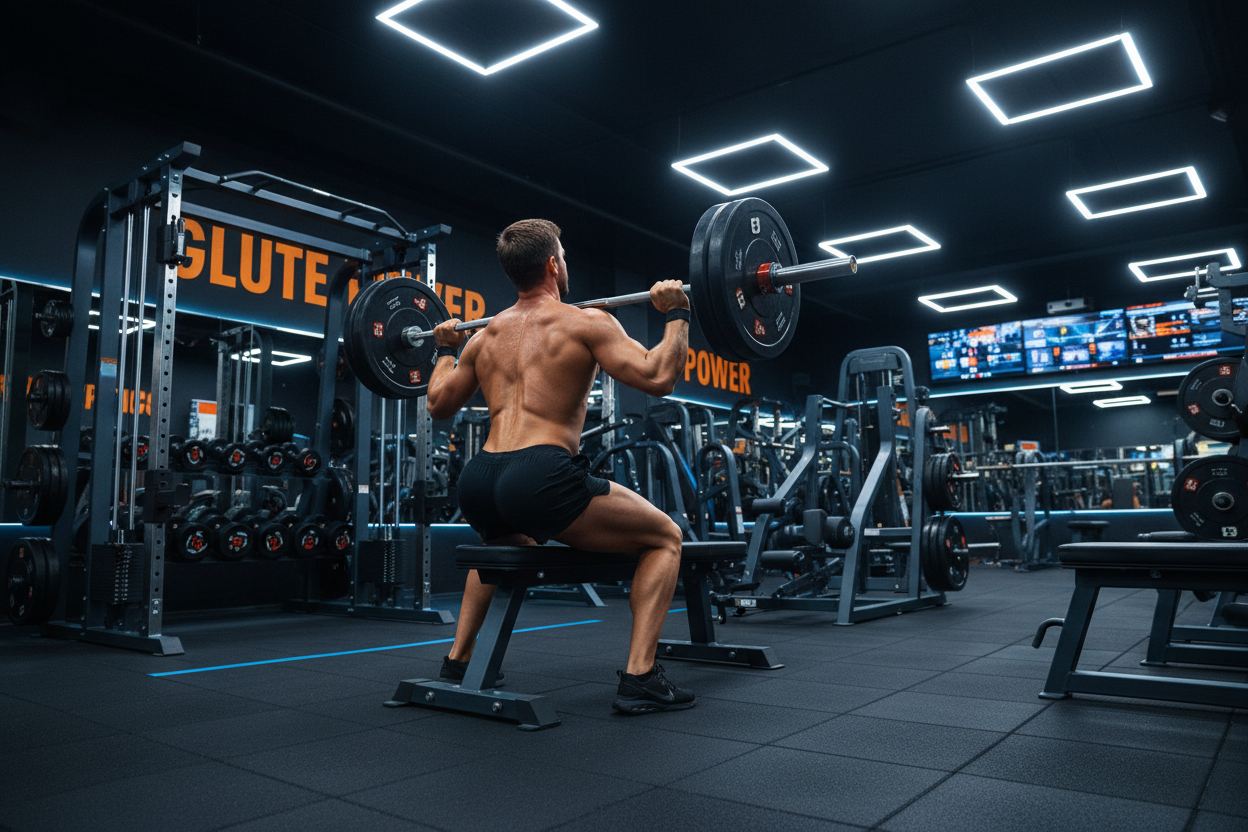
Unilateral training is non-negotiable. Everyone has a dominant side, and bilateral lifts like the barbell squat can mask imbalances. By placing your rear foot on a bench and leaning your torso slightly forward, you turn the split squat into one of the best glute and hamstring exercises available. The deep stretch on the glute of the working leg is unmatched by almost any other movement.
Structuring the Routine
Knowing the exercises is only half the battle; programming them correctly is what generates results. You shouldn't just throw these exercises together randomly. The best workout for hamstrings and glutes starts with heavy, technically demanding movements and finishes with metabolic stress (the "burn").
Here is a sample structure for a hypertrophy-focused lower body session:
- A. Barbell Romanian Deadlift: 3 sets of 6–8 reps. (Focus on heavy load and a 3-second lowering phase).
- B. Barbell Hip Thrust: 3 sets of 10–12 reps. (Hold the top squeeze for 2 seconds on every rep).
- C. Bulgarian Split Squats: 3 sets of 10 reps per leg. (Lean forward to bias the glutes).
- D. Seated or Lying Leg Curls: 3 sets of 15–20 reps. (Take these to failure to pump blood into the muscle).
This sequence ensures you hit the muscles from a lengthened position, a shortened position, and unilaterally. It covers all bases for hypertrophy and strength.
Common Mistakes to Avoid
Even with the best glute and hamstring workout plan, poor execution will kill your progress. The most frequent error is lumbar hyperextension. When locking out a deadlift or hip thrust, many lifters lean back too far, compressing their spine. The goal is to extend the hips, not the back. Once your glutes are squeezed hard, the movement is over. Going further puts stress on the vertebrae, not the muscles.
Another issue is rushing the negative. The hamstrings are composed largely of fast-twitch muscle fibers, which respond incredibly well to eccentric loading. Dropping the weight quickly on an RDL robs you of the most growth-producing part of the lift. Slow down. Control the weight. Make the muscle work against gravity.
Final Thoughts on Frequency
The posterior chain is resilient and can handle a high volume of work, but it also takes a beating during daily activities and other lifts like squats. Training this area specifically twice a week is usually the sweet spot for most lifters. This frequency allows you to hit the best exercises for hamstrings and glutes with high intensity while still allowing 48 to 72 hours for recovery. Consistency with these movements, prioritizing form over ego, is what eventually builds the shelf-like glutes and sweeping hamstrings that complete a physique.
Frequently Asked Questions
Can I train glutes and hamstrings on the same day as quads?
Yes, you can train the entire lower body in one session, but it can be very taxing. If you choose to do this, consider alternating which muscle group you prioritize first in the workout. One session starts with hamstring-dominant movements, and the next session starts with quad-dominant movements.
Are squats enough for hamstring development?
Generally, no. While squats are excellent for quads and glutes, biomechanical studies show they do not fully activate the hamstrings. To fully develop the back of your legs, you must include exercises that involve direct hip extension (like deadlifts) and knee flexion (like leg curls).
How often should I change my posterior chain exercises?
You should stick to the same core movements for at least 8 to 12 weeks to see progressive overload. Constantly switching exercises prevents you from getting stronger at them. Stick to the basics and focus on adding weight or reps over time rather than seeking novelty.