The Post-WOD CrossFit Stretch Protocol I Actually Stick To
You just finished a heavy session of 'Grace' or some ungodly thruster-heavy AMRAP. You’re lying on your back, staring at the rafters of your garage, wondering why you pay for this kind of torture. Your knees feel like they’re filled with dry gravel, and your lower back is tighter than a drum. This is the exact moment where a proper crossfit stretch routine makes the difference between waking up like a human or waking up like a rusted Tin Man.
I used to be the guy who would just flop around on a foam roller for thirty seconds while talking about my split times. It didn't work. Real recovery requires more than just rolling over a piece of plastic; it requires a targeted approach to the joints we actually beat up daily.
- Focus: Hips, thoracic spine, and lats.
- Time: 10-12 minutes total.
- Frequency: Post-workout only (keep it static).
- Gear: A surface that doesn't feel like a sidewalk.
Why Your Current Post-WOD Routine Is Probably Just Flailing
Most people treat post-workout mobility like an afterthought. They grab a resistance band, loop it around a rig, and mindlessly pull their shoulder while scrolling Instagram. This isn't crossfit stretching; it's just distracting yourself from the pain. If you want to actually see progress in your overhead squat or your snatch depth, you need a protocol that targets the nervous system.
The goal after a WOD is to move from a sympathetic state (fight or flight) to a parasympathetic state (rest and digest). Randomly flailing around doesn't do that. A structured crossfit mobility workout focuses on long-duration holds that tell your brain it’s safe to let the muscles release. Stop thinking of it as 'stretching' and start thinking of it as 're-centering' your joints after you’ve spent an hour trying to pull them out of alignment with a barbell.
The 3 CrossFit Mobility Drills That Target the Actual Damage
You don't need a 40-minute yoga flow. You need three specific movements that hit the primary bottlenecks: the hips, the front rack, and the thoracic spine. These are the areas where 90% of CrossFit injuries start. If you fix these, your squat feels deeper and your shoulders stop clicking every time you go overhead.
Fixing the Hips After Heavy Squats
If you've spent the morning doing wall balls or heavy back squats, your hip flexors are likely shortened and angry. The 'Couch Stretch' is the gold standard here, but most people do it wrong by over-arching their back. You want to tuck your pelvis, squeeze your glute, and stay upright. This is where you find the best hip mobility exercises to undo the damage of high-rep squatting. Don't force the range—yield to it. If you're grimacing, your body will fight the stretch. Breathe through your nose and let the hip open up over two full minutes per side.
Opening the Front Body After Wall Balls and Cleans
The front rack position is a shoulder killer. Between cleans, front squats, and those 150 wall balls you just did, your pecs and lats are probably pulling your shoulders forward into a permanent hunch. To fix this, you need effective chest stretching exercises that target the pec minor and the thoracic spine. I like the 'Puppy Pose' or a box-assisted lat stretch. The goal is to get your chest toward the floor while keeping your arms locked out. This reverses the 'CrossFit slouch' and makes your next overhead press session feel infinitely smoother.
Stop Trying to Do Mobility Work on Bare Concrete
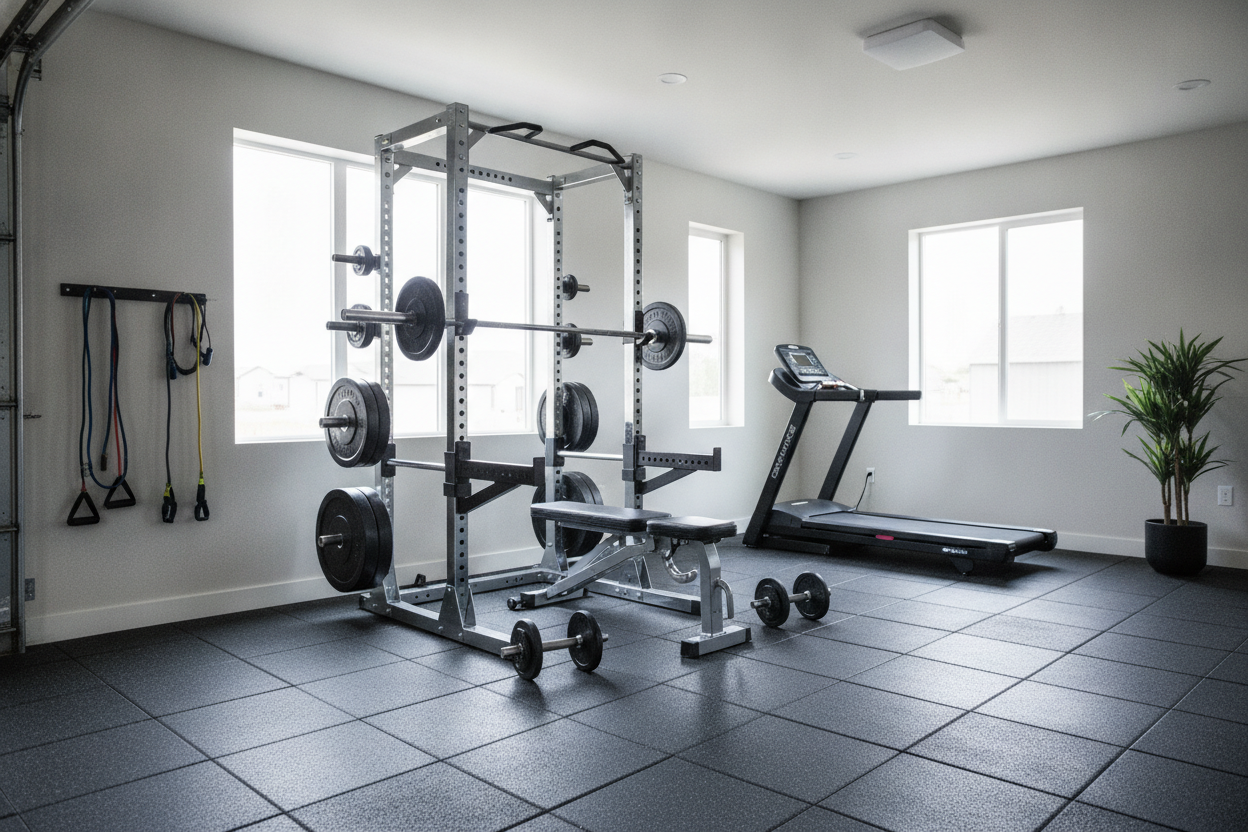
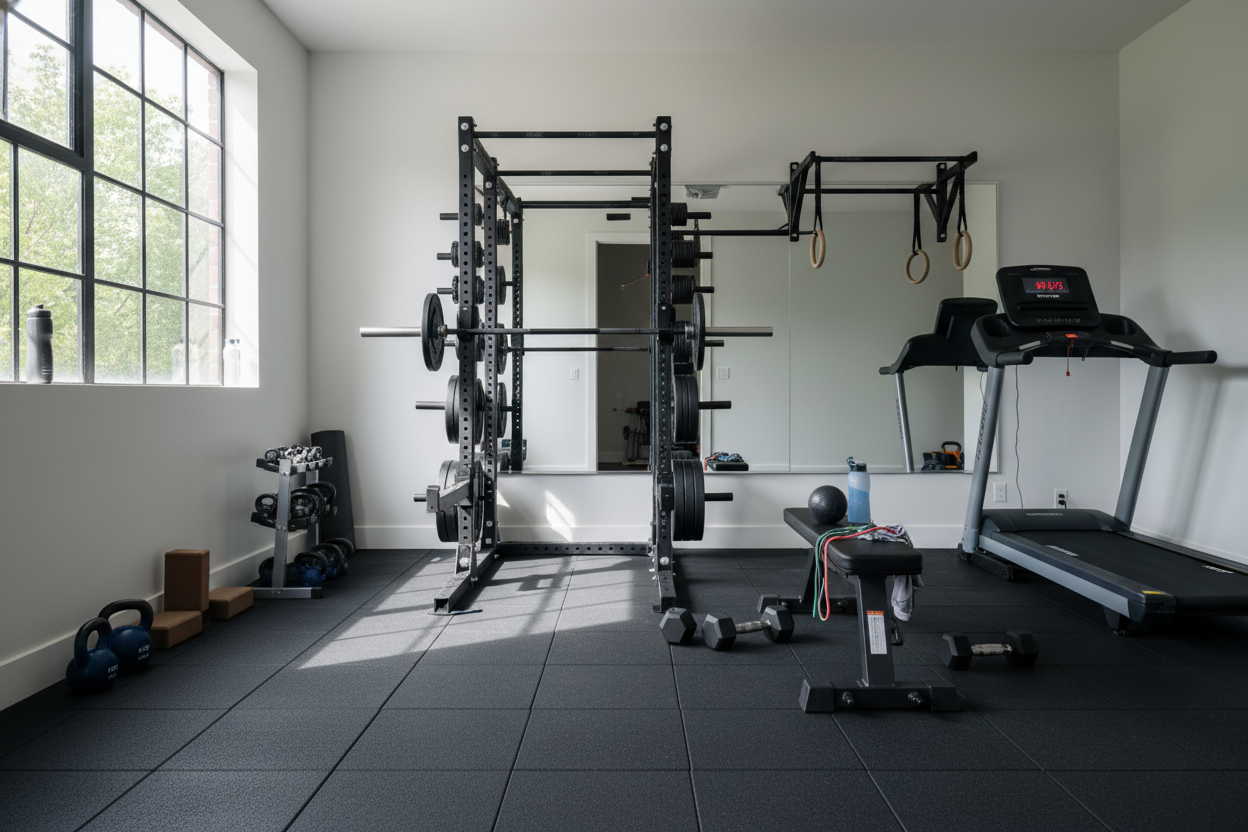
Here is a cold truth: your nervous system is smart. If you are trying to relax your psoas while grinding your kneecap into a cold, hard garage floor, your brain will keep your muscles tight to protect you. You cannot get deep into crossfit stretching exercises if you are in physical pain from the floor itself. I spent years trying to do mobility on horse stall mats, and they are too dense and too grimy for real floor work.
If you have the space, a dedicated 6x8ft exercise mat is a total game-changer for a home gym. It gives you enough room to sprawl out without your limbs ending up on the dusty concrete. If you’re working in a tighter corner of the garage, even a smaller exercise mat gym flooring setup provides the necessary cushion to let your joints actually sink into the movement. When the surface is comfortable, your heart rate drops, your muscles relax, and the mobility work actually sticks.
My Personal Experience: The Cost of Skipping
Two years ago, I thought I was too 'tough' for mobility. I’d finish my WOD, put my weights away, and head straight to the shower. Within six months, my snatch caught a hard ceiling because I couldn't get my hips low enough without my heels lifting. My shoulders felt like they were made of dry leather. I finally invested in a decent mat and committed to 10 minutes of mobility after every session. It wasn't overnight, but my squat depth returned, and that nagging ache in my bicep tendon finally vanished. The biggest mistake I made was thinking intensity in the workout was the only thing that mattered. Recovery is where the gains actually happen.
FAQ
How long should I hold a CrossFit stretch?
For post-workout recovery, aim for at least 2 minutes per position. It takes about 90 seconds for the nervous system to stop resisting the stretch and for the fascia to actually begin to yield.
Should I stretch before or after a WOD?
Never do long, static holds before a workout; it can actually decrease your power output. Stick to dynamic movements (leg swings, arm circles) before the clock starts, and save the deep stretching for the cooldown.
What if I don't have time for a full routine?
If you only have two minutes, do the Couch Stretch. It hits the hips and quads, which are the primary drivers for almost every CrossFit movement. It’s the highest ROI stretch you can do.