
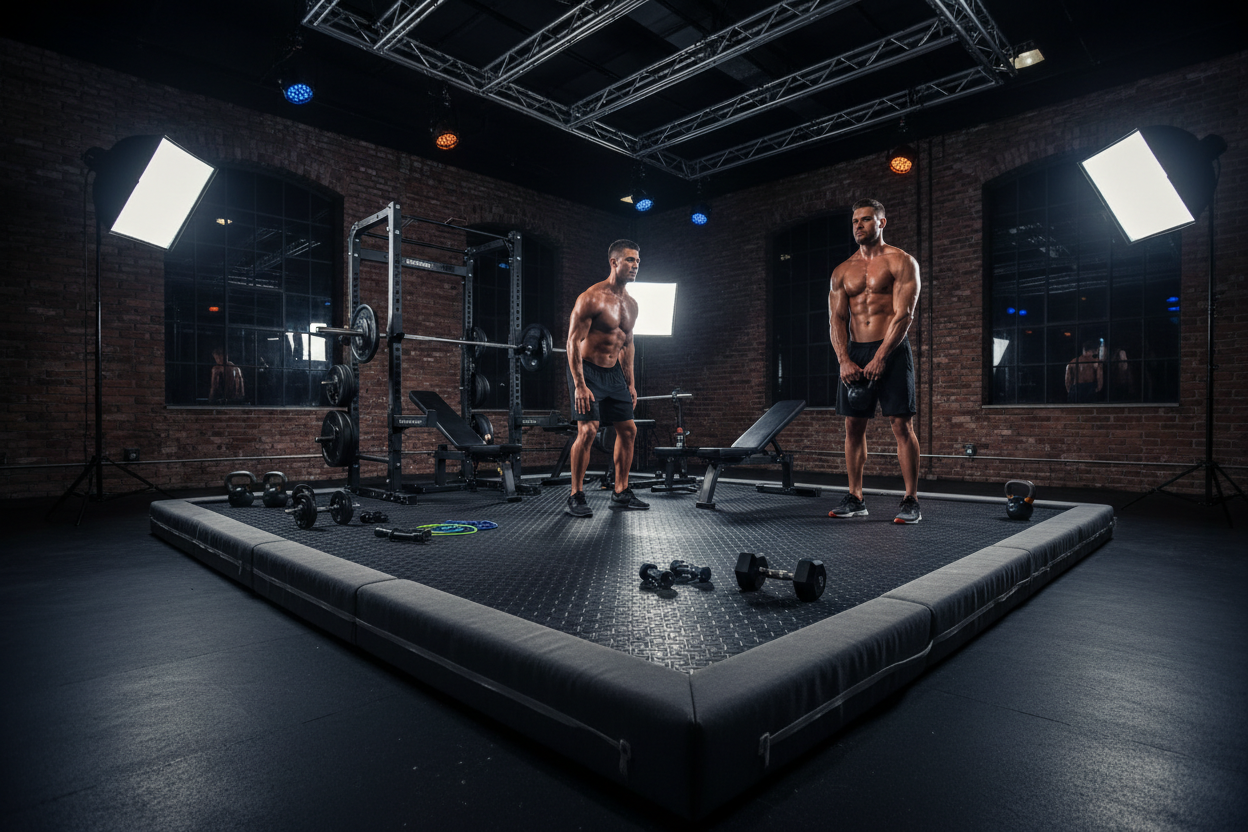
The Perfect Gym Stage: What to Know Before You Build or Buy
There is nothing quite like the sound of a heavy barbell hitting the floor. But if that floor is your garage concrete or a spare bedroom, that sound is usually followed by a wince. Whether you are tired of noise complaints, worried about your foundation, or just want a designated lifting zone, investing in a proper gym stage is the ultimate upgrade for serious lifters.
Building out a dedicated lifting platform does more than just protect your property—it mentally separates your heavy lifting space from the rest of the room. In this guide, we will break down exactly what makes a lifting platform effective, how to choose the right materials, and how to plan for the footprint in your home gym.
Key Takeaways
- A dedicated lifting stage protects your foundation and equipment from catastrophic impact damage.
- The ideal setup combines a hard center wood footing with shock-absorbing rubber side panels.
- High-density stage padding is crucial for dampening acoustics and vibrations in residential spaces.
- Standard 8x8 foot stages offer the most versatility, but 8x4 foot half-stages work incredibly well for tight spaces.
The Anatomy of a Bulletproof Lifting Platform
A high-quality lifting platform is not just a slab of wood thrown on the floor. It is an engineered system designed to absorb shock, provide traction, and stabilize your lifts.
Wood vs. Rubber Ratios
When planning your setup, the surface materials dictate performance. The center needs to be a hard, stable surface—usually oak or birch plywood—so you can drive through your heels without losing power during squats and deadlifts. The outer drop zones require a heavy-duty stage mat to absorb the shock of iron or bumper plates. A typical setup utilizes a 4-foot wide wood center flanked by 2-foot wide rubber drop zones on each side.
The Role of Acoustic Layers
Do not overlook the under-layers. Proper stage padding beneath the top wood and rubber layers diffuses the kinetic energy of a dropped bar. This prevents the vibration from traveling through your floor joists and rattling the entire house. Layering oriented strand board (OSB) with high-density foam or secondary rubber matting creates a buffer that drastically reduces decibel levels.
Space Planning for North American Home Gyms
Footprint is the number one limiting factor for most home gym owners. Before you order materials or purchase a pre-built frame, you need to map out your floor plan.
Standard Dimensions and Clearances
Most standard home setups use an 8x8 foot footprint. This size comfortably accommodates a full power rack on the back half while leaving a dedicated deadlift zone in the front. If you are crammed into a single-car garage or basement corner, an 8x4 foot half-stage is a highly effective alternative. Just ensure you have at least 12 to 18 inches of clearance around the perimeter of the stage so you are not bumping into walls while loading plates.
From Our Gym: Honest Take
We recently installed a custom 8x8 platform in our main testing garage to see how it held up against daily abuse. I used three layers of 3/4-inch plywood topped with a specialized 3/4-inch vulcanized rubber stage mat on the drop zones. The grip on the center birch board is phenomenal, and my chalked grip holds solid through heavy deadlift sets without me ever worrying about my feet slipping.
The acoustic difference is night and day; dropping 405 lbs barely registers in the house above, whereas before, it shook the kitchen cabinets. The only caveat? Moving 100-pound rubber mats into place is a brutal workout in itself, and the raw rubber smell took about three weeks of open-garage ventilation to fully dissipate. If you are sensitive to smells, wash your mats with a mild degreaser before bringing them indoors.
Frequently Asked Questions
Is a gym stage necessary for a home gym?
If you regularly perform heavy barbell lifts like deadlifts, cleans, or snatches, a stage is highly recommended. It protects your floor from cracking, prolongs the life of your bumper plates, and significantly reduces noise.
How thick should a stage mat be?
For the top impact layer, you want a minimum of 3/4-inch thick rubber. Anything thinner will not adequately absorb the shock of a loaded barbell, and you risk the plates denting the subfloor underneath.
Can I put a lifting stage on carpet?
Yes, but you need a highly rigid base layer to prevent the platform from bowing under heavy weight. Using two layers of 3/4-inch plywood screwed together in perpendicular directions will create a stiff enough base to float securely over plush residential carpet.


