The Only Time Buying Fixed Hand Weight Sets Actually Makes Sense
I remember the first time I tried to build a home gym on a shoestring budget. I spent three hours scrolling through Amazon at midnight, comparing the grip diameter of different hand weight sets, trying to figure out why some cost fifty bucks and others cost two hundred. I ended up buying the cheapest ones I could find. Two weeks later, the vinyl coating started peeling, and my basement smelled like a tire fire. It was a classic rookie mistake.
We have been told for years that adjustable dumbbells are the only way to go for home training. And while they save space, they aren't the end-all-be-all. Sometimes, the 'old school' approach of having a dedicated rack of fixed weights is exactly what your training needs. But you have to know which ones are worth the floor space and which ones are just expensive paperweights.
Quick Takeaways
- Avoid neoprene or vinyl if you plan on sweating; they become dangerously slippery.
- Fixed weights are superior for high-intensity drop sets where speed matters.
- Check for a 'death rattle'—if the head moves on the handle, send it back.
- Local marketplaces are great for iron, but buying new is better for rubber hex to ensure low odor.
The Neoprene Trap: Why That Small Weights Set Will Disappoint You
Neoprene is the fitness industry's favorite way to sell you gear that won't last. Most small weights set options you see in big-box stores are dipped in this colorful, soft-touch coating. It looks great on a shelf, but it’s a nightmare in a real workout. The moment your palms get a little damp, that soft texture turns into a Slip-N-Slide. I’ve seen more than one person nearly drop a 10-pounder on their foot because they couldn't maintain a lock-tight grip.
Beyond the grip issues, these sets are built for people who don't actually plan on getting stronger. They usually stop at 15 or 20 pounds. If you are following a real home weights workout for women or men, you will outgrow those numbers in about three weeks of consistent lunging. Real training requires progressive overload. You need a handle with knurling—that diamond-patterned etching—that bites into your skin and stays there. Don't waste your money on equipment that has a built-in ceiling for your progress.
Hunting for Hand Dumbbells for Sale? The Brutal Local Market Reality
Searching for hand dumbbells for sale on Facebook Marketplace or Craigslist is a special kind of endurance sport. I’ve spent more time than I’d like to admit driving forty minutes to a stranger's garage only to find that the hand weights nearby they described as 'like new' were actually rusted solid. If you are looking for a dumbbells set nearby, you have to be prepared for the 'vintage' upcharge. People think that because iron lasts forever, they can sell their 1980s York plates for 2024 retail prices.
There is also the safety factor. When you see hand weights for sale from a random seller, you have no idea if they’ve been dropped from six feet up or stored in a damp shed that compromised the internal threading. It is vital to know how to buy a set of weights for sale without getting ripped off. Always check the bolts. If the end cap looks like it’s been tampered with or the weight head spins independently of the handle, walk away. It’s not worth the five dollars you’re saving to have a cast-iron head fall on your face during a bench press.
The 3 Times Fixed Hand Weight Sets Are Actually the Smart Move
Even though adjustables are the darlings of the home gym world, I still keep a few pairs of fixed weights around. The first reason is drop sets. If you are running a high-volume hypertrophy program, you don't have thirty seconds to fiddle with a selector dial or a screw-lock collar. You need to be able to drop the 30s and immediately grab the 20s. A fixed hand weights set nearby makes this seamless.
The second reason is training partners. If you and your spouse or a buddy are lifting together, adjustables become a massive bottleneck. You’ll spend more time waiting for the other person to finish their set so you can change the weight than you will actually lifting. Having a dedicated hand weights buy for your most-used increments (usually 15s, 25s, and 35s) keeps the momentum of the workout alive. Finally, consider the 'clunk factor.' Adjustable dumbbells are notoriously bulky. If you are doing lateral raises or movements where the weights pass close to your body, the extra length of an adjustable handle can throw off your mechanics. Fixed weights are more compact, better balanced, and frankly, they just feel more 'real' in your hand.
Red Flags to Watch For When You Buy Hand Weights
When you finally decide to pull the trigger, don't just look at the price tag. Look at the specs. The first red flag is handle diameter. Many cheap sets use a 25mm handle that feels like a toothpick. You want something in the 28mm to 32mm range—it feels more secure and is easier on your joints. Next, check the material. If it’s 'cement filled plastic,' run. Those will leak sand the first time you set them down too hard.
You should also be wary of the smell. Low-quality rubber hex dumbbells use recycled tires and cheap adhesives that off-gas a toxic stench. If you’re training in a small spare room, that smell will never leave. Look for virgin rubber or urethane. Urethane is more expensive, but it’s virtually indestructible and won't mark up your floors. A quality weight set and bench combo is an investment you only want to make once. If the knurling is so sharp it draws blood, or so smooth it feels like glass, keep looking. You want that 'Goldilocks' grip that stays put without needing a bottle of chalk every five minutes.
How to Maximize Your Setup Once You Bring the Iron Home
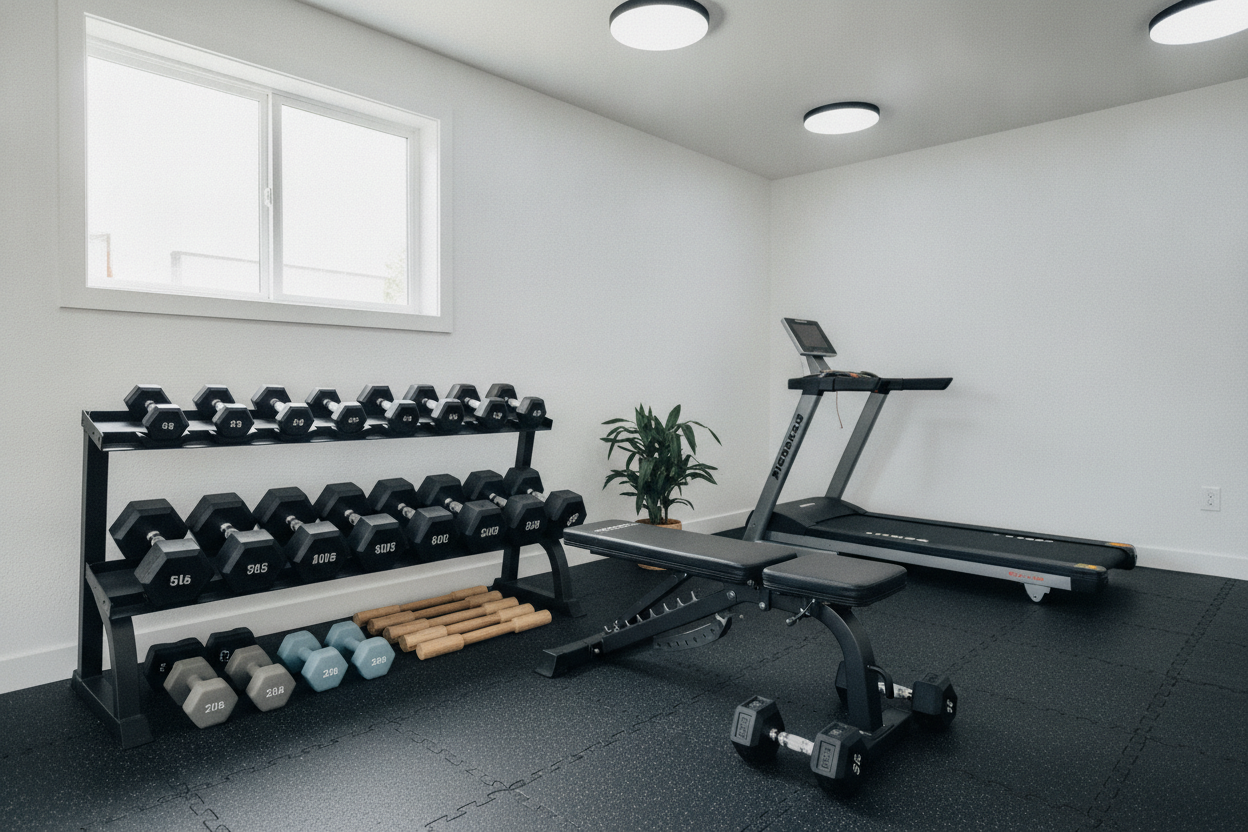
So you’ve got your weights. Now what? Most people make the mistake of just doing bicep curls in front of a mirror. To actually build a physique, you need to be able to perform compound movements under control. That’s why I always tell people that their second purchase should be a sturdy adjustable weight bench. Without a bench, you’re limited to standing or floor-based movements, which cuts your potential exercise library in half.
Think about storage, too. Don't just leave your new weights in a pile in the corner. Not only is it a tripping hazard, but it also makes you less likely to work out. A simple A-frame rack or a tiered shelf keeps your space organized and makes the 'gym' feel like a destination rather than a chore. When your gear is accessible and organized, you remove the friction that usually kills a workout habit. Treat your equipment like the professional tools they are, and they will return the favor during your sessions.
My Honest Take: The Dumbbell I Regret Buying
I once bought a set of 50-pounders from a guy in a parking lot for what I thought was a steal. They were those old-school 'pro-style' dumbbells where the plates are held on by a long bolt. About halfway through a set of overhead presses, I felt the left head shift. I tightened it, but it kept coming loose. I eventually realized the threads were stripped inside the handle. It was a literal ticking time bomb. I ended up having to weld the ends shut just to make them safe to use. Lesson learned: if the mechanical integrity is even slightly questionable, it belongs in the scrap yard, not your gym.
FAQ
Are fixed weights better than adjustables?
They aren't 'better' objectively, but they are more durable and faster to switch between. If you have the space and the budget, a full rack of fixed weights is the gold standard for a reason.
How do I stop my rubber weights from smelling?
Wipe them down with a mixture of mild soap and water, then let them sit in a well-ventilated area (or a garage with the door open) for 48 hours. If they still stink after a week, they’re likely made from low-grade recycled rubber.
What is the best weight to start with?
For most people, a pair of 15s and 25s will cover a huge range of movements, from goblet squats to overhead presses. Don't buy the 2-lb or 5-lb 'toning' weights; you'll grow out of them faster than you think.