How I Use Heavy Exercise to Weight Gain Without Getting Soft
I remember my first real attempt at a bulk. I was twenty-two, living in a cramped apartment, and eating everything that wasn't nailed down. I put on twenty pounds in three months, but when I looked in the mirror, I didn't see an athlete. I saw a guy who had clearly eaten too many donuts and not moved enough heavy iron. I had the calories, but I didn't have the exercise to weight gain strategy to turn that fuel into actual tissue.
Quick Takeaways
- Muscle is metabolically expensive; you have to force your body to build it with heavy tension.
- Compound barbell movements are the most efficient weight gain exercise at gym or home setups.
- Avoid the 'dirty bulk'—if the weight on the bar isn't going up, you're just getting fat.
- High-density complexes are the secret to staying lean while adding mass.
The 'Dirty Bulk' Trap (And Why It Ruins Your Physique)
The internet loves to tell you that to gain weight, you just need to eat. While a caloric surplus is mandatory, eating without the right mechanical stimulus is a recipe for disaster. If you're looking for How To Gain Weight In Legs Without Exercise The Honest Guide, you'll find that while you can add size, it won't be the dense, functional muscle you actually want.
When you focus on a weight increase workout without enough intensity, your body has no reason to build muscle. It takes the path of least resistance: storing those extra calories as adipose tissue. I've seen guys gain thirty pounds only to realize they have to diet for six months just to see their abs again. That is a waste of time. Your training to gain weight must be as aggressive as your appetite.
Why You Need High-Density Exercise to Weight Gain Properly
Proper nutrient partitioning is the goal. You want the steak and potatoes you ate for dinner to be shuttled toward your biceps and quads, not your midsection. Intense, heavy lifting creates a hormonal environment—spiking growth hormone and testosterone—that tells your body to prioritize tissue repair. This is the core of a successful workout and weight gain plan.
High-density training means doing more work in less time. Instead of sitting on your phone for five minutes between sets of curls, you need to be moving heavy loads that challenge your central nervous system. This type of weight gain gym exercise creates the metabolic stress necessary to trigger hypertrophy even in the most stubborn 'hardgainers.'
The Difference Between Adding Mass and Adding Fat
If your scale weight goes up five pounds but your bench press stays the same, you didn't gain five pounds of muscle. It is that simple. I track my progress by the bar first and the scale second. A successful workout weight gain phase should see your 5-rep maxes steadily climbing. If you're just getting softer and slower, you aren't doing a weight gain workout; you're just overeating.
My Go-To Barbell Complexes for Stacking on Dense Tissue
When I’m in a dedicated mass phase, I stop chasing the 'pump' and start chasing total tonnage. Barbell complexes are my secret weapon. You pick up the bar and don't put it down until the entire sequence is done. For example: Clean, into Front Squat, into Push Press, into Back Squat. That is a brutal weight put on exercise that hits every major muscle group.
To do this right at home, you need a solid Weight Set And Bench. I prefer a bar with decent knurling that won't slip when your hands get sweaty, and plates that can handle being dropped if you have to bail. These exercises for weight gain require 100% focus and zero equipment failure. If you're doing a workout routine weight gain style, these complexes will spark more growth in twenty minutes than an hour of machines ever could.
Why Your Home Gym Setup Dictates Your Mass Phase Success
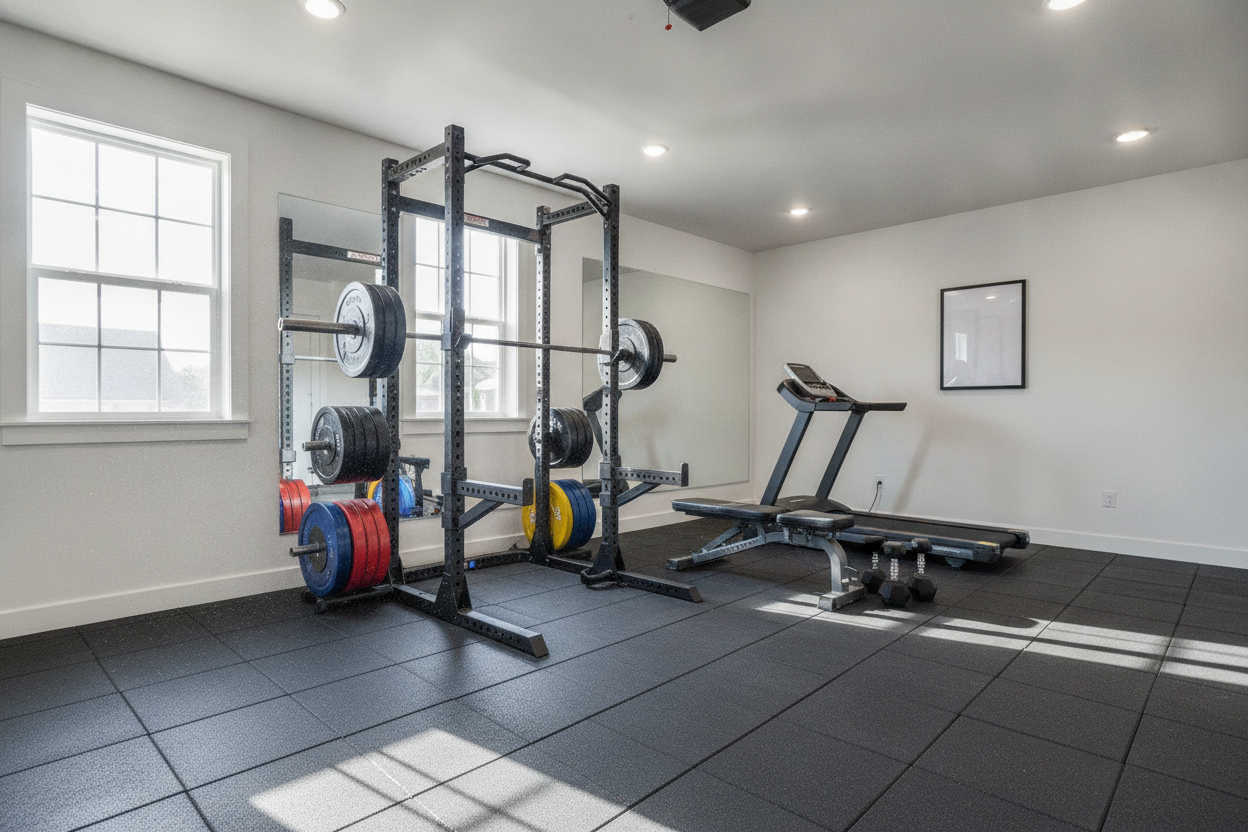
You cannot gain weight by exercise if you are afraid of your equipment. I’ve trained on cheap, bolt-together racks that swayed when I racked 225 pounds. It’s impossible to push to failure—which is where the growth happens—if you're worried about a catastrophic equipment collapse. You need to know that if you miss a rep on a heavy squat, the safety arms will catch the load.
For my heavy sessions, I use the Gxmmat X6 Power Rack Weight Bench Package. The 14-gauge steel and integrated pull-up bar give it the stability of a commercial gym unit but in a footprint that fits in a standard garage. Having those safety spotters is a game-changer when you're trying to hit a new PR on a workout to gain weight. It allows you to train with the intensity required to actually force your body to grow.
Stop Chasing the Scale (And Start Chasing PRs)
The biggest mistake you can make is obsessing over the morning weigh-in. The scale is a liar; it fluctuates with water, salt, and stress. Instead, focus on your exercise routine to gain weight. Are you adding 2.5 pounds to the bar every week? Are you doing an extra rep with the same weight? If the answer is yes, the mass will follow. Muscle weight gain exercise is a slow process of progressive overload. Stick to the heavy compounds, eat clean enough to fuel the work, and let the results speak for themselves.
FAQ
Can females use this method for weight gain?
Absolutely. The physiology is the same. An exercise to gain weight for females should still focus on compound movements like squats and deadlifts. You won't get 'bulky' overnight; you'll just build a stronger, more athletic frame.
What is the best exercise weight gain routine for beginners?
Keep it simple. A three-day-a-week full-body split focusing on the 'Big Three' (Squat, Bench, Deadlift) is the gold standard. Consistency beats complexity every time when you're starting a weight gaining exercise at gym or home.
How much cardio should I do while bulking?
Keep it to a minimum. Low-intensity walking is fine, but save the HIIT for your cutting phases. You want every spare calorie going toward muscle repair, not fueling a five-mile run.