The Only Leg Exercises You Need for Total Lower Body Development
You walk into the gym and see a dozen different machines promising to sculpt your quads and hamstrings. It is overwhelming, and frankly, mostly unnecessary. The fitness industry thrives on variety, but your physiology thrives on consistency and intensity. You don't need to hit your legs from twelve different angles every session.
If you want to build mass and strength efficiently, you have to cut the fluff. This guide breaks down the only leg exercises you need to construct a powerful lower body foundation, focusing on movement patterns rather than flashy equipment.
Quick Summary: The Essential Movement Patterns
If you are skimming for the answer, here is the core list. These cover every biomechanical function of the lower body required for growth.
- The Squat Pattern (Knee Dominant): Barbell Back Squat, Front Squat, or Leg Press.
- The Hinge Pattern (Hip Dominant): Romanian Deadlift (RDL) or Standard Deadlift.
- The Unilateral Pattern (Single-Leg Stability): Bulgarian Split Squat or Walking Lunges.
- The Extension Pattern (Posterior Chain): Weighted Back Extensions or Glute Bridges.
- The Plantar Flexion (Calves): Standing Calf Raise.
The Philosophy of Minimalism in Training
More volume does not always equal more growth. In fact, spreading your energy across too many exercises often leads to "junk volume"—reps that fatigue you but don't stimulate adaptation.
By narrowing your focus to the only leg exercises you need, you can dedicate more mental energy and physical intensity to the lifts that matter. It is better to do three exercises at 100% intensity than seven exercises at 70% effort.
1. The Squat Pattern (The King)
Why It Is Essential
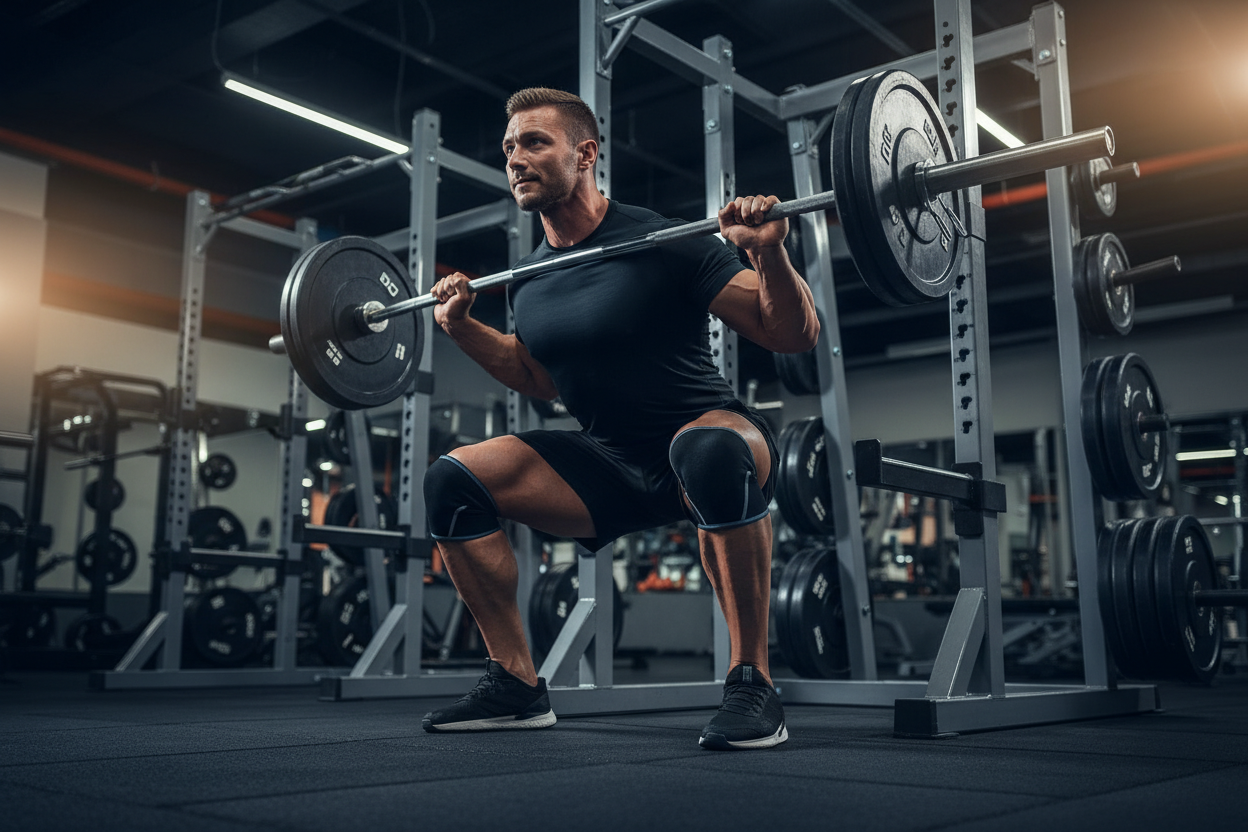
You cannot talk about leg development without knee flexion. Whether you choose a high-bar back squat, a front squat, or even a heavy hack squat machine, the goal is the same: maximal load on the quadriceps and glutes through a full range of motion.
The Execution
Focus on depth. Stopping halfway down cheats your glutes out of activation. If barbell squats hurt your lower back, swap them for a Hack Squat. The muscle doesn't know if you are holding a bar or pushing a sled; it only knows tension.
2. The Hinge Pattern (The Posterior Builder)
Why It Is Essential
While squats hit the quads, the hinge builds the "show" muscles of the back of the leg: the hamstrings and glutes. The Romanian Deadlift (RDL) is superior to the conventional deadlift for pure hypertrophy because it maintains constant tension on the hamstrings without the dead stop on the floor.
The Execution
Imagine closing a car door with your butt. Keep your knees soft but fixed. Push your hips back until you feel a painful stretch in your hamstrings, then drive the hips forward. Do not pull with your back.
3. The Unilateral Movement (The Equalizer)
Why It Is Essential
Bilateral movements (using both legs) can mask imbalances. If your right quad is stronger, it will take over during a heavy squat. Unilateral work ensures both legs carry their own weight.
The Variation to Choose
The Bulgarian Split Squat is arguably the most effective accessory movement in existence. It places the glute under immense stretch and load while removing spinal compression. Yes, they are miserable to perform, but that is exactly why they work.
My Training Log: Real Talk
Let me step out of the "coach" role for a second and tell you about my actual experience switching to this minimalist list. When I first dropped the leg extensions and curl machines, I felt like I wasn't doing enough. I was used to leaving the gym with a 'pump' that felt like my skin was splitting.
But the first time I truly pushed a heavy RDL session to failure, the feeling was different. It wasn't just a pump; it was a deep, vibrating fatigue in the muscle belly. I specifically remember the grip on the bar starting to slip because my calluses were tearing before my hamstrings gave out—that's a sign you need straps, by the way. Don't let your grip limit your leg growth.
Also, regarding Bulgarian Split Squats: there is a very specific, awkward wobble that happens when you are three reps into a heavy set and your back foot slips slightly on the bench because the vinyl is slick with sweat. That moment of panic forces your lead glute to stabilize harder than any machine ever could. It’s unpolished and uncomfortable, but that specific instability is where the athletic growth happens.
Conclusion
You do not need a complex spreadsheet to grow big legs. You need to master the squat, the hinge, and the lunge, and you need to add weight to the bar over time. Strip away the noise, focus on these fundamental patterns, and the results will speak for themselves.
Frequently Asked Questions
Can I really build big legs with just 3 or 4 exercises?
Absolutely. Hypertrophy is driven by mechanical tension and progressive overload. If you are adding weight to your squats and RDLs consistently, your legs will grow. Most bodybuilders built their foundation on these exact movements before adding isolation work.
What about calves?
While compound lifts stimulate the calves isometrically, they usually require direct work for maximum growth. A simple standing calf raise performed with a deep stretch and a slow tempo is usually sufficient. You don't need multiple angles for calves; you just need painful consistency.
How often should I perform this routine?
For most natural lifters, hitting these movements twice a week is the sweet spot. This allows you to split the volume (e.g., Squat focus on Monday, Hinge focus on Thursday) so you can attack each session with maximum freshness.