The Only Home Gym Equipment You Actually Need (No Fluff, Just Results)
Building a home gym doesn't require a second mortgage or converting your entire garage into a commercial fitness center. After setting up my own workout space three years ago and helping dozens of friends create theirs, I've learned that most people overthink this process. The essentials home gym setup can fit in a corner of your bedroom and cost less than six months of gym membership fees.
What you actually need depends on your fitness goals, available space, and budget. But there's a core set of equipment that works for nearly everyone, whether you're just starting out or you've been training for years. Let me walk you through the home gym necessities that deliver real results without cluttering your space or emptying your wallet.
The Foundation: What Every Home Gym Needs
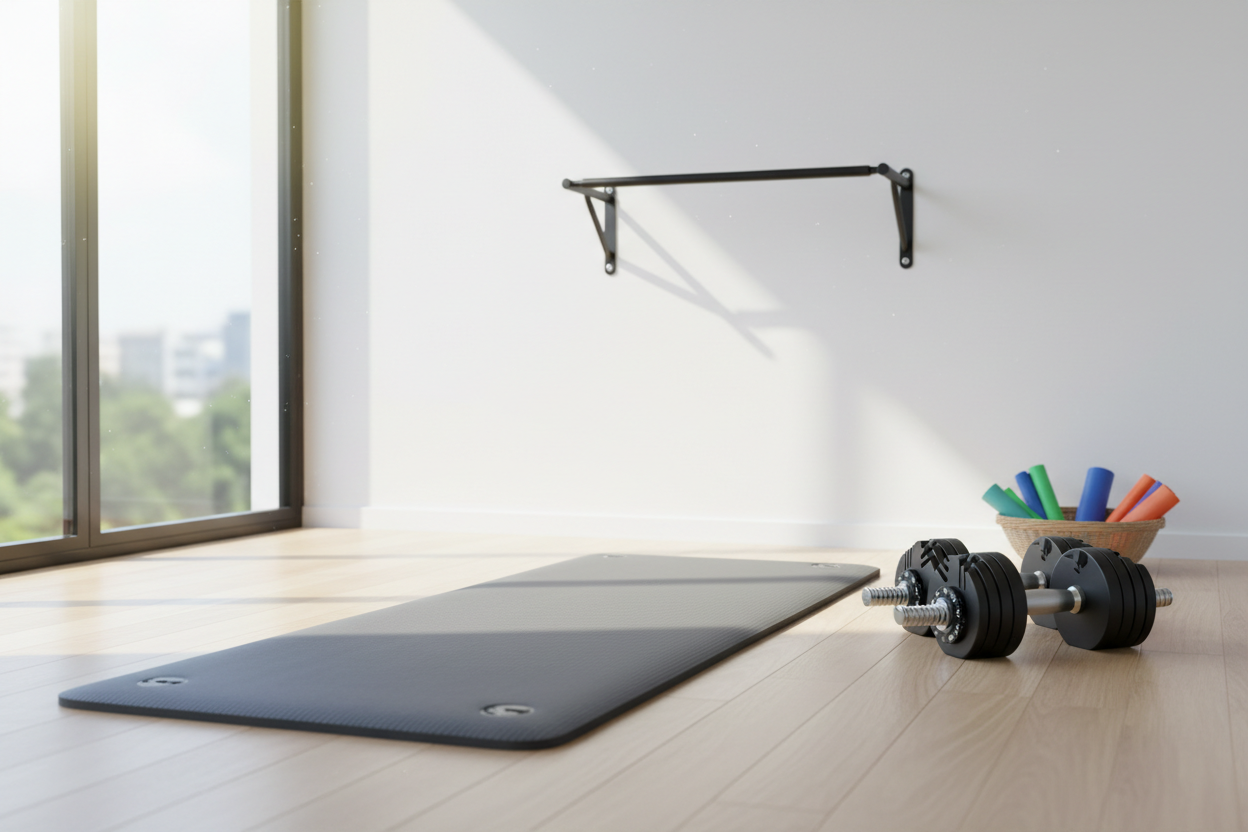
Your essential home workout equipment starts with just a few key pieces. A quality exercise mat is non-negotiable—it protects your floors, cushions your joints, and defines your workout space. Look for something at least 6mm thick that won't slide around during planks or burpees.
Resistance bands belong on every home exercise equipment list because they're incredibly versatile and take up almost no space. Get a set with varying resistance levels (light, medium, heavy) so you can progress over time and target different muscle groups effectively. I keep mine hanging on a hook behind my door, and they've replaced at least five different machines I thought I needed.
Adjustable dumbbells are the workhorse of any at home gym necessities collection. They're more expensive upfront than fixed-weight dumbbells, but they replace an entire rack of weights. A pair that adjusts from 5 to 50 pounds covers most people's needs for years. If budget is tight, start with one or two pairs of fixed weights in the 10-20 pound range and add more as needed.
Building Your Complete Setup
A pull-up bar transforms any doorway into a upper body training station. The home workout essentials wouldn't be complete without one because pull-ups, chin-ups, and hanging leg raises are among the most effective bodyweight exercises you can do. Modern designs install and remove in seconds without damaging door frames.
Kettlebells deserve a spot on your home gym essentials list for their unique ability to combine strength and cardio training. One 25-35 pound kettlebell (depending on your strength level) opens up hundreds of exercise variations. Swings, Turkish get-ups, goblet squats, and snatches all build functional strength that translates to real-world movement.
Here's something most at home workout essentials guides miss: a simple foam roller. Recovery equipment matters just as much as training equipment. Spending ten minutes rolling out tight muscles prevents injuries and improves your performance in every workout. I learned this the hard way after dealing with persistent hip pain that disappeared within two weeks of regular foam rolling.
The Smart Additions
Once you've covered the basics, a few strategic additions can dramatically expand your training options. A stability ball adds core training variety and can double as a bench for dumbbell work. At around $25, it's one of the most cost-effective pieces of essential at home workout equipment you can buy.
Jump rope deserves consideration if cardio is part of your routine. It's brutally effective, costs less than $15, and stores in a drawer. Ten minutes of jump rope work burns more calories than most people achieve in 30 minutes on a treadmill, and it builds coordination and foot speed that other cardio equipment doesn't touch.
A suspension trainer (like TRX or similar systems) anchors to your door or ceiling and enables hundreds of bodyweight exercises with variable difficulty. It's particularly valuable if you travel frequently because most models pack down to the size of a water bottle. This belongs on any comprehensive home gym checklist for people who want maximum versatility from minimal equipment.
Creating Your Personal Checklist
Your at home workout equipment essentials depend on how you actually train, not on what fitness influencers say you need. Someone focused on yoga and bodyweight training has different requirements than someone building muscle or training for a marathon.
Start by honestly assessing your workout habits. What exercises do you actually do consistently? What equipment would remove the biggest obstacles to training regularly? For me, the turning point was realizing I needed a dedicated space more than I needed more equipment. Clearing out a 6x8 foot area and keeping my gear organized there made me five times more consistent than when everything was scattered around.
The home gym essentials equipment for strength training centers on progressive overload—you need ways to gradually increase resistance. That means adjustable weights, resistance bands with multiple levels, or a suspension trainer where you can change leverage angles. Without progression, you'll plateau fast.
Space-Saving Strategies
Limited space doesn't mean limited options. Wall-mounted storage racks keep resistance bands, jump ropes, and small weights organized and accessible. Collapsible equipment like foldable benches or door-mounted pull-up bars appear when you need them and disappear when you don't.
Under-bed storage works perfectly for yoga mats, foam rollers, and resistance bands. I use a flat plastic bin that slides under my bed and holds about 80% of my equipment. It takes me less than a minute to pull everything out and set up my workout space.
The Complete List
When people ask me for a definitive workout room essentials list, here's what I recommend for a well-rounded home gym that handles strength, cardio, flexibility, and recovery:
Exercise mat (6mm or thicker)
Resistance band set (light, medium, heavy)
Adjustable dumbbells or fixed weight pairs
Pull-up bar
Kettlebell (one medium weight)
Foam roller
Stability ball
Jump rope
Suspension trainer (optional but valuable)
This setup costs between $300-600 depending on the quality level you choose, fits in a closet, and supports virtually any training program. You can add specialty items later based on your evolving needs, but this foundation keeps most people progressing for years.
The biggest mistake I see people make is buying equipment before establishing a consistent routine. Start with the absolute basics—mat, bands, and one set of dumbbells. Use them regularly for a month. Then add pieces based on what you find yourself wishing you had during workouts. This approach prevents the garage full of unused equipment that plagues so many home gym attempts.
Quality matters more than quantity. One excellent kettlebell beats five cheap ones that feel awkward and break down. Read reviews, test equipment when possible, and buy the best you can afford for items you'll use frequently. Budget options work fine for things you'll use occasionally, but your core equipment should last a decade or more with proper care.
FAQ
How much space do I really need for a functional home gym?
A 6x8 foot area is enough for most home workout setups. This gives you room to lie down fully extended, do jumping exercises, and store essential equipment. Many people successfully train in even smaller spaces by using foldable or wall-mounted equipment and clearing floor space before each workout.
Should I buy everything at once or build my gym gradually?
Start with just a mat, resistance bands, and dumbbells. Use these consistently for 3-4 weeks to establish your routine and identify what you're missing. Then add one piece of equipment every few weeks based on your actual training needs, not what looks cool or what others recommend.
What's the most versatile single piece of home gym equipment?
Adjustable dumbbells offer the most exercise variety and progression potential in a single purchase. They enable hundreds of movements for every muscle group and scale with your strength gains over time. If you could only own one piece of equipment, this would be it.