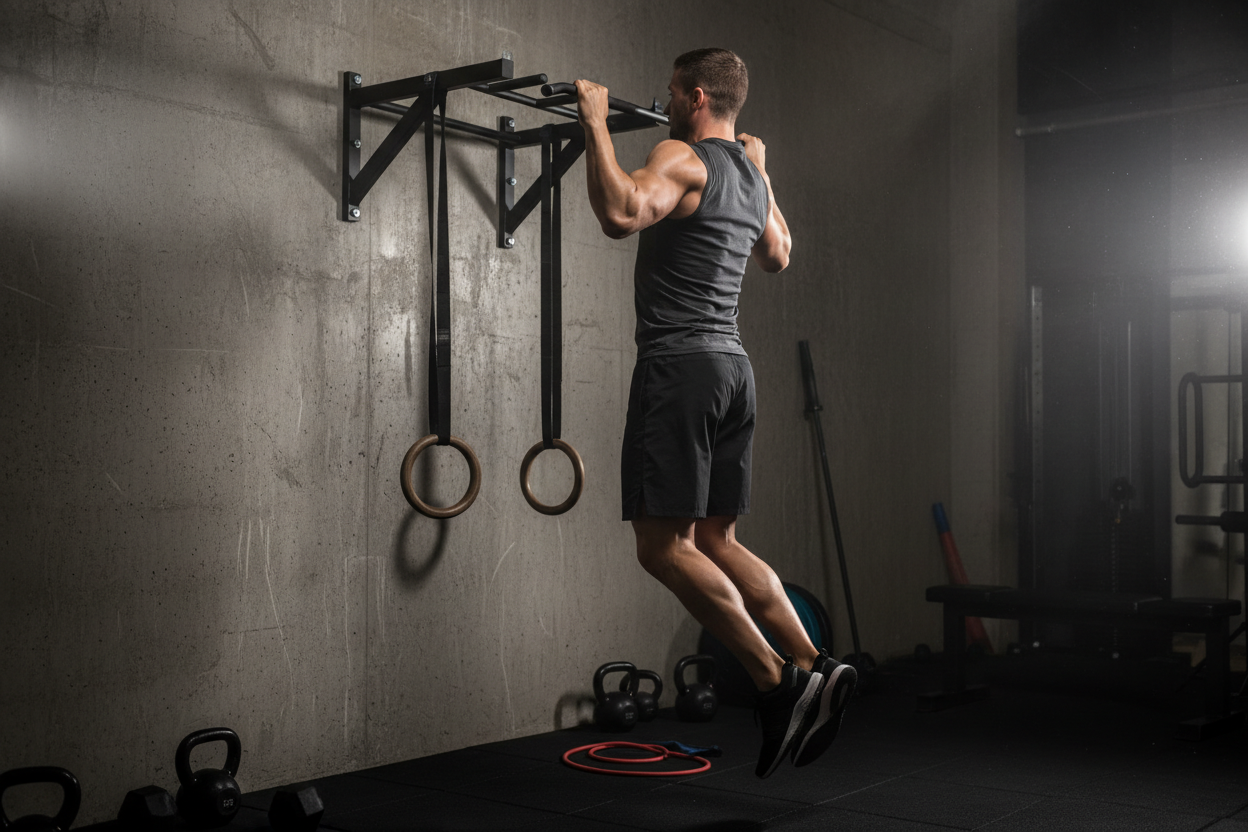
The Only Equipment for Pull Ups You Actually Need to Build Muscle
The pull-up is the absolute king of upper-body development. It requires no subscription and minimal space, yet it builds a V-taper faster than almost any machine. However, the market is flooded with flimsy bars and over-engineered gadgets that promise the world but deliver shaky mechanics. Finding reliable equipment for pull ups shouldn't be a workout in itself.
Whether you are renting an apartment with fragile doorframes or outfitting a garage gym, the gear you choose dictates your safety and your gains. Let's cut through the noise and look at what actually works for vertical pulling mechanics.
Quick Summary: Choosing Your Gear
- Doorway Leverage Bars: Best for renters and limited space; requires a sturdy door trim.
- Wall-Mounted Bars: The gold standard for stability and weighted reps; requires drilling into studs.
- Power Towers: Ideal for those who can't drill holes but have floor space; offers versatility (dips/leg raises).
- Gymnastic Rings: Superior for joint health and stabilizer muscle recruitment; requires a high anchor point.
- Assisted Pull-Up Machines: Best for beginners building initial strength before moving to free-hanging variations.
The Hierarchy of Pull Up Fitness Equipment
Not all bars are created equal. When evaluating pull up fitness equipment, stability is the primary metric. If the bar shakes, your nervous system limits force production to protect you. This kills your strength gains.
1. The Doorway Leverage Bar (The Renter's Choice)
This is the most common pull-up device for home use. It uses leverage to clamp onto the doorframe without screws. It is excellent for convenience, but it has limitations.
You cannot perform explosive movements like kipping or muscle-ups on these. They are strictly for controlled, strict rep work. Ensure your door trim is solid wood, not composite, or you risk cracking the molding.
2. Wall and Ceiling Mounted Bars
If you own your home, this is the superior choice. Pull ups gym equipment found in commercial centers is always fixed to a rigid structure. Replicating this at home allows for weighted vest work without fear of the equipment detaching.
Look for a bar with a distance of at least 14 to 20 inches from the wall. This clearance prevents your feet from dragging against the drywall during hollow-body holds.
3. The Power Tower
For those who cannot drill into walls, the power tower is a standalone unit. It is a staple piece of exercise equipment for pull ups because it usually includes a dip station.
The downside is the footprint. These take up significant floor space. Additionally, cheaper models tend to wobble. If you go this route, look for a base with a wide footprint and heavy-gauge steel.
Essential Accessories for Progression
Once you have the bar, you might need secondary workout equipment pull up tools to modify the difficulty.
Resistance Bands
Forget the expensive assisted pull-up machines found in gyms. A simple heavy-duty loop band choked around the bar provides the same assistance curve. As you get stronger, you switch to a thinner band.
Dip Belts
Once you can do 10 strict reps, bodyweight becomes too easy. A dip belt allows you to hang plates between your legs. This is the secret to massive back growth that calisthenics purists often ignore.
Common Mistakes When Buying Chin Ups Equipment
Many people confuse chin-up bars with pull-up bars. While most chin ups equipment can handle pull-ups, pay attention to grip options.
Avoid bars with excessive foam padding. While it feels nice initially, the foam compresses and becomes slippery with sweat, ruining your grip security. Knurled metal or powder-coated steel provides the tactile feedback necessary for a heavy lift.
Also, be wary of "telescopic" doorway bars that rely solely on friction (twisting to expand). Unless they have screw-in cups, these are notorious for slipping mid-rep.
My Personal Experience with equipment for pull ups
I have tested nearly every type of bar on the market, and I want to share a specific reality about the "doorway leverage bars" that product descriptions rarely mention.
Years ago, I bought a standard leverage bar for my rental apartment. It held my weight fine, but the black foam padding on the lateral handles chemically reacted with the white paint on my doorframe. It left a sticky, black residue that was impossible to scrub off without stripping the paint entirely. I lost a chunk of my security deposit because of it.
Furthermore, I eventually upgraded to a wall-mounted rig in my garage. The difference in "neural drive" was immediate. When I used the doorway bar, I subconsciously pulled slower because I felt the slight flex of the door trim. Once I bolted a rig into the studs, that hesitation vanished. I could pull with 100% explosive force. If you are serious about numbers, the stability of the mount matters just as much as the bar itself.
Conclusion
Building a strong back doesn't require a commercial facility. It requires the right equipment for pull ups that matches your living situation and training goals. Whether you choose a simple doorway bar or a full rig, prioritize stability over fancy features. Secure your gear, chalk up, and start pulling.
Frequently Asked Questions
What is the best pull up equipment for heavy people?
For individuals over 220lbs, a wall-mounted bar screwed into studs or a ceiling joist mount is safest. Friction-based doorway bars can slip, and cheap power towers may wobble. Always check the weight capacity rating and subtract 20% for a safety margin.
Can I do pull ups without a bar?
Yes, but it is difficult. You can use pull up exercise equipment alternatives like gymnastic rings thrown over a sturdy tree branch or exposed beam. You can also do bodyweight rows using a sturdy table, though this changes the angle of the pull.
Is a curved or straight bar better for pull ups?
A straight bar is generally better for strict form and developing grip strength. Curved or "ergonomic" bars can reduce wrist strain for chin ups equipment, but they can sometimes force you into a grip width that isn't optimal for your specific shoulder mechanics.