The Only 7 Pieces of Equipment You Actually Need for Your Home Gym
Building a home gym doesn't require taking out a second mortgage or converting your entire garage into a commercial fitness center. After transforming my spare bedroom into a functional workout space three years ago, I've learned that the difference between home gym essentials and expensive dust collectors comes down to versatility and consistency of use.
The fundamental question of what equipment should I buy for a home gym has a surprisingly straightforward answer: focus on tools that support multiple movement patterns and match your actual workout habits, not your aspirational ones. Most people waste money on specialized machines that seemed essential in the store but end up as expensive coat racks.
Understanding Your Home Gym Needs
Before rushing to buy equipment, consider your training goals and available space. A powerlifter's essential home gym equipment looks vastly different from what a yoga enthusiast requires. The beauty of home training lies in customization, but that same freedom can lead to poor purchasing decisions if you don't have a clear plan.
Your home gym necessary equipment should support progressive overload—the ability to gradually increase difficulty over time. This principle applies whether you're building strength, endurance, or mobility. Equipment that can't grow with you becomes obsolete quickly.
The Non-Negotiable Foundation
Adjustable dumbbells rank as the single most versatile piece of equipment you can own. They support hundreds of exercises, require minimal space, and scale from beginner to advanced training. I started with a pair that adjusts from 5 to 50 pounds, which served me well for two years before I needed heavier options. Unlike fixed-weight dumbbells that require an entire rack, adjustable sets give you a complete weight range in the footprint of a small suitcase.
A quality exercise mat protects your floors, cushions your joints, and defines your workout space psychologically. This might seem like a minor consideration, but having a designated area creates a mental trigger that helps with consistency. Look for mats at least 6mm thick if you'll be doing floor exercises regularly.
The Power of Resistance Bands
Resistance bands often get dismissed as beginner tools, but they're actually sophisticated training implements that provide variable resistance throughout a movement's range of motion. A set with different resistance levels costs less than a single restaurant meal but unlocks countless exercise variations. They're particularly valuable for warming up, rehabilitation work, and adding accommodating resistance to other exercises.
I keep mine looped around my squat rack permanently because I use them in nearly every session—for face pulls, banded squats, and mobility work. Their portability also means your home gym travels with you, which has saved my training routine during countless business trips.
Essential Equipment for a Home Gym That Builds Real Strength
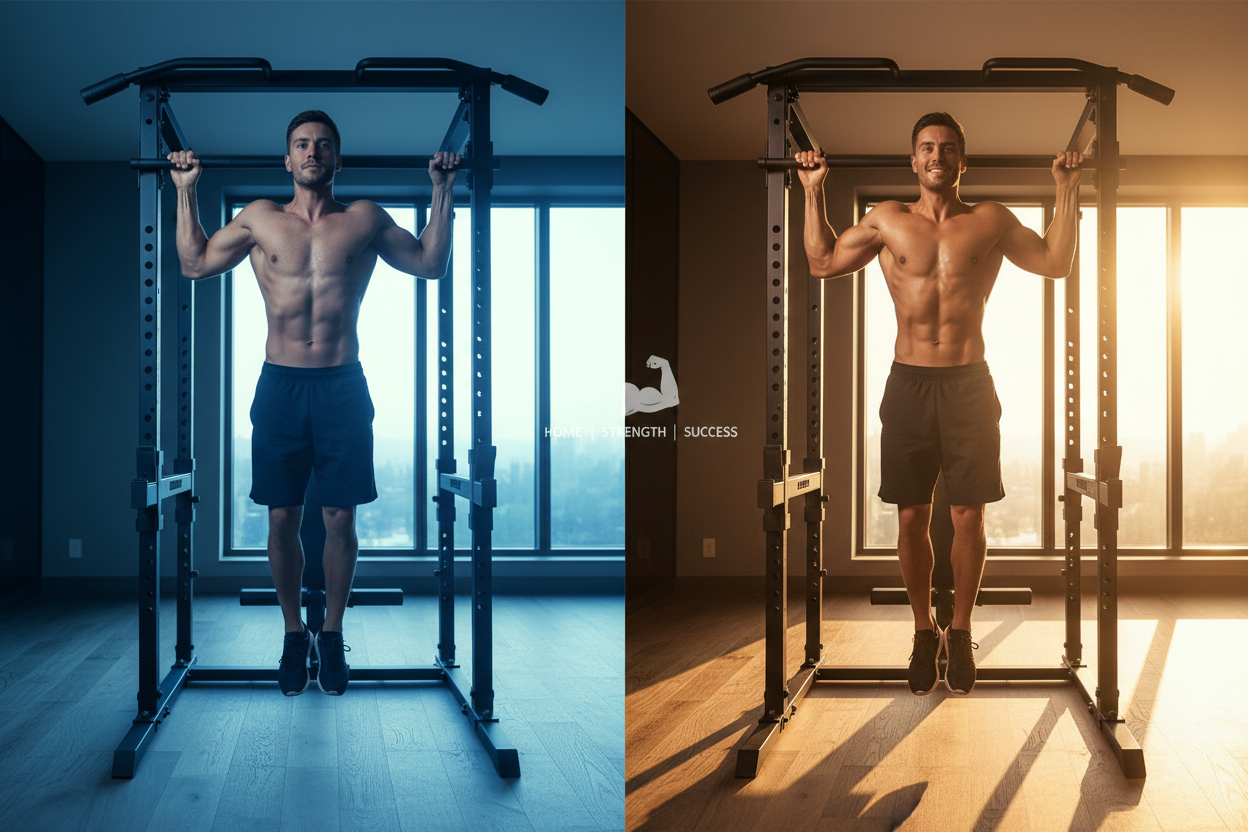
A pull-up bar represents the most space-efficient way to build upper body pulling strength. Doorway-mounted versions work for most people, though free-standing or wall-mounted options provide more exercise variety. The ability to perform pull-ups, chin-ups, and hanging leg raises from a single piece of equipment makes this a cornerstone of any serious home setup.
For lower body development, a kettlebell bridges the gap between dumbbells and barbells beautifully. A single 35-pound kettlebell for men or 20-pound for women enables goblet squats, swings, Turkish get-ups, and dozens of other movements. The unique weight distribution challenges your stability in ways that dumbbells don't, developing functional strength that transfers to daily activities.
When to Add a Barbell Setup
If you have space and budget, a barbell with plates and a squat rack forms the holy trinity of strength training. This combination supports the big compound lifts—squats, deadlifts, bench press, and overhead press—that build strength most efficiently. However, this setup requires significant space, investment, and commitment to barbell training specifically.
I waited eight months before adding a barbell to my home gym, and that patience paid off. By then, I knew my training preferences and had developed the consistency to justify the investment. Many people buy a full power rack as their first purchase, then realize they prefer bodyweight and dumbbell training.
The Overlooked Home Gym Must Have Items
A foam roller costs less than a movie ticket but provides daily value for recovery and mobility. Spending five minutes rolling before and after workouts reduces soreness, improves flexibility, and helps prevent injuries. This falls into the category of unsexy equipment that makes everything else work better.
Similarly, a simple timer or interval app transforms any equipment into a high-intensity training tool. I use a basic interval timer for EMOM (every minute on the minute) workouts, Tabata sessions, and rest period management. The structure it provides increases workout efficiency dramatically.
What You Can Skip (At Least Initially)
Treadmills and stationary bikes dominate home gym wishlists, but they're often poor investments. They're expensive, space-consuming, and replicate activities you can do outside for free. Unless weather or safety concerns make outdoor activity impossible, allocate your budget elsewhere.
Specialized machines like leg extension or cable crossover stations fall into the same category. They do one thing well but cost hundreds or thousands of dollars. That money buys a lot of versatile equipment that supports varied training.
Ab-specific devices rarely justify their cost. Your core gets worked during compound movements, and floor exercises with a mat provide all the targeted ab training most people need. The ab roller is an exception—it's inexpensive and brutally effective—but most other ab gadgets gather dust.
Building Your Home Gym Gradually
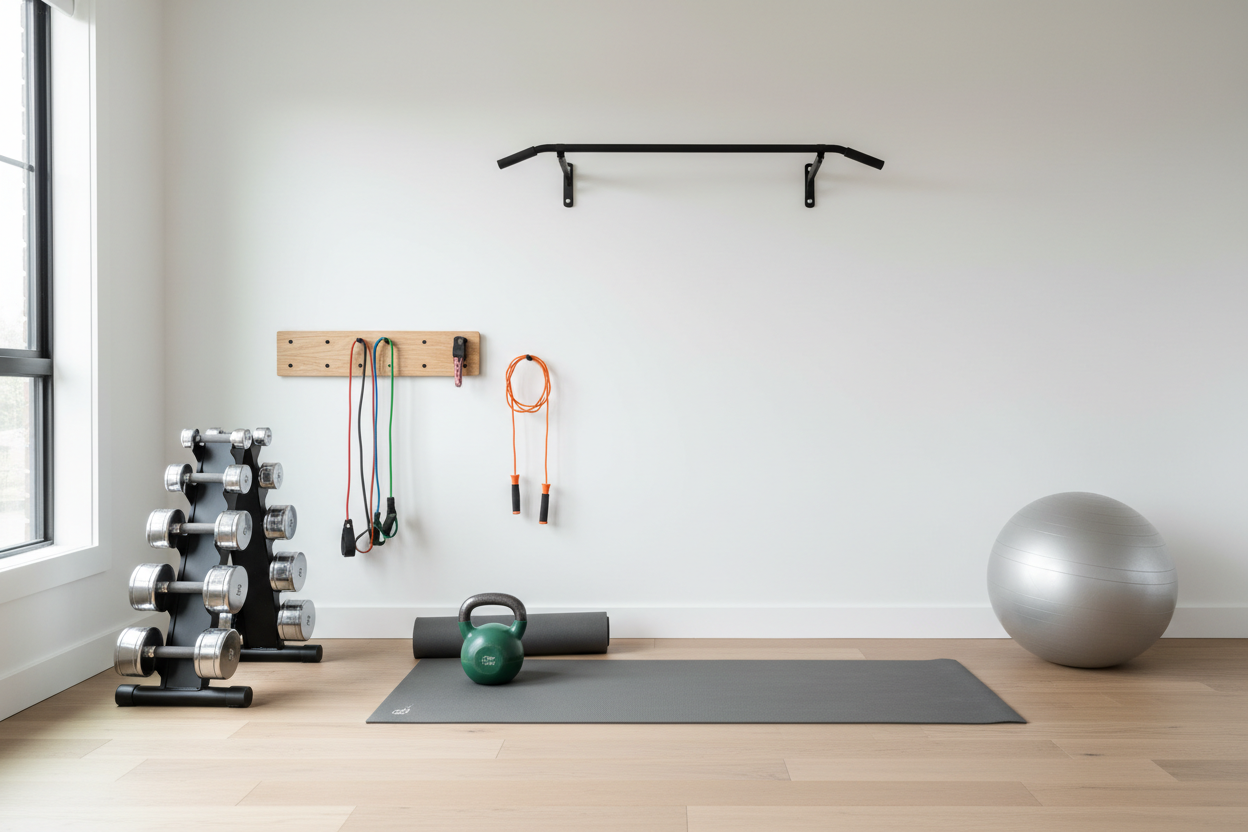
Start with adjustable dumbbells, a mat, and resistance bands. This trio costs a few hundred dollars and supports complete full-body workouts indefinitely. Add a pull-up bar and kettlebell next, then reassess based on your actual usage patterns and evolving goals.
This phased approach prevents buyer's remorse and helps you understand what you'll actually use. My current home gym took two years to assemble, with each addition made deliberately based on identified gaps in my training. The result is a curated collection where every piece earns its floor space.
The essential equipment for a home gym ultimately depends on individual goals, but versatility, progressive overload capability, and space efficiency should guide every purchase. Equipment that checks these boxes will serve you for years, while impulse purchases based on marketing hype become expensive lessons in what not to buy.
FAQ
How much should I budget for basic home gym essentials?
A functional starter setup with adjustable dumbbells, resistance bands, a quality mat, and a pull-up bar costs between $300-500. This provides everything needed for comprehensive training. You can spend less with basic fixed dumbbells or more for premium adjustable sets, but this range covers quality equipment that lasts.
Do I need cardio equipment for a complete home gym?
Not necessarily. Bodyweight circuits, jump rope, or outdoor activities provide excellent cardio without expensive machines. If you live in an area with harsh weather or have specific training needs, a rowing machine offers the best value—it works the full body and takes less space than treadmills or bikes.
What's the biggest mistake people make when building a home gym?
Buying too much equipment too quickly based on motivation rather than proven habits. Start minimal, establish consistent training patterns, then add equipment to address specific limitations you've actually experienced. This approach saves money and ensures every purchase gets used regularly.