The Only 4 Senior Upper Body Exercises You Need for Daily Life
I remember watching my dad struggle with a standard chest press machine at his local Y. The rigid, fixed path of the handles forced his shoulders into a position that looked like a medieval torture rack. He was trying to stay active, but the gear was literally grinding his joints down. If you are hunting for senior upper body exercises, you have to stop trying to move like a 22-year-old gym rat. Your anatomy has changed, and your training needs to change with it.
- Fixed machines are often the enemy of arthritic shoulders; free weights are your friends.
- Shortening your range of motion by just 10% can eliminate 90% of joint inflammation.
- Floor-based movements provide a physical safety 'stop' that prevents overextension.
- Grip strength is a primary indicator of longevity—don't ignore the carry.
Why Standard Gym Machines Wreck Older Shoulders
Most commercial gym machines are designed for a 'standard' body type that doesn't account for decades of wear and tear. These machines force you into a fixed arc. If your shoulder socket doesn't perfectly align with that steel pivot point, your tendons take the hit. It’s why so many people end up with 'weightlifter’s shoulder' after a few months of machine use.
Free weights, like dumbbells or kettlebells, allow for micro-adjustments. Your wrist can rotate, and your elbow can tuck in naturally. This is especially true for dumbbell chest workouts designed for women and men who need a neutral grip to keep the humerus from pinching the rotator cuff. Free weights require more stability, but they don't force you into a cage.
The 'Pain-Free Range' Rule for Aging Joints
We’ve been told for years that 'full range of motion' is the gold standard. For a senior lifter, that’s often a recipe for a cortisone shot. I tell my clients to find their 'Pain-Free Range.' This means stopping a press an inch or two before the weight touches your chest, or stopping a row just before your elbow travels behind your torso.
You aren't 'cheating' the rep. You’re staying in the zone where the muscle does the work but the joint remains stable. Shortening the stroke keeps constant tension on the muscle fibers, which is what actually builds upper body strength for seniors. You don't need to touch the bar to your chest to get a massive benefit; you just need to move a challenging weight through the space your body allows.
The 4 Movements Worth Keeping in Your Routine
Forget the 15 different isolation exercises. You need movements that help you put a heavy suitcase in an overhead bin or push yourself up if you ever take a spill. These four upper body exercises for older adults are the high-ROI moves that actually translate to real life.
Dead-Stop Floor Presses
The bench press is the most common culprit for shoulder impingement. By moving the exercise to the floor, you create a physical barrier. Your upper arms hit the carpet before your shoulders can dip into that dangerous 'deep stretch' territory. This makes it one of the safest chest exercises for older adults. I’ve seen lifters with chronic tears move 50-lb dumbbells on the floor with zero pain because the floor acts as a natural spotter.
Neutral-Grip Isometric Rows
Standard rows with a palms-down grip can flare up 'tennis elbow' in a heartbeat. Switch to a neutral grip—palms facing each other. This keeps the elbow in a more natural alignment. To build that crucial postural strength, don't just pull and drop. Hold the squeeze at the top for two seconds. This 'isometric' hold forces the muscles between your shoulder blades to wake up, fighting the 'slump' that often comes with age.
The Supported Overhead Hold
Dynamic overhead pressing—pushing a weight up and down—is often too much for upper body exercises for seniors with limited mobility. Instead, just hold the weight up there. Use two hands to get a moderate weight overhead, then just stand tall and hold it for 20-30 seconds. This builds massive stability in the rotator cuff and improves your ability to reach for items on high shelves without the grinding friction of a repetitive press.
Heavy Suitcase Carries
This is the king of upper extremity exercises for seniors. Pick up the heaviest dumbbell you can safely hold in one hand. Now, walk. Don't let the weight pull you to the side; stay perfectly upright. This builds grip strength, which is a literal marker for heart health, and strengthens the traps and obliques. It’s the most functional way to train your 'carrying muscles' for groceries or luggage.
How to Set Up Your Home Training Area Safely
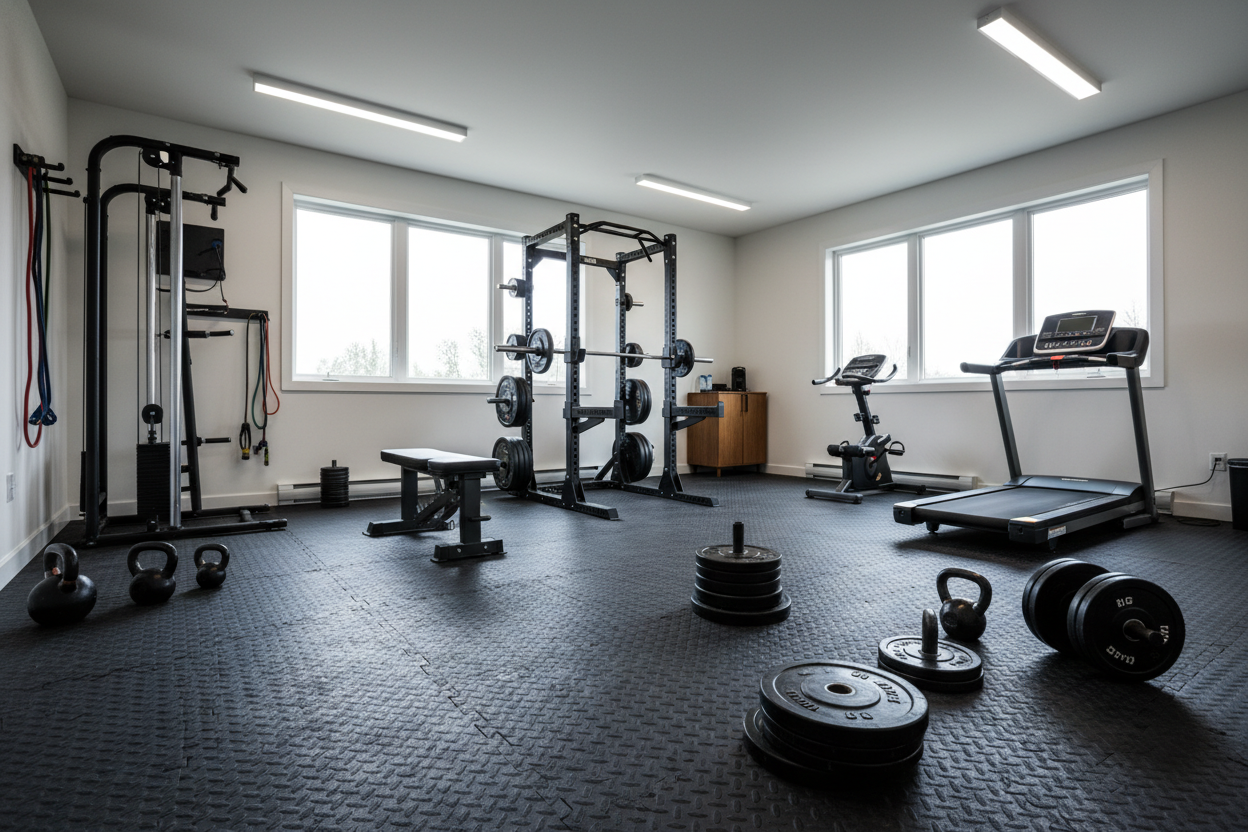
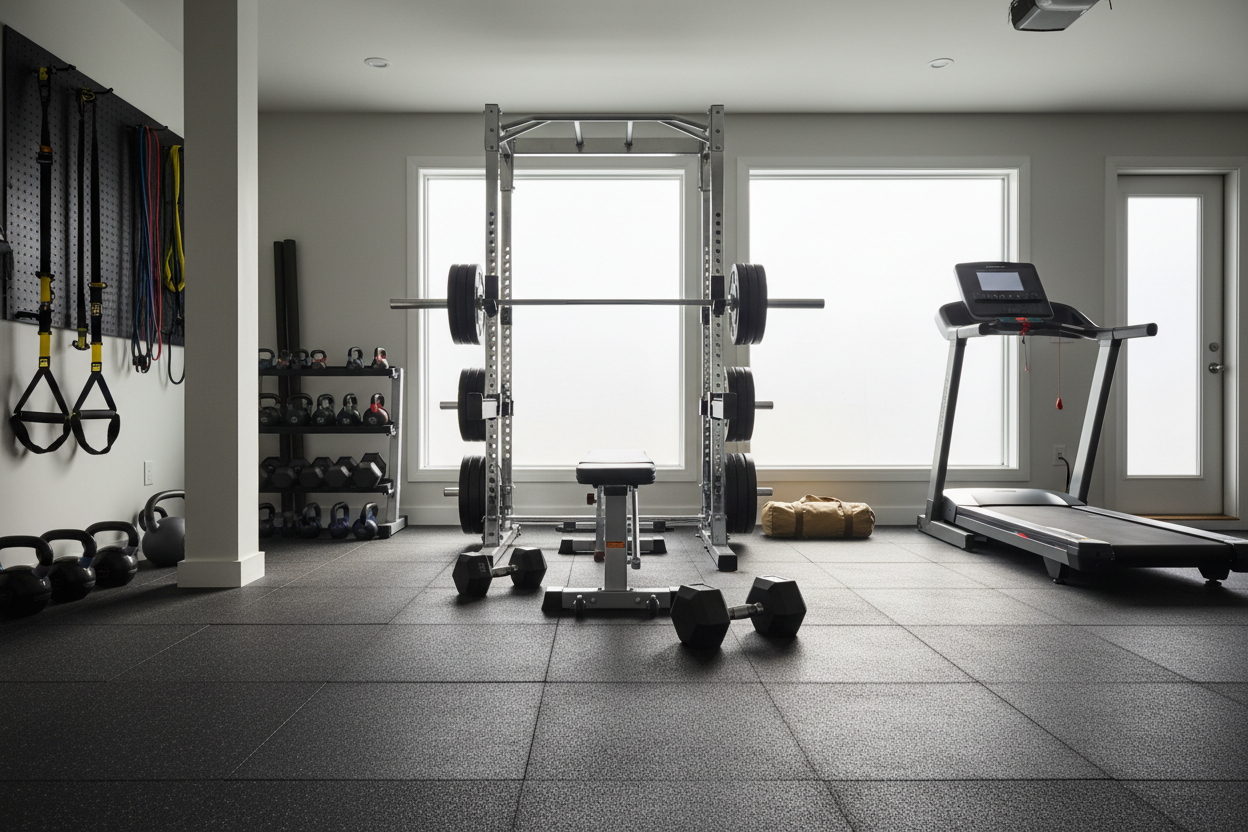
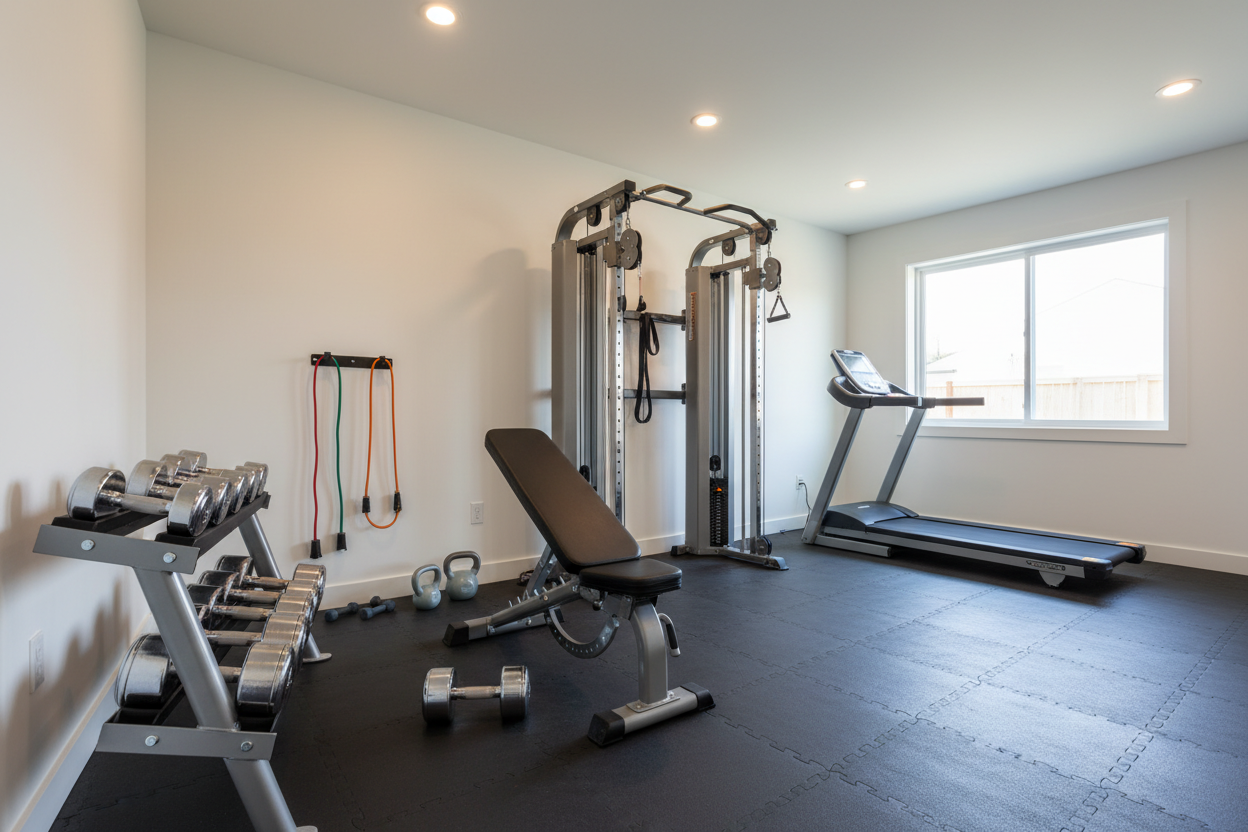
I’ve seen too many people try to do upper body exercises for seniors at home on a slippery rug or bare concrete. That’s a fall waiting to happen. You need a high-traction surface. I always recommend a dedicated gym flooring for home workout setup. A 6x8 ft mat provides enough space to move without the edges curling up.
Lighting is also non-negotiable. Shadows can hide trip hazards like stray dumbbells. Make sure your space is bright and clear of clutter. If you're training in a garage, check your clearance—you don't want to hit a low-hanging garage door opener during your overhead holds. A simple, flat bench and a set of adjustable dumbbells are all you really need to get started.
Programming Your Weekly Strength Routine
Don't fall for the myth that you should only use 2-lb plastic dumbbells. To build upper body strength training for seniors, you need a load that actually challenges you. If you can do 20 reps and you aren't breathing hard, it’s a cardio session, not a strength session. Aim for the 8-12 rep range where the last two reps feel difficult but manageable.
A 3-day weekly split is the sweet spot for recovery. Monday, Wednesday, and Friday works well. You can easily integrate these moves into a larger list of exercises for a full body workout. Start with the heavy carries while you're fresh, move to the floor press, and finish with the rows. Consistency beats intensity every single time.
FAQ
Is it safe to lift weights if I have arthritis?
Yes, and it's actually recommended. Strengthening the muscles around an arthritic joint provides better support and can reduce pain, provided you stay in that 'pain-free range' we discussed.
Can I use resistance bands instead of weights?
Bands are great for warm-ups, but they don't provide the same constant mechanical tension as iron. For bone density and real-world strength, you eventually want to move toward dumbbells or kettlebells.
What if I can't get down on the floor for the press?
You can perform the 'floor press' on a sturdy bed or a very firm sofa, though the lack of a hard surface makes it slightly less stable. Alternatively, use a bench but consciously stop the weights well above your chest.