Your Bench Press Is Ruining Your athletic upper body workout
I spent five years chasing a 315-lb bench press only to realize I could barely throw a football or punch a heavy bag without my shoulder clicking like a Geiger counter. We have all been there—scrolling through equipment sites at midnight, ordering a heavy-duty rack, and thinking that straight-line strength is the only metric that matters. But if you want a true athletic upper body workout, you have to stop acting like your torso is a piece of stationary furniture.
Quick Takeaways
- Bilateral lifts like the bench press are foundations, but they are not the whole house.
- Real power is rotational, moving force from one hip to the opposite shoulder.
- The transverse plane (twisting) is where athletes actually live and win.
- Stable flooring and a solid leg base are non-negotiable for explosive movements.
The Symmetrical Trap Most Home Lifters Fall Into
Most garage gym routines are built on symmetry. You lay on a bench, grab a bar with both hands, and push. It is clean, it is measurable, and it is largely useless for sports. In the real world, you rarely push with both arms simultaneously from a stable, seated position. When you rely solely on bilateral movements, you develop 'blocky' strength. You become a tank that can only drive in a straight line.
I see guys obsessed with building a pro physique with upper body workout machines for home. While those machines are phenomenal for hypertrophy and hitting that 18-inch arm goal, they often strip away the need for stabilization. An upper body workout for athletes needs to force your core to bridge the gap between your limbs. If the machine is doing the balancing for you, your nervous system is essentially taking a nap during your set.
The result of too much symmetrical lifting is 'stiff athlete syndrome.' You look like a Greek god but move like a rusted gate. To fix this, we need to stop thinking about muscles in isolation and start thinking about 'slings' of fascia and muscle that wrap around your body.
Enter the 'Rotational Sling': How Humans Actually Move
Human movement is diagonal. Think about a pitcher throwing a fastball or a quarterback launching a deep ball. The power does not start in the shoulder; it starts in the opposite foot, travels through the hip, crosses the core, and explodes through the hand. This is the 'Rotational Sling' or the Anterior Oblique Sling. If your upper body athlete workout does not respect this diagonal line, you are leaving 40% of your power on the table.
Upper body exercises for athletes should prioritize unilateral (one-arm) movements. When you press a single dumbbell, your opposite side core has to fire like crazy just to keep you from falling off the bench. That is functional stability. I switched my primary chest day from a barbell bench to a heavy single-arm floor press, and my shoulder pain vanished within three weeks. Why? Because my body was finally allowed to rotate naturally through the ribcage rather than being pinned flat against a board.
Why Moving in the Transverse Plane Changes Everything
The transverse plane is the 'forgotten' plane of motion. Most lifters stay in the sagittal plane (up and down, forward and back). But rotation is where the magic happens. When you add a twist to your rows or a pivot to your presses, you engage the internal and external obliques. These muscles act as the 'transmission' for your body, transferring torque from your lower half to your upper half.
Training in this plane builds durable shoulders. A lot of rotator cuff issues stem from a ribcage that is too stiff to rotate. If your ribs do not move, your shoulder blade has to overcompensate. By adding athlete upper body exercises that involve a reach or a twist, you unlock that thoracic mobility and let your scapula glide the way it was designed to.
The 4 Pillars of a True Athlete Upper Body Routine
If I were building a full upper body workout for athletes from scratch in a 10x10 garage, these are the four movements I would anchor the program with. Forget the pec deck; grab a landmine and a med ball.
- The Landmine Rotational Press: This is the king. You stand, pivot your back foot, and press the bar from your shoulder. It is the ultimate expression of hip-to-hand power.
- Alternating Dumbbell Snatches: This builds 'reflexive' strength. You are moving a weight fast from the floor to overhead, forcing your upper body to stabilize a load in a split second.
- Med Ball Rotational Slams: You need to be explosive. Throwing a 10-lb ball into a wall as hard as possible builds 'rate of force development' that a slow bench press never will.
- Single-Arm Cable Rows with Reach: As you pull with the right hand, reach forward with the left. This creates that 'sling' tension across the upper back.
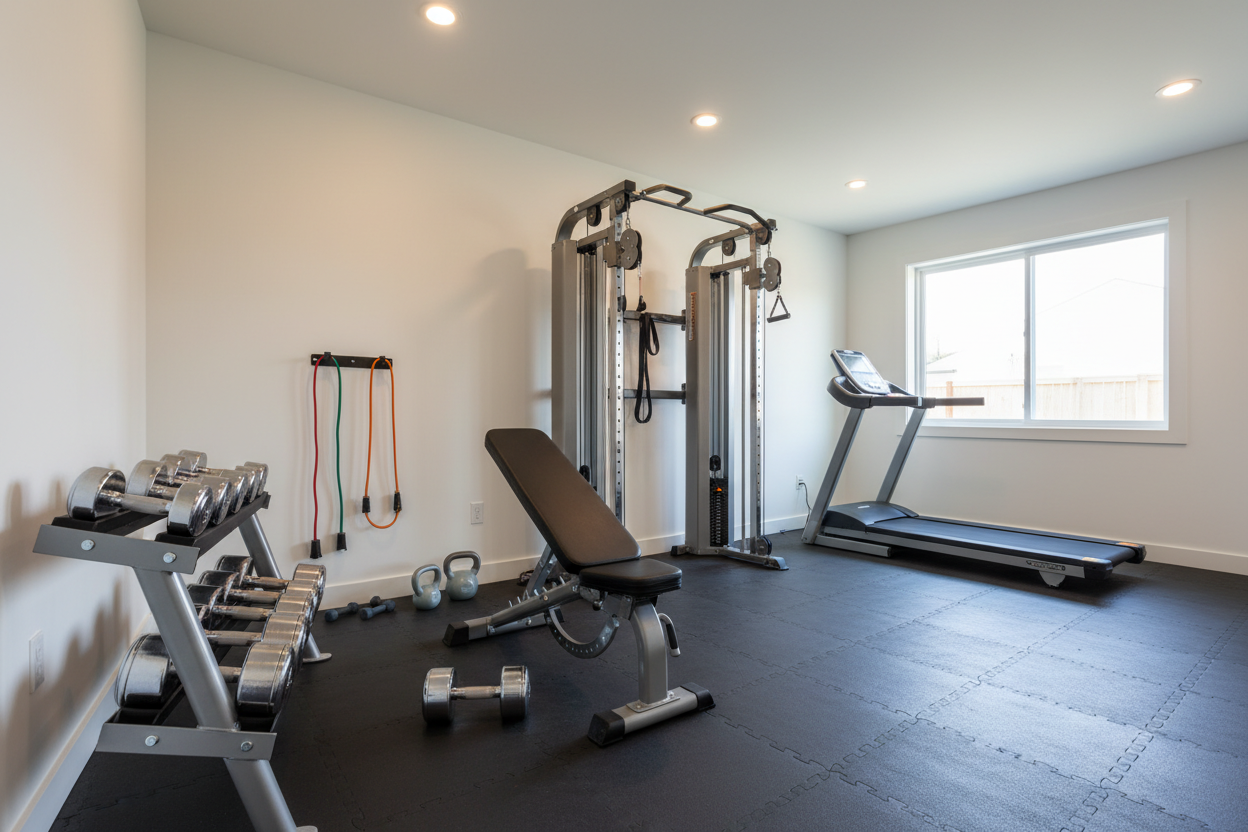
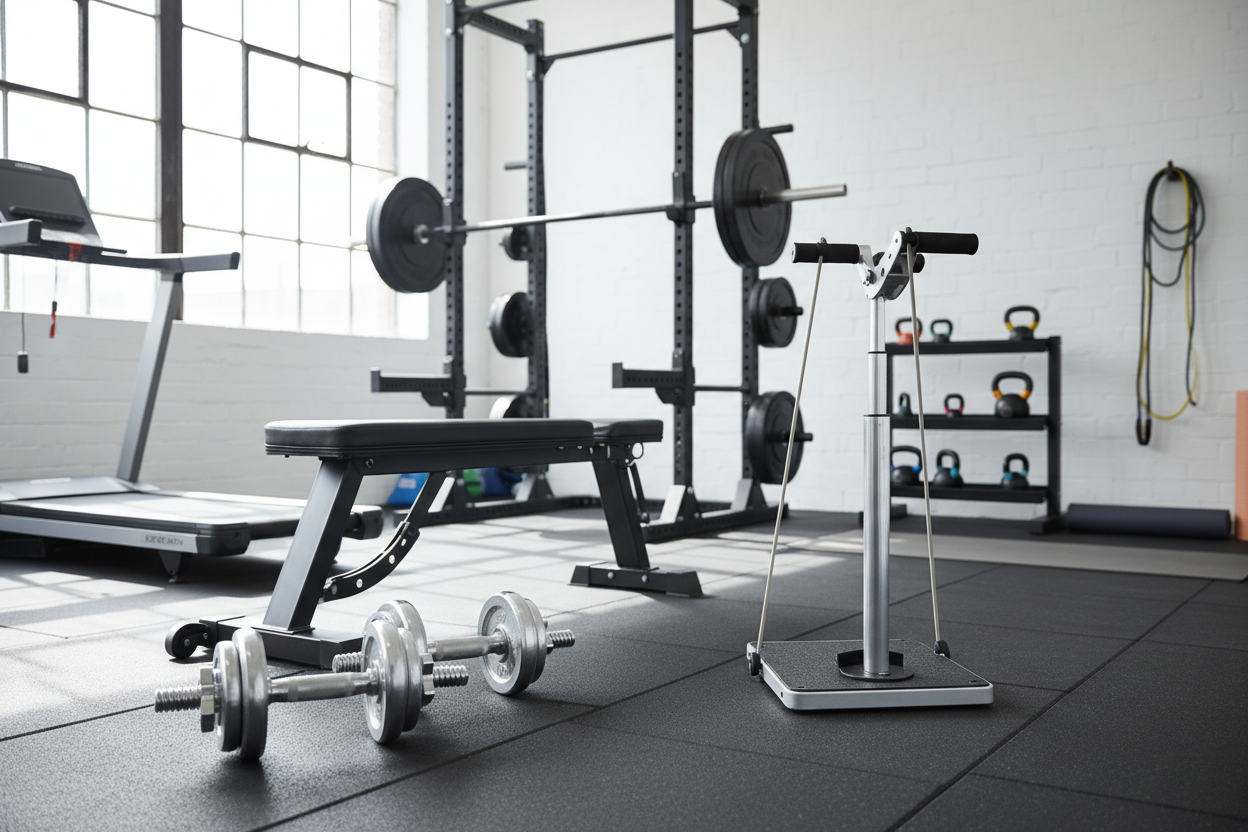
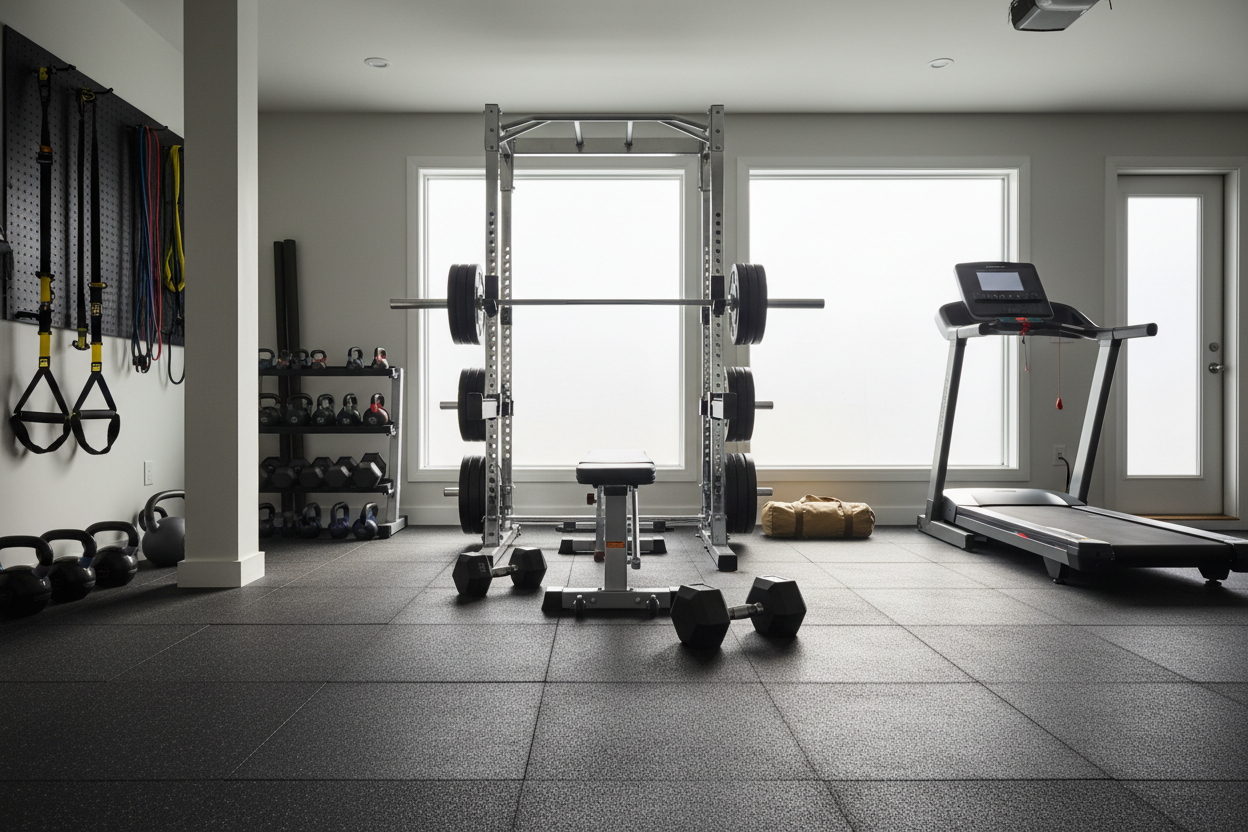
One thing people overlook is the surface they are training on. If you are doing explosive rotational work on a slick concrete floor, you are going to blow an ACL or slide out. I use a high-density 6x8ft exercise mat yoga mat gym flooring for home workout because it provides the grip needed to plant your feet during a 20-lb med ball throw. Without a stable base, your brain will literally 'down-regulate' your power output to keep you from falling.
Don't Forget the Engine: Why Arm Power Starts in the Legs
You cannot fire a cannon from a canoe. The best upper body workouts for athletes are actually full-body sessions in disguise. If your legs are weak, your upper body power has a very low ceiling. You need a foundational level of 'brute' leg strength to act as the anchor for your rotational movements.
I am not saying you need to be a world-class squatter, but using a lower body strength machine to build quad and glute density provides the 'ballast' for your upper body. When I am coaching athletes, we always hit a heavy lower body movement before our upper body athlete workout. It primes the central nervous system and ensures the 'engine' is hot before we start asking the 'wheels' (the arms) to spin fast.
How to Program This Without Losing Your Max Strength
I know what you are thinking: 'I don't want to stop being strong.' You don't have to. The best upper body workouts for athletes blend the two worlds. I like the '80/20' rule. Spend 20% of your session on a big, heavy bilateral lift (like a weighted pull-up or a close-grip bench) to keep your raw force production high. Spend the other 80% on the unilateral, rotational, and explosive work.
Start your session with the explosive stuff—the med ball throws or plyo push-ups—while your nervous system is fresh. Move to your heavy strength lift, then finish with the rotational 'sling' work. This keeps you from getting that 'meathead' stiffness while ensuring you can still hold your own when someone asks what you bench. It is about being a versatile athlete, not just a guy who can move a bar in a straight line.
Personal Experience: The Day I Realized I Was 'Fake Strong'
A few years ago, I was at my peak bench press strength—hitting 275 for reps. Then, a friend invited me to a boxing gym. Within two rounds, my shoulders were burning, my punches had zero 'snap,' and I felt like I was moving through molasses. I had the muscle, but I didn't have the 'sling.' I was all disconnected parts. I spent the next six months ditching the barbell for landmines and single-arm work. My bench numbers actually stayed the same, but my 'real world' power tripled. Don't make the mistake of thinking a big chest equals a powerful upper body.
FAQ
Do I need a cable machine for rotational work?
Cables are great, but a landmine attachment or even just a heavy resistance band looped around a rack post works just as well. The key is the diagonal tension, not the specific tool.
Is the bench press completely useless for athletes?
No, it is a great way to build general pushing strength. But it should be a 'supplement' to your training, not the main course. If you bench, follow it up with a rotational movement to 'reset' your mobility.
How often should I train for rotational power?
Twice a week is plenty. These movements are taxing on the nervous system. Treat them with the same respect you give a heavy deadlift session.