The Only 4 Beginner Leg Exercises at Home You Actually Need
I remember scrolling through social media at midnight, trying to find a way to train legs without a $100 monthly gym membership. Every video I found showed some influencer doing backflips into a pistol squat while holding a kettlebell between their teeth. It’s nonsense. If you're just starting out, beginner leg exercises at home shouldn't require the balance of a tightrope walker or a degree in biomechanics.
Quick Takeaways
- Focus on four basic movement patterns: squat, hinge, lunge, and bridge.
- Bodyweight provides more than enough resistance for the first 4-8 weeks.
- Control and 'time under tension' matter more than how many reps you can crank out.
- A non-slip surface is the only actual 'gear' you need to start.
Why Influencers Make Starting So Damn Confusing
Most 'beginner' routines you see on Instagram are actually high-intensity cardio circuits in disguise. They want you sweating, gasping for air, and sore for four days because it feels like you 'did something.' But for a beginner leg workout at home, jumping around like a caffeinated kangaroo is a fast track to knee pain and frustration.
Strength isn't built in a frantic blur. It’s built through repeatable, controlled patterns. You don't need to 'shock' your muscles with 50 different variations. You need to teach your nervous system how to move your own body weight through a full range of motion without your knees caving in or your back rounding like a scared cat.
The Core Four: Beginner Leg Exercises at Home
I’ve tested hundreds of movements, and for a novice, everything else is just noise. We are focusing on the squat, the hinge, the lunge, and the bridge. These are the foundational patterns that every heavy lifter uses. Mastering these now means you won't have to unlearn bad habits later when you eventually pick up a barbell.
The Bodyweight Couch Squat
Most beginners suck at squatting because they’re terrified of falling backward. Use your couch as a safety net. Stand with your feet shoulder-width apart, sit your hips back until your glutes just graze the cushion, and drive back up through your heels. This forces you to keep your shins vertical and your chest up. No more 'quad-dominant' leaning that kills your knees.
The Wall-Supported Romanian Deadlift
The hip hinge is the hardest pattern for beginners to grasp. Stand about six inches away from a wall, facing away from it. With a slight bend in your knees, push your butt back until it touches the wall. Keep your spine neutral. If you feel a stretch in your hamstrings, you're doing it right. This is the 'hinge'—the basis of every deadlift variation in existence.
The Assisted Reverse Lunge
Forward lunges are notoriously hard on the knees if your balance isn't perfect. Reverse lunges are much more forgiving. Stand next to a doorframe or the back of a sturdy chair and hold on for balance. Step back, drop your back knee toward the floor, and keep your front shin vertical. Using an assist allows you to focus on the muscle contraction rather than wobbling around like a leaf in the wind.
The Floor Glute Bridge
This is the best way to wake up your posterior chain without putting a single pound of pressure on your spine. Lie on your back, knees bent, feet flat on the floor. Squeeze your glutes to lift your hips until your body forms a straight line from shoulders to knees. Hold for two seconds at the top. It’s simple, but most people skip it because it isn't 'flashy' enough.
Building a Real Leg Workout for Beginners at Home
Stop overcomplicating the structure. Pick these four moves and perform them twice a week with at least two days of rest in between. Aim for 3 sets of 10 to 12 reps for each exercise. Rest for 60 to 90 seconds between sets—don't rush it. Focusing on a routine with no equipment at home allows you to master the mind-muscle connection before you ever worry about external load.
Does a Beginner Leg Workout Male Routine Need Weights Immediately?
I hear this from guys all the time: 'Bodyweight is for cardio; I want to build serious size.' Here is the reality check: If you cannot perform 20 perfect, slow-tempo bodyweight squats with zero instability, you have no business holding a 50-lb dumbbell. Mastering tension and joint integrity is what allows you to handle heavy weights later without blowing out a disc or a meniscus. Your beginner leg workout male routine should be about movement quality first.
Stop Trying to Lunge on Slippery Hardwood
This is my biggest pet peeve with home training. Trying to learn leg workout for beginners at home while wearing socks on a polished hardwood floor is a recipe for a groin strain. You need traction to feel stable. I’ve seen people quit training because they felt 'uncoordinated,' when really they just didn't have a grip on the floor.
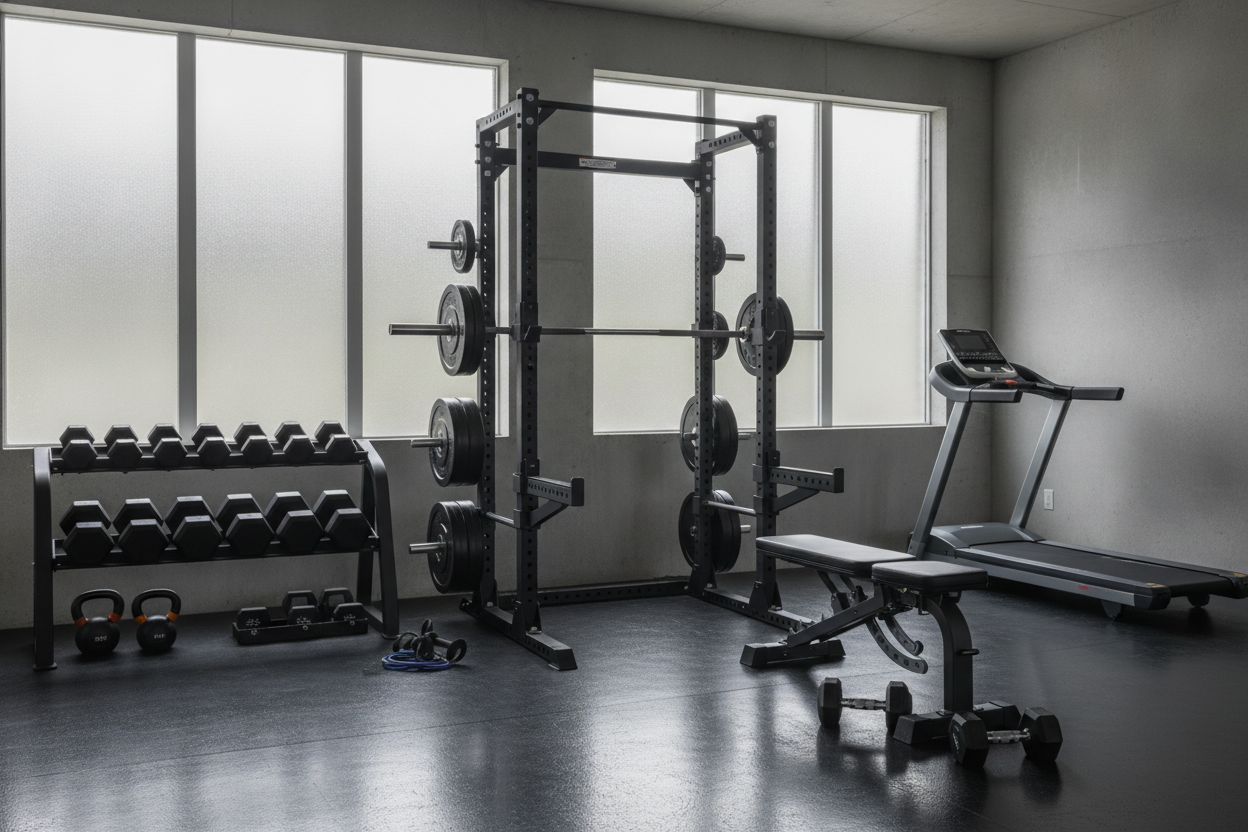
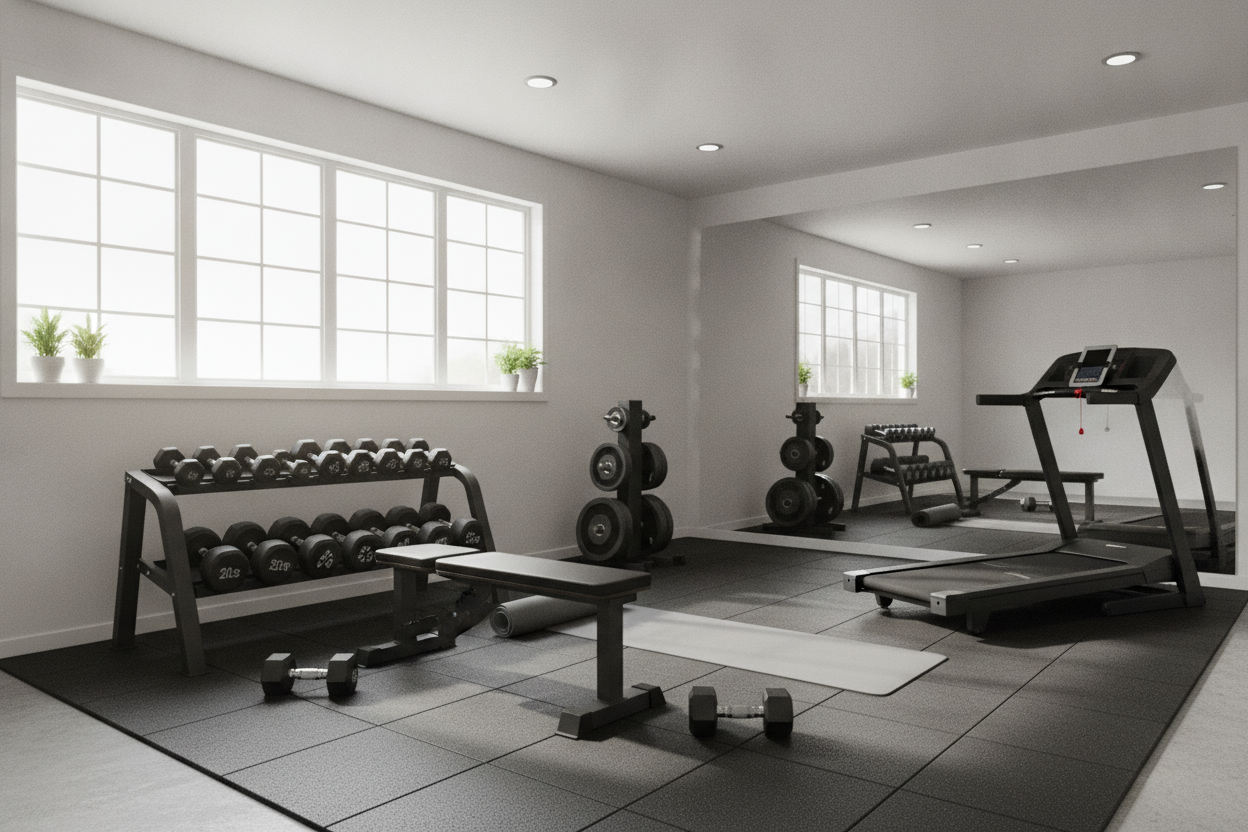
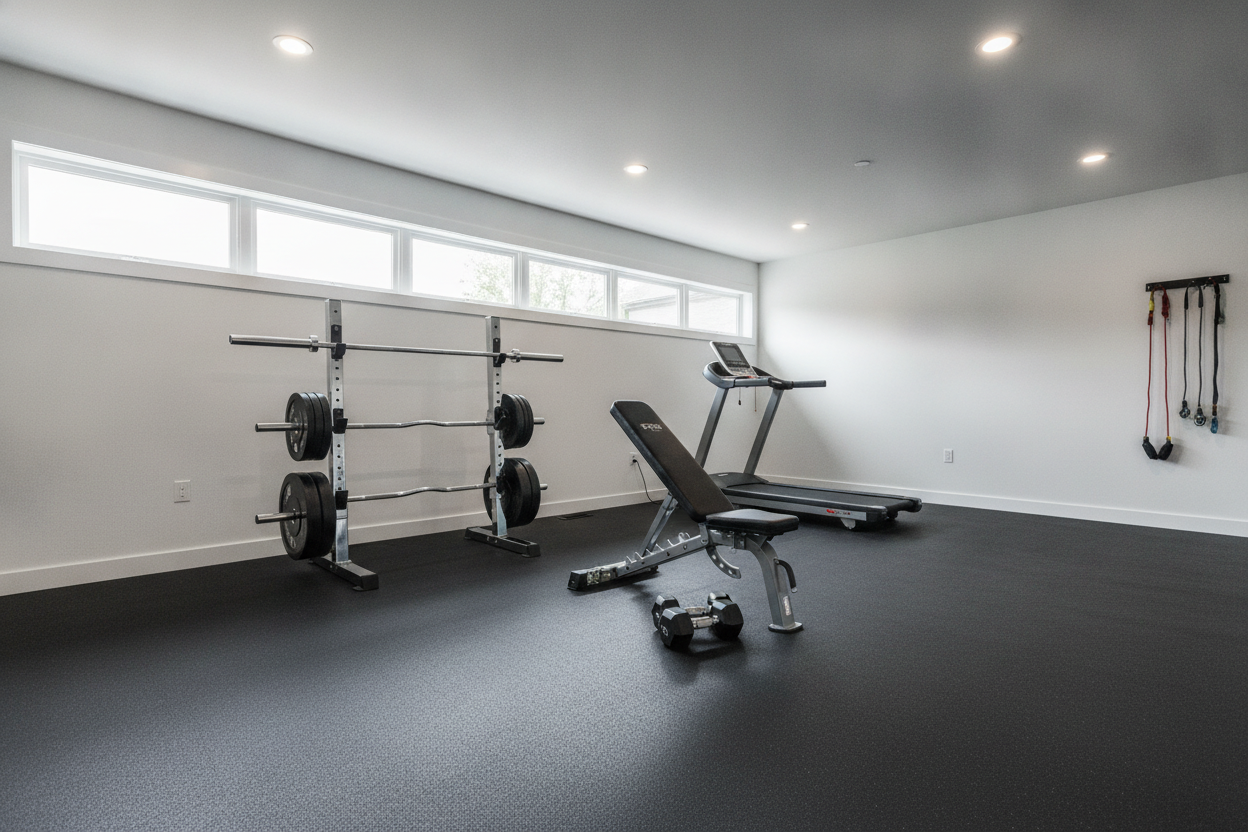
You don't need a $2,000 power rack, but you do need a dedicated space. Investing in a large exercise mat transforms a slippery living room into a stable training zone. If you're serious about this, getting proper gym flooring for home workout is the only gear I'd tell a beginner to buy on day one. It protects your floors and, more importantly, your joints.
Personal Experience: My 'Ego' Mistake
When I first started training at home, I skipped the 'couch squats' and went straight to trying to hold a heavy water jug while lunging. My form was trash. I ended up with a nagging pain in my left patellar tendon that took three months to clear up. I had to swallow my pride, put the weight down, and go back to these exact four movements. Once I mastered the bodyweight versions, my strength exploded. Don't repeat my mistake—earn the right to add weight.
FAQ
How many times a week should I do these beginner leg workouts at home?
Twice a week is the sweet spot. Your muscles need time to recover and adapt. If you're still incredibly sore by the second session, wait another day.
Do I need to wear shoes for these exercises?
Training barefoot or in flat-soled shoes is actually better for beginners. It helps you feel the floor and improves your balance compared to 'squishy' running shoes.
When should I move from bodyweight to weights?
When you can perform 3 sets of 15 reps for every movement with perfect control and a slow 3-second descent. If you're not shaking by the end of a bodyweight set, you're ready to add a light dumbbell or kettlebell.