The Only 3 Rules for Beginning Weight Training at Home
I remember standing in my garage three years ago, staring at a pair of rusty 25-pound dumbbells and wondering if I was actually going to get strong or just hurt my back. The internet wants you to believe you need a $3,000 smart mirror and a commercial-grade power rack to see results. They're wrong. If you are beginning weight training at home, the biggest obstacle isn't your lack of gear—it's the clutter and the lack of a plan.
Quick Takeaways
- Clear a dedicated 6x8 foot space to ensure you actually move.
- Focus on three foundational movements: the goblet squat, the hinge, and the floor press.
- Buy adjustable dumbbells first; avoid the massive machines until you've trained for 90 days.
- Track your rest times and eccentric tempo to make light weights feel heavy.
Forget the Shiny Gear: Focus on the Space First
Before you spend a dime on iron, look at your floor. Most people try to start their training in a cramped corner between the lawnmower and a stack of Amazon boxes. This is a recipe for a canceled workout. You need a 'sacred' footprint where you don't have to worry about stubbing your toe or slipping on a slick garage floor. My first mistake was trying to lunge on bare concrete; my knees still haven't forgiven me.
You need a high-traction surface that defines your workout zone. A large exercise mat for home gym setup isn't just about comfort; it's about psychological commitment. When you step onto that mat, you're in the gym. It protects your subfloor from dropped weights and keeps your sweat from soaking into the carpet. If the floor is slippery or gross, you will find every excuse to skip your session. Clear the space, lay down the rubber, and claim your territory.
How to Start Strength Training at Home (Without Getting Hurt)
You don't need a barbell to get strong. In fact, starting with a barbell often leads to ego-lifting and poor form. When figuring out how to start strength training at home, stick to the basics: the Goblet Squat, the RDL (hinge), and the Floor Press. These movements teach your body how to stabilize under load without the risk of getting pinned under a heavy bar.
The floor press is a personal favorite for beginners. Instead of a bench, you lie directly on the floor. This naturally limits your range of motion, protecting your shoulders from overextending. To do this safely, you need enough room to bail if a rep gets sticky. A 6x8ft exercise mat yoga mat gym flooring for home workout provides the ideal footprint to sprawl out for floor presses or long-stride lunges without your weights crashing onto unprotected hardwood. Focus on 'feeling' the muscle work rather than just moving the weight from point A to point B.
Your First Setup: Dodging the Instagram Trap
Instagram will tell you that you need a functional trainer with 20 attachments. You don't. You need one pair of adjustable dumbbells or two kettlebells. My first 'home gym' was a single 40-lb kettlebell and a pull-up bar. It was brutal, and it worked. When piecing together an at home weight training set avoid these costly mistakes by refusing to buy anything that takes up more than 10 square feet of permanent space in your first month.
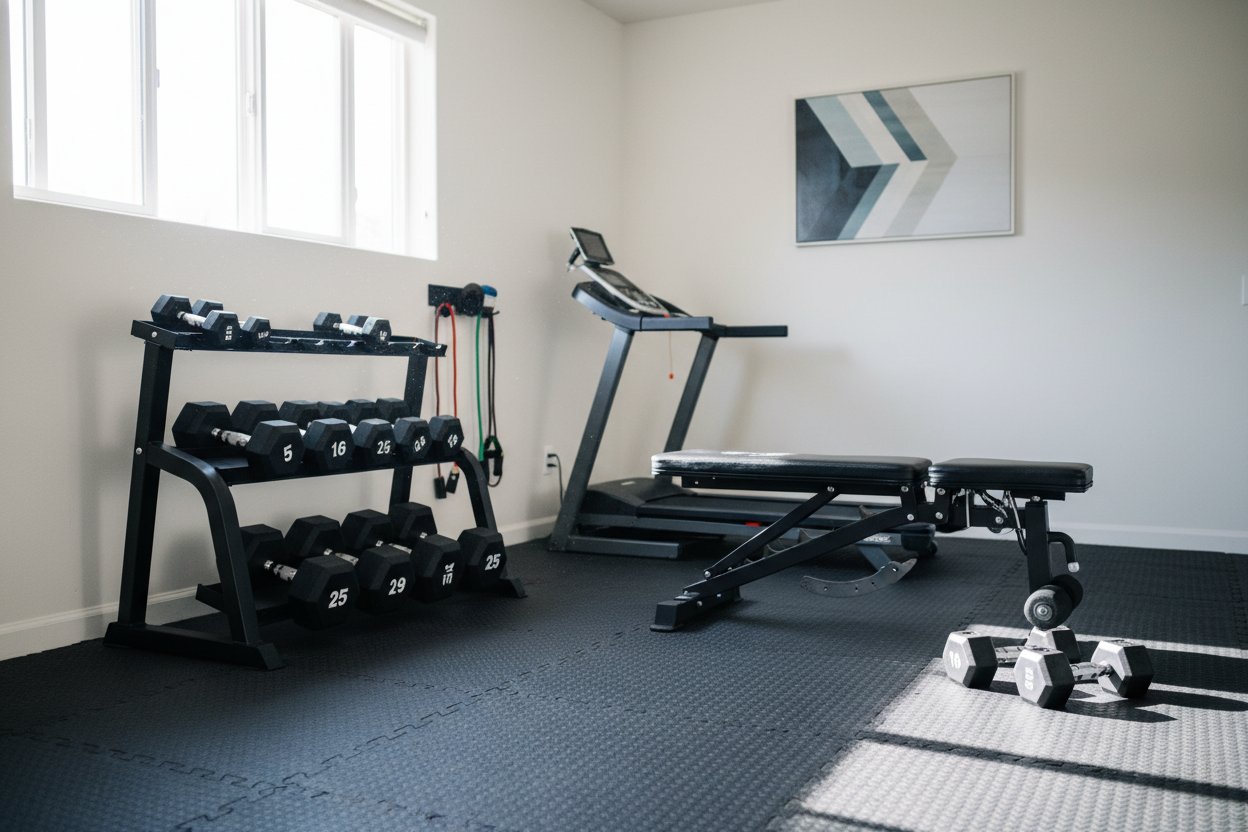
Adjustable dumbbells are the gold standard for beginners. They grow with you. A pair that goes from 5 to 50 pounds will last you a year or more. Avoid the cheap, plastic-cladded weights that rattle. If the weight feels like it's going to shift mid-swing, you won't trust the movement. Buy gear that feels dense and secure. Your focus should be on the contraction, not wondering if a 5-pound plate is about to fall on your face.
How to Start Weight Training at Home Using Progressive Overload
The biggest hurdle when how to start weight training at home is the 'ceiling' of your equipment. Eventually, those 20-pound weights will feel light. Most people think they need to buy heavier weights immediately, but that’s a rookie move. You can force muscle adaptation through progressive overload without adding a single pound to the bar.
Try 'tempo training.' Instead of banging out 10 fast reps, take 4 seconds to lower the weight (the eccentric phase). Hold for a 1-second pause at the bottom, then explode up. This increases 'time under tension,' which is a primary driver for muscle growth. You can also decrease your rest periods. If you usually wait two minutes between sets, cut it to 45 seconds. I’ve had some of my hardest workouts using nothing but a pair of 35s just by manipulating the clock and my form.
When Is It Actually Time to Upgrade Your Gym?
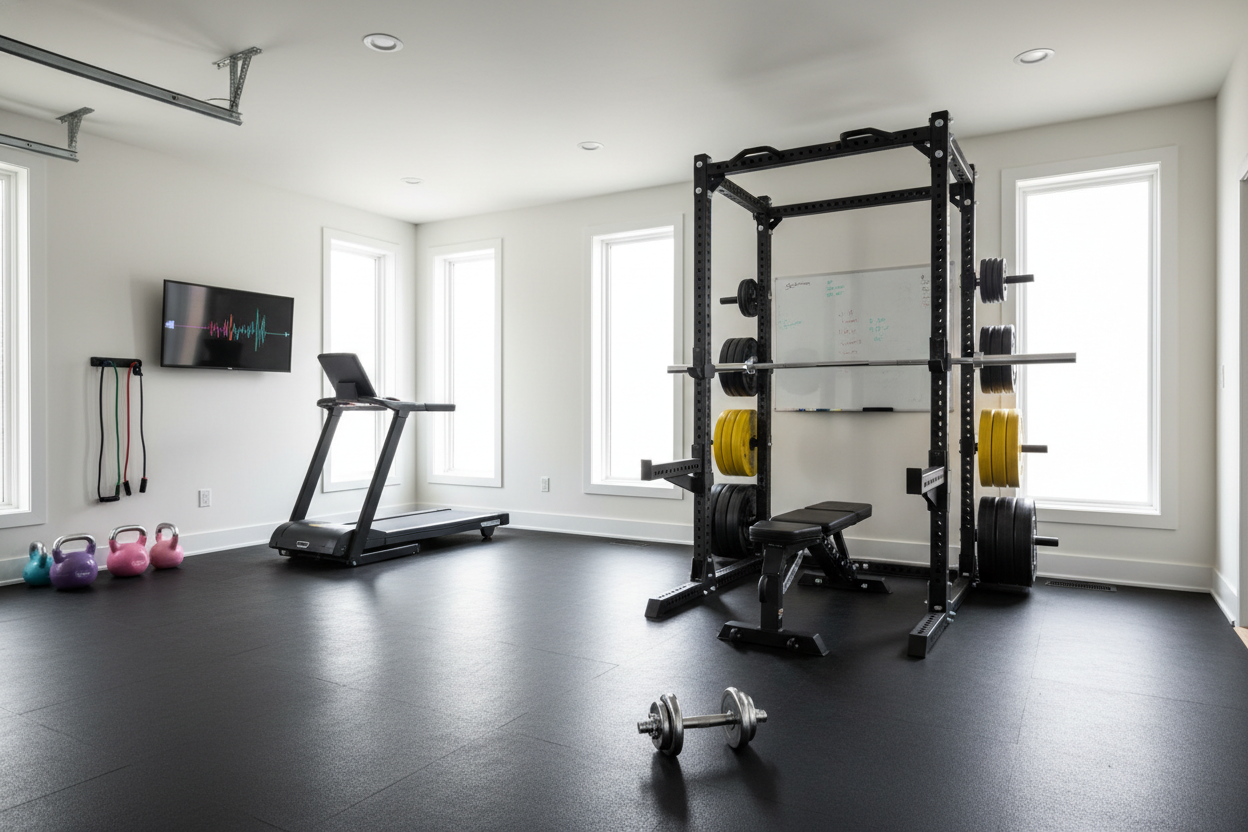
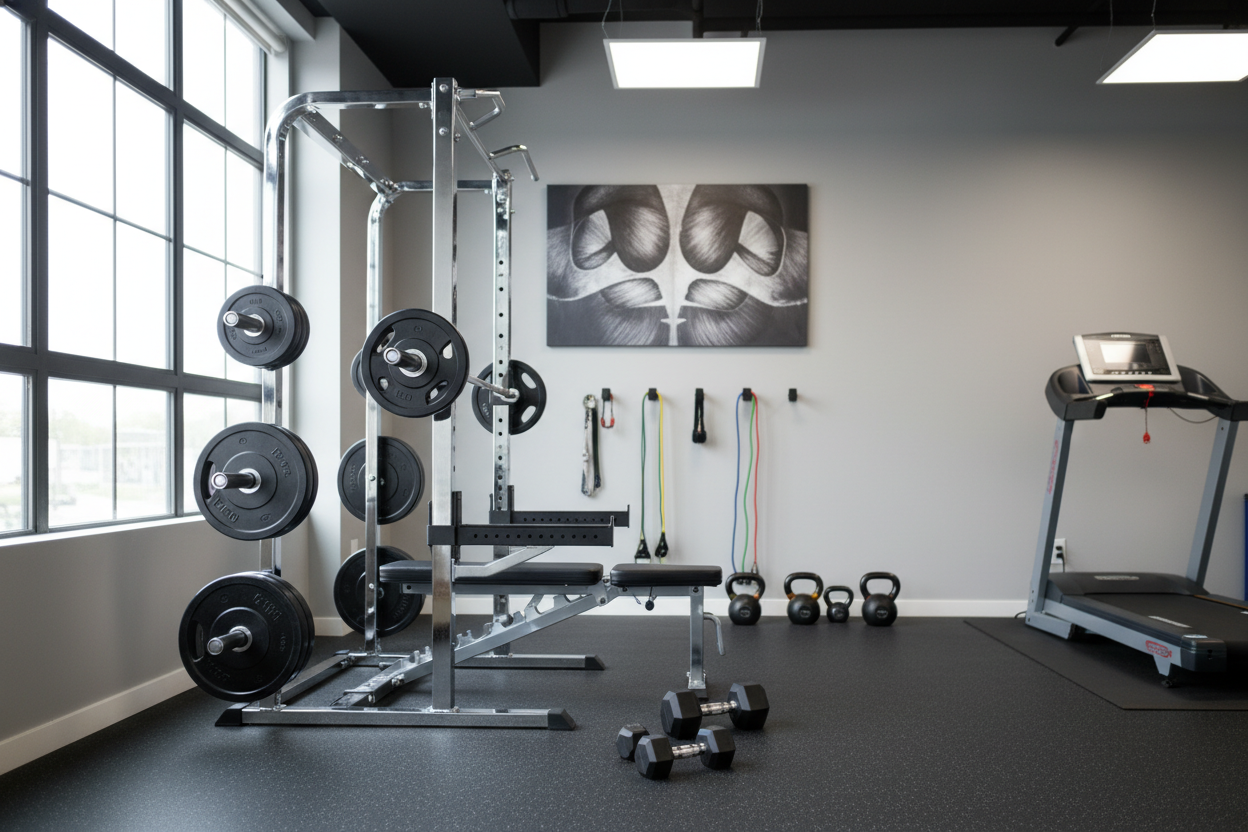
Don't buy a power rack until you've consistently trained three days a week for at least three months. By then, you’ll know if you’re a 'dumbbell person' or if you’re ready to commit to the barbell life. Upgrading should be a reward for consistency, not a bribe to start working out. When you finally hit the point where you're deadlifting your heaviest dumbbells for 15+ reps with ease, you've earned the right to look into building real muscle with the best at home weight training equipment like a squat stand or an Olympic bar.
FAQ
Do I need a weight bench to start?
No. You can do floor presses for your chest and use a sturdy chair or the edge of a couch for Bulgarian split squats and seated overhead presses. A bench is a 'Phase 2' purchase.
How much space do I really need?
A 6x8 foot area is the sweet spot. It’s enough room to lay down, reach your arms out, and take a full stride in a lunge without hitting a wall.
Is it better to start with dumbbells or kettlebells?
Dumbbells are more intuitive for traditional bodybuilding movements. Kettlebells are great for explosive power and 'flow' workouts. If you're a total beginner, dumbbells have a shallower learning curve.