The Most Overlooked Building Muscle Mass Tips Start With Your Feet
I remember the first time I tried to hit a heavy squat PR on my garage's bare concrete floor. It was January, the floor had a thin layer of dust, and my old Chuck Taylors felt like they were on ice. Halfway through the ascent, my right heel drifted two inches to the side. I didn't get pinned, but I lost the rep. You can have the best programming in the world, but if your feet are hunting for grip, you aren't following the most effective building muscle mass tips—you're just trying to survive the set.
- A stable floor prevents 'micro-slips' that drain your power output.
- Proper traction allows for maximum leg drive on every lift, including bench press.
- Rubber flooring protects your joints and your expensive iron plates.
- A dedicated lifting zone creates the mental separation needed for high-intensity training.
The Hidden Power Leak in Your Garage Gym
Most gaining muscle mass tips focus on what's in your hands—the barbell, the dumbbells, the cable attachments. But physics doesn't care about your bicep curl if your foundation is trash. When you lift on bare concrete or those cheap foam puzzle mats from the big-box stores, you're dealing with a massive power leak. Every time your foot shifts a millimeter under load, your nervous system dampens your strength output to prevent injury. It's a built-in safety mechanism that kills your gains.
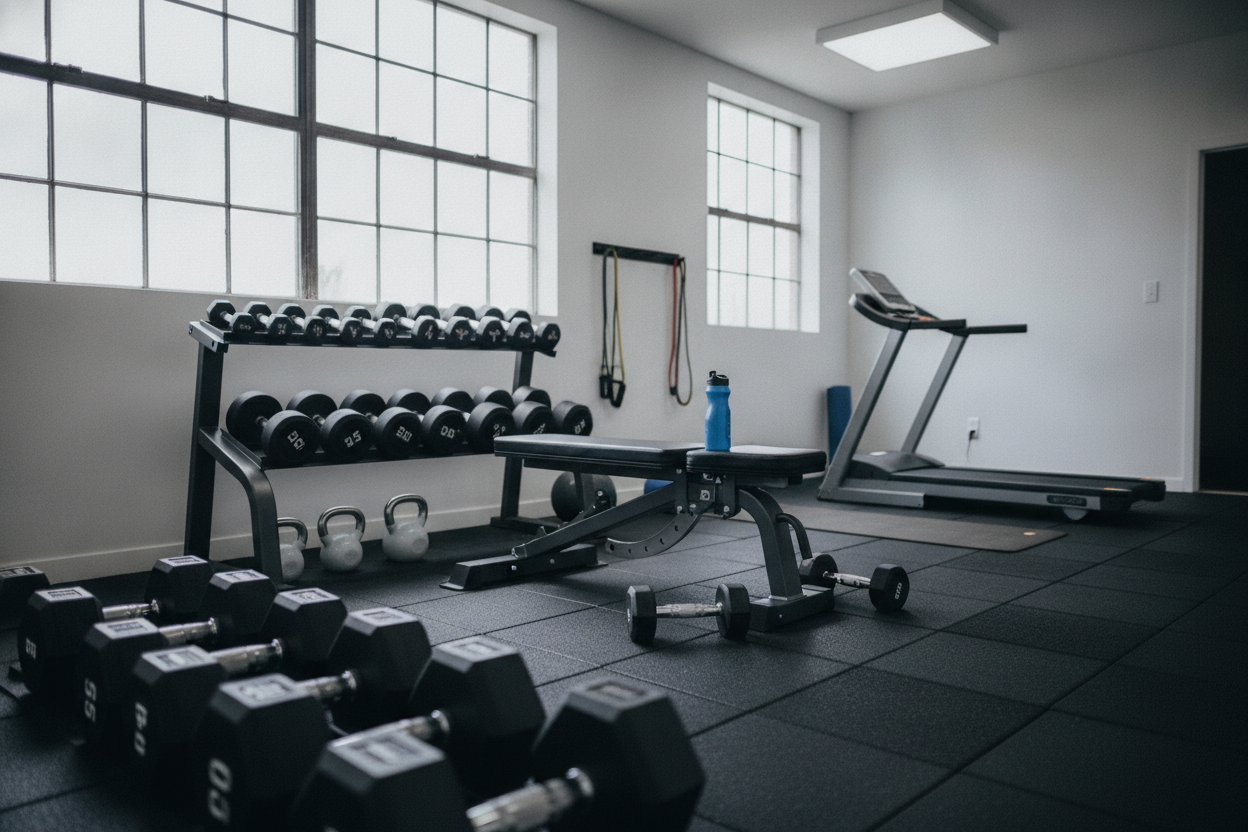
To fix this, you need a high-density surface that grips both the subfloor and your shoes. Upgrading to a large exercise mat for home gym is the fastest way to stop those micro-slips. When your feet are locked in place, you can actually apply 100% of your force into the bar. That increased mechanical tension is the literal driver of hypertrophy. You can't build a skyscraper on a swamp, and you shouldn't try to build a 400-pound squat on a slippery garage floor.
Why Leg Drive Dictates Your Upper Body Gains
Don't think for a second that floor stability is only for leg day. If you want to maximize your chest and shoulder development, you need to master the kinetic chain. During a heavy bench press, your power starts at your feet, travels through your legs, into your braced core, and finally into the bar. If your feet slide when you try to drive your heels down, your arch collapses and your shoulder stability goes out the window. This is why my favorite build muscle tips always start with the floor.
A rock-solid foundation is the prerequisite for the best leg muscle building exercises, but it's equally vital for overhead presses and heavy rows. When I'm pressing 90-pound dumbbells over my head, the last thing I want to worry about is my stance widening against my will. A dense rubber mat provides the friction necessary to 'screw' your feet into the ground, creating the external rotation and torque needed to keep your spine safe and your muscles working at their limit.
Stop Treating Your Workouts Like Chores
There is a massive psychological component to training at home. If you're lifting in the same spot where you park the minivan or store the lawnmower, your brain stays in 'chore mode.' One of the most underrated pieces of muscle building advice is to create a 'sacred space' for your training. When you step off the cold concrete and onto a professional-grade mat, it signals to your brain that it's time to work.
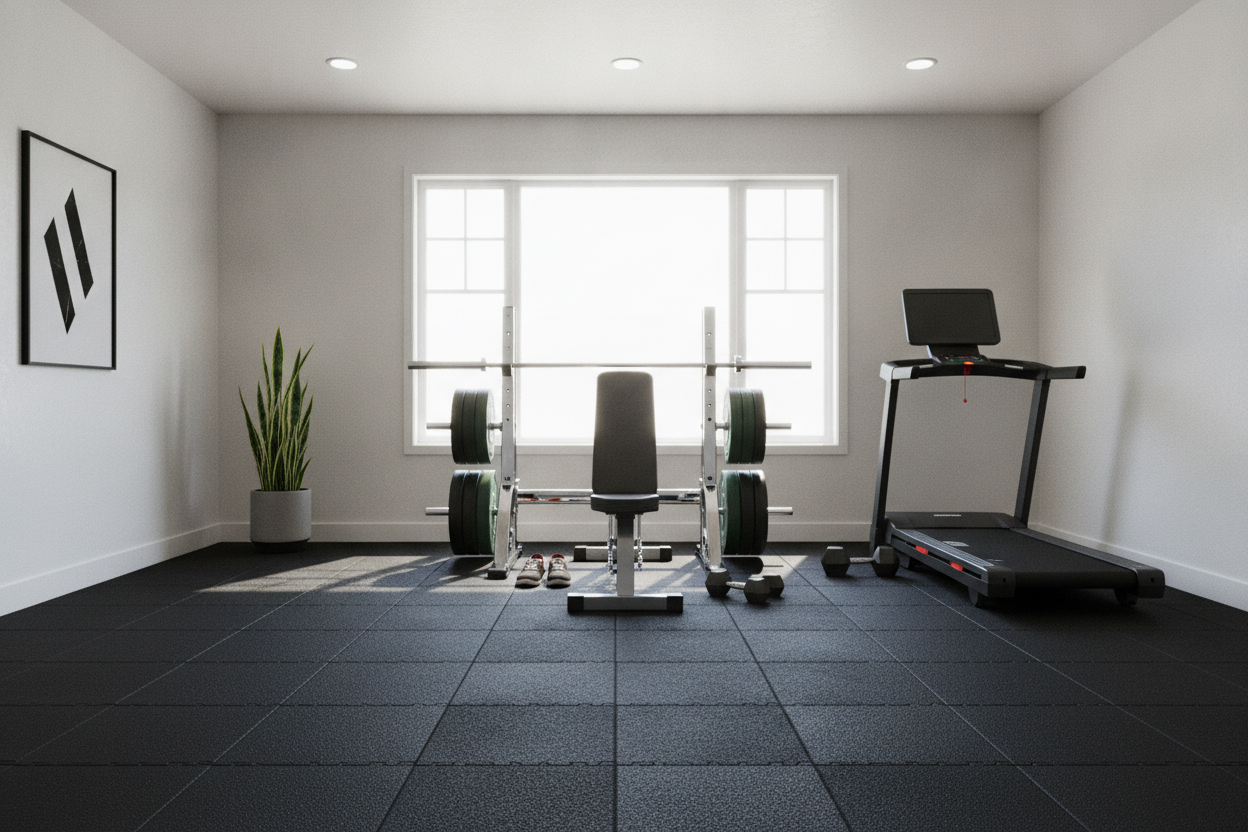
By defining your lifting area, you naturally start following better muscle building tips for home gyms, like staying off your phone and ignoring the laundry pile in the corner. I've found that a dedicated 7mm or 8mm rubber surface provides just enough cushion to save my joints during high-volume sessions without being so squishy that it ruins my balance. It's about professionalizing your environment so you can professionalize your effort.
How to Fix Your Floor Without Breaking the Bank
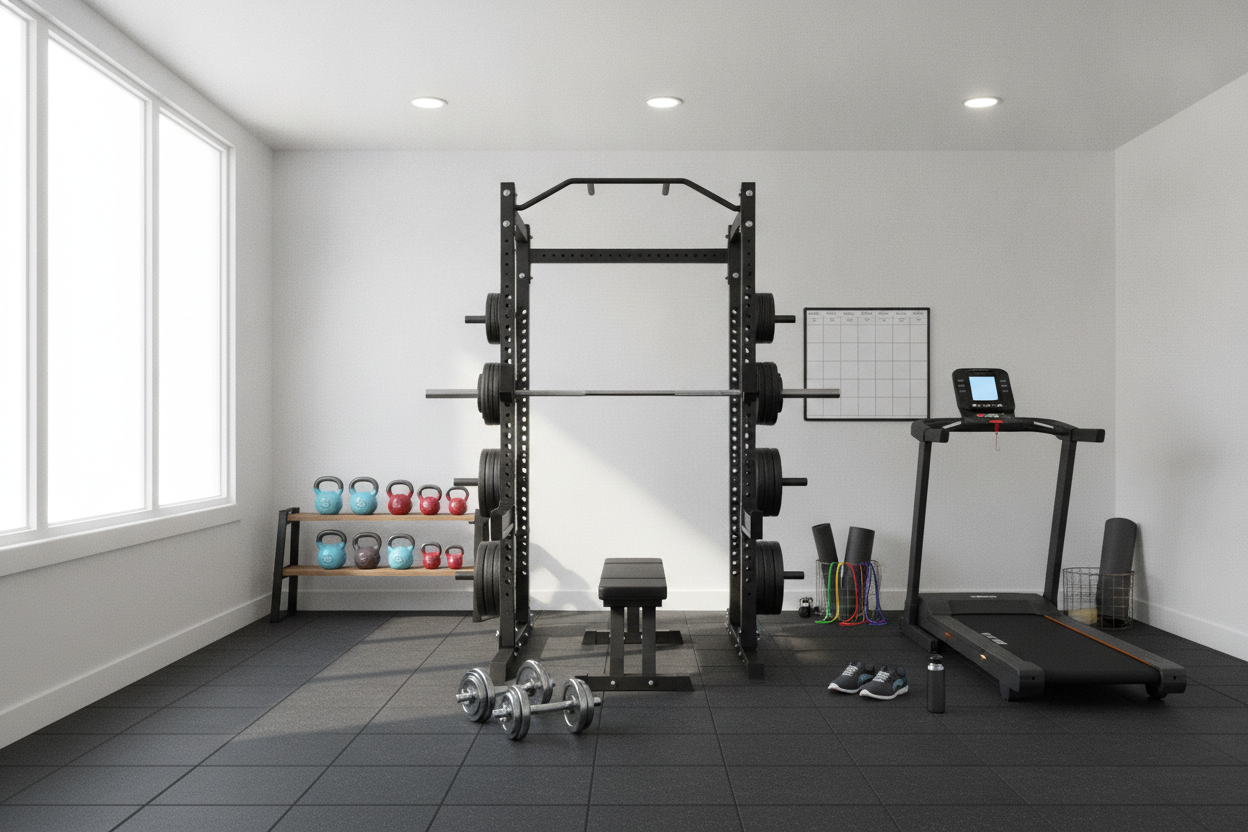
You don't need to spend $2,000 on professional athletic flooring to see results. You just need to match the mat to your movement. If you're running a full power rack with a bench and a deadlift zone, you need a 6x8ft exercise mat. This size is the gold standard for home gyms because it covers the entire footprint of a standard rack plus enough room to step out for lunges or rows. It’s heavy enough to stay put without adhesive, which is a huge plus if you’re renting.
If you're working in a tighter space or doing mostly dumbbell work, a 6x4ft exercise mat is usually plenty. The key is the density. You want something that doesn't 'bottom out' when you drop a 50-pound weight. Most tips for muscle growth ignore the equipment's impact on the house, but a good mat saves your slab from cracking and keeps the noise down so your neighbors don't hate you. Look for high-density PVC or recycled rubber—avoid the soft, squishy foam that feels like a marshmallow. You want a surface that fights back when you push against it.
Put It Into Practice: My Go-To Stability Checklist
Before your next session, run through this stability audit to see if your floor is holding you back. First, try the 'sock slide test.' If you can easily slide your foot across your lifting surface while wearing socks, it’s too slick for heavy triples. Second, check for 'mat creep.' If your mats have gaps between them after a set of squats, they aren't dense enough or large enough to handle the lateral force.
These tips on building muscle mass might seem small, but they aggregate over hundreds of workouts. I spent years lifting on bare concrete because I thought I was 'hardcore,' but all I really got was sore ankles and a plateaued bench press. Once I committed to a stable, high-traction surface, my confidence under the bar skyrocketed. Stop fighting the floor and start using it to your advantage.
Is concrete bad for your joints when lifting?
Concrete has zero shock absorption. Over time, heavy movements like calf raises or even standing for an hour-long workout can lead to joint fatigue and shin splints. A high-density mat provides just enough compression to protect your joints without sacrificing the stability you need for heavy loads.
Can I just use a yoga mat for lifting?
No. Yoga mats are designed for grip with bare hands and feet, but they are too thin and soft for heavy weights. They will tear instantly under a dumbbell or a squat rack, and they provide zero protection for your floor. Stick to dedicated gym flooring that is at least 6mm to 8mm thick.
Do I need to glue my gym mats down?
Usually not. If you buy a large enough single-piece mat, the weight of the rubber plus the weight of your equipment (rack, plates, bench) will keep it firmly in place. Glue is generally only necessary for thin tiles in high-traffic commercial settings.