The Iron Foundation: Why Your Home Gym Needs a Barbell and Rack Above All Else
You walk into a commercial gym at 5:30 PM, and the landscape is predictable. The treadmills are occupied, the dumbbell rack is a chaotic mess, and there is a queue three people deep waiting for the only squat rack available. This specific frustration is usually the catalyst that drives people to clear out space in their garage or basement. You want to train on your own terms, without waiting for someone to finish scrolling through Instagram between sets. When you decide to build a home gym, the sheer volume of equipment options can be paralyzing. You might be tempted by all-in-one cable machines or fancy cardio tech, but the most effective tool for changing your body composition remains the most primitive: a heavy piece of steel and a place to hang it.
If you want to build real strength and muscle mass safely at home, prioritizing a barbell set with rack is the only logical starting point. This combination allows you to perform the "Big Four" movements—squat, bench press, deadlift, and overhead press—which provide the highest return on investment for your time and effort. Everything else is just an accessory.
My Transition to Garage Training
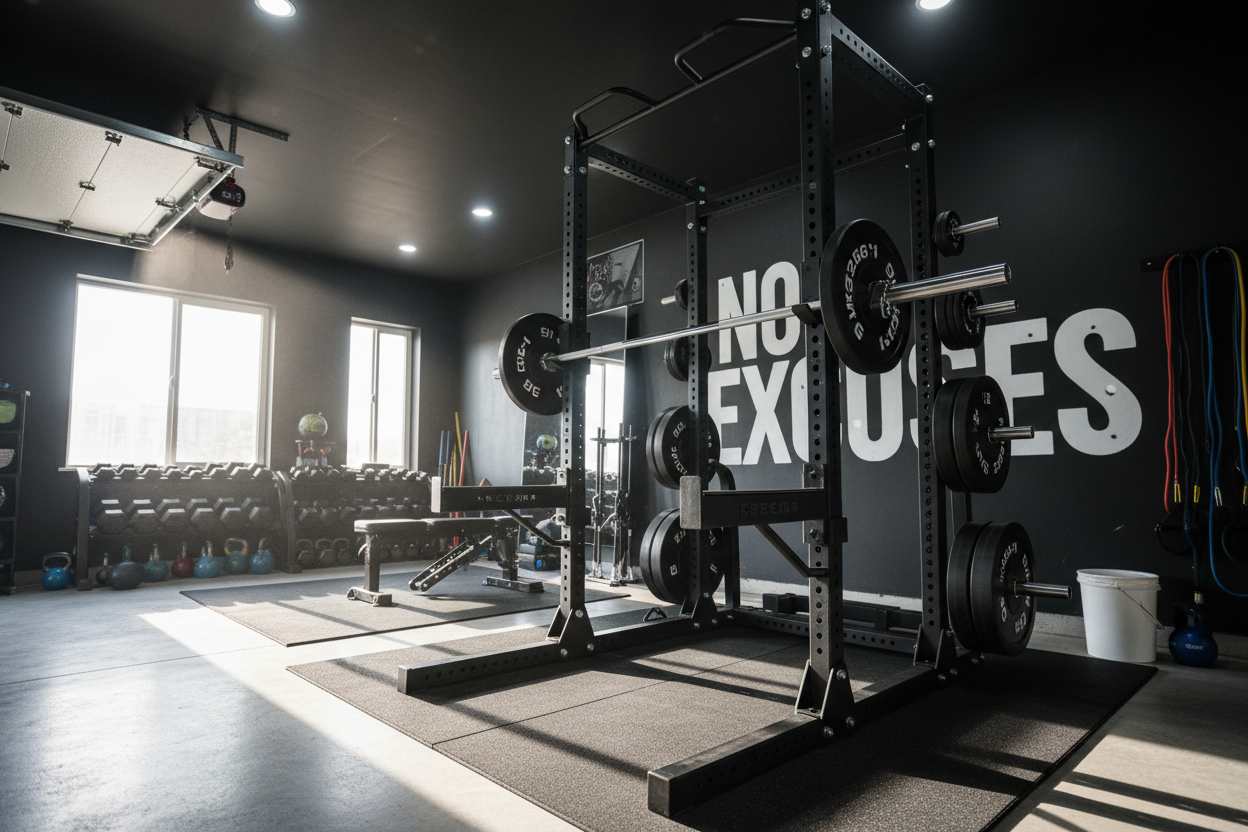
I spent years spinning my wheels in commercial fitness centers. I would modify my programming based on what equipment was free rather than what I actually needed to do. If the benches were taken, I’d skip chest day or do subpar machine work. Eventually, I cleared a 10x10 space in my garage and bought a used power cage and a rusty olympic bar. The difference was immediate. Having a dedicated barbell set and rack meant I could fail safely. I could push for that extra rep on a heavy squat without worrying about crumbling under the weight because the safety pins were there to catch me. That psychological safety net allowed me to progress faster in six months of home training than I had in two years of gym membership. It wasn't about having fancy gear; it was about having access and safety.
Understanding the Ecosystem: The Rack
The rack is the centerpiece of your gym. It serves as your spotter, your storage, and your station for almost every lift. When shopping for a barbell rack set, you will typically encounter three main categories: squat stands, half racks, and power cages.
Squat stands are the most space-efficient. They consist of two uprights connected at the base. They are great for Olympic weightlifting or overhead work but offer the least amount of safety for heavy benching or squatting alone. If you fail a rep, there is often nowhere for the bar to go but down on top of you.
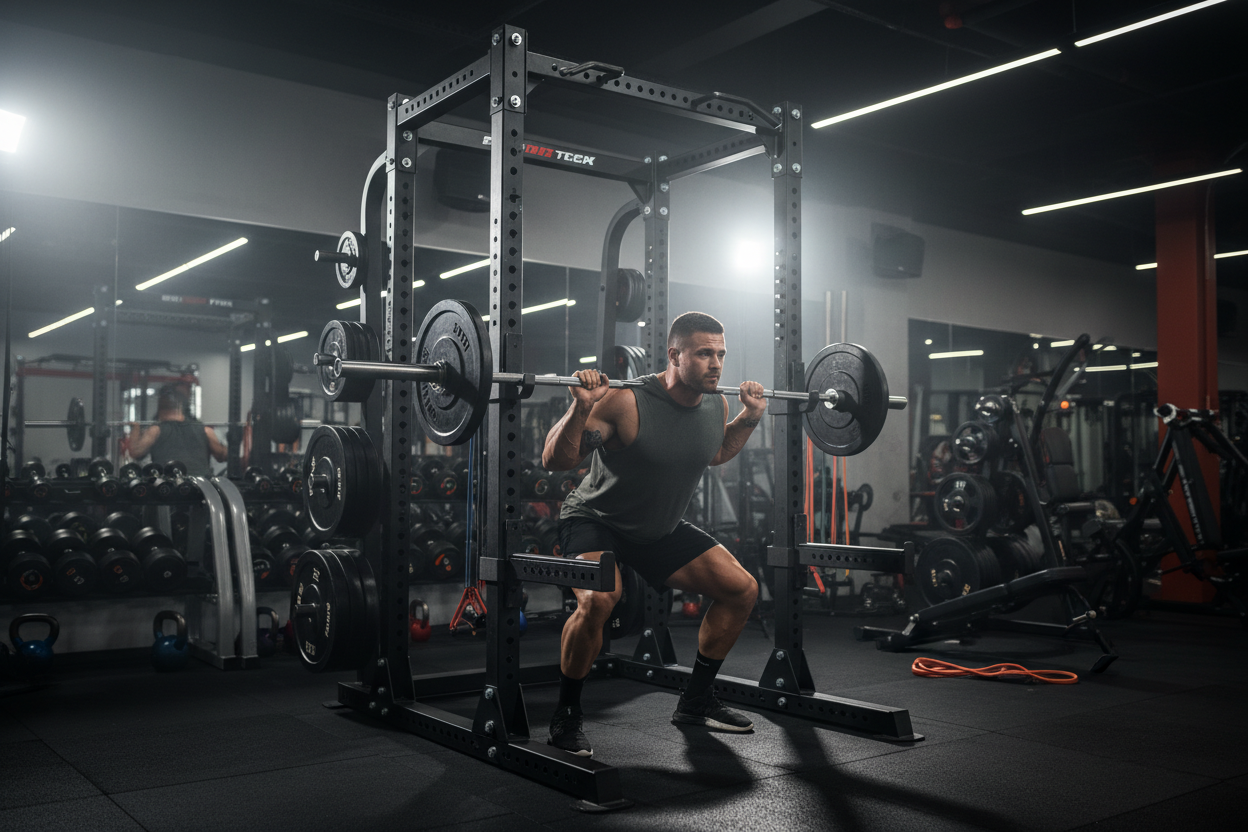
The power cage, or power rack, is the gold standard. It is a four-post box that you stand inside. The key feature here is the safety pin or strap system that runs between the front and back uprights. You set these just below the bottom of your range of motion. If you can't complete a lift, you simply lower the weight onto the pins and crawl out unscathed. For anyone training alone, a full power cage is non-negotiable insurance.
The Barbell: Your Connection to the Weight
Many beginners make the mistake of blowing their budget on a fancy rack and buying a cheap, thick, chrome-plated bar found at a sporting goods store. This is a mistake. The barbell is the piece of equipment you are physically touching for every rep. A cheap bar will bend permanently under heavy loads, the knurling (grip texture) will likely be too passive or aggressively sharp, and the sleeves won't spin. Bad sleeve rotation transfers torque to your wrists and elbows, leading to tendonitis over time.
When looking for a barbell set with rack, examine the specifications of the bar included. You want an Olympic bar (2-inch sleeves) with a tensile strength of at least 165,000 PSI. If the manufacturer doesn't list the PSI, it is likely low quality. The diameter should generally be 28mm to 29mm for general strength training. A good bar has a "whip" or elasticity that feels alive in your hands, rather than a dead metal pipe.
The Plates: Iron vs. Bumpers
Once you have the steel, you need the weight. Your choice of plates depends entirely on your training style and your flooring. Cast iron plates are classic. They are thinner than bumper plates, meaning you can load more weight onto the bar. They are also incredibly durable and generally cheaper per pound. However, they are loud and can damage concrete floors if dropped, even with rubber mats.
Bumper plates are made of high-density rubber. They are designed to be dropped from overhead, making them essential for CrossFit or Olympic lifting movements like the clean and jerk. They are quieter and kinder to your foundation. Many vendors sell a complete barbell rack set that includes bumper plates, which is often the best route for garage gyms where noise vibration travels to the rest of the house.
Space and Logistics
Integrating this equipment into a home environment requires measuring more than just floor space. Vertical clearance is the silent killer of home gym dreams. A standard power rack is often over 80 inches tall. If you are putting this in a basement with low ceilings, you need to measure the clearance not just for the rack, but for your body during pull-ups. If you plan to do standing overhead presses, you need even more height—roughly your height plus half your arm length plus the radius of a 45lb plate.
Floor footprint is manageable for most. A full barbell set and rack setup usually requires a 8x8 foot area to be comfortable. This accounts for the width of the bar (7 feet) and room to load plates on either side without hitting the wall.
The Versatility Factor
The beauty of this setup lies in its infinite scalability. A rack is not just for squats. With the addition of a few cheap accessories, it becomes a total body solution. Add a dip attachment to the uprights for chest and triceps. Hang gymnastics rings from the pull-up bar for rows and stability work. Use the safety pins for rack pulls or pin presses to break through strength plateaus. Unlike a leg press machine which does exactly one thing, a rack adapts to your creativity and programming needs.
Investing in high-quality iron is a commitment to a lifestyle. It removes the friction between you and your workout. When the equipment is sitting twenty feet away from your couch, the barrier to entry drops significantly. You aren't just buying metal; you are buying consistency.
Frequently Asked Questions
Can I install a power rack on a second floor or in an apartment?
Generally, yes, but you must be mindful of the weight load and noise. A rack and loaded bar can weigh upwards of 500+ lbs, which is usually within the structural limits of modern residential floors (similar to a full refrigerator or waterbed), but dropping weights is out of the question. You will need a lifting platform to disperse the weight and dampen noise.
What is the difference between a standard and an Olympic barbell set?
Standard bars have 1-inch sleeves and are typically rated for much lower weight capacities (often under 200 lbs). Olympic bars have 2-inch rotating sleeves, are longer, heavier (45 lbs/20kg), and can handle significantly higher loads. For any serious training, an Olympic set is the only viable option.
Do I really need a rack if I just want to bench press?
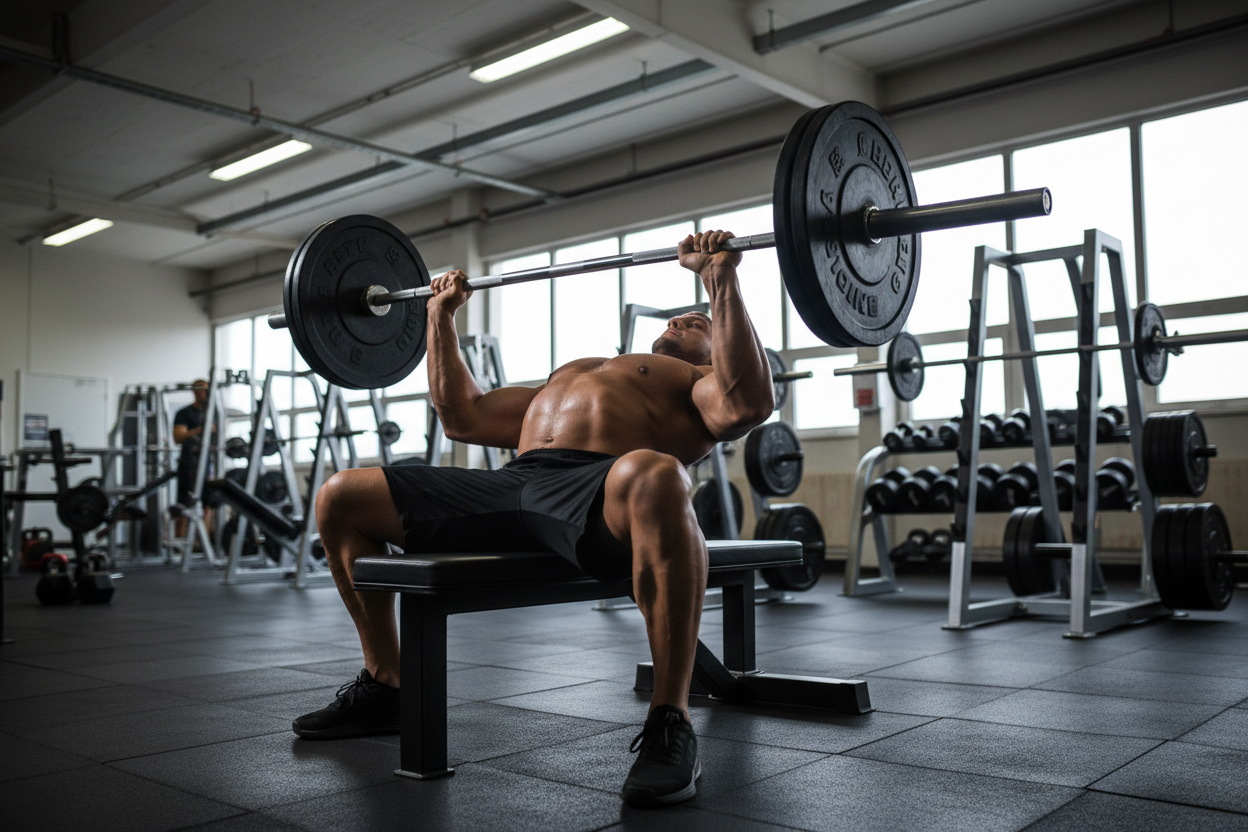
Yes, for safety reasons. While you can buy a standalone bench with uprights, a rack allows you to set safety pins. If you fail a bench press rep without a spotter or safety pins, the bar can crush your windpipe or chest. A rack allows you to bench alone with 100% safety.