
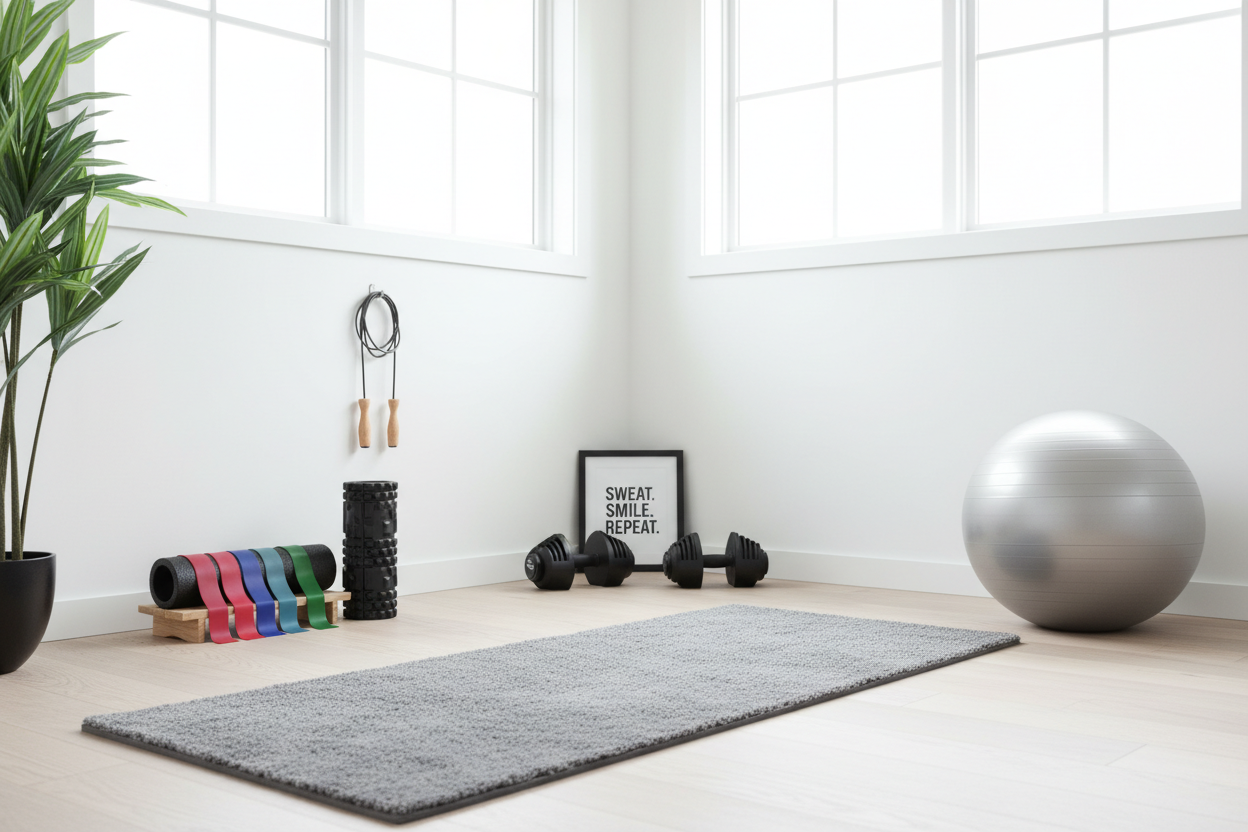
The Home Gym Essentials You're Probably Missing (And Why They Matter)
Building a home gym doesn't end with a set of dumbbells and a yoga mat. The difference between a workout space you actually use and one that collects dust often comes down to the smaller pieces—the accessories for home gym that transform a corner of your basement or spare bedroom into a functional fitness environment.
I learned this the hard way after spending months doing floor exercises on cold concrete, wondering why I dreaded every workout. A simple puzzle mat changed everything, and that's when I realized the equipment itself is only half the equation.
Why Accessories Matter More Than You Think
The right accessories create an environment that supports your goals rather than fighting against them. A resistance band set takes up minimal space but multiplies your exercise options. A foam roller becomes your post-workout ritual that prevents the soreness that might otherwise keep you from coming back tomorrow. These aren't luxury items—they're the infrastructure that makes consistency possible.
Think about commercial gyms for a moment. They don't just have machines; they have mirrors for form checking, proper flooring to protect joints, storage solutions that keep equipment accessible, and ventilation that makes the space bearable. Your home setup deserves the same thoughtful approach, scaled to your space and budget.
The Foundation: Flooring and Protection
Before you add another piece of equipment, look down. Your flooring determines everything from how much noise you make (important if you have neighbors or family members) to whether you'll damage your floor or injure yourself. Interlocking foam tiles work beautifully for yoga, stretching, and bodyweight exercises. For heavier lifting, you'll want rubber mats that can handle dropped weights without cracking or denting your floor.
I've seen people invest in expensive barbells only to use them on hardwood floors, then wonder why they're hesitant to push themselves. The psychological barrier of worrying about damage is real, and it limits your workouts in ways you might not even notice.
Storage Solutions That Actually Work
Dumbbells rolling around, resistance bands tangled in a drawer, jump ropes knotted together—this chaos isn't just annoying, it's a barrier to working out. When you need to spend ten minutes untangling equipment before you can start, you've already lost the battle.
Wall-mounted racks keep dumbbells organized and visible. A simple basket or bin system for smaller items like resistance bands, gloves, and jump ropes makes setup effortless. The goal is to reduce friction between the decision to work out and actually starting your first exercise.
Versatile Accessories That Multiply Your Options
Resistance bands deserve special attention among accessori home gym because they're incredibly space-efficient while offering progressive resistance for nearly every muscle group. A set with varying resistance levels costs less than a single month's gym membership but provides years of use. They're perfect for warm-ups, rehabilitation work, and adding difficulty to bodyweight exercises.
Suspension trainers like TRX systems attach to doors or ceiling mounts, turning your bodyweight into a complete workout system. The beauty lies in the simplicity—adjust your body angle to make exercises easier or harder, no need to swap weights or change settings.
Adjustable dumbbells solve the space problem that comes with traditional dumbbell sets. Instead of a rack holding fifteen pairs of weights, you get two handles that adjust from five to fifty pounds or more. The initial cost stings, but the space savings and convenience pay dividends over time.
Recovery and Mobility Tools
Foam rollers, massage balls, and stretching straps often get dismissed as optional extras. That perspective shifts quickly once you hit your thirties or push through an intense training phase. These tools aren't about pampering—they're about maintaining the tissue quality and joint mobility that allow you to keep training.
A lacrosse ball costs a few dollars but reaches trigger points that foam rollers can't touch. Resistance bands work for stretching and mobility just as well as they do for strength work. These dual-purpose accessories earn their space in even the most minimal home gym.
Creating the Right Atmosphere
A bluetooth speaker changes your workout environment completely. Music isn't just entertainment; it's a performance enhancer backed by research. The right playlist can push you through those last difficult reps or make a long cardio session tolerable.
Mirrors serve a practical purpose beyond aesthetics. Checking your form prevents injuries and ensures you're actually targeting the muscles you intend to work. A full-length mirror doesn't need to be expensive—even a basic door-mounted option provides the feedback you need.
Proper lighting matters more than most people realize. A dim basement or poorly lit garage makes early morning or evening workouts feel like a chore. A bright LED shop light costs minimal money but transforms the space into somewhere you actually want to spend time.
Smart Additions for Serious Training
A pull-up bar mounted in a doorway or on the wall opens up an entire category of exercises. Combined with resistance bands for assistance, it makes one of the most effective upper body exercises accessible regardless of your current strength level.
Weight plates and a barbell might seem like major equipment rather than accessories, but a basic Olympic barbell setup takes surprisingly little space when stored vertically. It's the difference between a home gym that handles beginner workouts and one that can support years of progressive strength training.
Gymnastic rings hang from the same mounting point as a suspension trainer but offer different movement patterns and grip positions. They're humbling at first—even basic exercises become significantly harder—but they build incredible upper body and core strength.
The Minimalist Approach
You don't need everything at once. Start with the basics: proper flooring, a few resistance bands, and a foam roller. Add pieces as you identify gaps in your training. The home gym that works is the one you use consistently, not the one with the most equipment.
Pay attention to what limits your workouts or causes you to skip sessions. If you avoid certain exercises because they're uncomfortable on your current surface, better flooring moves to the top of the list. If you're bored with your routine, accessories that add variety become the priority.
Frequently Asked Questions
What's the most versatile accessory for a small home gym?
Resistance bands offer the best combination of versatility, space efficiency, and cost-effectiveness. A complete set with varying resistance levels supports everything from warm-ups to serious strength training, and they store in a drawer when not in use.
Do I really need special flooring for home workouts?
If you're doing anything beyond gentle yoga, yes. Proper flooring protects your joints during high-impact exercises, prevents damage to your floor from dropped weights, reduces noise, and creates a defined workout space that psychologically separates exercise time from the rest of your day.
How much should I budget for home gym accessories?
You can start with $100-200 for basics like flooring mats, resistance bands, and a foam roller. A well-equipped setup with storage solutions, mirrors, and more specialized tools might run $500-800, but build gradually based on what you actually need rather than buying everything at once.


