The Hidden Cost of Weight Machine Ownership No One Mentions
I remember the first time I decided my garage needed a real-deal functional trainer. I’d been doing pull-ups on a joist and floor-pressing like a caveman for years. I saw a 'deal' online, clicked buy, and realized forty-eight hours later that the cost of weight machine ownership isn't just the number on the checkout page. It is a logistical nightmare involving lift gates, floor anchors, and a very annoyed spouse who can no longer park her car inside.
Before you drop three grand on a selectorized stack, you need to understand what you're actually paying for. It isn't just the iron; it's the engineering, the footprint, and the inevitable maintenance that comes with moving parts. If you think a barbell is expensive, wait until you see the bill for shipping 600 pounds of precision-milled steel to your driveway.
Quick Takeaways
- Freight shipping for selectorized units can add $300-$600 to the base price.
- Floor space is your most valuable asset; a single machine can eat 25% of a standard one-car garage.
- Budget machines use plastic pulleys and thin cables that feel like 'dragging sand' during a rep.
- Used commercial gear is a gamble that requires a deep knowledge of cable tension and bushing wear.
Why That 200lb Weight Stack Costs So Much
When you look at the initial price for weight machine units, the sticker shock usually comes from the stack itself. You aren't just buying 200 pounds of iron. You’re buying 20 pieces of precision-machined steel that have to slide perfectly on chrome-plated guide rods. If those plates are off by even a millimeter, the whole machine chatters like a cold engine. Cheap cast iron plates stick; high-end milled plates glide.
Then there’s the pulley system. A quality machine uses aluminum pulleys with sealed bearings. These don't just 'work'—they disappear. When you’re mid-set on a heavy cable fly, the last thing you want to feel is the friction of a nylon wheel melting against a steel cable. That smooth, 'commercial gym' feel is the result of tight tolerances that simply cost more to manufacture. You are paying for the lack of friction, not the weight itself.
Finally, consider the frame gauge. A rack might get away with 14-gauge steel if it's just holding a bar, but a weight machine is under constant tension. Most reputable brands use 11-gauge 3x3 steel because the frame has to remain perfectly rigid while the stack is moving. If the frame flexes, the guide rods bind, and your expensive machine becomes a very heavy coat rack.
Navigating the Sketchy Secondary Market
I love a good deal as much as anyone, but the used market for selectorized gear is a minefield. You’ll see a Life Fitness or Hammer Strength unit on Marketplace for $500 and think you’ve won the lottery. You haven’t. Most of these 'deals' are coming out of high-traffic commercial clubs where they’ve been beaten to death for a decade. The bushings are shot, the upholstery is holding onto ten years of stranger-sweat, and the cables are one heavy set away from snapping.
Before you hand over the cash, you need to know the red flags on any weight lifting machine. Check the guide rods for scoring; if someone didn't lubricate them, the metal-on-metal friction creates grooves that ruin the movement forever. Pull the stack all the way to the top and let it down slowly. If it hitches or catches, walk away. Replacing a proprietary cable or a custom-milled pulley on a discontinued commercial unit can cost more than the machine is worth.
That said, if you find a 'prosumer' unit from a garage gym enthusiast who is moving, jump on it. These machines usually have low mileage and have been kept in a climate-controlled environment. Just be prepared for the 'gym tax'—the reality that you’ll need three buddies and a trailer to move it. These things do not disassemble easily, and putting them back together without the original manual is a special kind of hell.
The Hidden Fees of Owning Selectorized Gear
The checkout price is a lie. When you buy a rack, you can usually fit the boxes in a crossover SUV. When you buy a selectorized machine, you are dealing with industrial logistics. The weight machines price you see on the website is just the entry fee to a much more expensive club.
Freight Shipping and Assembly Headaches
Unless you’re buying from a local big-box store, your machine is coming on a pallet via LTL (Less Than Truckload) freight. This means a semi-truck is going to pull up to your curb. If you didn't pay for 'white glove' delivery, they’re dropping a 700-pound crate at the end of your driveway. I’ve spent four hours unboxing a functional trainer in the rain just to get the individual components into the garage. Then comes the assembly. We’re talking 50+ bolts, complex cable routing, and the constant fear that you’ve threaded the cable on the wrong side of a pulley. If you value your time at more than $10 an hour, the 'free' assembly you do yourself is actually costing you a fortune in sanity.
Floor Space is Your Most Expensive Asset
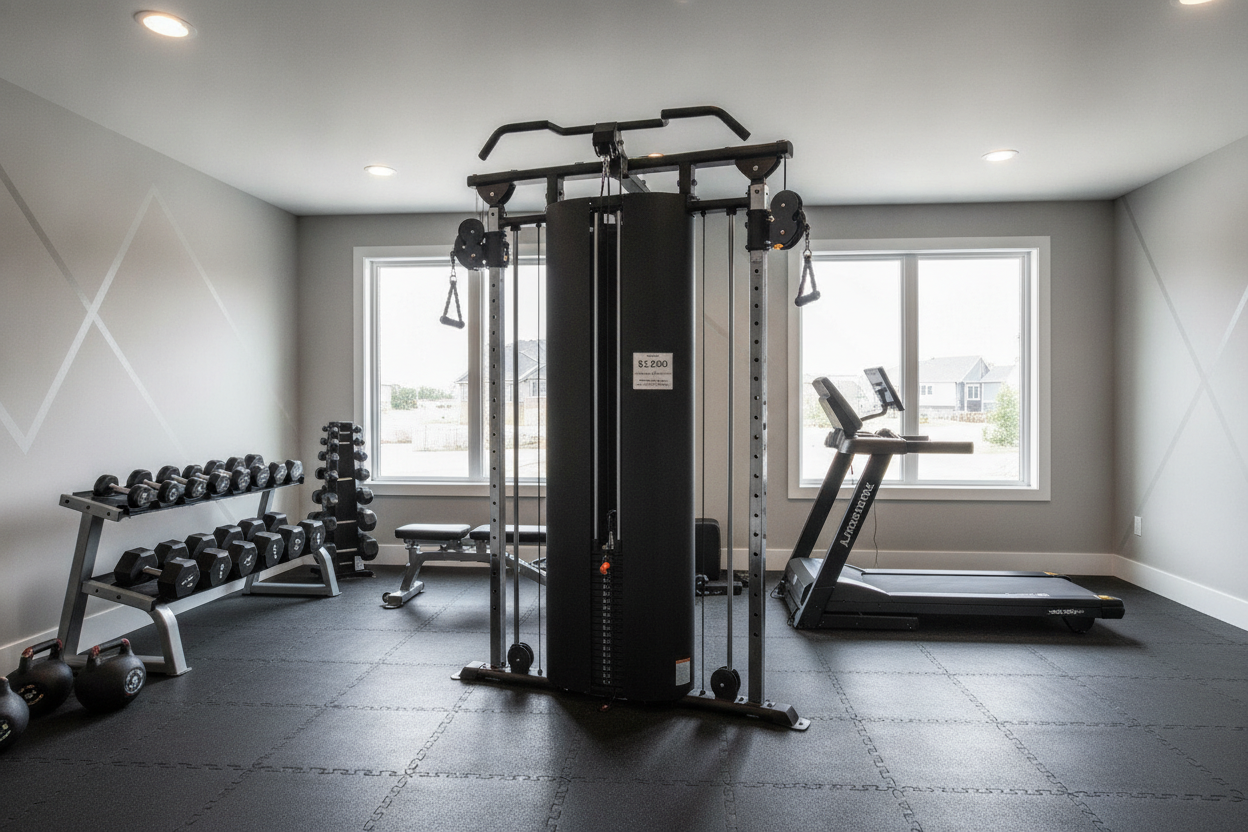
In a garage gym, square footage is currency. A standard functional trainer has a footprint of roughly 4' x 5', but you need at least another three feet of clearance around it to actually use the thing. If you’re paying a mortgage on a house with a 400-square-foot garage, that one machine is effectively 'costing' you a significant portion of your monthly payment. Unlike a folding rack or adjustable dumbbells, a weight machine is a permanent resident. You can't just tuck it away when you need to pull the lawnmower out. You have to be absolutely sure that the specific movement that machine provides is worth the permanent loss of floor space.
Why the Budget Weight Machines Price Point is a Trap
I get the temptation. You see a lat pulldown on Amazon for $399 with 4.5 stars. Don't do it. The weight machines price floor exists for a reason. At that price point, the manufacturer is cutting corners on the two things that matter most: the cable quality and the pulley bearings. Most of these budget units use 1/8-inch aircraft cable coated in cheap PVC. Within six months, the PVC cracks, the cable starts to fray, and the 'smooth' pull becomes a series of jerky, dangerous vibrations.
Furthermore, budget machines often have terrible strength curves. A well-designed machine accounts for the fact that you are stronger at the end of a row than at the beginning. Cheap machines use simple circular pulleys that offer no cam-effect, meaning the weight feels 'off' throughout the entire range of motion. You’ll find yourself using momentum just to get the weight moving, which defeats the entire purpose of using a machine for hypertrophy. If you can't afford a mid-tier unit from a brand like Rep, Rogue, or Titan, you are genuinely better off buying a high-quality set of bands.
Should You Actually Buy One for Your Garage?
Here is the hard truth: most people don't need a selectorized machine. If you are a powerlifter or a general fitness enthusiast, a solid power rack and a barbell will get you 95% of the way there. Dropping $2,500 on a dedicated leg extension machine is a luxury, not a necessity. If your goal is just general movement, a gym machine workout routine for weight loss is often just a way to avoid the hard work of compound lifts. You're paying a premium for comfort.
However, if you are chasing pure hypertrophy or you’re training around an injury where you need a fixed path of motion, the investment is worth it. There is something to be said for the efficiency of moving a pin rather than loading plates, especially if you’re doing drop sets. Just go into it with your eyes open. Budget for the freight, clear out the floor space, and for the love of your hamstrings, don't buy the cheapest thing on the internet.
Personal Experience: The 'Steal' That Cost Me a Weekend
Two years ago, I bought a used leg press for $400. I thought I was a genius. It took four of us to load it into my truck, and I nearly blew out my suspension. Once I got it home, I realized the 'minor rust' on the guide rods was actually deep pitting. Every time I pressed, it sounded like a saw cutting through wood. I spent $150 on replacement parts and twelve hours of my life scrubbing steel with WD-40 and steel wool. By the time it was 'smooth,' I had spent enough money and time that I could have just bought a brand-new, entry-level unit with a warranty. Learn from my ego: sometimes the 'hidden cost' is your own time.
FAQ
Do weight machines require a lot of maintenance?
Not a ton, but you can't ignore them. You need to wipe down the guide rods with a silicone-based lubricant (never WD-40) every few months and check the cables for fraying. If you keep the dust off the pulleys, a good machine will last a lifetime.
Can I put a commercial weight machine in a second-story room?
I wouldn't. A commercial functional trainer can weigh 600-800 pounds, and that's before you start pulling on it. That’s a massive amount of concentrated 'dead load' on your floor joists. Keep the heavy iron in the garage or the basement.
Is a plate-loaded machine better than a selectorized one?
Plate-loaded is cheaper and easier to move, but selectorized is faster for training. If you already own a lot of Olympic plates, a plate-loaded lat pulldown is the best 'bang for your buck' way to add variety to your gym without the $2,000 stack fee.