The Heavy Lifting Guide: How to Actually Build Glutes in the Gym
Building a powerful, shapely posterior chain requires more than just random squats or a few sets on the stair climber. If you want to see significant hypertrophy, you need a strategy rooted in biomechanics and progressive overload. The reality is that the best glute routine isn't about confusion or doing twenty different movements in a single session; it is about mastering a few key movement patterns that place maximum tension on the gluteus maximus, medius, and minimus. To get the results you want, you have to move heavy iron with precision.
Understanding the Mechanics of Glute Growth
Before grabbing a barbell, you need to understand what stimulates growth. The glutes are the largest muscle group in the body, primarily responsible for hip extension, abduction, and external rotation. Many lifters make the mistake of relying solely on compound leg movements like standard back squats. While squats are fantastic, they are often quad-dominant for many people. To build the best glutes possible, you need to prioritize exercises that isolate hip extension and allow you to load the muscle heavily without your lower back or quadriceps taking over the movement.
I learned this the hard way early in my lifting journey. I spent two years obsessing over heavy back squats, assuming my glutes would naturally catch up. They didn't. My thighs got massive, but my posterior chain lagged significantly. It wasn't until I shifted my focus to hip-dominant movements and learned to pelvic tilt correctly that I started seeing actual changes. That mind-muscle connection, combined with heavy loads, is the non-negotiable factor in hypertrophy.
The King of Tension: Hip Thrusts
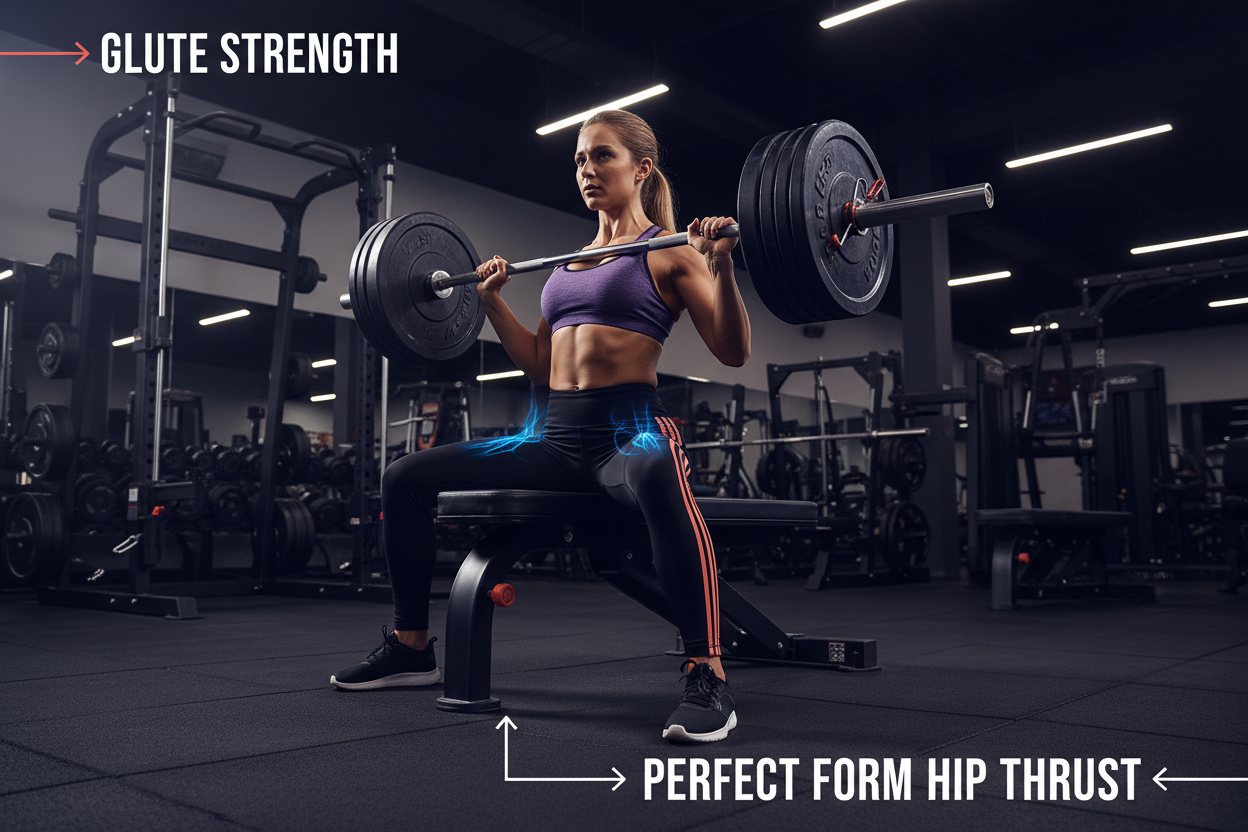
If we are talking about the best glute exercises gym setups allow for, the barbell hip thrust reigns supreme. Unlike standing exercises where tension drops off at the top of the movement (due to gravity), the hip thrust provides peak tension when the glutes are fully shortened. This creates a unique pump and mechanical stress that is difficult to replicate with other movements.
For the best glute workout at gym, set up a bench that hits just below your shoulder blades. Roll a padded barbell over your hips. Keep your chin tucked against your chest—this is crucial because looking up at the ceiling often causes your lower back to arch, shifting tension away from the glutes. Drive through your heels and lock out your hips fully at the top. This is one of the best glute muscle building exercises because you can load it incredibly heavy over time.
The Stretch: Romanian Deadlifts (RDLs)
While the hip thrust overloads the shortened position, you need to damage the muscle fibers in the lengthened position to maximize growth. This is where the Romanian Deadlift (RDL) comes in. It is widely considered one of the best exercises for glutes at gym because it places the glutes under immense tension while they are stretched.
To perform these correctly, imagine you are closing a car door with your butt. Keep a soft bend in your knees, but do not turn it into a squat. Push your hips back as far as they will go. The moment your hips stop moving back, stop lowering the bar. Going lower than your hamstring flexibility allows will only shift the load to your lumbar spine. Mastering the RDL is essential for anyone looking for the best gym glute exercises.
Unilateral Strength: Bulgarian Split Squats
We all love to hate them, but Bulgarian Split Squats are non-negotiable. Unilateral training (working one leg at a time) fixes imbalances and allows for a deeper range of motion. For the best bum exercises gym enthusiasts can perform, this variation targets the gluteus maximus and the stabilizers (glute medius).
To make this one of the best glute-focused exercises rather than a quad exercise, adjust your torso angle. Lean forward slightly (about 45 degrees) while keeping your spine neutral. This hip flexion stretches the glute more than an upright torso would. Drive through the heel of the front foot. If you struggle with balance, you can use a Smith Machine, which provides stability so you can focus entirely on the output.
Accessory Work: Rounding Out the Physique
Once the heavy compound lifting is done, you should move toward metabolic stress—often called "the pump." The best glute exercises at gym cable stations include glute kickbacks and cable abductions. These target the glute medius, which creates the shelf-like appearance of the upper glute.
Perform cable kickbacks with a slight external rotation of the foot. Don't swing your lower back; the movement should come entirely from the hip joint. These high-repetition movements are the icing on the cake for the best gym workout for glutes.
Structuring Your Routine
You shouldn't try to do every exercise every day. A solid structure for a lower-body day focused on the posterior chain looks like this:
- Compound Lift (Shortened Position): Barbell Hip Thrusts – 3 sets of 8-10 reps (Heavy)
- Compound Lift (Lengthened Position): Romanian Deadlifts – 3 sets of 8-12 reps (Controlled eccentric)
- Unilateral Movement: Bulgarian Split Squats or Reverse Lunges – 3 sets of 10-12 reps per leg
- Isolation/Pump: Cable Kickbacks or 45-degree Hyperextensions – 3 sets of 15-20 reps
This structure ensures you hit the muscle from all angles and resistance curves, making it the best glute routine for consistent gains.
Progressive Overload is the Key
You can have the perfect list of the best gym glute exercises, but if you aren't applying progressive overload, you won't grow. This means adding weight, reps, or improving form every single week. Tracking your lifts is mandatory. If you hip thrusted 135lbs for 10 reps last week, aim for 12 reps this week, or bump the weight to 140lbs. Hypertrophy is an adaptation to stress. If the stress doesn't increase, the adaptation stops.
Common Mistakes to Avoid
Many gym-goers fail to see results because they prioritize weight over form. If you are swinging your body to move the weight, you are using momentum, not muscle. Additionally, failing to eat enough protein will halt your progress regardless of how hard you train. Muscle tissue requires amino acids to repair and grow larger. Treat your nutrition with the same discipline as your training.
Final Thoughts on Gym Glute Training
Building a strong posterior chain takes time. It is a process of months and years, not weeks. By focusing on the best glute exercises gym equipment can support—specifically heavy hip thrusts, RDLs, and split squats—and applying consistent progressive overload, you will see the physical changes you are working toward. Ignore the fad workouts you see on social media that involve dancing with light dumbbells. Stick to the biomechanical basics, lift heavy, and recover harder.
Frequently Asked Questions
How often should I train my glutes for maximum growth?
Most people see the best results training glutes 2 to 3 times per week. This frequency allows for high-quality volume while giving the muscle groups roughly 48 hours to recover and repair between sessions.
Why do I feel my quads taking over during glute exercises?
This usually happens due to being "quad dominant" or having an upright torso during movements. To fix this, focus on hinging at the hips, leaning your torso forward slightly in lunges, and driving through your heels rather than your toes.
Can I build glutes without heavy weights?
While you can improve tone with bodyweight, significant muscle growth (hypertrophy) requires mechanical tension that usually comes from external load. To get the best results, you eventually need to add resistance through weights or machines.