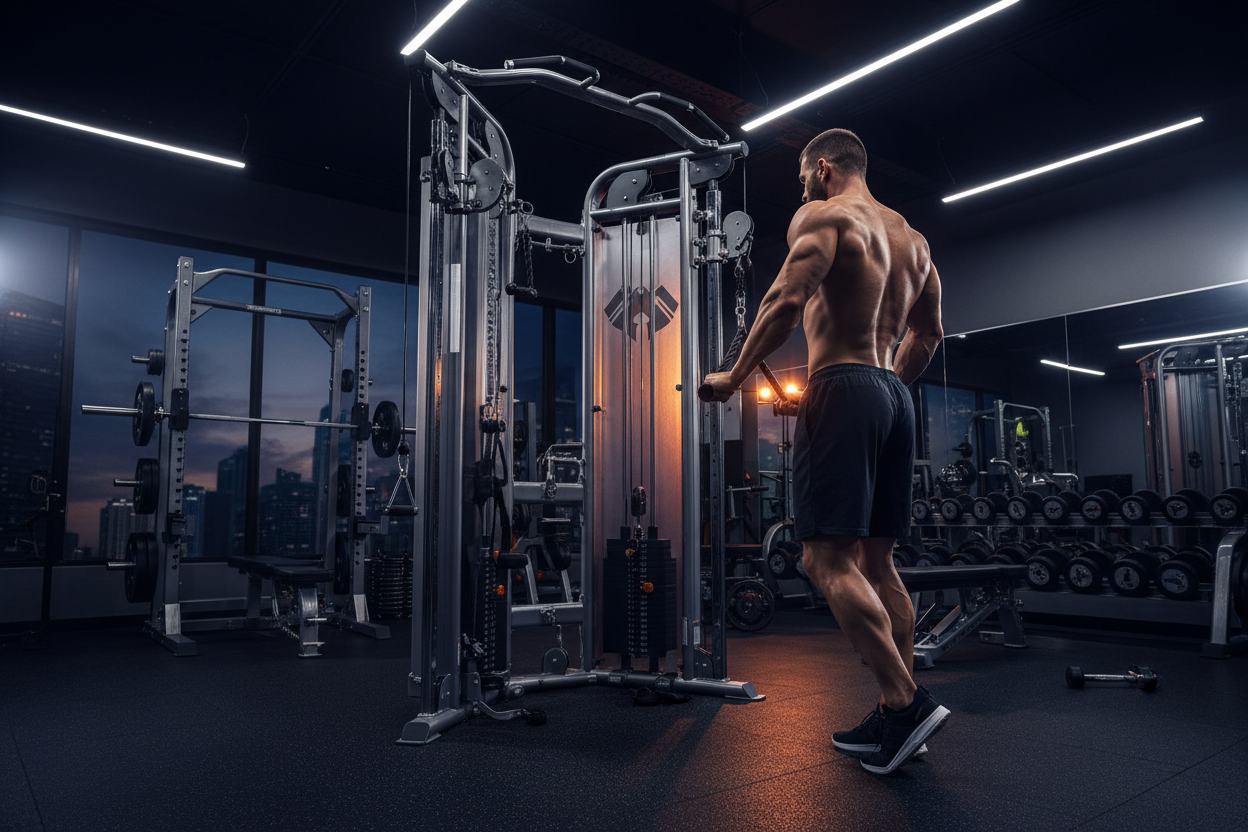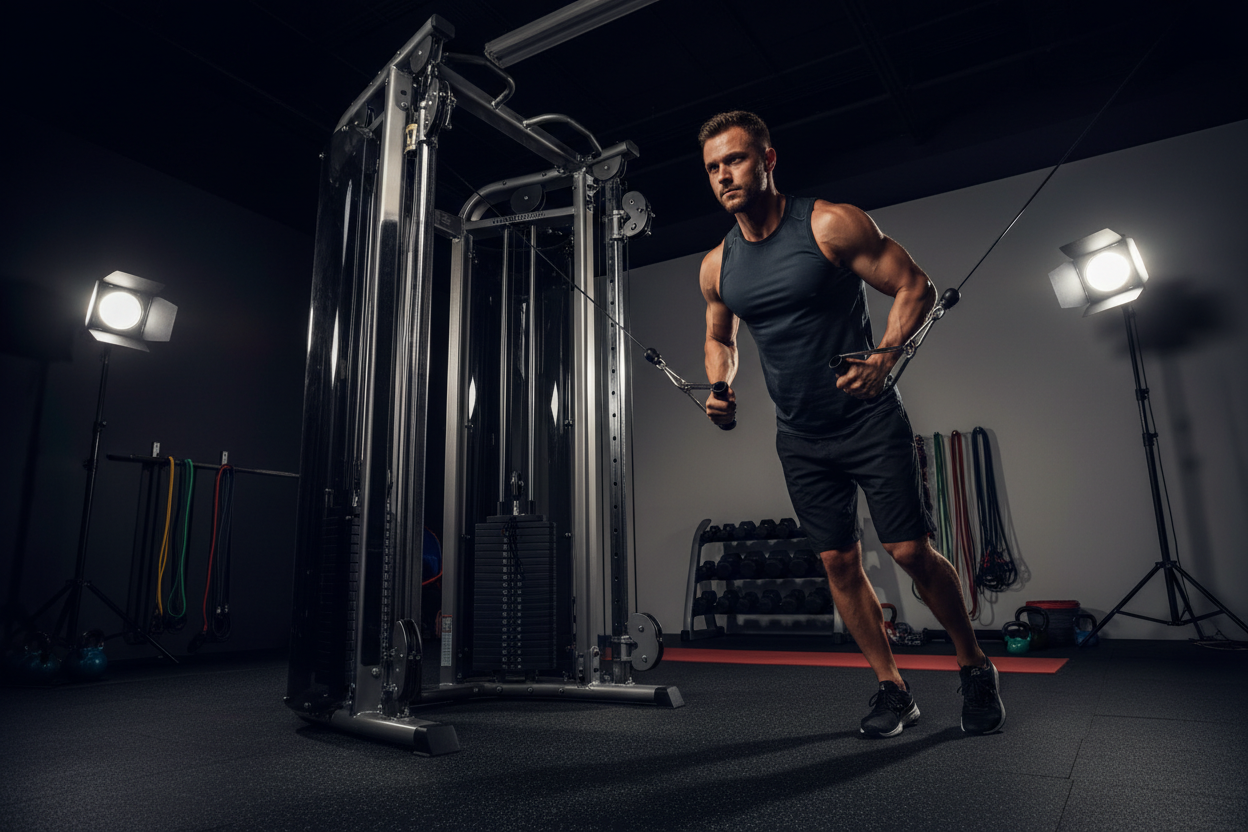
The Gym Machine Pulley: Why Your Home Setup Needs One
If you have been lifting in a garage or basement for a while, you know the struggle. Free weights are fantastic for building raw strength, but eventually, you hit a plateau. You miss the constant, isolating tension of commercial cable stations, but you simply don't have the footprint or the budget for a massive functional trainer. This is exactly where a high-quality gym machine pulley comes in.
Adding a pulley system to your existing setup is one of the most cost-effective ways to unlock hundreds of new accessory movements. In this guide, we will break down what makes a reliable pulley exercise system, how to integrate it into a compact North American home gym, and what specs actually matter before you spend your hard-earned money.
Key Takeaways
- Space Efficiency: Modern gym pulley equipment can easily attach to existing power racks or mount directly to wall studs, requiring minimal floor space.
- Constant Tension: Unlike dumbbells, cable pulleys for gym equipment provide uniform resistance throughout the entire range of motion, maximizing muscle hypertrophy.
- Cost-Effective: A standalone pulley fitness machine or rack attachment costs a fraction of a full-scale commercial functional trainer.
- Weight Capacity Matters: Always check the weight rating; entry-level gym cables and pulleys max out around 200 lbs, while heavy-duty options handle 400+ lbs.
Choosing the Right Pulley Fitness Equipment
Not all pulleys for gym equipment are created equal. When you are looking to add an exercise machine pulley to your home setup, paying attention to the hardware will save you from jerky movements and snapped cables down the line.
Weight Capacity and Ratios
Understanding the pulley ratio is crucial. A 1:1 ratio means if you load 100 pounds, you are lifting exactly 100 pounds. A 2:1 ratio (common in many functional trainers and advanced pulley workout equipment) means 100 pounds feels like 50 pounds, but the cable travels twice as far. For most garage gym athletes adding a simple lat pulldown or low row attachment, a 1:1 ratio on standard weight machine pulleys is ideal for heavy strength work.
Material: Nylon vs. Aluminum Sheaves
The actual wheel (sheave) dictates the smoothness of your workout. Entry-level fitness equipment pulleys are usually made of fiberglass-reinforced nylon. These are perfectly fine for casual use and keep costs low. However, if you want that buttery-smooth, commercial gym feel, look for aluminum fitness pulleys with sealed ball bearings. Upgrading your exercise equipment pulleys and cables to aluminum can instantly revitalize a cheap rack attachment.
Space Planning for Exercise Equipment with Pulleys
One of the biggest advantages of a standalone pulley exercise system is its footprint. If you are dealing with a standard 8-foot ceiling in a basement gym, vertical clearance is your main hurdle.
Rack-Mounted vs. Wall-Mounted
If you already own a power rack, a rack-mounted gym cable pulley is a no-brainer. It utilizes the stability of your existing cage. Just ensure you have about 6 to 8 inches of clearance above the rack's crossmember so the top pulley doesn't scrape the ceiling. If you are tight on space, a wall-mounted pulley fitness machine that anchors directly into your wooden studs takes up virtually zero floor space, making it perfect for parking a car in the garage after your workout.
From Our Gym: Honest Take
We recently installed a plate-loaded pulley for exercise equipment on our standard 3x3 power rack in the testing facility. The versatility is undeniable—tricep pushdowns, face pulls, and cable crunches are back in my routine without taking up an extra square foot of floor space.
However, I will be completely honest: the stock nylon pulleys gym equipment often ships with can feel slightly gritty under loads exceeding 150 lbs. I noticed the cable dragging a bit during heavy lat pulldowns. Swapping them out for aftermarket aluminum pulleys transformed the rig completely. My chalked grip held solid, and the movement became dead-silent. Pro tip: Make sure you regularly lubricate the guide rods with a silicone-based spray; it makes a world of difference in reducing friction.
Frequently Asked Questions
Is a gym machine pulley worth it for a home gym?
Absolutely. For the relatively low cost, gym pulleys add a massive variety of accessory exercises that are difficult to replicate with barbells alone, particularly for isolating the back, triceps, and side delts.
How much weight can standard exercise equipment pulleys handle?
Most mid-range pulley fitness equipment is rated for 250 to 300 lbs. Commercial-grade pulleys and high-tensile aircraft cables can safely handle 400 lbs or more. Always verify the manufacturer's weight limit before maxing out the loading pin.
Can I replace the pulleys on my current machine?
Yes. Replacing worn-out weight machine pulleys is a common and affordable DIY upgrade. Just measure the outer diameter of the wheel and the inner diameter of the bearing hole to ensure the new cable pulleys for gym equipment fit your existing bolts.