Cable Machine Name Guide: What Is That Rig Called?
We've all been there: you wrap up an incredible workout at a commercial gym, utilizing a buttery-smooth pulley system for triceps pushdowns and chest flys. You decide you want one for your garage gym, but when you get home and open your laptop, you hit a wall. You realize you don't actually know the correct cable machine name to type into the search bar. Are you looking for a functional trainer? A crossover? A pulley tower?
Equipment terminology can be incredibly confusing, and buying the wrong piece of machinery is an expensive mistake. In this guide, we will translate commercial gym jargon into plain English, helping you identify exactly what rig you need, how much space it will take up, and what to look for when outfitting your home gym.
Key Takeaways
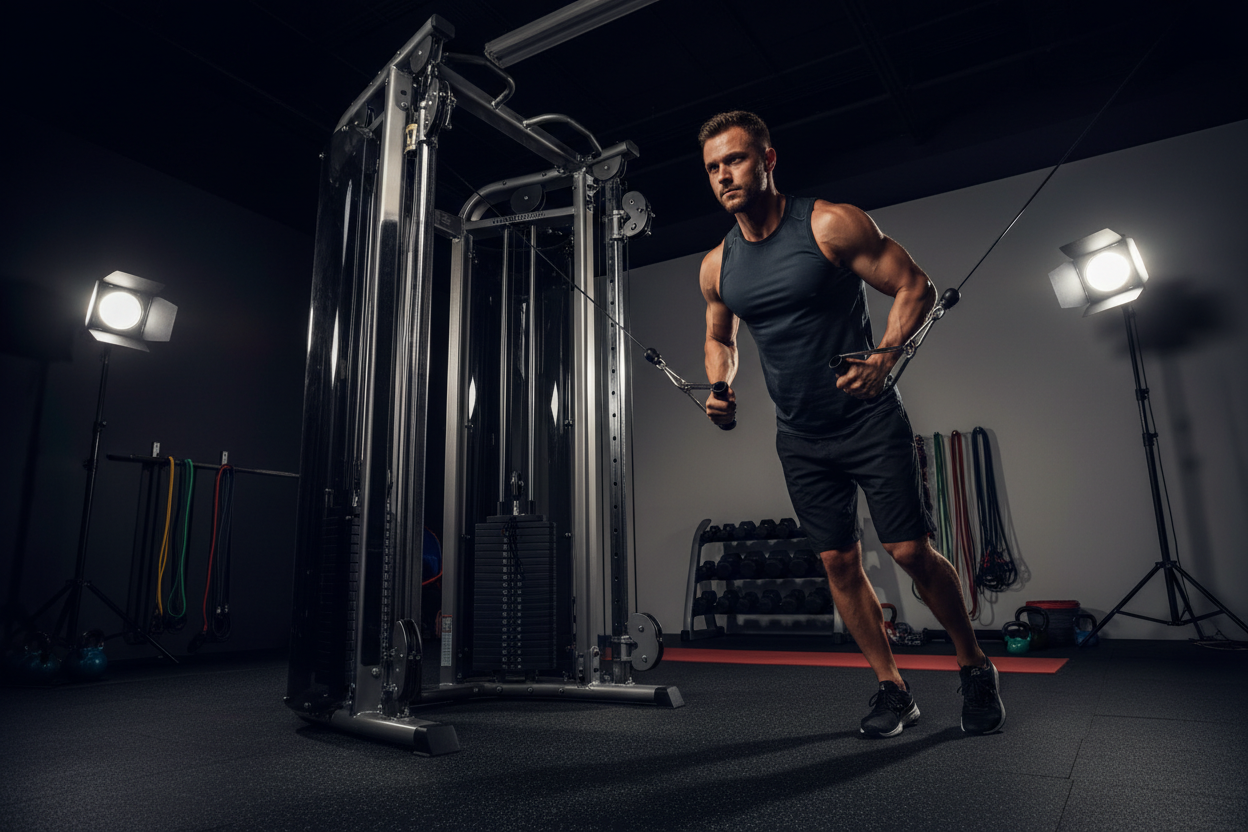
- Functional Trainer: A compact, dual-weight-stack machine with adjustable pulleys, ideal for home gyms.
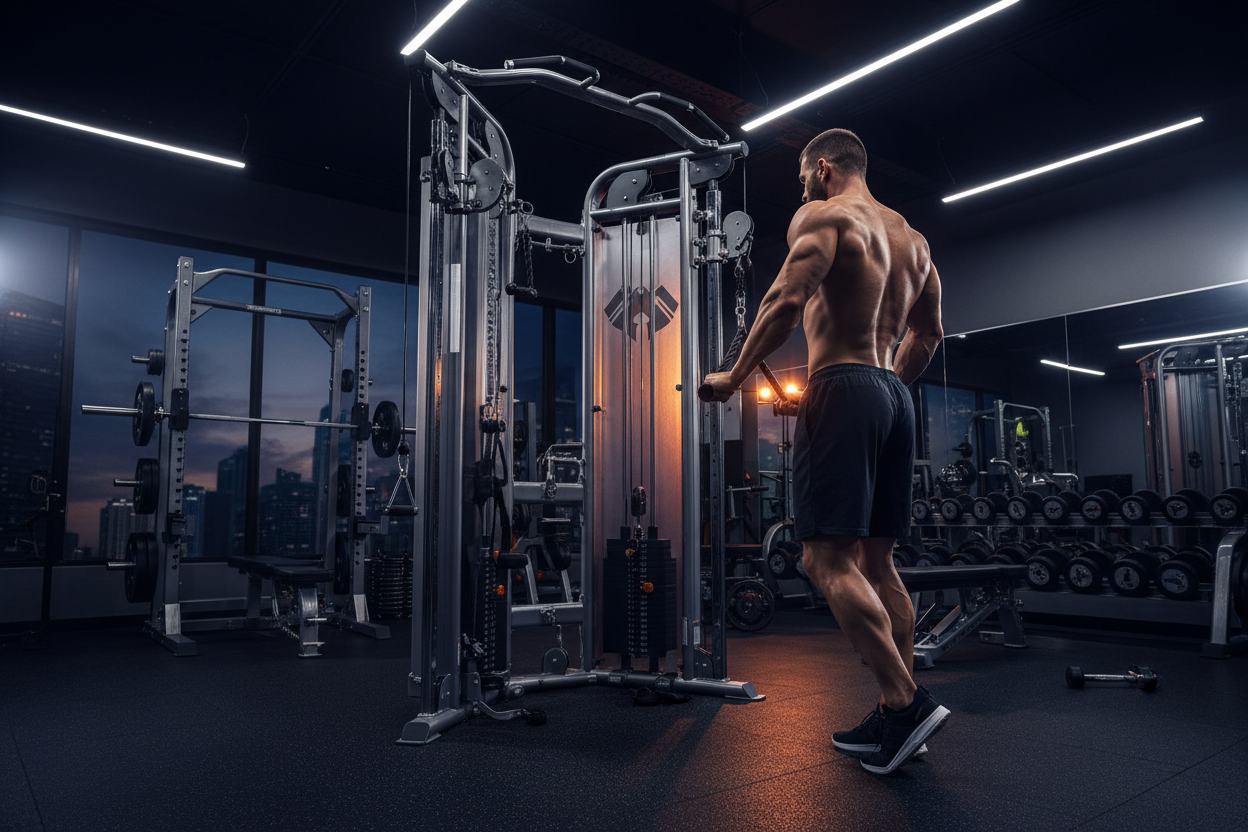
- Cable Crossover: A massive, wide-stance machine with two separate towers connected by a top bridge, usually too large for residential spaces.
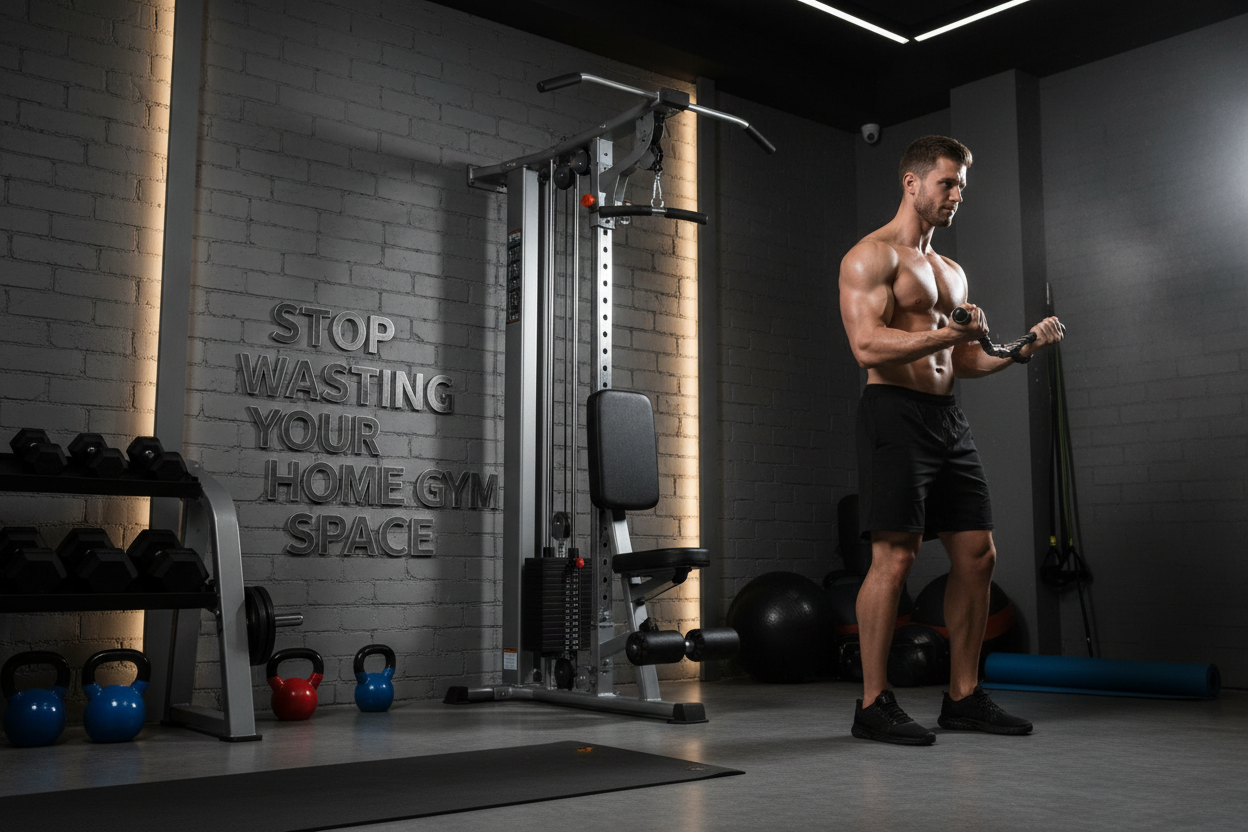
- Lat Pulldown / Low Row: A specialized single-stack machine dedicated to heavy vertical and horizontal pulling.
- Single Pulley Column: A space-saving, wall-mounted or rack-attached single cable system.
Decoding Cable Equipment Types
Before you drop thousands of dollars, you need to match the specific cable machine name to your training style and available square footage.
The Functional Trainer
If you want the ultimate versatility in a home gym, this is likely what you are looking for. A functional trainer features two adjustable pulley columns positioned relatively close together (usually 50 to 65 inches apart). Because both pulleys are housed in a single, connected frame, it maximizes exercise variety while minimizing its footprint.
The Cable Crossover
Often confused with the functional trainer, the true cable crossover is a commercial gym behemoth. It consists of two independent weight towers separated by 10 to 12 feet of open space, connected by a pull-up bar bridge. Unless you have a massive three-car garage or a dedicated warehouse, a full crossover is usually overkill for a residential setup.
Will It Fit Your Home Gym?
Knowing the right equipment name is only half the battle; knowing if it fits your space is the real challenge.
Garage vs. Basement Clearances
Most functional trainers and lat pulldown machines stand between 80 and 85 inches tall. If you are building a basement gym with standard 8-foot (96-inch) ceilings, you will have plenty of clearance for the machine itself, but potentially not enough for muscle-ups or full pull-ups on the top crossbar. Always measure your ceiling height before purchasing, and account for any exposed ductwork or lighting fixtures.
Weight Stacks vs. Plate-Loaded Systems
Once you've identified the machine you want, you have to decide how to power it. Plate-loaded cable machines are highly budget-friendly because you use your existing Olympic plates for resistance. However, selectorized weight stacks (machines with built-in metal plates and a pin) offer drastically faster transition times between exercises, making them the superior choice for high-intensity training and drop sets.
From Our Gym: Honest Take
When I first installed a 2:1 ratio functional trainer in my own two-car garage, I completely underestimated the working footprint. While the machine itself was only 60 inches wide, I needed at least 80 inches of functional width to perform chest flys and lateral raises comfortably. Furthermore, the 2:1 pulley ratio meant that a 200-pound weight stack actually provided 100 pounds of felt resistance per handle. If I were to do it again, I would have opted for a slightly heavier stack to ensure I never maxed out on heavy seated rows. The smooth, constant tension is absolutely worth the investment, but you have to plan your floor space around the exercises, not just the steel frame.
Frequently Asked Questions
What is the standard cable machine name at the gym?
Most people are thinking of a 'Functional Trainer' when they refer to a standard dual-pulley cable machine. If it is a very wide machine with two separate towers, it is called a 'Cable Crossover.'
Are home cable machines worth the money?
Yes. Cable machines provide constant tension throughout the entire range of motion, which is incredibly difficult to replicate with free weights. They are excellent for isolation work, injury rehab, and maximizing hypertrophy.
How much ceiling height do I need for a functional trainer?
You need an absolute minimum of 84 inches (7 feet) for most standard functional trainers, but 96 inches (8 feet) is highly recommended so you have enough headroom to utilize the built-in pull-up bars without hitting your head.