The Dumbest Mistakes I Made Building My Womens Leg Day Workout
I remember staring at a pair of 5-lb neoprene dumbbells in my living room, convinced that if I just did enough 'pulses,' my legs would magically transform. I was following every 'toning' guide on the internet, spending forty minutes doing donkey kicks and air squats that barely broke a sweat. It took three years of spinning my wheels to realize that a real womens leg day workout doesn't require a thousand reps; it requires a loaded barbell, some floor protection, and a bit of grit.
- Muscle 'burn' is often a distraction from actual progress.
- Compound lifts should always come before accessory work.
- You don't need a commercial gym's worth of machines to see results.
- Protecting your subfloor is cheaper than repairing cracked concrete.
Chasing the 'Burn' Instead of the Barbell
I used to think if my quads weren't screaming by the tenth rep, I was failing. I would do 30-rep sets of bodyweight squats, chasing that lactic acid build-up like it was the holy grail of hypertrophy. It wasn't. That burn is just metabolic stress, and while it has its place in a well-rounded plan, it is a secondary driver of growth compared to mechanical tension. If you want to change the shape of your legs, you have to move weight that actually challenges your central nervous system.
The day I stopped doing 50 glute bridges and started doing 5 sets of 5 heavy squats was the day my progress actually started. I stopped looking for 'beginner leg day' routines that felt like cardio and started looking for ones that felt like lifting. When you're training at home, it's easy to fall into the high-rep trap because you might not have a full rack of plates yet. But even a single 35-lb or 50-lb kettlebell used for heavy goblet squats will do more for your glutes than an hour of unweighted leg lifts.
I had to learn to embrace the 'heavy' side of things. That meant resting for two minutes between sets instead of thirty seconds. It meant focusing on the quality of the rep rather than how fast I could get my heart rate up. If you are still chasing the burn, try swapping your high-rep circuits for a session where you focus on adding just 2.5 lbs to your main lift every week. The results will speak for themselves.
Relying on Commercial Machines I Couldn't Bring Home
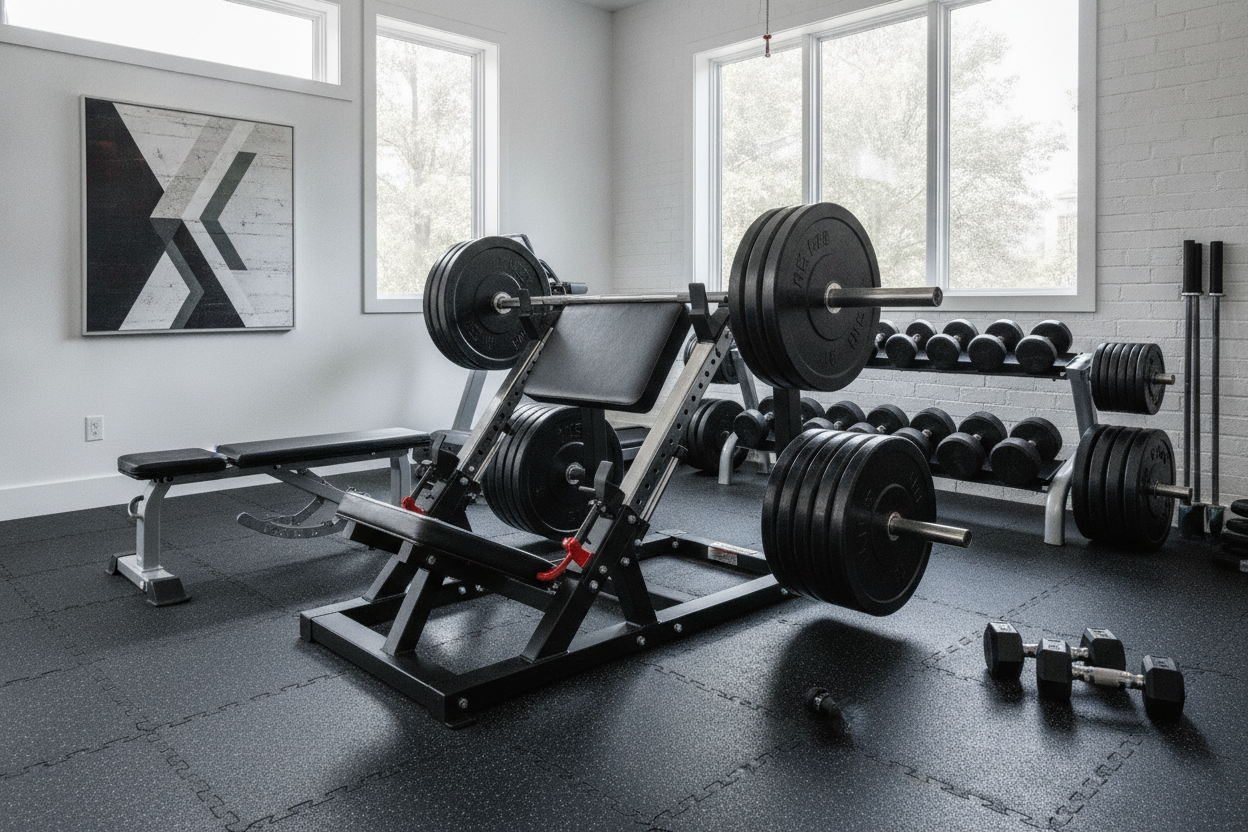
When I first transitioned from a big box gym to my garage, I panicked. How was I going to do leg day without a $3,000 leg press or a seated hamstring curl machine? I spent weeks looking for used commercial gear on Marketplace, convinced my progress would stall without a Hack Squat. I was wrong. You can build incredible lower body strength with a simple barbell and a pair of dumbbells if you know how to use them.
This shift forced me to master the gym leg workout routine female guide principles that focus on stabilization and core engagement. Machines are great for isolation, but they often mask weaknesses in your stabilizers. When you're forced to balance a barbell on your back or hold heavy dumbbells for lunges, your core, ankles, and hips are all forced to work in unison. My stabilizers were weak because the machines were doing all the balancing for me.
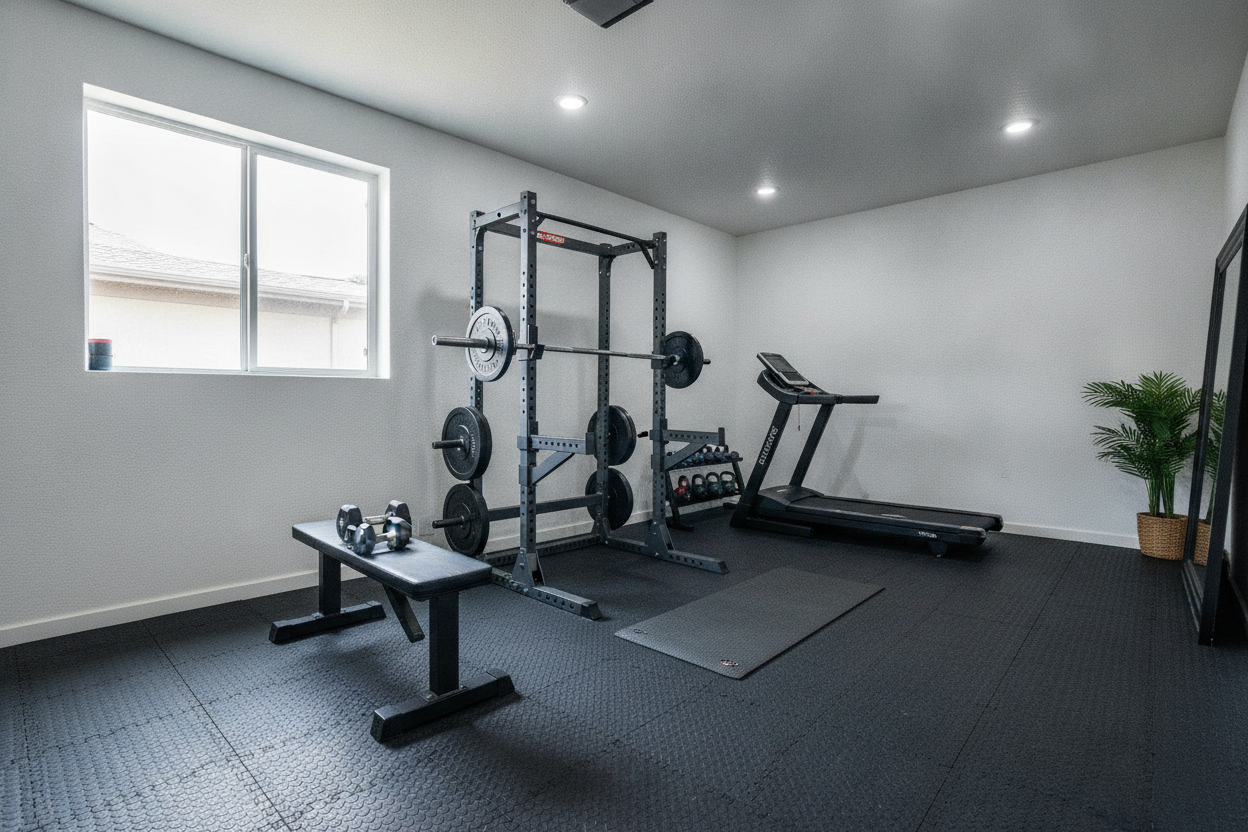
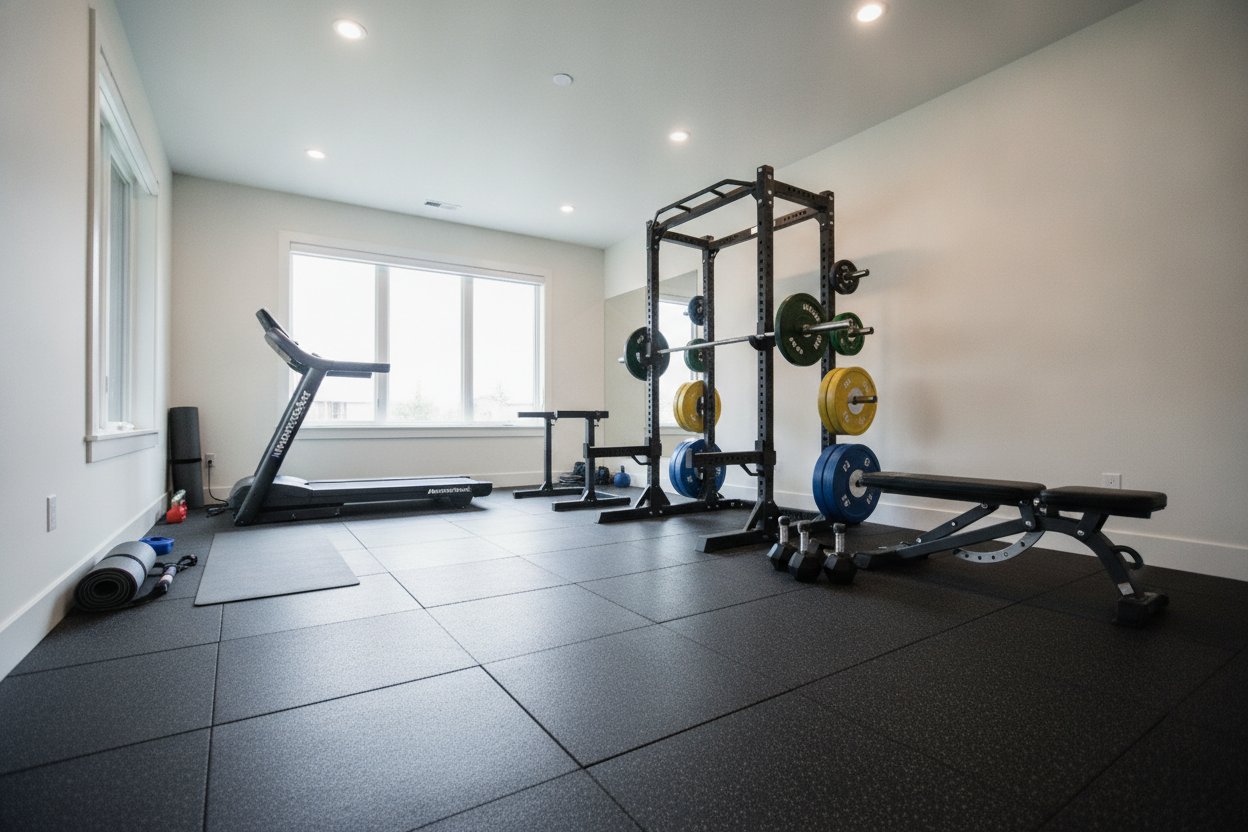
In my current 12x12 ft gym space, I don't have room for a leg press. Instead, I use a heavy sandbag or a barbell for front squats. I've found that my functional strength—the kind that helps you carry heavy groceries or hike up a steep trail—improved significantly once I ditched the fixed-path machines. If you're building a home gym, don't waste your budget on a leg extension machine. Buy a high-quality barbell with decent knurling and a set of bumper plates first.
The Minimalist Fix: 4 Moves That Actually Work
If you are overwhelmed by 12-exercise Instagram circuits, stop. I cut my routine down to four main movements and saw more progress in six months than I did in the previous two years. First, the Romanian Deadlift (RDL). It is the king of the hamstrings and glutes. I usually aim for 3 sets of 8-12 reps, focusing on the stretch. Second, Front Squats. They are harder on the core but easier on the lower back than back squats, making them great for high-frequency training.
Third, Walking Lunges—the move everyone loves to hate. I like to do these with a pair of 35-lb dumbbells, focusing on a long stride to target the glutes. Finally, heavy Hip Thrusts. I do not mean 20 reps with a light bar; I mean loading that bar until you need a thick foam pad to protect your hips. I've personally loaded up to 315 lbs on my home setup for these, and nothing builds the posterior chain faster. If you need to see the form on these, check the workout hub for the specific mechanics and video breakdowns.
The beauty of this minimalist approach is that you can actually track your progress. When you're doing 15 different exercises, it's impossible to know if you're getting stronger. When you only have four, you know exactly when it's time to add another 5-lb plate to the bar. I keep a simple logbook in my gym—nothing fancy, just a spiral notebook—to ensure I'm never lifting the same weight two weeks in a row. This simplicity is what turned my 'workout' into 'training.'
Ignoring the Impact of Heavy Weight on My Garage Floor
Here is the mistake that cost me a security deposit and a lot of stress. I started pulling 225-lb deadlifts directly on the concrete floor of my garage. I thought the thin outdoor rug I had would be enough to dampen the noise and protect the slab. It wasn't. Three months in, I noticed a spiderweb crack forming right where the plates hit. Concrete is strong under compression, but it's brittle under impact.
If you are serious about a heavy lower body weight workout female routine, you need a dedicated space that can handle the abuse. I finally invested in a 6x8ft exercise mat that actually absorbs the shock. It is thick enough to save the slab and quiet enough that I am not waking up the neighbors during 6 AM sessions. A good mat also provides the necessary grip; there is nothing worse than your feet sliding out during a heavy set of lunges because the floor is dusty or slick.
I also learned the hard way that cheap iron plates are louder and more abrasive than rubber-coated ones. If you're training in a residential area, bumper plates are worth the extra investment. They have a larger surface area which helps distribute the force of the drop. Combine those with a solid mat, and you can train as heavy as you want without worrying about the structural integrity of your home or your relationship with your neighbors.
Why I Eventually Scrapped the Split Entirely
The 'Leg Day' obsession eventually became my biggest hurdle. I would go so hard on Monday that I could not walk until Thursday, which meant my total weekly volume was actually pretty low. I would dread that one day a week, and if I missed it, my entire lower body progress was stalled for another seven days. I eventually scrapped the dedicated leg day and moved to an all over body workout female routine.
By hitting legs three times a week with moderate volume instead of once a week with soul-crushing volume, I recovered faster and lifted more total weight over the month. For example, instead of doing 15 sets of legs on Monday, I do 5 sets on Monday, Wednesday, and Friday. This kept my technique fresh and prevented that 'can't sit down' soreness that used to ruin my week. It is about frequency and consistency, not just how much you can punish yourself in a single window.
This shift also helped with my overall energy levels. I no longer felt like a zombie for 24 hours after my workout. If you find yourself skipping leg day because you're scared of the recovery time, try spreading those exercises out across the week. You'll likely find that you can lift heavier and with better form when you aren't trying to cram everything into one exhausting session. My legs have never been stronger, and my garage floor has never been safer.
FAQ
How often should a beginner do a leg workout?
Twice a week is the sweet spot. It allows for enough recovery while keeping the technique fresh in your mind. As you get more comfortable, you can move to three times a week with lower volume per session.
Do I need a squat rack for a home leg workout?
Eventually, yes. You can start with dumbbells or kettlebells, but to really push your limits and load the spine safely for heavy squats, a rack is a non-negotiable piece of gear for long-term progress.
Can I lose weight with just leg days?
Leg muscles are huge, so training them burns a lot of calories, but fat loss still comes down to your overall caloric balance. Don't rely on one workout to fix a bad diet.