Chasing the Hip Thrust World Record Will Probably Crush Your Pelvis
I remember the first time I tried to load four plates on a bar for hip thrusts. I felt like a hero until the bar started rolling toward my chin and my bench tipped backward, nearly launching me into the dumbbell rack. If you think that was a mess, looking at the hip thrust world record will make your pelvis ache just by proxy. We are talking about human beings moving more weight than a literal Smart car with nothing but their glutes and a prayer.
Quick Takeaways
- The elite records for this lift currently hover between 800 and 1,000+ pounds.
- Setup is 90% of the battle; without a bolted-down bench, you are asking for a hospital visit.
- Specialized padding is mandatory, not optional, once you cross the 400-pound threshold.
- Most 'gym records' you see on social media are high-velocity ego lifts with zero lockout.
Just How Heavy Are We Talking?
When we talk about the hip thrust record, we have to separate the wheat from the chaff. The internet is full of 'fake weights' and half-reps where the lifter barely moves the bar two inches. But in the world of elite strength, the numbers are terrifying. We are seeing athletes move 800, 900, and even 1,000 pounds. At that level, the barbell isn't just a tool; it becomes a weapon that wants to fold you in half.
Official records are tricky because the hip thrust isn't a standard powerlifting lift like the squat or deadlift. Most of these feats happen in specialized 'glute labs' or during heavy accessory days for world-class strongmen. To count, the lifter needs a full lockout—hips level with the knees—and a controlled descent. If the bar is bouncing off the floor like a pogo stick, I am not interested in the number.
The Heaviest Hip Thrust Men Have Pulled Off
The heaviest hip thrust ever recorded by a male athlete usually comes from the world of Strongman or specialized powerlifting. Legends like Chris Duffin and Blaine Sumner have toyed with weights in the 1,000-pound range. When you load ten 45-pound plates on each side of a standard Olympic bar, the bar actually starts to bow around the lifter's body. It looks less like a gym lift and more like a structural engineering test.
Most men who hit these numbers aren't doing it for the 'booty gains.' They are doing it because hip extension strength is the primary driver for a massive deadlift and stones. If you can't lock out 800 pounds on your hips, you aren't locking it out on a deadlift bar. These guys use stiff bars, often 27mm or 29mm, just to keep the oscillations from throwing them off the bench.
Who Holds the World Record Hip Thrust Woman Title?
The world record hip thrust woman title is a hotly contested spot, primarily because the glute-to-bodyweight strength ratio in elite female lifters is insane. Names like Tamara Walcott—who already holds world records in the deadlift—have posted clips moving well over 800 pounds. It is a masterclass in bracing. You can see the internal pressure they create just to keep their spine from turning into a question mark.
What is impressive about these women isn't just the weight; it is the technique. Unlike the guys who sometimes 'manhandle' the weight with momentum, the top female lifters usually show incredible eccentric control. They prove that the glutes are the largest, most powerful muscle group in the body when you actually know how to fire them under load.
The Nightmare Logistics of Moving a Small Car with Your Hips
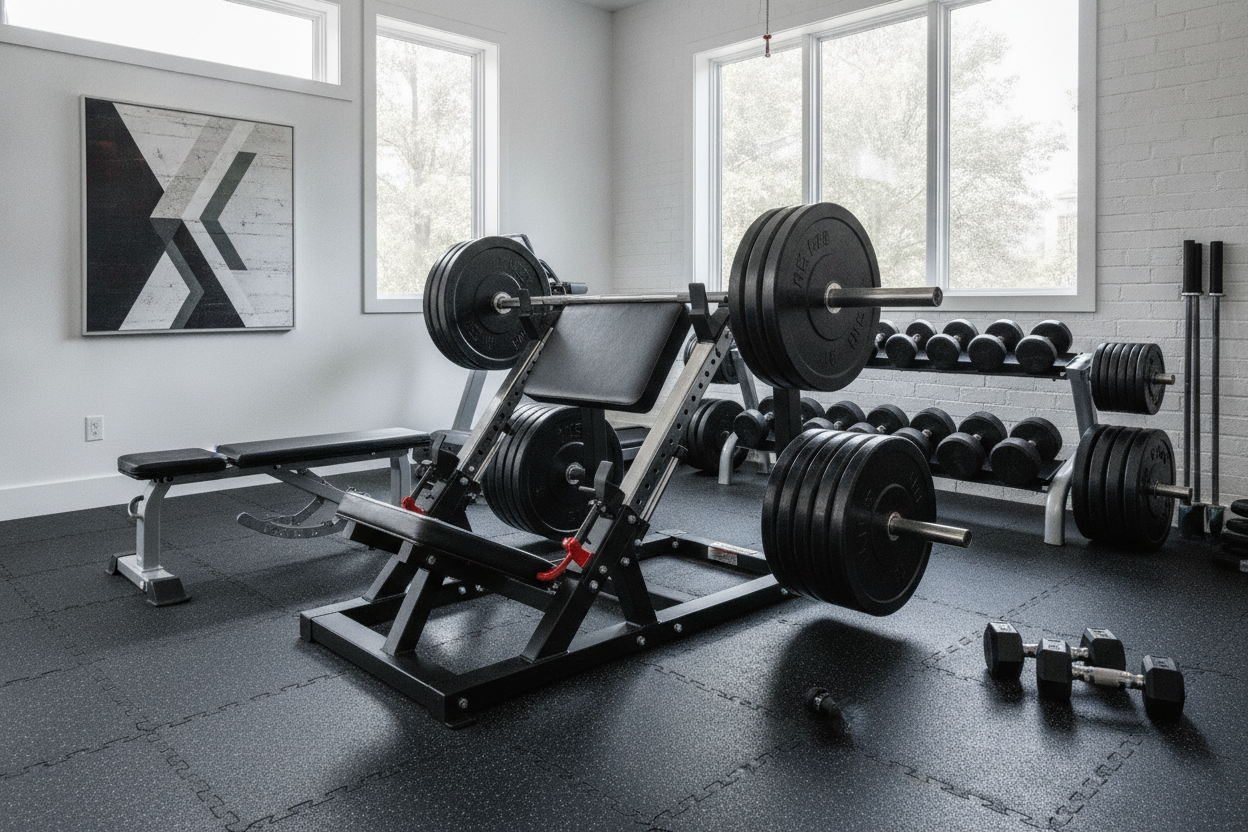
Setting up for a world-class lift is a logistical nightmare. You can't just walk up to a bench and go. First, you have the 'barbell taco' effect. At 600+ pounds, a cheap bar will literally bend over your pelvis. You need a high-tensile strength power bar that won't permanently deform under the load. Then there is the floor—standard gym tiles will compressed or crack under that much concentrated pressure.
Then there is the padding. A standard foam roll is useless here. Elite lifters use high-density squat pads or even specialized mats folded multiple times. If that pad shifts an inch during a 800-pound lift, the serrated knurling of the bar will chew through your skin and bruise your pelvic bone instantly. It is a brutal, uncomfortable, and loud process that usually requires two spotters just to help slide the plates on without the bar tipping.
Why You Shouldn't Chase These Numbers in Your Garage
I love a good home gym session, but trying to break a hip thrust record in your garage is a recipe for disaster. Most residential floors aren't rated for a 700-pound drop. More importantly, your standard utility bench is a pivot point. If you don't have it braced against a wall or a rack, the moment you drive upward, the bench is going to slide backward, and you are going to drop a loaded barbell directly onto your guts.
If you are hell-bent on going heavy at home, you need dedicated equipment. A standard flat bench is too high and too unstable. You should look into a specialized setup like the Gxmmat Hip Thrust Bench which provides a much wider, lower base of support. This keeps the center of gravity low and prevents the 'flip' that happens when you're wrestling with heavy iron. Even then, I'd suggest staying within a rep range that doesn't require a funeral director if you miss a lift.
When Using a Tracked Machine Actually Makes Sense
I'm usually a free-weight purist, but once you start pushing past 400 or 500 pounds, the setup time for a barbell thrust becomes a workout in itself. This is where a Smith machine hip thrust actually becomes the superior choice. It removes the stability requirement, allowing you to focus 100% of your neural drive into your glutes rather than balancing a vibrating bar.
The fixed path of a Smith machine also saves your shins. You don't have to worry about the bar rolling forward or back. For most lifters—even the very strong ones—the Smith machine allows for better mind-muscle connection and a much harder squeeze at the top. If your goal is hypertrophy rather than a world record certificate, the machine is the smarter play every single time.
What Normal Lifters Can Learn From the Elite
You don't need to move 900 pounds to get the benefits of the elite. The biggest takeaway from record holders is the 'hard lockout.' Watch any hip thrust world record attempt and you'll see the lifter pause at the top. They aren't just getting the weight up; they are owning it. Most people in commercial gyms cut the range of motion short because they are using too much weight. If you can't hold the top for a full second, take a plate off.
Bracing is the second lesson. These athletes treat a hip thrust like a heavy squat. They take a massive diaphragmatic breath, pack their ribs down, and turn their core into a pillar of stone. This protects the lower back. If you feel a 'pinch' in your lumbar during thrusts, you aren't bracing like a record holder. Prioritize that tension, keep your chin tucked, and stop worrying about how many plates are on the bar until your form is flawless.
FAQ
Is the hip thrust record officially in the Guinness World Records?
Not usually. Guinness tends to track 'most weight moved in one minute' or 'most repetitions' rather than a single max lift. The true heavy records are usually tracked by strength federations or documented in professional strength facilities.
Can I break my pelvis doing a hip thrust?
If you use a bare bar with no padding and poor form, you can certainly cause bone bruising or stress fractures. Always use a high-density pad and ensure the bar is positioned across the crease of your hips, not directly on the hip bones.
Why is the hip thrust easier than a deadlift?
The range of motion is significantly shorter, and the leverage is much more favorable. Your glutes are in their strongest position at the top of a thrust, whereas the 'floor' part of a deadlift is where most people are weakest.