The Definitive Leg Day Playbook: Moves That Actually Build Mass
Building a lower body that performs as well as it looks requires more than just walking into the gym and hopping on the nearest machine. You need a strategy. If you are looking for a concrete legs workout list that balances size, strength, and longevity, the answer lies in mastering a few fundamental movement patterns rather than trying to confuse your muscles with endless variety. The most effective training sessions prioritize compound movements that recruit the maximum amount of muscle fiber, followed by targeted isolation work to shore up weaknesses.
Many lifters overcomplicate their training. They hunt for secret techniques when the magic is actually in the execution of the basics. A proper list of exercises for legs should cover the squat pattern, the hip hinge, unilateral movement, and specific isolation for the hamstrings and quads. By hitting these four categories, you ensure that no muscle group is left lagging and that your physique develops symmetrically.
The Foundation: Squat Variations
When compiling a solid legs workout list, the squat inevitably sits at the top. It is the primary movement for developing the quadriceps, glutes, and adductors while demanding significant core stability. However, the barbell back squat isn't the only option, and for some biomechanics, it might not even be the best one.
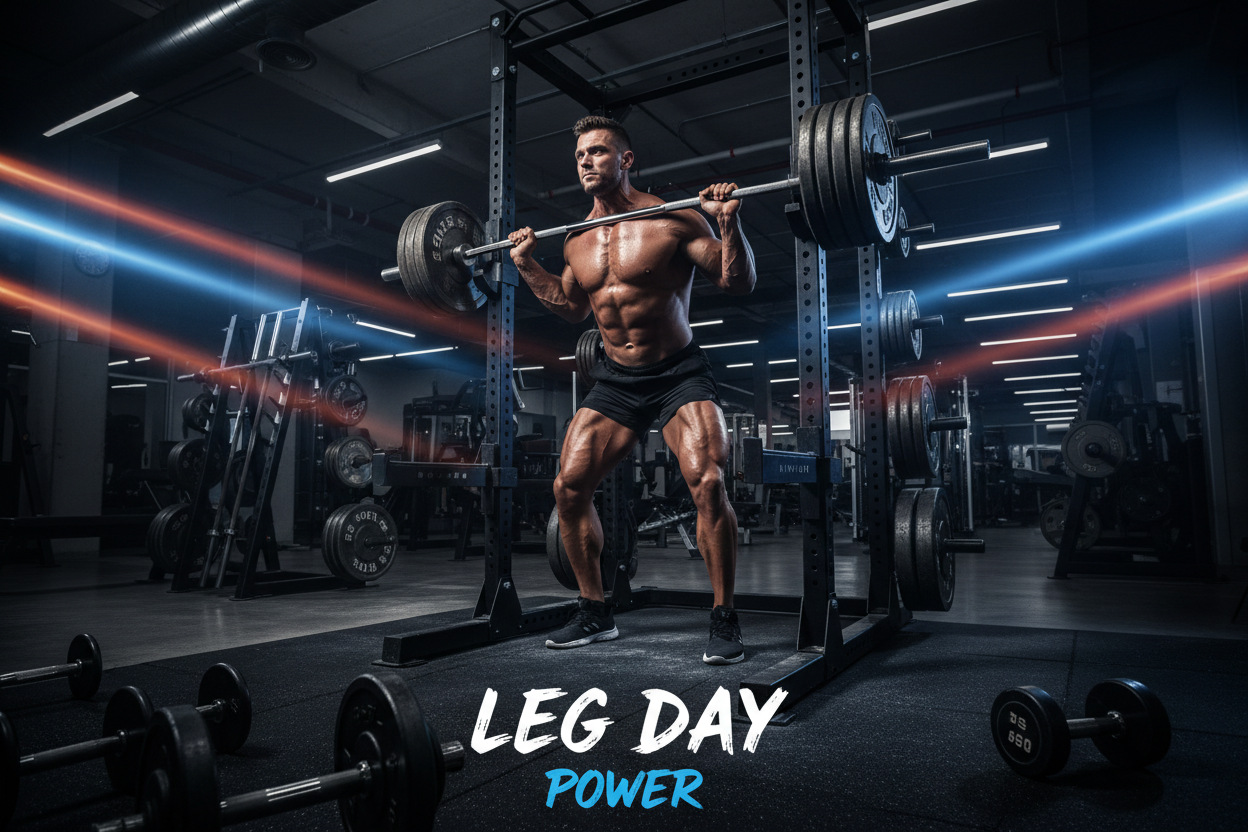
The Barbell Back Squat remains the gold standard for loading. Because you can place a heavy load directly on your spine, the potential for systemic stress and subsequent growth is unmatched. The key here is depth. Hitting parallel—where the hip crease drops below the top of the knee—ensures full glute activation. Cutting reps high usually results in better ego boosts than leg gains.
For those with long femurs or lower back issues, the Front Squat or Goblet Squat are superior alternatives. By shifting the weight to the front of the body, you are forced to maintain a more upright torso. This shift places a tremendous amount of tension on the quadriceps and reduces shear force on the lumbar spine. If your goal is pure quad development, these anterior-loaded variations often outperform the traditional back squat.
The Posterior Chain: Hip Hinges
A massive set of quads looks strange if there is nothing supporting them from the back. Any comprehensive list of exercises for legs remains incomplete without a heavy hip hinge to target the hamstrings and glutes. This is where many gym-goers fail; they treat leg day as quad day and wonder why their knees hurt or their physique looks unbalanced.
The Romanian Deadlift (RDL) is arguably the best hypertrophy builder for the posterior chain. Unlike a conventional deadlift, which starts from the floor, the RDL starts from the top down. You unlock your knees slightly and push your hips back as far as possible. The movement ends not when the bar hits the ground, but when your hips stop moving back. This keeps constant tension on the hamstrings.
I learned the importance of the hinge the hard way. Early in my lifting career, I focused entirely on pressing movements—leg press, hack squat, extensions. My quads grew, but I developed nagging knee tendinitis. It wasn't until I incorporated heavy RDLs and dedicated hamstring work that the knee pain vanished. My hamstrings started acting as the necessary brake system for my knees, stabilizing the joint during heavy squats. Neglecting the back of your legs is a recipe for injury.
Unilateral Training: Fixing Imbalances
Bilateral movements like squats hide imbalances. Your dominant leg will naturally take over to move the weight. To build a truly bulletproof lower body, your list of workouts for legs must include single-leg work. These movements are often the most hated because they require balance, coordination, and a high pain tolerance.
The Bulgarian Split Squat is notorious for a reason. By elevating the rear foot, you place the entire load on the front leg. This exercise stretches the hip flexors of the rear leg while hammering the glutes and quads of the working leg. You can adjust the bias simply by changing your torso angle: lean forward to hit the glutes, or stay upright to torch the quads.
Walking Lunges serve a similar purpose but add a dynamic component. They force the stabilizers in the hip and ankle to work overtime. If holding dumbbells is too taxing on your grip, throwing a barbell on your back or using a weighted vest allows you to continue until your legs give out, rather than your hands.
Machine Isolation: The Finishers
Once the heavy compound lifting is done, machines allow you to safely take muscles to absolute failure without worrying about stabilizing a heavy bar. If you are looking for a list of workouts for legs that focuses purely on hypertrophy without spinal loading, machines are your best friend.
Leg Extensions are unique because they are one of the few exercises that load the quadriceps in the fully shortened position. While squats load the muscle effectively at the stretch, extensions hit the rectus femoris when the leg is straight. Squeezing at the top of the movement drives blood into the muscle and creates a massive pump.
Conversely, Seated or Lying Leg Curls are non-negotiable for hamstring development. The hamstrings have two functions: hip extension (trained by RDLs) and knee flexion (trained by curls). You must do both. The seated leg curl is generally superior for hypertrophy because flexing the hip puts the hamstring in a more stretched position to begin with, allowing for greater mechanical tension.
Putting It Together: The Sample Routine
You don't need to do every exercise every session. A well-structured list leg exercises routine might look like this:
- Squat Variation: 3 sets of 5-8 reps (Focus: Strength and Tension)
- RDL or Stiff Leg Deadlift: 3 sets of 8-12 reps (Focus: Hamstring Stretch)
- Bulgarian Split Squat: 3 sets of 10-12 reps per leg (Focus: Balance and Hypertrophy)
- Leg Extension: 3 sets of 15-20 reps (Focus: Metabolic Stress)
- Seated Leg Curl: 3 sets of 12-15 reps (Focus: Peak Contraction)
- Calf Raises: 4 sets of 15-20 reps (Focus: Full Range of Motion)
Consistency with this rotation will yield better results than constantly changing your routine. Track your weights, aim to add a little load or a rep each week, and eat enough to support the growth. The exercises don't need to be fancy; they just need to be done with intensity.
Frequently Asked Questions
How many times a week should I train legs?
For most natural lifters, training legs twice a week is the sweet spot for hypertrophy. This frequency allows you to split the volume, perhaps focusing one day on squat patterns and the other on hinge patterns, ensuring you can train with high intensity without overwhelming your recovery capacity.
Can I build big legs with just dumbbells?
Absolutely, though your exercise selection will need to shift toward unilateral movements. Since you cannot load a goblet squat as heavily as a barbell back squat, exercises like Bulgarian split squats and lunges become essential because they require less total weight to create a high stimulus on the target muscles.
What should I do if I feel squats only in my lower back?
This usually indicates a form breakdown or a weak core, often resulting from the hips shooting up faster than the chest (the "good-morning" squat). Try switching to front squats or goblet squats to force an upright torso, and work on bracing your core properly before every single rep.