The Constant Tension Hack: A Better Workout for Shoulder Mass
I spent years swinging 35-pound dumbbells around like a pendulum, wondering why my delts looked like flat pancakes despite the heavy lifting. I was following every standard workout for shoulder mass I could find, but the growth just wasn't there. It wasn't until I stopped fighting gravity and started manipulating resistance that things finally clicked.
Most of us treat our home gym like a shrine to the iron, but gravity is a fickle mistress when it comes to lateral movements. If you’ve ever felt like the first half of your side raise is just 'dead air,' you're not crazy—you're just losing the battle against physics. Switching to constant tension changed my physique and, more importantly, stopped my rotator cuffs from screaming at me after every session.
Quick Takeaways
- Dumbbells provide zero tension at the bottom of lateral movements because the weight is pulling straight down, not against the muscle.
- Cables and bands provide a 'flat' resistance curve, meaning the muscle is under fire from start to finish.
- You can move significantly less weight and get a better hypertrophy stimulus while sparing your joints.
- A 2:1 cable ratio is the gold standard for these movements to ensure smooth travel without the weight stack jumping.
Why Gravity Is Lying to Your Delts
Gravity only works in one direction: down. When you do a standard lateral raise with a dumbbell, the resistance is at its peak when your arm is parallel to the floor. But at the bottom? The weight is just hanging. There is zero torque on the medial deltoid. You’re essentially resting for 30% of every single rep.
This mismatch is why so many people resort to 'cheating' or using momentum to kick the weight up. Because there’s no tension at the start, you have to explode to get the dumbbell moving. This puts a massive amount of shear force on the supraspinatus tendon. Most traditional gym workout shoulder exercises rely on this flawed curve, which is why your traps usually take over before your delts even wake up.
Training shoulders effectively requires tension where the muscle is most elongated. If you want to actually build the 'cap,' you need a load that pulls across your body, not just down toward your shoes. It’s the difference between a muscle that’s working for 40 seconds and one that’s taking micro-naps every two seconds.
The Magic of Constant Resistance
Cables and heavy-duty bands change the game because they allow you to align the resistance with the fiber orientation of the deltoid. When I switched to a cable-only gym exercise shoulder routine for six weeks, my lateral head thickness exploded. Why? Because I was forced to control the weight through the entire range of motion.
By using a cable, you can set the pulley height so the cable is perpendicular to your arm at the start of the move. This forces maximum motor unit recruitment from the very first inch of the lift. You’ll find that a 15-pound cable feel twice as heavy as a 30-pound dumbbell. This 'working out shoulder muscles' hack allows you to use lighter loads while achieving higher levels of metabolic stress and mechanical tension.
Plus, the constant tension eliminates the 'resting point' at the top and bottom. There is no relief. This creates massive occlusion—that skin-splitting pump—which is a primary driver for hypertrophy. If you have a functional trainer with a 1:1 or 2:1 ratio, you have everything you need for 3D delts.
The 3-Move Constant Tension Workout
This isn't your standard 5x5 routine. This is about time under tension and precision. If you’re doing this workout for shoulder in gym environments, claim a cable station and don't let go. If you're at home, get your pulleys ready.
Move 1: The Cross-Body Cable Lateral
Set the pulley to hip height. Reach across your body and grab the D-handle with the far hand. By starting with the handle across your body, the medial delt is under a massive stretch before you even start the rep. Keep a slight bend in the elbow and pull out and away. Don't think about lifting up; think about pushing the handle toward the walls. This is arguably the most effective exercise in gym for shoulder width because it hits the fibers that dumbbells simply can't reach.
Move 2: The Tall-Kneeling Dual Pulley Press
Most people ego-press standing up and use their legs. Drop to both knees on a cushioned home gym exercise mat to kill the momentum. Set two pulleys to the lowest setting. Pressing cables upward forces the shoulders to stabilize against a force pulling inward and downward simultaneously. This 360-degree stability requirement makes it a superior muscle shoulder workout compared to a fixed barbell press. My shoulders always feel 'fuller' after this than they ever did with a Smith machine.
Move 3: Continuous-Tension Face Pulls
Forget the heavy weight; focus on the squeeze. Set the pulley to forehead height. Pull the rope toward your ears and pull the ends apart. Hold the peak contraction for two seconds. This is a staple in many shoulder and back workout routines for a reason. It builds the rear delts and mid-traps, giving you that '3D' look from the side profile. If you aren't feeling a burn by rep 12, your weight is too heavy and your form is trash.
How to Hack This Setup in a Garage Gym
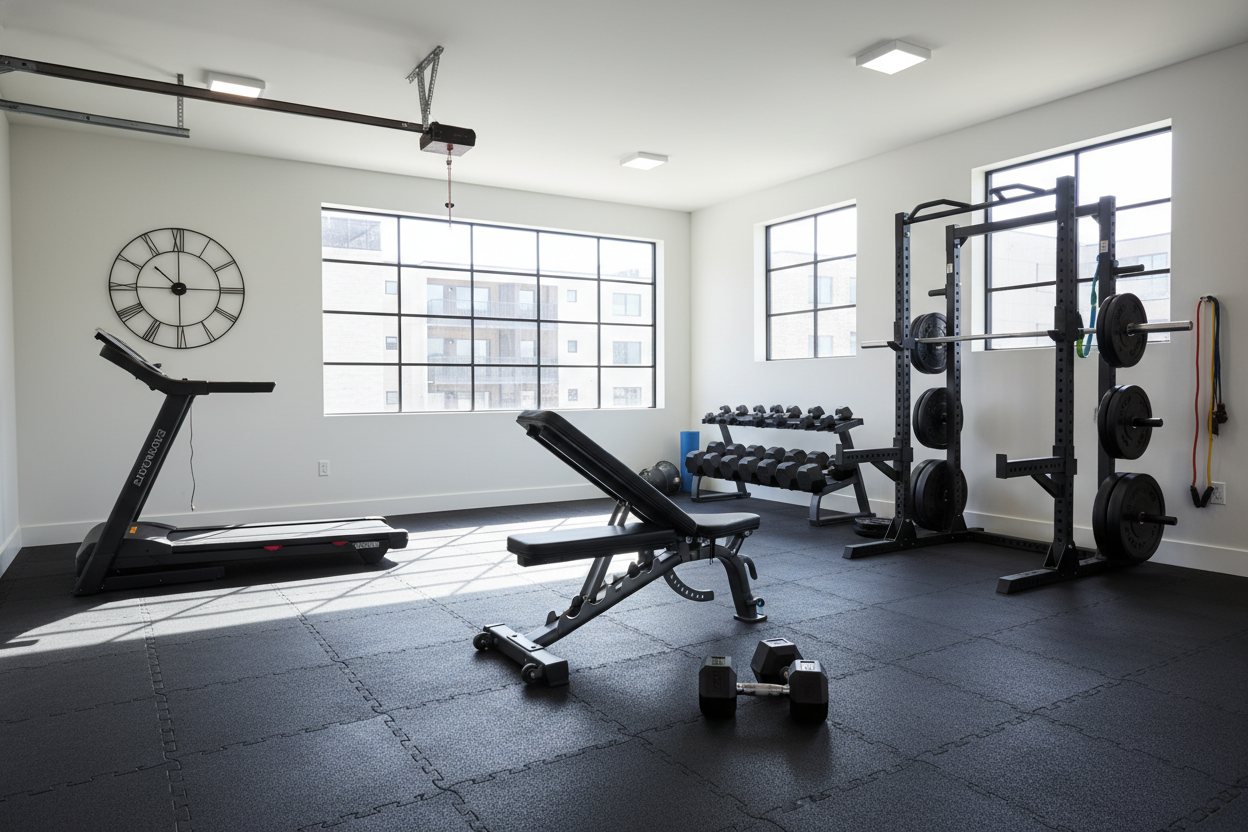
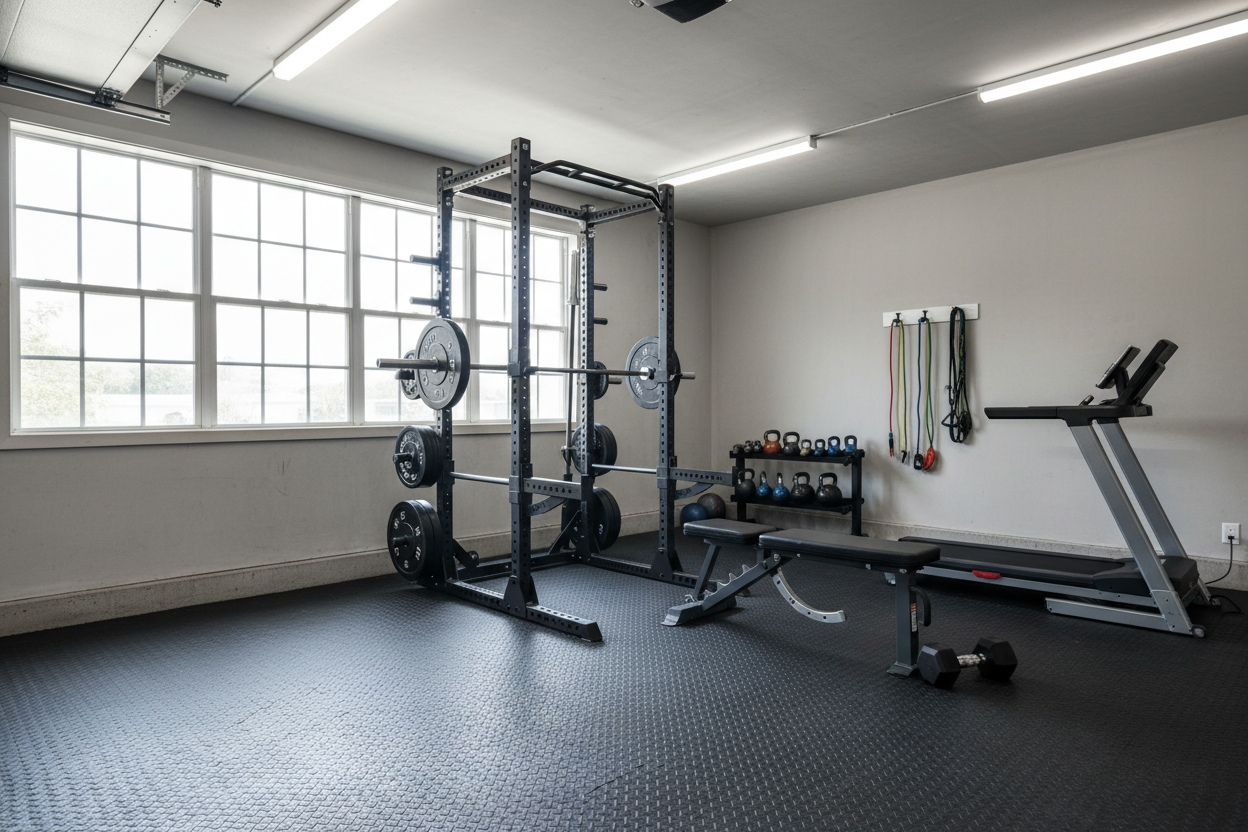
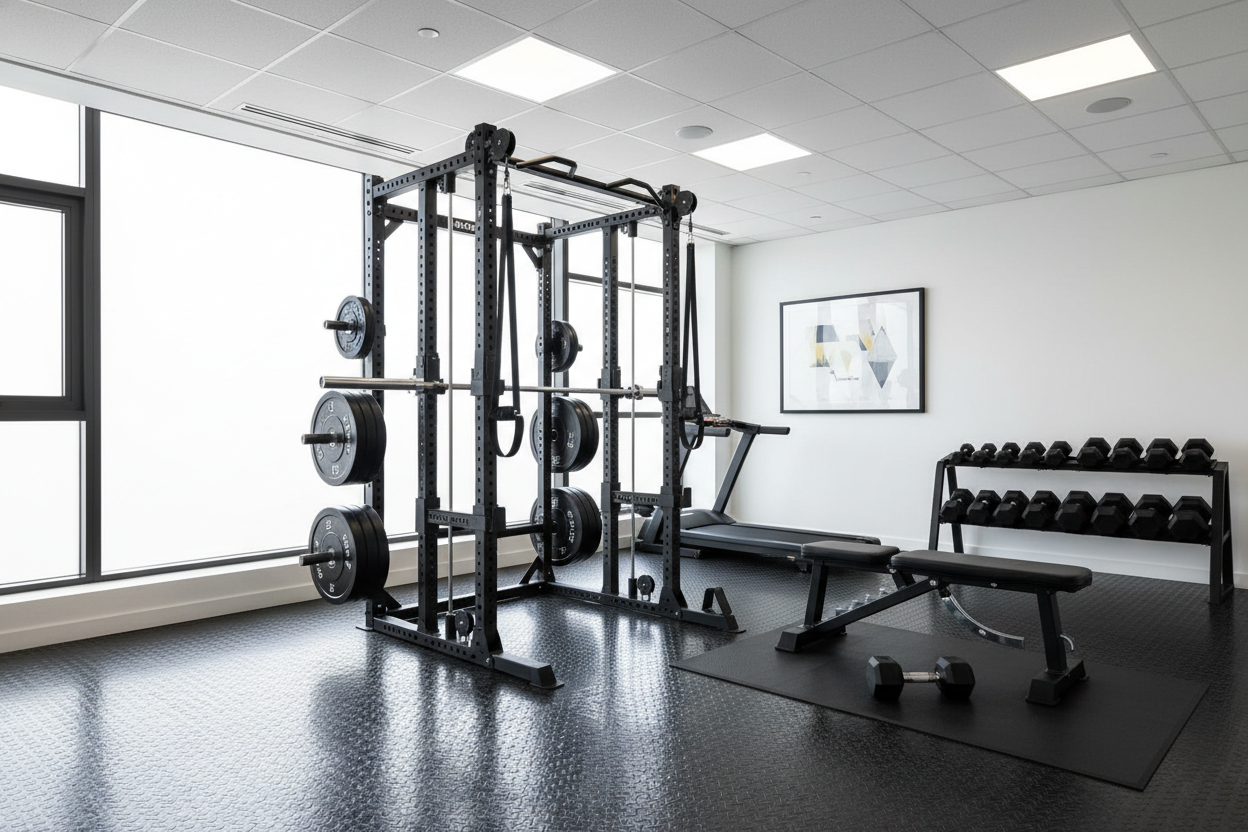
You don't need a $3,000 functional trainer to do this. I spent years using a single wall-mounted pulley and a set of 41-inch latex bands. To mimic the cross-body lateral, anchor a loop band to the bottom of your power rack. The resistance will increase as you reach the top, perfectly matching your deltoid's strength curve.
If you're doing the tall-kneeling press with bands, make sure you have a large exercise mat for home gym use so you can anchor the bands under your knees without them slipping or digging into your shins. The key is to never let the band go slack. If there’s a loop at the bottom, you’re losing the benefit. Shorten the band or step further away to keep that tension 'on' throughout the shoulder training workout.
Personal Experience: The 'Heavy' Trap
I used to be the guy trying to 'power up' 50-pound dumbbells for lateral raises. My traps were huge, but my shoulders were narrow and my right labrum was constantly inflamed. I had to swallow my pride and drop down to 15-pound cable raises. It felt embarrassing at first—until the results started showing. The biggest mistake I made was thinking weight moved equaled muscle grown. In the shoulder wo world, tension is king, and ego is the enemy. My joints haven't felt this good in a decade.
FAQ
What is the best exercise for shoulder width?
The cable lateral raise is king. Unlike dumbbells, it provides tension at the bottom of the movement where the medial delt is most stretched, leading to better growth over time.
Can I build big shoulders with just bands?
Absolutely. Bands actually provide a 'linear variable resistance' that gets harder as you reach the peak contraction, which is great for the shoulder muscles and workouts targeting the lateral head.
How many times a week should I train shoulders?
For most lifters, twice a week is the sweet spot. One day focused on heavy overhead pressing and one day focused on this 'constant tension' isolation work provides a balanced muscle fitness shoulder workout.
Do I need a cable machine for a good shoulder workout?
No, but it helps. You can use resistance bands or even just change the angle of your body (like leaning away from a pole during a lateral raise) to shift the gravity curve, but cables are the most convenient tool for a gym exercise shoulder session.