The Complete Guide to Building Your Perfect Home Gym Without Breaking the Bank
Setting up a home workout space doesn't require a massive budget or a spare room the size of a commercial fitness center. With the right equipment to workout at home, you can create an effective training environment that fits your goals, space, and wallet. The key is understanding which pieces of fitness equipment for the home will actually get used versus those that end up as expensive coat racks.
I learned this lesson the hard way after purchasing an oversized elliptical machine that dominated my bedroom for six months before I admitted defeat and sold it online. The reality is that the best exercise equipment in home settings is whatever you'll consistently use, not necessarily the most expensive or elaborate option.
Essential Equipment for Every Home Workout Space
Building your collection of workout equipment for the home starts with versatile pieces that support multiple exercises. Resistance bands might seem simple, but these exercise tools at home can replicate dozens of gym machines at a fraction of the cost. A set of adjustable dumbbells serves as the backbone of any strength training routine, providing the at home weight equipment needed for progressive overload without requiring an entire wall of fixed-weight options.
A quality yoga mat does double duty as both a cushioned surface for floor exercises and a designated workout zone that signals your brain it's time to train. This simple piece of home exercise gear creates a psychological boundary between relaxation space and training space, which matters more than most people realize when working out in shared living areas.
For those focused on strength training, a adjustable bench transforms your workout possibilities. This single piece of fitness home equipment enables incline presses, step-ups, Bulgarian split squats, and countless other movements that target muscles from different angles. Combined with your dumbbells, you've essentially replicated half of what most commercial gyms offer.
Space-Saving Solutions for Small Living Areas
Living in an apartment or smaller home doesn't mean sacrificing your fitness goals. Compact at home workout equipment like suspension trainers mount to any sturdy door frame and pack away in seconds. These tools for workout routines engage your core during every movement while building functional strength that transfers to daily activities.
Resistance band sets with door anchors provide another space-efficient option for home training equipment. Store them in a drawer when not in use, then attach them to create a full-body workout system. The newest workout equipment designs increasingly prioritize portability and storage, recognizing that most people don't have dedicated gym rooms.
Kettlebells deserve special mention as incredibly efficient exercise gear for home use. A single kettlebell supports hundreds of exercises, from swings and snatches to goblet squats and Turkish get-ups. Unlike some bulky exercise home equipment, kettlebells tuck neatly into corners and under beds. Starting with one moderate-weight bell teaches proper movement patterns before investing in a full set of home workout equipments.
Smart Investments for Long-Term Fitness
When deciding which exercise equipment to buy, durability matters as much as functionality. Cheap resistance bands snap mid-workout, flimsy benches wobble dangerously under load, and poorly constructed home exercise devices create more frustration than results. Spending slightly more upfront on quality fitness equipment for home use saves money and prevents injuries.
A pull-up bar ranks among the best strength equipment for home training. Modern designs install without drilling holes, fitting securely in standard door frames. This single piece of at home training equipment builds back, arm, and core strength while requiring minimal space. For those not yet able to perform full pull-ups, the same bar supports resistance bands for assisted variations.
Foam rollers and massage tools might not seem like traditional workout equipment for home use, but recovery is where progress actually happens. These home exercise accessories help manage muscle soreness, improve mobility, and prevent the overuse injuries that sideline enthusiastic home exercisers. Think of them as essential maintenance tools for your body.
Building Your Collection Strategically
Rather than buying a complete home exercise equipment set all at once, build your collection gradually based on your evolving needs. Start with basic equipment for working out at home like resistance bands and a mat. As you establish consistent habits, add pieces that support your specific goals—whether that's indoor workout equipment for cardio, home exercise weight equipment for strength, or specialized tools for mobility work.
This approach prevents the common mistake of over-investing in new exercise equipment before knowing what you'll actually use. That fancy rowing machine might seem perfect when you're motivated on Sunday morning, but if you genuinely prefer outdoor running, it becomes an expensive reminder of good intentions.
Shopping for fitness at home equipment also means considering noise levels if you live in an apartment. Rubber-coated weights, yoga blocks, and resistance-based exercise tools at home create effective workouts without disturbing neighbors below. Save the jumping exercises and heavy deadlifts for gym visits or ground-floor living situations.
Creating an Effective Workout Environment
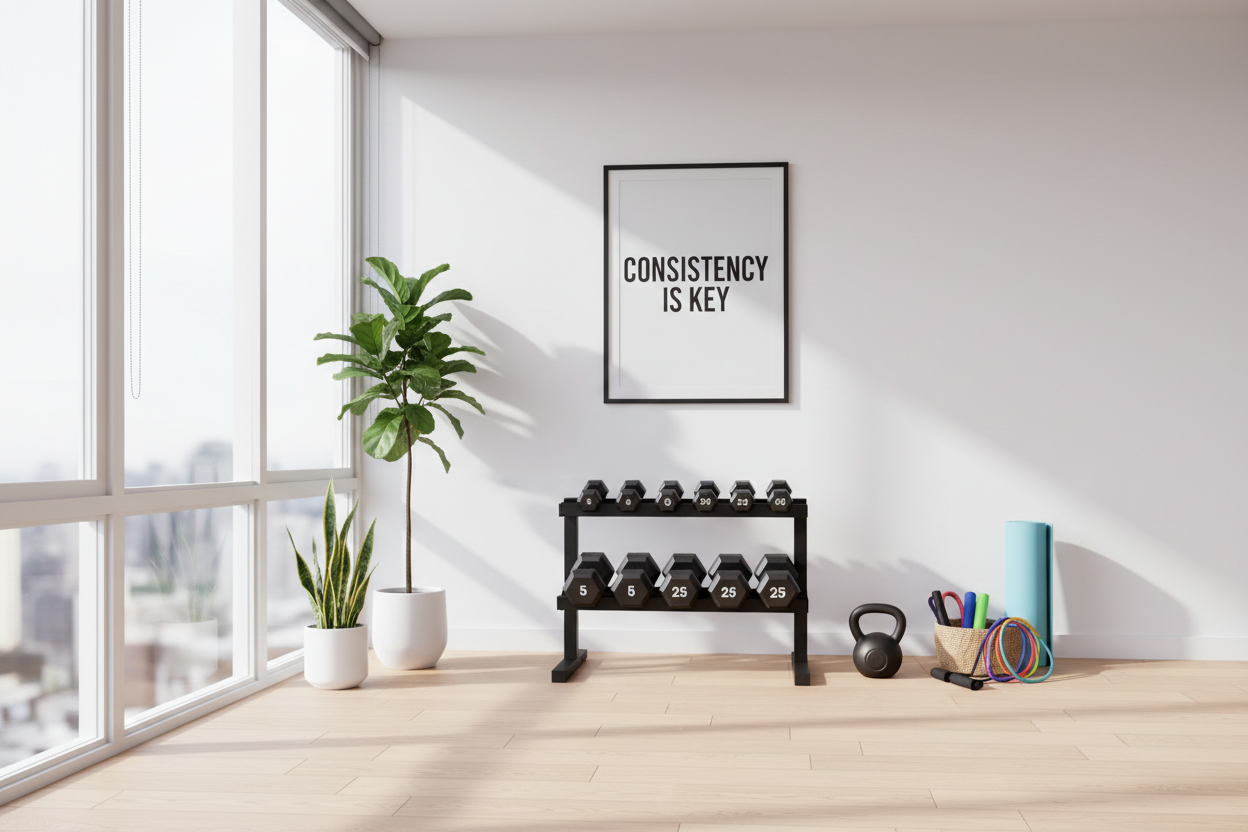
The physical equipment home workout enthusiasts collect matters less than the environment you create. Dedicate a specific area—even just a corner of your bedroom—as your training zone. This designated space, stocked with your chosen at home fitness equipment, removes decision fatigue from the equation. You don't waste mental energy figuring out where to exercise; you simply go to your spot and begin.
Proper lighting and ventilation transform how workout gear for home use feels during training sessions. A dim, stuffy corner makes every set harder than necessary, while a well-lit area with fresh air circulation supports better performance. Small environmental tweaks often matter more than having the newest fitness equipment or most complete home workout set.
Storage solutions keep your exercise gear organized and accessible. Wall-mounted racks for resistance bands, shelves for smaller home exercise instruments, and designated bins for accessories prevent the clutter that makes home training feel chaotic. When your equipment for fitness at home stays organized, you're more likely to use it consistently.
Avoiding Common Purchase Mistakes
The fitness industry excels at marketing new exercise equipment that promises revolutionary results. Before buying home exercise gym equipment based on infomercials or social media ads, research independent reviews and consider whether it truly fits your training style. That vibrating platform or ab-targeting workout device rarely delivers the promised results, no matter how compelling the marketing.
Similarly, resist the urge to buy fitness equipment for home use that replicates exercises you can do with equipment you already own. If your adjustable dumbbells and bench already support chest exercises, you probably don't need a specialized chest press machine taking up floor space. Focus on filling genuine gaps in your training capabilities rather than collecting redundant tools for exercise.
Personal exercise equipment should match your current fitness level, not your aspirational future self. Buying advanced home training gear before you're ready often leads to improper form, frustration, and abandoned equipment. Start with appropriate workout stuff for home use, master the basics, then upgrade as your abilities progress.
Making the Most of What You Have
The best home exercise material is whatever gets you moving consistently. A simple home workout set of bands, dumbbells, and a mat supports thousands of exercise variations. Learning to use basic equipment for home training creatively builds better fitness knowledge than owning every specialized machine but understanding none of them deeply.
Online resources and training apps help maximize your existing at home workout tools. Video demonstrations show proper form for exercises you might not have considered, while structured programs ensure balanced training across all muscle groups. Your collection of exercise equipment at home becomes exponentially more valuable when paired with quality programming.
Remember that commercial gyms succeed not because they have equipment you can't buy, but because they create an environment dedicated solely to training. You can replicate that focus at home with even minimal workout equipment at home by establishing routines, eliminating distractions, and treating your training time as non-negotiable. The equipment matters far less than the consistency with which you use it.
Frequently Asked Questions
What's the minimum equipment needed to start working out at home effectively?
A quality exercise mat, set of resistance bands, and adjustable dumbbells cover the essentials for most people. This basic home workout set supports strength training, flexibility work, and bodyweight exercises across all major muscle groups. You can always expand your collection later based on specific goals and preferences.
How much should I budget for setting up a home gym?
A functional home training setup costs anywhere from $100 to $500 depending on quality and variety. Basic equipment to workout at home starts around $100 for bands, a mat, and light weights, while a more complete collection with adjustable dumbbells, a bench, and additional accessories runs $300-500. Avoid cheap equipment that breaks quickly, but don't overspend on specialized machines you won't use.
Is it better to buy equipment gradually or all at once?
Building your collection of fitness equipment for the home gradually allows you to learn what you actually use before investing heavily. Start with versatile basics, establish consistent workout habits over 4-6 weeks, then add specific pieces that address gaps in your training. This approach prevents buyer's remorse and wasted money on unused gear.