The Brutal Reality of Building a Gym at Home in a Spare Room
I remember the day I realized my commercial gym membership had jumped to $80 a month while the showers still smelled like a damp basement. I spent three hours that night scrolling through power racks, convinced I could turn my 10x12 spare bedroom into a gym at home. It felt like freedom, but I was one dropped deadlift away from a structural nightmare.
Most people treat an at home gym like a storage unit—they just keep piling stuff in. But your spare bedroom wasn't built for a competition home gym environment. It was built for a twin bed and a nightstand. Here is the reality of training inside your house without ending up in the basement by accident.
Quick Takeaways
- Second floors are for static loads; dropping weights is a structural risk.
- Never use foam puzzle mats; they are useless for heavy equipment.
- A mini gym set (dumbbells + bench) beats a crowded power rack in small spaces.
- Soundproofing is about vibration, not just volume.
The 'Spare Room Delusion' (Why Second-Floor Lifting Is Risky)
Most people think a house is a solid block of concrete. It’s not. If you’re building an inhouse gym on the second floor, you’re dealing with wooden joists designed for a bed and a dresser, not a 300-lb squat rack plus a 220-lb human. Static weight—the weight just sitting there—is usually fine. It's the dynamic weight that causes the real damage.
Dropping a barbell from hip height creates a force much higher than its actual weight. A gym for house use needs to account for the fact that a 400-lb impact can literally crack the drywall on the ceiling below you. If you hear the floor creak when you walk, imagine what happens when you fail a squat. Plan your layout over load-bearing walls, not in the center of the room. I've seen floor joists start to bow over six months because someone parked a 500-lb home gym setup in the middle of a 1970s master bedroom. Don't be that person.
Flooring First: How Not to Destroy Your House
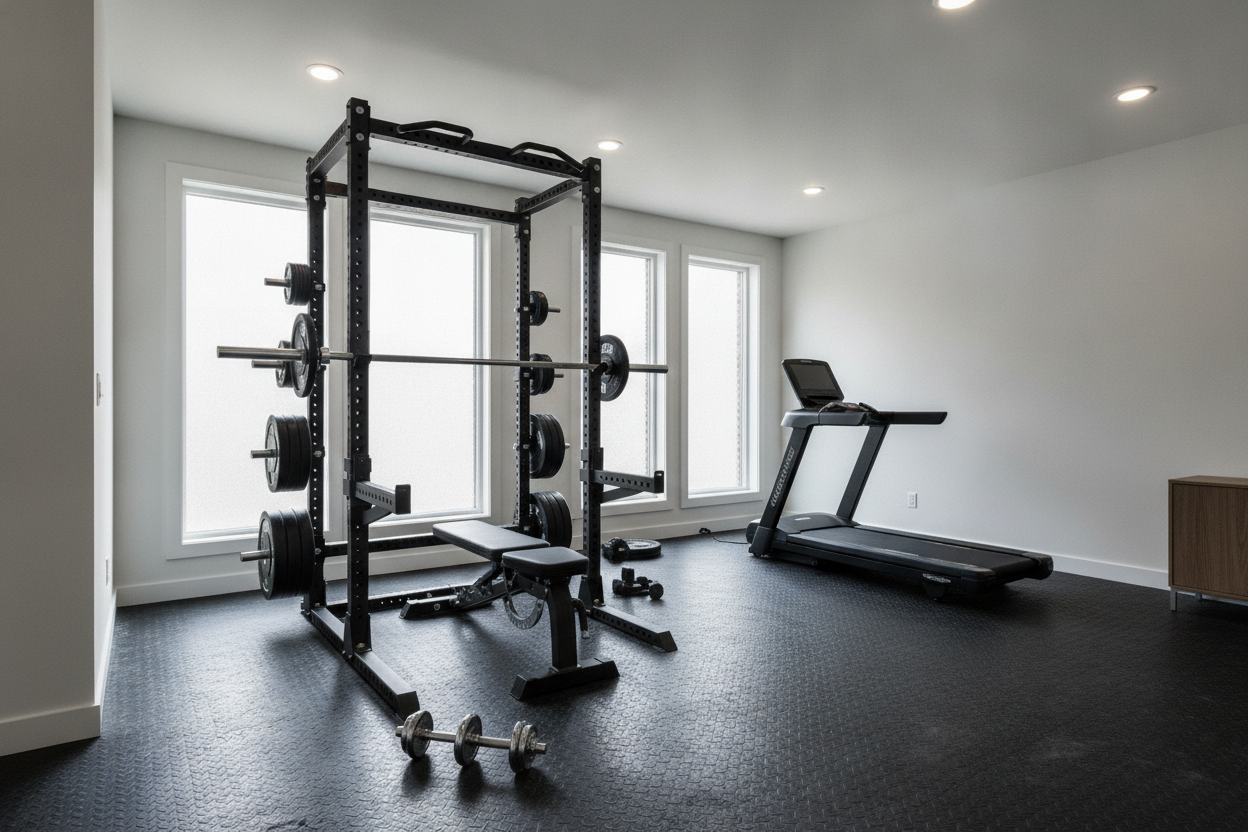
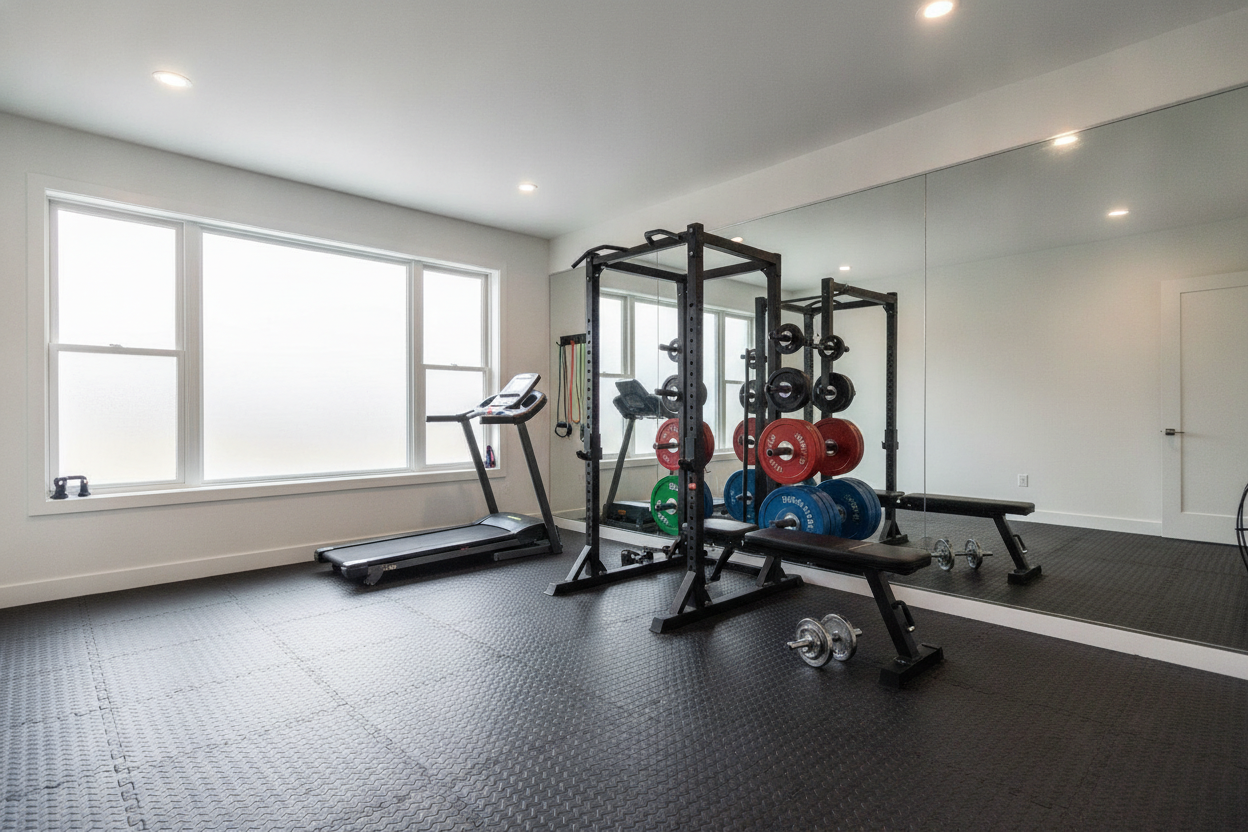
Forget those cheap foam tiles you see at big-box stores. They compress under a heavy home gym system and offer zero protection for your subfloor. You need a large exercise mat for home gym setups that actually absorbs impact and stays put. My rule? Layer it.
I always recommend putting down 3/4-inch plywood first to distribute the weight across the joists. Then, roll out a heavy-duty 6x8ft exercise mat on top. This prevents your equipment from sliding during explosive movements and keeps your iron from punching a hole through the floorboards. If you skip the plywood, you're just paying for a future floor renovation when you move home from the gym and realize the hardwood is splintered. High-density rubber is non-negotiable. It also helps with the noise, which your neighbors or spouse will appreciate at 6 AM.
Stop Hoarding Gear (The Minimalist Approach)
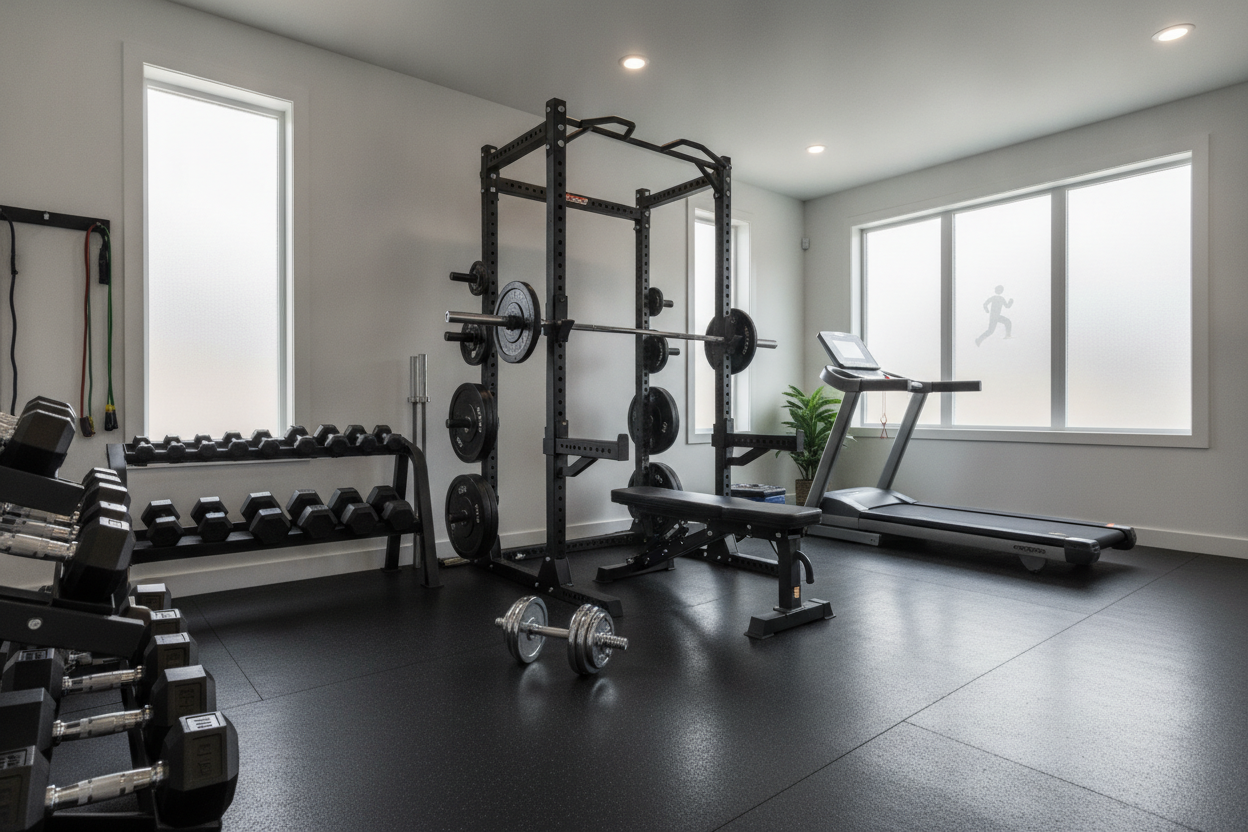
You don't need a six-post rack. In a bedroom, a mini gym set is the way to go. Think adjustable dumbbells and a sturdy flat bench. If you try to cram a full home gym system into a spare room, you'll end up with six inches of clearance on each side. It’s claustrophobic and dangerous when you're trying to move a bar. I've punched a hole in my own drywall just trying to unload a 45-lb plate in a tight space.
If you really have the itch for dedicated gear, look for the best at home workout machines that offer a small footprint. A slim-profile cable tower or a foldable bench can give you 90% of the utility of a commercial gym without making your bedroom feel like a storage closet. Keep a home gym lean; you can always add more later, but you can't add more floor space. Focus on versatility over volume. One good set of adjustable dumbbells replaces an entire wall of fixed weights.
How to Maximize Intensity Without Dropping Weight
You can't drop weights in a bedroom. Period. To get a real workout gym at home, you have to change how you lift. Slow down the eccentric. Use pauses. I’m a huge fan of using a gym workout at home strategy like mechanical drop sets. This allows you to reach muscle failure safely with lighter weights by switching from a harder movement to an easier one.
This approach saves your floor and your joints. Instead of chasing a 1-rep max that might collapse your floor joists, chase the pump. Use tempo training—three seconds down, one second hold, one second up. It makes 50-lb dumbbells feel like 100 lbs, which is exactly what you want when training in a spare room. You’re not training for the Olympics; you’re training to get fit in a 100-square-foot box. Adapt your programming to your environment.
When to Actually Pay for Professional Rigging
Eventually, you might want a competition home gym. If you’re bolting a rack into your wall studs or installing a massive cable crossover, consider a home gym with installation service. I once tried to find studs in an old house with plaster walls; I ended up with six exploration holes and a rack that leaned three degrees to the left. If it involves structural safety or heavy cable columns, pay the pro to do it right.
Professional installers also know how to handle the weight distribution issues I mentioned earlier. They can tell you if a wall is truly load-bearing or if you're about to rip the header out of your closet. It's a small price to pay for the peace of mind that your rack isn't going to tip over during a set of pull-ups.
My Biggest Mistake
I once bought a cheap gym for house kit from a clearance site. The bench felt like it was made of soda cans. During a heavy press, the leg support buckled. I didn't get hurt, but it taught me that cheap gear is the most expensive thing you can buy because you'll just buy the good stuff two months later. Buy once, cry once. Now, I only buy equipment that has a weight rating at least double what I plan to lift.
FAQ
Can I put a treadmill on the second floor?
Yes, but the vibration will be loud for everyone else. Use a high-density rubber mat to dampen the thud of each step and keep the belt clean.
Will my floor collapse under a squat rack?
Unlikely to collapse instantly, but constant heavy loading will cause the floor to sag over years. Use plywood to spread the load across multiple joists.
What is the minimum space for a home gym?
You can get a killer workout in a 6x8 ft space if you use adjustable dumbbells and a folding bench. Anything smaller feels like a closet and limits your range of motion.