The Blueprint to a Massive Shoulder Transformation (Natural Guide)
We all want that coveted V-taper. It’s the universal sign of a powerful physique, creating the illusion of a smaller waist while commanding respect in a t-shirt. But achieving a legitimate shoulder transformation is arguably the hardest task in bodybuilding because the deltoids are stubborn, complex muscles.
Most lifters spend years pushing heavy weight overhead only to see minimal growth. They chase the pump but miss the architecture. If you are tired of looking narrow and want to understand the mechanics behind capping off your delts, this guide breaks down exactly how to get there.
Key Takeaways for Shoulder Growth
- Volume over Ego: The side delts respond better to high reps and strict tension than heavy, swinging movement.
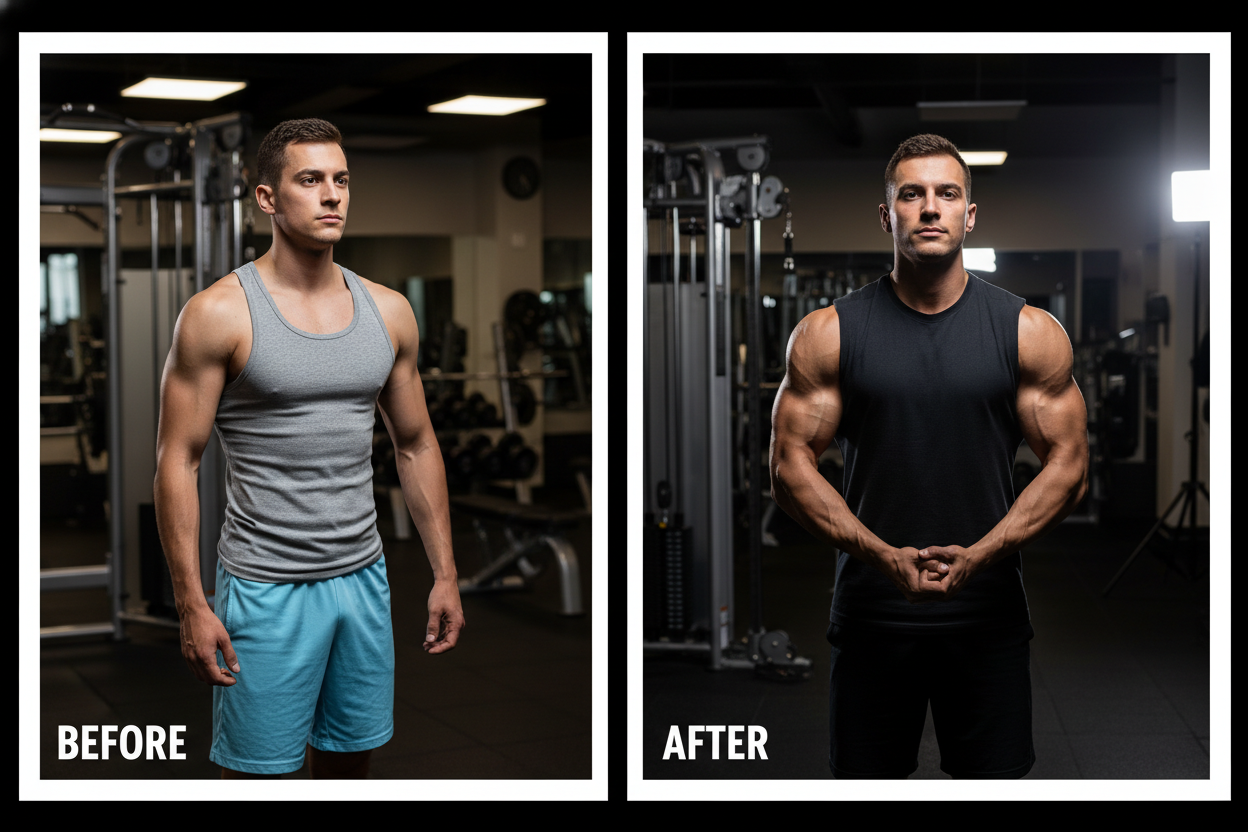
- The 3D Illusion: Rear delts are often neglected, but they provide the "pop" seen in impressive shoulder muscles before and after photos.
- Frequency Matters: Shoulders recover quickly; training them twice a week yields faster results than a single "bro-split" day.
- Angle Variation: You cannot build a full shelf with just overhead pressing; abduction angles are critical.
The Anatomy of a Transformation
To understand shoulder growth before and after a training block, you have to look at the three distinct heads of the muscle. Most people have overdeveloped front delts (from bench pressing) and non-existent rear delts.
For a true transformation, you must prioritize the Lateral (Side) Head. This is the muscle responsible for width. If you look at shoulders before and after a successful bulk, the biggest difference is almost always the lateral width, not just the height of the muscle.
The "Big 3" Mechanics for Growth
1. The Heavy Compound (Vertical Push)
You need a heavy overhead press. Whether it is a barbell Military Press or a Seated Dumbbell Press, this moves the most load. This creates the density and slab of muscle. However, do not arch your back excessively, or you turn it into an upper-chest exercise.
2. The Isolation (Abduction)
This is where the magic happens. Lateral raises are non-negotiable. When analyzing shoulder exercises before and after results, those who master the lateral raise always win. The trick isn't weight; it's leverage. Keep the weight light enough that your traps don't take over.
3. The Rear Delt Correction
Face pulls or reverse flyes are essential. They pull the shoulders back, fixing your posture. Good posture instantly makes your shoulders look wider, giving you an immediate "before and after shoulder workout" visual improvement just by standing correctly.
Common Mistakes Killing Your Gains
The most frequent issue I see is the "Trap Takeover." When you go too heavy on lateral raises, your body naturally shrugs the weight up using the trapezius muscles. This builds a thick neck, not wide shoulders.
Another issue is ignoring the eccentric (lowering) phase. The deltoids are comprised of mixed fiber types. They need time under tension. If you are just dropping the weight after lifting it, you are missing 50% of the growth stimulus.
My Training Log: Real Talk
I remember clearly when my own shoulder transformation actually started. For the first two years of lifting, I was obsessed with moving 60lb dumbbells on lateral raises. I thought I was strong, but my shoulders looked flat, and my neck was getting huge from shrugging the weight.
The turning point was an ego-check. I dropped the weight down to 15lbs—yes, the pink or shiny metal ones at the bottom of the rack. I focused purely on pushing my hands out toward the walls rather than up toward the ceiling. The burn was different. It wasn't a muscle ache; it was a deep, nauseating heat right in the center of the side delt cap. I also remember the specific feeling of the dumbbell knurling digging into my pinky because I was tilting the weight slightly (pouring the pitcher) to deactivate the front delt. That specific, burning leverage shift is what finally made my shirts fit differently.
Conclusion
A radical shoulder transformation doesn't happen by accident, and it doesn't happen overnight. It requires checking your ego at the door and focusing on angles and tension rather than just moving weight from point A to point B. Stick to the plan, prioritize your side and rear delts, and the width will come.
Frequently Asked Questions
How long does a shoulder transformation take?
With consistent training and a caloric surplus, you can expect to see significant changes in 12 to 16 weeks. However, drastic structural changes (the "bowling ball" look) typically take 12+ months of dedicated hypertrophy training.
Can I get big shoulders with just dumbbells?
Absolutely. In fact, dumbbells are often superior for shoulder workouts before and after comparisons because they allow for a freer range of motion than barbells, reducing joint stress and allowing for better isolation of the lateral head.
Why do my shoulders click when I workout?
Clicking usually indicates mobility issues or inflammation in the rotator cuff. If it is painless, it may just be gas releasing (crepitus), but if it hurts, stop immediately. You may need to adjust your elbow position slightly forward (in the scapular plane) rather than flaring them directly out to the side.