The Best Strength Training Workouts for Women Are Surprisingly Simple
I spent years scrolling through social media, watching influencers perform elaborate lunges while balancing on a Swiss ball and holding a five-pound kettlebell overhead. I tried the 1,000-rep leg challenges and the 'toning' circuits that left me sweaty but never actually stronger. It wasn't until I cleared out a corner of my garage and bought a real barbell that I realized the best strength training workouts for women aren't found in a frantic circuit—they are found in the basic, heavy lifts that most women are told to avoid.
Quick Takeaways
- Prioritize compound movements like squats and deadlifts over isolation exercises.
- Lift heavy enough that the last two reps of every set are a genuine challenge.
- Rest for 2 to 3 minutes between sets to allow for neurological recovery.
- Progressive overload is the only way to see long-term physical changes.
Stop Doing Circus Tricks in Your Living Room
The fitness industry has a bad habit of infantilizing women. We are told to 'sculpt' or 'lengthen' using weights that weigh less than a gallon of milk. If you are standing on one leg while doing a bicep curl to 'engage your core,' you aren't doing the best strength workout for women; you are practicing for the circus. Real strength comes from stability and mechanical tension, not from trying to see how many different body parts you can move at once.
Complexity is often a mask for a lack of results. When you perform these high-rep, low-weight 'burn' routines, you are mostly just stressing your cardiovascular system. You’ll get sweaty, and your muscles might sting from lactic acid, but you aren't providing the stimulus required to build lean muscle tissue. To actually change your body composition, you need to put the muscle under enough load to force it to adapt.
I’ve seen women spend forty minutes doing 'glute activation' with a rubber band, only to be too tired to do the heavy squats that actually build a posterior chain. We need to stop fearing the iron. A 10-lb dumbbell will only take you so far. If you want to see a difference in the mirror and feel a difference in your daily life, you have to move toward movements that allow for significant weight to be added over time.
What the Best Strength Training Workout for Women Actually Looks Like
A proper program is built on the back of progressive overload. This means doing more over time—more weight, more reps, or better form. For most lifters, a full body workout performed three days a week is vastly superior to a complex 'body part split' where you only hit legs once a week. Frequency and intensity are your best friends.
The goal is to treat yourself like an athlete. Athletes don't worry about 'toning'; they worry about performance. When your squat goes from 65 pounds to 135 pounds, the 'toning' happens as a side effect of that increased capability. You don't need a different workout every day. You need to do the same five or six movements consistently for months, getting slightly better at them every single week.
You Need Heavy Compound Movements
Compound movements involve more than one joint. Think of a squat (hips and knees) versus a leg extension (just knees). These lifts give you the best return on your time investment because they recruit the most muscle mass. When you perform the best strength exercises for women, like the deadlift, you are working your legs, back, core, and grip all at once. This creates a massive hormonal and metabolic response that isolation exercises simply can't match.
You Need Real Rest Intervals
There is a persistent myth that if you aren't huffing and puffing, you aren't working hard. In strength training, the opposite is often true. If you can jump right into your next set after thirty seconds, you didn't lift heavy enough. For true strength adaptation, you need 2 to 3 minutes of rest. This allows your ATP stores to replenish so you can attack the next set with maximum force. Stop treating your lifting session like a HIIT class; the goal is power, not a high heart rate.
The Absolute Best Strength Exercises for Women
If I had to strip a program down to the bare essentials, it would revolve around four movements. First is the Squat. Whether it’s a goblet squat with a heavy dumbbell or a back squat with a barbell, this is the king of lower body development. Second is the Deadlift. Nothing builds a strong back and glutes like pulling weight off the floor. When you focus on leg workout exercises for women, these two should be the foundation of every session.
Third is the Overhead Press. It builds strong shoulders and stable triceps. Finally, you need a Row. Horizontal pulling balances out all the sitting we do at desks and builds a posture that looks as strong as it feels. You don't need thirty different machines. You need these four movements and the discipline to stick with them until the weights get heavy.
Gear Up: Making Your Space Lift-Ready
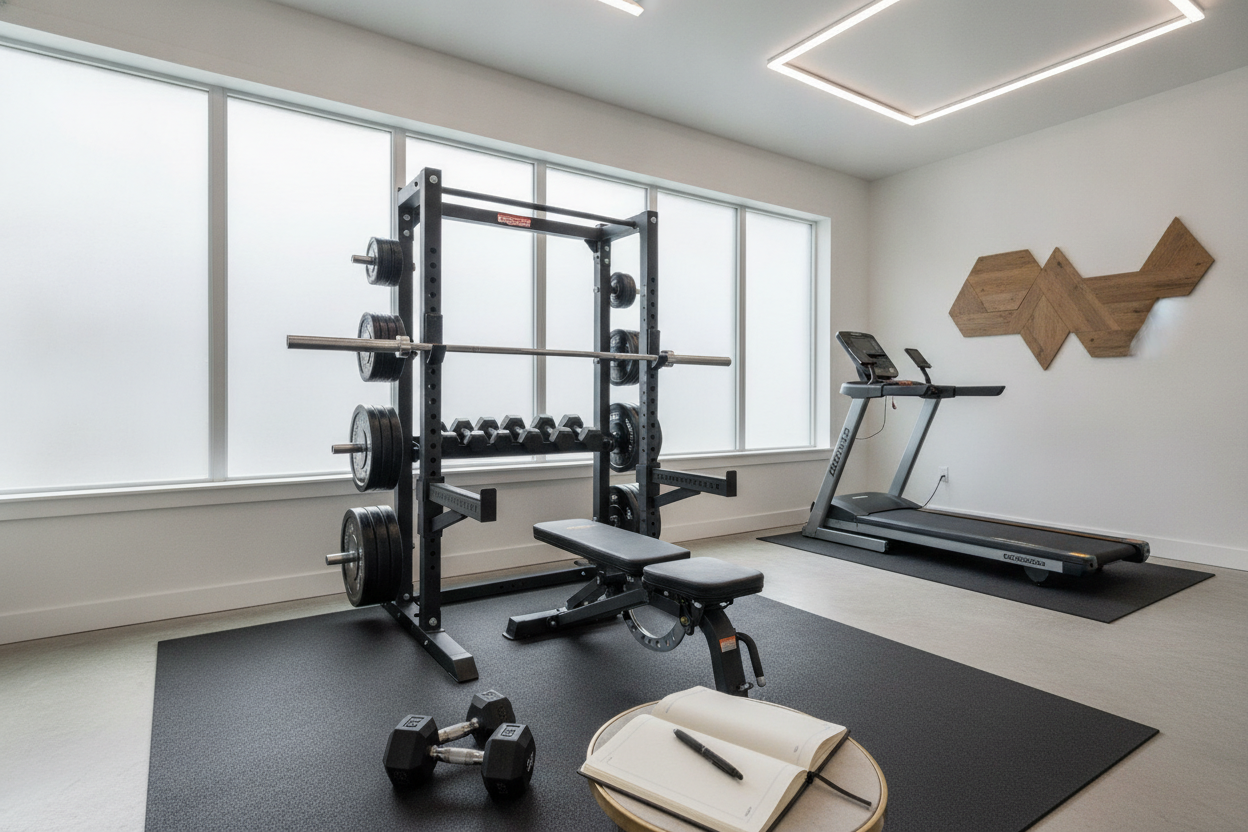
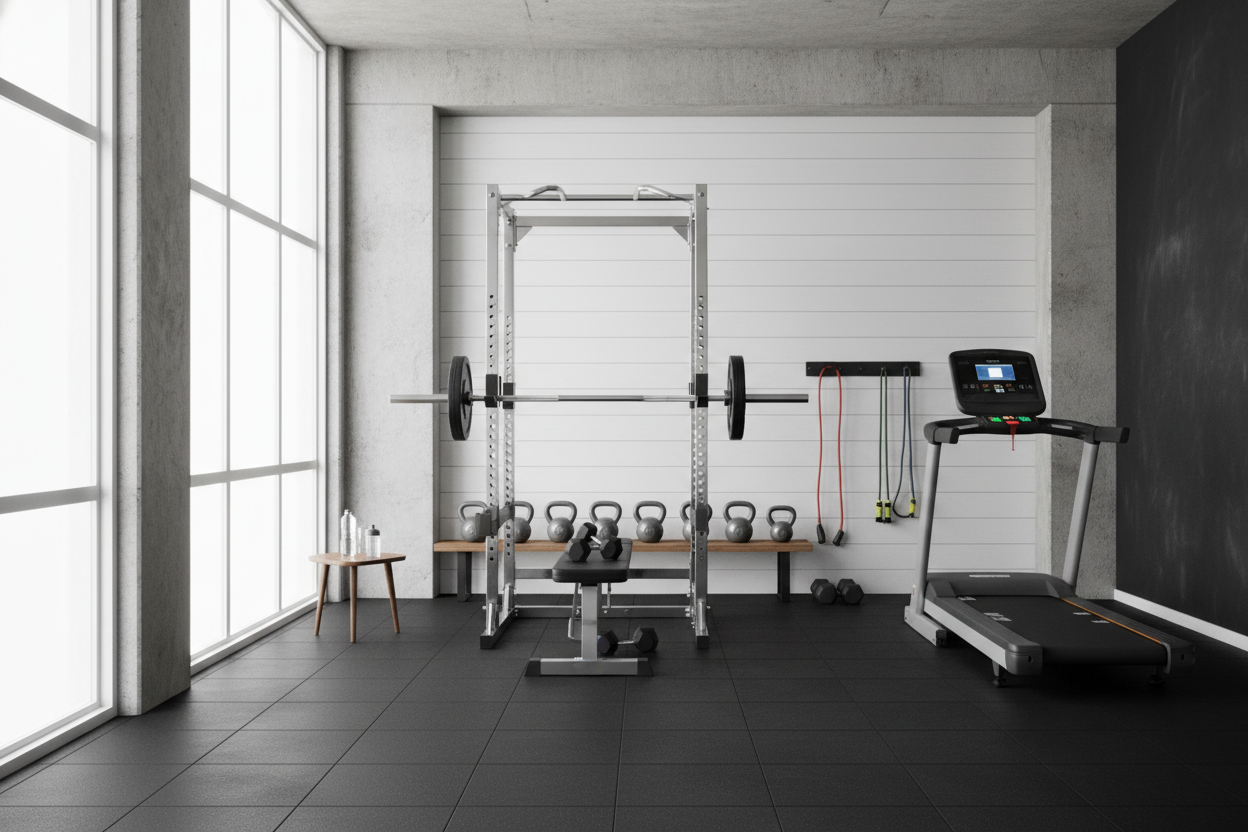
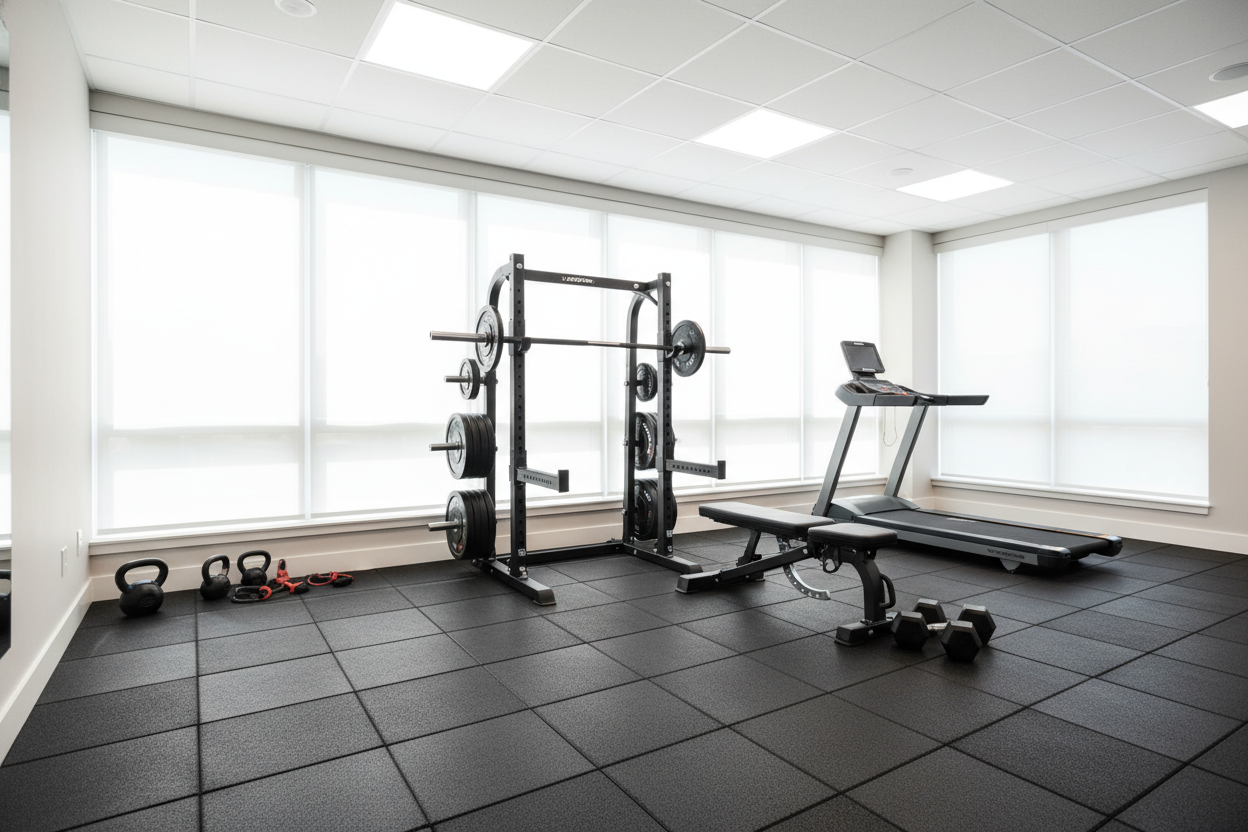
You can’t build real strength if you’re constantly worried about your equipment. I’ve seen too many people try to deadlift on slippery carpet or thin yoga mats. If you're serious about lifting at home, you need a solid foundation. Investing in proper gym flooring for home workout is the first step. It protects your subfloor from dropped weights and gives your feet the traction they need for heavy squats.
Next, move away from the 'fitness' section of the store and look for actual strength equipment. A sturdy power rack and a barbell with a 500-lb capacity might seem like overkill now, but you will outgrow those 15-lb vinyl dumbbells faster than you think. Buying gear that grows with you is cheaper in the long run than buying three sets of 'beginner' equipment that ends up as clothes hangers.
The Best Strength Workout for Women: A 3-Day Home Split
This is a simple A/B split. You alternate between Workout A and Workout B, training three days a week (e.g., Mon/Wed/Fri). This ensures you hit every muscle group frequently while allowing for recovery.
Workout A:
1. Barbell Squats: 3 sets of 5-8 reps
2. Overhead Press: 3 sets of 8-10 reps
3. Lat Pulldowns or Rows: 3 sets of 10-12 reps
4. Planks: 3 sets of 45 seconds
Workout B:
1. Deadlifts: 3 sets of 5 reps
2. Bench Press or Push-ups: 3 sets of 8-10 reps
3. Lunges: 3 sets of 10 reps per leg
4. Face Pulls: 3 sets of 15 reps
To keep the progress going, you might want to look into strength training accessories like fractional plates. These allow you to add just half a pound or a pound to the bar at a time. For upper body lifts like the overhead press, a five-pound jump is often too much, and these small increments are what keep you from hitting a plateau for months on end.
Personal Experience: My Biggest Mistake
I used to be terrified of the 45-lb plates. I thought that if I touched them, I’d wake up looking like a professional bodybuilder. I spent two years doing high-rep 'toning' workouts and saw zero change in my physique. It wasn't until I started a basic 5x5 program and focused on the weight on the bar that my body actually changed. I didn't get 'bulky'; I got dense and capable. My biggest regret is wasting those two years on 'pink dumbbell' logic because I was afraid of looking 'manly.' Strength is feminine, and the iron doesn't care about your gender.
FAQ
Will lifting heavy make me look bulky?
No. Women don't have the testosterone levels to accidentally build massive muscle mass. Lifting heavy will make you look firm and athletic, not like a bodybuilder. That 'bulky' look usually comes from high body fat levels, not too much muscle.
How long should my workouts take?
If you are following a 3-day split with proper rest intervals, expect to be in your gym for 45 to 60 minutes. This includes a warm-up. If you’re done in 20 minutes, you aren't resting enough between your heavy sets.
Can I do this if I have bad knees?
Proper strength training often fixes 'bad' knees by strengthening the muscles that support the joint. However, you should always start with a weight you can control and focus on perfect form. If a barbell squat hurts, try a box squat or a goblet squat first.