The Best Bodybuilder Workout Plan Ignores the 5lb Rule
I remember staring at the rust-speckled 45-pound plates in my freezing garage, wondering why my chest looked exactly the same as it did four months ago. I was religiously adding five pounds to the bar every week because that is what every strength manual told me to do. But my form was turning into a shaky, half-rep mess just to keep up with the math. I wasn't getting bigger; I was just getting better at cheating.
If you are training in a home gym, you have probably hit this wall too. You run out of plates, or you hit a plateau that feels like a brick wall because a 5-pound jump on a 25-pound dumbbell curl is a 20% increase in load. That is insane. The best bodybuilder workout plan for the garage athlete isn't about the weight on the bar—it is about mastering the weight you already have.
- Stop chasing 5lb jumps and start chasing rep PRs.
- Use an 8-12 rep window to ensure you are actually hitting hypertrophy.
- Prioritize stability so your muscles fail before your balance does.
- Master the eccentric (the lowering phase) to make light weights feel heavy.
The Problem With 'Just Add 5 Pounds'
Linear progression is the darling of the strength world. It works wonders for a novice powerlifter on a 5x5 program, but for someone trying to build a physique, it is a trap. In a commercial gym, you might have access to 1.25-lb fractional plates or a full rack of dumbbells in 2.5-lb increments. In a home gym? You are lucky if your adjustable dumbbells don't jump in 10-pound clunky gaps.
When you force a weight increase before you are ready, your body finds a way to move the load. You start using momentum. You shorten your range of motion. You turn a strict overhead press into a weird standing incline bench press. You are technically 'lifting more,' but the tension on the target muscle actually drops. For hypertrophy, tension is the only currency that matters.
Most home lifters also hit a gear ceiling. If you are using a standard 300-lb weight set, you will eventually max out your squat or deadlift. If you only know how to progress by adding iron, you are finished the moment you run out of pegs. To keep growing, you have to change your definition of progress from 'more weight' to 'more work.'
How the Best Bodybuilder Workout Plan Actually Drives Growth
The secret is Double Progression. This is the most reliable way to build mass without blowing out your elbows or buying a thousand pounds of new plates. Instead of adding weight every session, you hold the weight static and fight to add a single rep to your sets across multiple weeks. Only when you hit the top of your rep range for every set do you allow yourself to increase the load.
This method forces you to actually own the weight. If you can do 3 sets of 8 with 100 pounds this week, and 3 sets of 10 next week, you have progressed. You have increased the total volume and the time under tension. This is how you force muscle adaptation without the neurological burnout that comes from grinding out 1-rep-max efforts every Tuesday. You can find specific templates that utilize this logic over at our workout hub.
Think of it as 'solidifying' your gains. By the time you actually add weight to the bar, that new weight feels manageable because your baseline strength has moved up organically. It is the difference between building a skyscraper on a concrete slab versus building it on sand. Double progression builds the slab.
Setting Your Rep Range Window
To make this work, you need a window. For most isolation moves like curls or lateral raises, I like a 10-15 rep window. For big compounds like rows or presses, 8-12 is the sweet spot. Here is the rule: if your goal is 3 sets of 12, and you hit 12, 10, and 9? You do not touch the weight next week. You stay right there until you hit 12, 12, and 12.
The moment you hit the 'ceiling' of your range with perfect form, you bump the weight by the smallest increment possible—usually 5 pounds on a bar or 2.5 to 5 pounds on dumbbells. You will likely drop back down to the 'floor' of your range (8 reps), and then you begin the climb back up. This cycle ensures you are always in the hypertrophy zone.
Structuring the Best Bodybuilding Workout Schedule
You cannot use this progression model if you are training the same muscle every single day. The best bodybuilding workout schedule for a home gym usually revolves around a 4-day or 5-day split. Why? Because to beat last week's logbook numbers, your central nervous system and your muscle fibers need actual recovery. If you are still sore from Monday, you aren't going to hit that 12th rep on Thursday.
I recommend an Upper/Lower split or a Push/Pull/Legs rotation. This gives each muscle group 48 to 72 hours of rest. In my experience, the 'bro split' (one muscle once a week) doesn't provide enough frequency for most naturals to master the movements, while a full-body-every-day approach makes it impossible to bring the intensity needed for double progression.
Keep a logbook. It doesn't have to be fancy—a $2 spiral notebook from the grocery store works better than any app. Write down your reps. If you did 10 reps at 155 lbs last week, your only mission today is to hit 11. That is how a bodybuilder thinks. It is a slow, methodical grind, not a frantic race to see who can lift the most dangerous amount of weight for a single, ugly rep.
What Happens When You Max Out Your Dumbbells?
Eventually, you will hit the end of the line. Maybe you have a set of 50-lb adjustables and you can finally do 3 sets of 15 on the bench press. Most people think they need to go buy 70s. Before you spend that money, look at your technique. Most home lifters have a range of motion that is, frankly, embarrassing. If you think you've plateaued, your range of motion is ruining your potential gains.
You can make those 50s feel like 70s by introducing a 3-second eccentric (the lowering phase) and a 1-second pause at the bottom of every rep. Try doing a deficit push-up or a deep-stretch dumbbell fly. By increasing the distance the weight travels and removing the 'bounce' at the bottom, you create more mechanical tension with less actual weight. This saves your joints and your wallet.
Another trick is the '1 ½ rep' method. Go all the way down, come halfway up, go back down, and then come all the way up. That is one rep. I promise you, those light dumbbells you were about to sell on Craigslist will suddenly feel like lead bricks. Bodybuilding is about making the exercise harder, not easier.
A Stable Base Equals More Reps
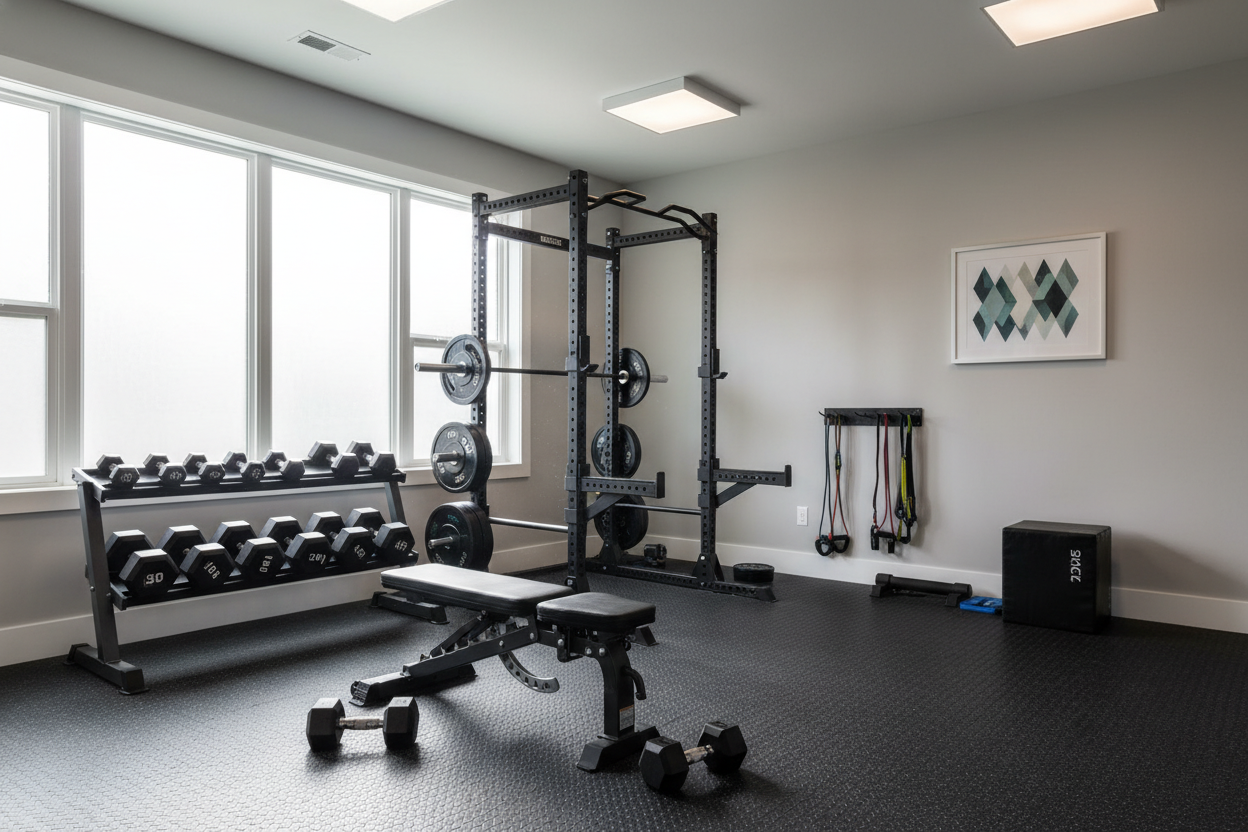
One thing people overlook in a garage gym is the floor. If you are trying to grind out a heavy set of Bulgarian Split Squats or a max-rep overhead press on a slick concrete floor, your brain will cut off power to your muscles because it feels unstable. You will fail the set because you're wobbling, not because your muscles are spent.
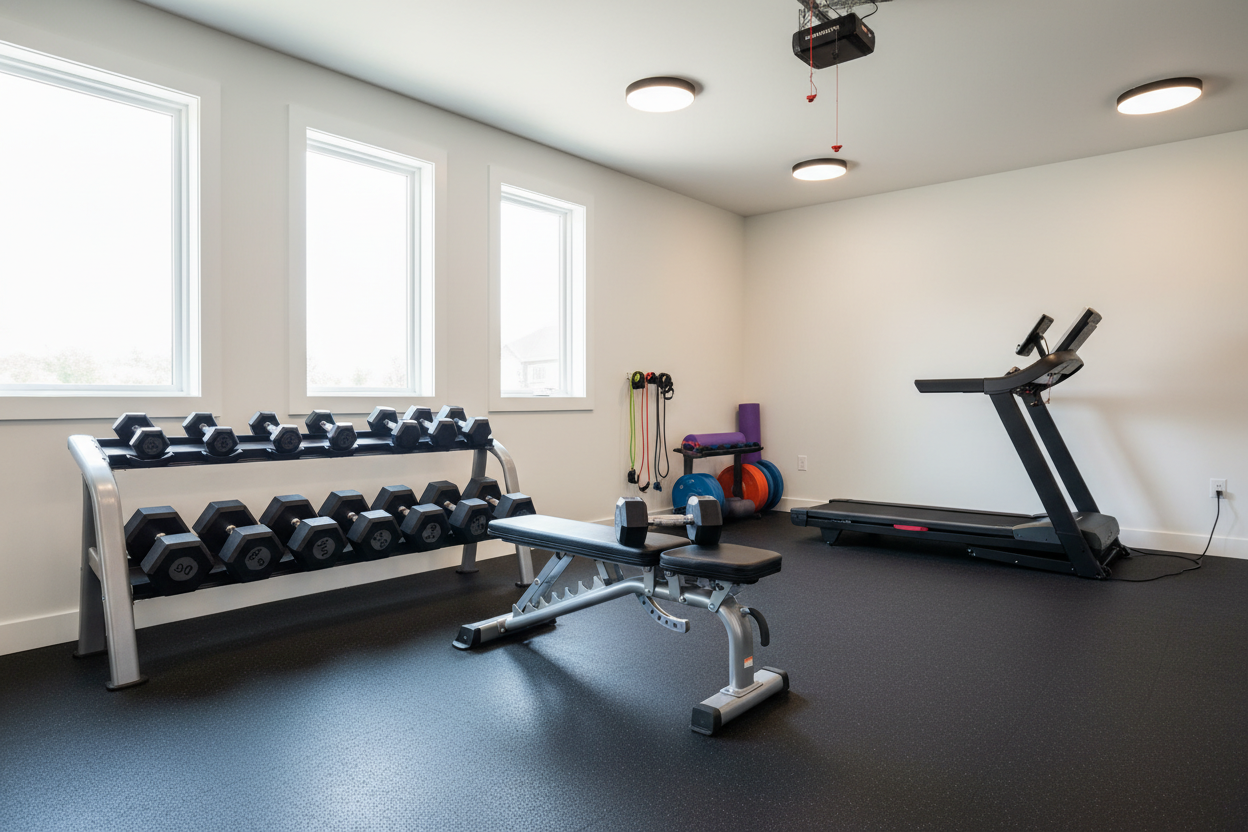
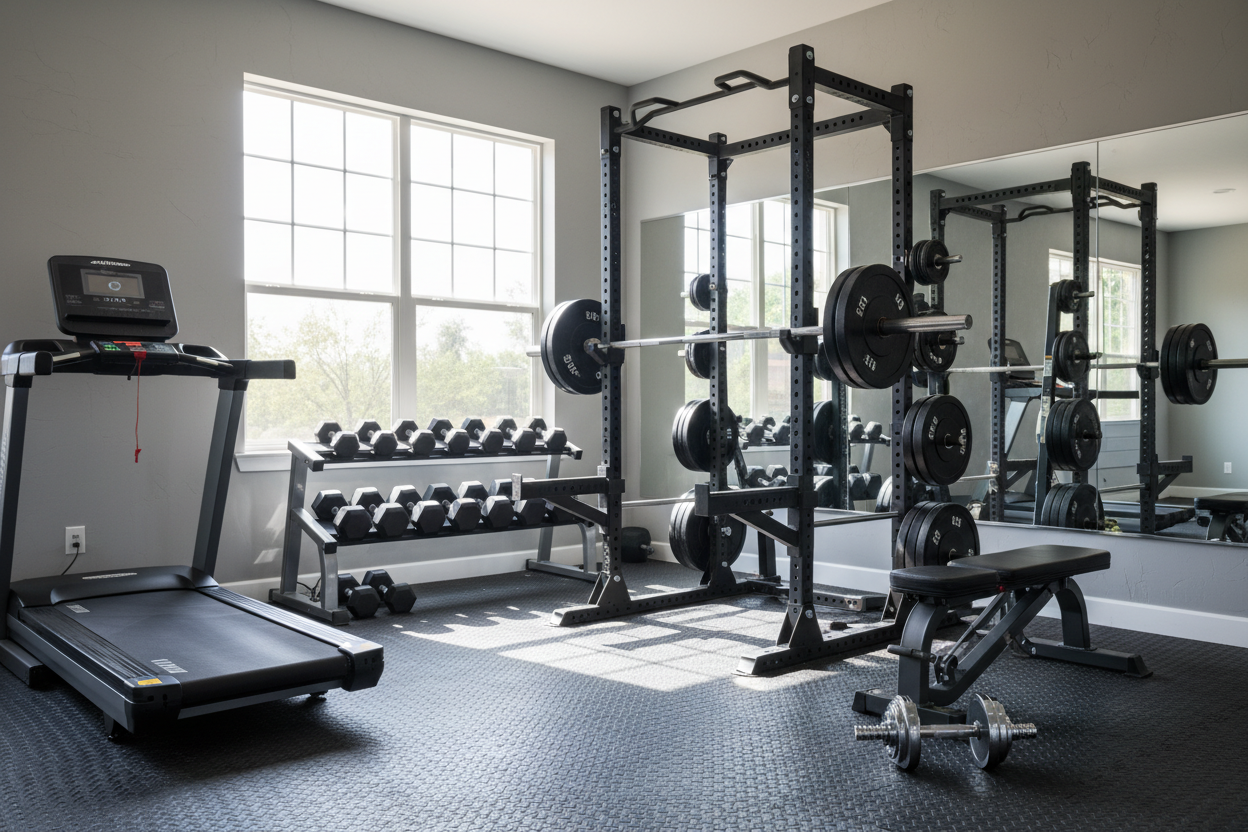
You need to be locked into the ground. Investing in proper gym flooring for home workout spaces isn't just about protecting the subfloor; it is about performance. When your feet are glued to a high-grip surface, you can actually exert 100% of your force into the lift. I spent years lifting on a piece of old carpet before I realized the slip was costing me at least two reps per set.
Personal Experience: My Ego vs. My Elbows
A few years ago, I was obsessed with hitting a 225-lb overhead press. I was adding weight every single week, regardless of how it looked. My 'press' eventually turned into a standing bench press with a massive back arch. My elbows started screaming, and my shoulders felt like they were full of crushed glass. I had to stop pressing for three months.
When I came back, I stripped the bar down to 135 and used double progression. I stayed at 135 until I could do 3 sets of 12 with a 2-second pause at the chin. It took longer, but my shoulders grew more in those six months than they had in the previous two years of 'maxing out.' I learned the hard way: the muscle doesn't have eyes. It doesn't know what the plates say. It only knows how hard it is being forced to contract.
FAQ
Is double progression better than 5/3/1?
It depends on your goal. If you want to step onto a powerlifting platform, 5/3/1 is a masterclass in peaking strength. But if you want to fill out a t-shirt, double progression is superior because it keeps you in the high-volume ranges that actually trigger hypertrophy.
Do I need fractional plates for a home gym?
They help, but they aren't mandatory if you use double progression. If you can't add 1.25 lbs, you just stay at your current weight until you can do 2 or 3 more reps than you did last time. That extra volume compensates for the lack of small weight jumps.
How long should I stay in a rep range?
As long as it takes. For some, that is two weeks. For a stubborn lift like the overhead press, you might be fighting for that 12th rep for a month. Don't rush it. Rushing leads to bad form, and bad form leads to the physical therapist's office.