Gym Equipment for Arms: Upper Body Machines, Setup, and Form
When planning an upper body routine, choosing the right gym equipment for arms can make a noticeable difference in how effectively you stimulate the biceps and triceps. While traditional free weights offer great utility, dedicated exercise machines provide guided paths that stabilize the joints, allowing you to train with strict form and direct muscular emphasis. Understanding how each station functions helps you build a well-rounded arm workout that complements your broader training plan.
Understanding Upper Body Mechanics and Exercise Machines
Most gym machines designed for arm training isolate specific movement patterns by locking your elbows or shoulders into fixed positions. In a standard free weight curl or extension, stabilizer muscles across the shoulder girdle, upper back, and core must actively work to keep the barbell or dumbbell steady. When using specialized exercise machines, the machine frame supports your posture, removing unnecessary momentum.
For anyone looking to build muscle and build strength without excessive joint strain, guided exercise stations keep the target muscles under controlled resistance through a full range of motion. Whether your goal is to train the front of the upper arm or the three heads of the triceps, modern gym machines help keep mechanical force focused squarely where you want it. If you are outfitting a training space at home, checking out a dedicated strength equipment collection can help you evaluate functional frames alongside versatile station layouts.
Comparing Free Weights and Upper Body Exercise Machines
Both free weights and gym machines serve distinct roles in a balanced fitness program. Free weights like dumbbells and barbells allow natural movement paths, engaging the core muscles and lower body to stabilize each lift. However, free weights rely entirely on gravity, meaning the resistance angle fluctuates as your limbs move through an arc.
Upper body exercise machines, on the other hand, often utilize cables, cams, or levers that adapt the resistance curve. This means the load remains consistent from the starting position through the peak contraction. If you are unsure which station matches your experience level, asking a gym employee or consulting a certified personal trainer can help clarify proper machine setup and pin adjustments.
Top Gym Equipment for Arms: Key Upper Body Stations
Navigating the gym floor can be overwhelming with so many specialized stations available. Here is an overview of the most effective machines for targeting your arms and supporting upper body development.
Cable Crossover Machine for Arm Isolation
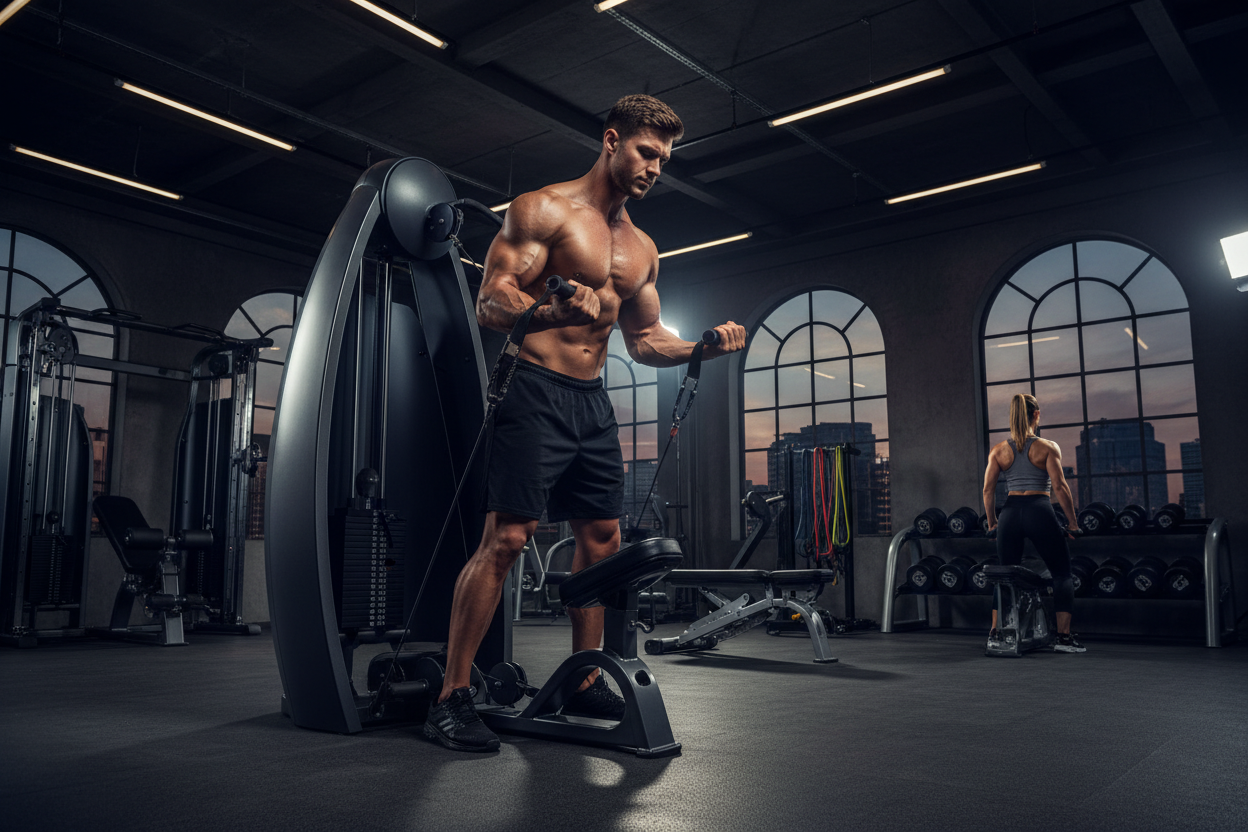
The cable crossover machine is one of the most versatile pieces of gym equipment for upper body development. Because the pulleys can be adjusted to various heights, a cable crossover machine accommodates endless variations for both the biceps and triceps. You can perform high-pulley curls, rope pushdowns, or overhead cable extensions with smooth, continuous resistance.
To perform a standard cable pushdown, stand tall, brace your core, and set the pulley above shoulder height. Keep your upper arm pinned close to your ribs, extend through the elbows, and slowly lower the stack back toward the starting position without letting your shoulders roll forward. Using controlled movements ensures that the triceps do the work rather than body weight shifting into the cable.
Seated Dip Machine for Triceps Development
The seated dip machine is an exceptional tool for loading the triceps heavily while minimizing the shoulder stress often associated with standard parallel bar dips. Because you are seated and strapped or wedged into pads, your lower body remains stable, allowing you to push downward through a guided trajectory.
When using a seated dip machine, adjust the seat so that your elbows start at roughly a right angle. Grasp the handles, brace your core muscles, and push downward until your arms are fully extended without locking the joint violently. Then slowly raise the handles back upward under control. Bringing your hands closer or shifting hand positioning slightly can alter how the triceps and chest interact during the exercise.
Chest Press Machine and Shoulder Press Machine Stations
While primary compound pressing stations are designed for the chest and shoulders, they contribute significantly to tricep development. A plate-loaded or pin-selected chest press machine forces the triceps to assist heavily during the lock-out phase of every push. Similarly, an overhead press machine engages the triceps alongside the upper chest and shoulders.
Integrating a press machine into your upper body workout allows you to fatigue the pressing muscles with heavy loads before moving on to single-joint isolation. When you adjust the seat height on a press machine, ensure the handles align with the middle of your chest to protect the shoulder capsule and optimize arm leverage.
Lat Pulldowns for Biceps and Upper Back Loading
Although lat pulldowns primarily target the latissimus dorsi, they are also a fundamental compound pulling exercise for the biceps and forearms. When you pull the bar downward toward your upper collarbone, the elbow flexors work alongside the latissimus dorsi and upper back musculature to control the load.
By swapping attachments—such as switching from a wide grip to an underhand close grip—lat pulldowns place even greater emphasis on the biceps. To maximize recruitment, avoid leaning back excessively; keep your torso slightly angled, pull smoothly through the elbows, and maintain controlled resistance on the way up.
Designing a Balanced Upper Body Workout
To get the most out of your arm training, structure your routine so that compound lifts precede direct isolation. For example, starting your upper body workout with heavy compound movements—such as lat pulldowns and an overhead press machine—recruits multiple large muscle groups while your energy levels are highest. Following these with a seated dip machine and cable curls allows you to finish off the arms with precision.
In my own gym layout, setting the seat height and checking pad alignment before adding resistance makes each repetition far more stable and predictable. Taking that quick moment to adjust the machine ensures your joints align naturally with the pivot point of the lever arm.
Those building a space at home can also explore home gym equipment deals to find compact multi-gyms or cable stations that fit tighter footprints. For a broader perspective on coordinating equipment across different routines, exploring a full body workout gym guide provides helpful strategies on layout and exercise sequencing.
Frequently Asked Questions
What gym equipment is best for arms?
The cable crossover machine and the seated dip machine are widely considered the most effective gym stations for targeting the arms. Cables offer consistent resistance across multiple angles, while dip stations allow focused triceps loading in a safe, seated position.
What gym equipment is best for flabby arms?
Machines that target the triceps, such as the seated dip machine or a high-pulley cable station for rope extensions, are ideal for strengthening the back of the upper arm. Most people find that pairing consistent resistance training with an overall healthy lifestyle produces the best upper body tone and definition.
Can I build arm strength using only machines?
Yes. Exercise machines allow you to apply progressive overload safely, making them highly effective for building arm strength and muscular endurance. Combining multi-joint movements like the chest press machine and lat pulldowns with targeted arm machines creates a comprehensive workout routine.