The Bare-Bones Exercise at Home Workout That Builds Muscle
I remember the day I finally quit my commercial gym. They had just hiked the monthly fee for the third time in two years, yet half the cable machines were perpetually frayed and the only power rack had a permanent 'Out of Order' sign taped to the uprights. I decided right then to build my own exercise at home workout, but I wasted the first six months following those high-speed, 'fat-burning' influencer videos that did absolutely nothing for my actual strength.
- Stop chasing sweat and start chasing mechanical tension.
- Bodyweight moves only build muscle if you manipulate leverage.
- Back training is the biggest hurdle for 'inhouse workout' setups.
- A high-quality floor surface is your most underrated piece of gear.
Why Most Living Room Routines Are Complete Garbage
Most 'exercise home work' you find on social media is just cardio wearing a mask. Doing 50 jumping jacks followed by 30 air squats will make you breathe hard and sweat, but it won't put an ounce of muscle on your frame. Your muscles don't care how fast your heart is beating; they care about how much tension they are forced to produce.
The problem with typical 'working out at home exercises' is the lack of progressive overload. If you can do 40 reps of something, you aren't building strength—you're building endurance. To see real changes, you have to treat your living room like a black-iron basement gym. That means low reps, high intensity, and finding ways to make simple bodyweight movements feel heavy.
The 'Big Three' for Your Exercise at Home Workout
You don't need twenty different 'exercises for at home' to look like you lift. You need to master three foundational patterns: the push, the pull, and the leg-dominant movement. These compound moves hit the most muscle mass in the shortest amount of time. If a routine has you doing 'bicep curls' with a soup can, throw the whole plan in the trash and start over.
Pushing Without a Bench Press
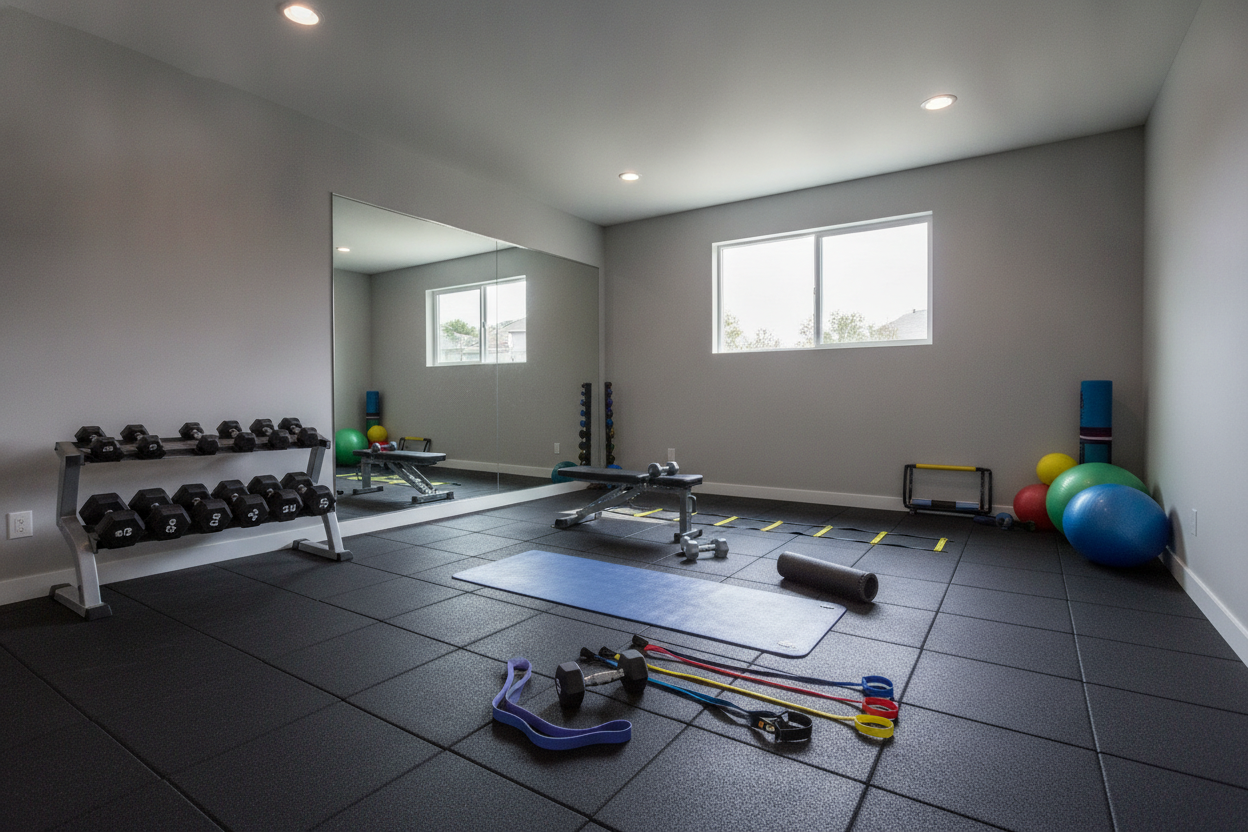
Standard push-ups get easy far too quickly for most men and women. To keep growing, you have to change the leverage. I do this by elevating my feet on a chair or using a thick 6x8ft exercise mat to perform deficit push-ups. By placing your hands on yoga blocks or even stacks of heavy books, you increase the range of motion and stretch the pec fibers deeper than a flat bench press ever could.
If you're still hitting 20+ reps easily, slow down. Use a four-second negative on every rep. The goal isn't to finish the set; the goal is to make the muscle fail. Protecting your wrists on a cushioned surface is a must here, especially when you start adding the mechanical stress of deficit work.
Pulling When You Don't Have a Bar
This is the hardest part of 'exercise home workout' programming. You can't really 'push' your back into growth. If you don't have a pull-up bar, you're fighting an uphill battle. I’ve tried the 'towel under the door' rows, but they are a poor substitute for real vertical or horizontal pulling.
I eventually invested in a doorway bar, which is non-negotiable for 'exercises for the home.' If you're not there yet, doorway rows—where you grab the frame and lean back—can work for high-volume 'fitness exercise at home,' but you’ll eventually need to find a way to pull your entire body weight against gravity to see real lat development.
Legs: No, Not Just Bodyweight Squats
Forget 100-rep sets of air squats. They just make your knees ache and your ego swell. If you want 'workout exercise at home' results for your legs, you need to move to unilateral (single-leg) training. Bulgarian split squats are the gold standard here. Put one foot back on your couch and squat with the other.
If bodyweight is too easy, grab a heavy backpack and wear it on your front. I’ve loaded my old hiking pack with 50 lbs of salt bags just to make 'workouts in home' feel like a real leg day. Three sets of 10 with a slow eccentric will ruin your quads more than any 20-minute HIIT circuit ever could.
Equipment That Actually Matters (And What Belongs in the Trash)
Stop buying plastic gimmicks. Most 'as seen on TV' gear is landfill fodder. If you’re serious about 'at home training,' start with a large exercise mat for home gym use. It saves your joints, protects your floor from sweat, and provides the grip you need for explosive movements. I’ve tried cheap yoga mats, and they just slide around like a Slip-N-Slide once you start sweating.
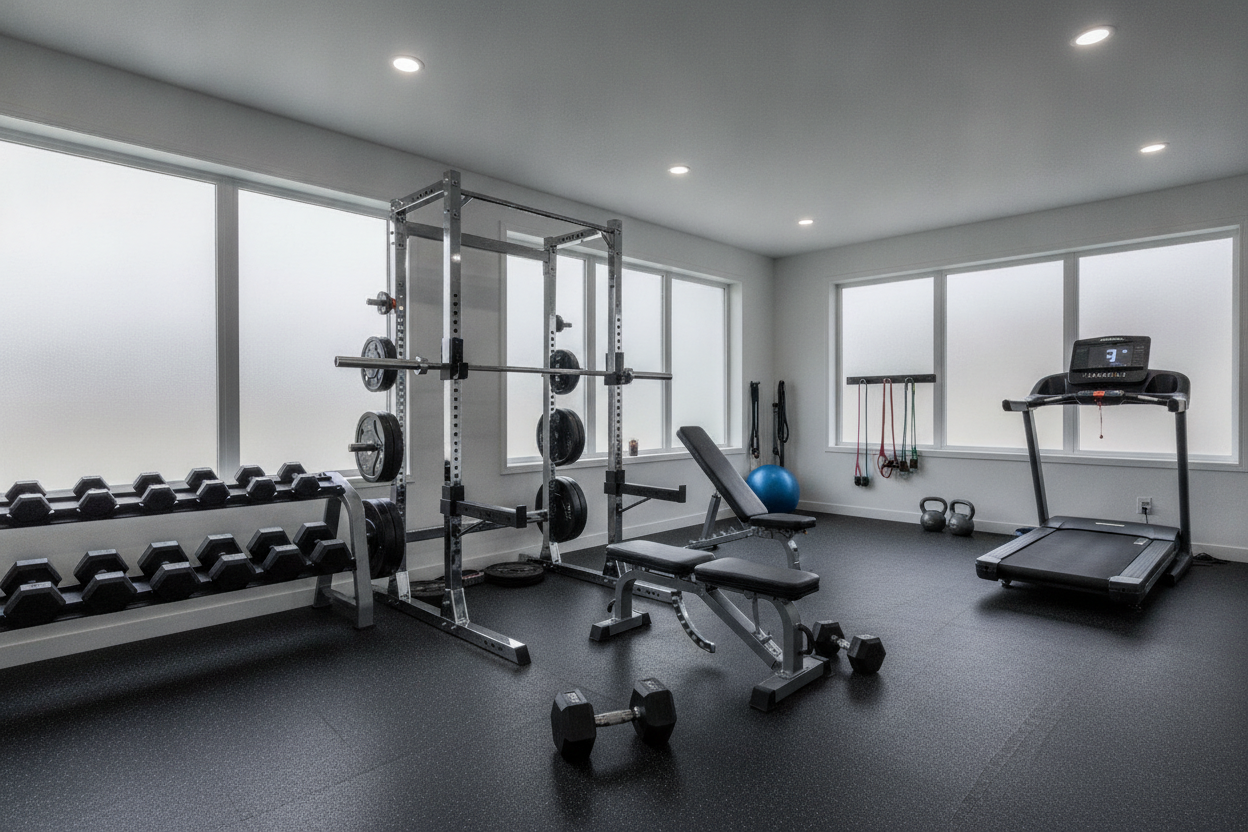
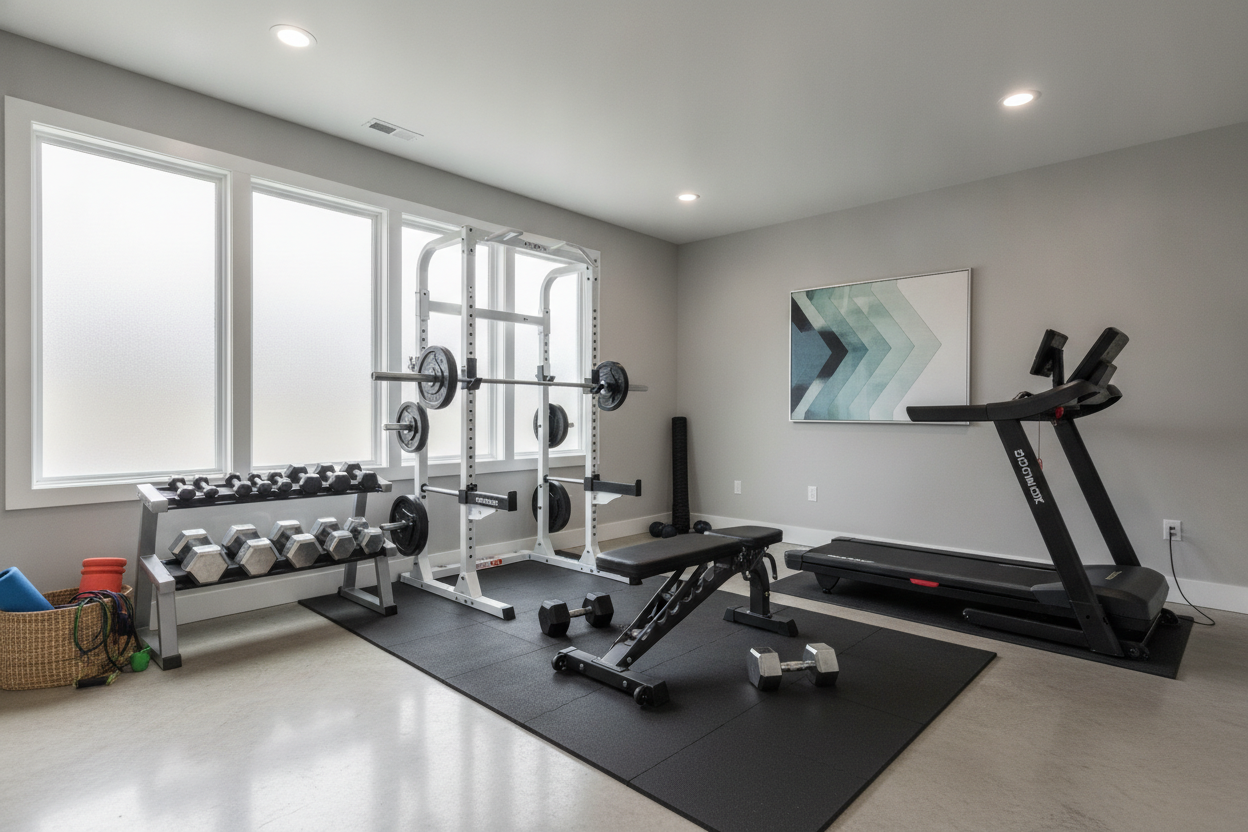
If you have the budget and the 6x8 ft of space, looking into the best at home exercise machines can bridge the gap between simple bodyweight moves and a professional setup. A solid rowing machine or a set of heavy adjustable dumbbells is worth ten times its weight in 'ab rollers' or 'thigh masters.'
Sneaking in Sets When You Have Zero Free Time
You don't always need a 45-minute block of time to get a 'physical training at home' session in. I’ve seen massive gains by 'greasing the groove.' This means doing one sub-maximal set of push-ups or pull-ups every hour while you work. By 6 PM, you’ve accumulated 100 reps without ever feeling fatigued.
This 'routine exercise at home' strategy is a lifesaver for busy parents or remote workers. You can learn more about mastering your exercise at home workout with micro-sessions to keep your volume high even when your schedule is absolute chaos. It turns your entire house into a training facility.
Personal Experience: My Living Room Disaster
I once bought a 'total body' suspension trainer from a discount bin. It looked fine, but during a set of rows, the stitching on the door anchor snapped. I flew backward and cracked my head on the coffee table. I learned two things that day: never trust cheap nylon with your body weight, and always have a dedicated, non-slip space for your 'body exercise home' routines. Now, I stick to heavy-duty mats and steel pull-up bars.
FAQ
How many days a week should I do this?
Three full-body sessions a week is plenty if the intensity is high enough. You need the days off for your central nervous system to recover.
Can I really build muscle without weights?
Yes, but you have to make the movements harder. Use 'tempo training' (slow movements) and 'deficit' positions to keep the muscles under tension longer.
Do I need to wear shoes for a home workout?
If you have a high-quality mat, training barefoot is actually better. It strengthens the small muscles in your feet and improves your balance during those Bulgarian split squats.