The Athlete’s Guide to Explosive Power: Why Your Glutes Matter More Than You Think
Most people in the gym are obsessed with what they can see in the mirror. They focus on quads, abs, and biceps, assuming these vanity muscles translate directly to field performance. But if you want to run faster, jump higher, or tackle harder, the real engine is behind you. Your glutes are the powerhouse of athletic movement, responsible for hip extension, rotation, and stabilization. Neglecting them doesn't just limit your potential; it actively invites injury.
To get straight to the point, you need movements that mimic the demands of sport. You aren't looking for spot reduction or toning; you are looking for force production. The essential rotation includes heavy hip thrusts for raw power, single-leg Romanian deadlifts for stability, and Bulgarian split squats to correct imbalances. These movements prioritize function over form, ensuring that every ounce of muscle you build translates to kinetic energy on the field.
The Function of the Posterior Chain in Sports
Athleticism is largely defined by the ability to generate force against the ground. Whether you are a sprinter pushing off the blocks or a basketball player loading up for a rebound, that power originates in the hips. The gluteus maximus is the primary driver of hip extension—the act of driving your leg backward. Without strong engagement here, your body compensates by overusing the hamstrings or the lower back.
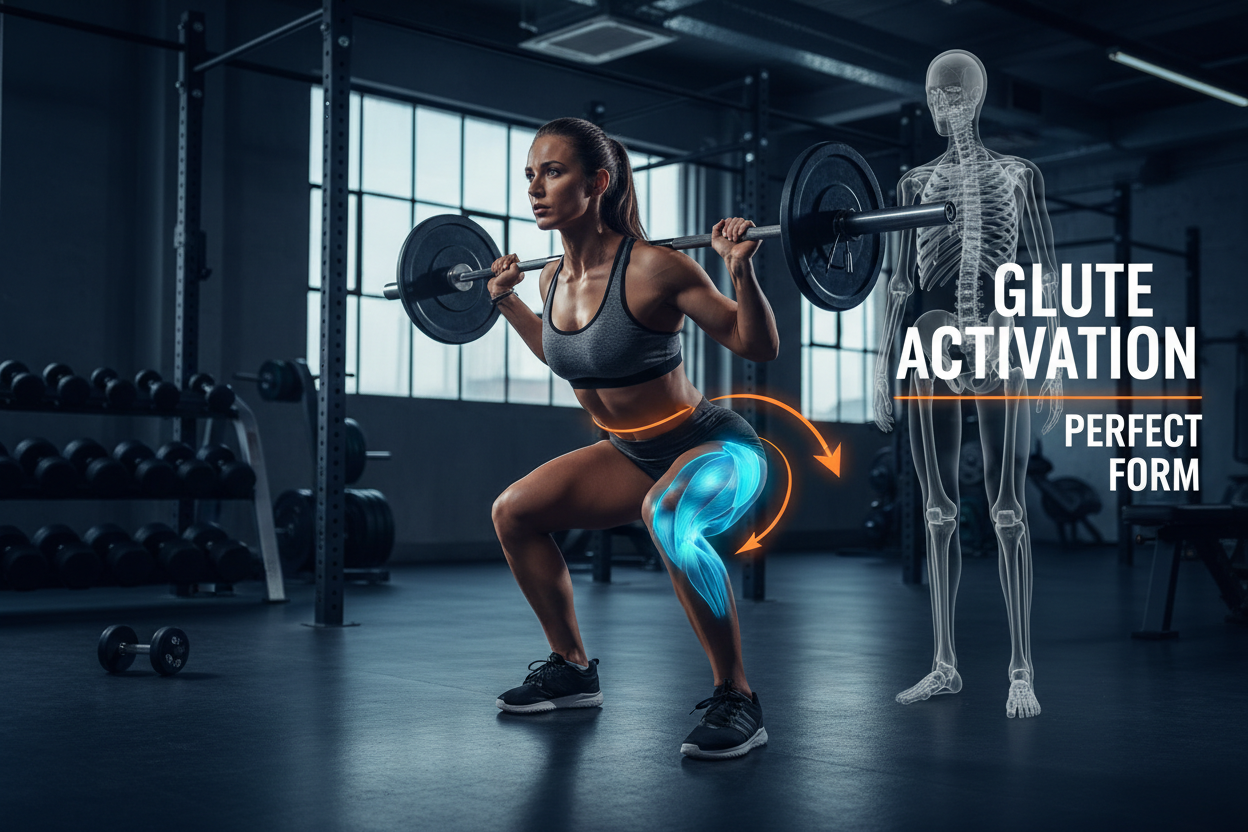
I learned this lesson the hard way. Years ago, while training for an obstacle course race, I developed a nagging pain in my lumbar spine. I thought my back was weak, so I hammered away at hyperextensions. The pain got worse. It wasn't until a physical therapist watched me squat that the issue became obvious: my glutes were dormant. My lower back was taking on the load that my hips should have been carrying. Once I shifted my focus to proper glute activation, not only did the back pain vanish, but my sprint times dropped significantly. The engine was finally turned on.
Building Raw Power: The Hip Thrust
The squat is often hailed as the king of leg exercises, but for pure glute development, it has limitations. At the bottom of a squat, there is less tension on the glutes compared to the quads. For maximum recruitment, the hip thrust reigns supreme. This movement places the glutes under constant tension and allows for peak contraction at the top of the movement, which is exactly where athletes need to be strongest to reach full hip extension.
When selecting the best glute exercises for athletes, the barbell hip thrust should be a staple in your strength cycle. It allows you to move heavy loads safely without compressing the spine. The focus here should be on the lockout. Drive through the heels, keep the chin tucked to prevent lumbar hyperextension, and squeeze hard at the top. This builds the horizontal force vector necessary for acceleration speed.
Unilateral Strength: The Bulgarian Split Squat
Sports are rarely played on two feet simultaneously. You sprint on one leg at a time; you change direction by planting one foot. Bilateral training (like standard squats) hides asymmetries. Your dominant leg will naturally take over, leaving the weaker side lagging behind. This imbalance is a recipe for non-contact injuries like ACL tears.
The Bulgarian split squat is brutal, but it is necessary. By elevating the rear foot, you force the front leg to handle the entire load. This challenges your stability and forces the glute medius—the muscle on the side of your hip—to work overtime to keep your knee from collapsing inward. Strengthening the glute medius is critical for knee health and lateral agility. If you cannot stabilize your hips on one leg, you cannot transfer power efficiently.
The Eccentric Component: Single-Leg Romanian Deadlift (RDL)
While the hip thrust builds concentric power (the push), athletes also need eccentric strength (the ability to absorb force). Think about landing a jump or decelerating after a sprint. If your muscles cannot handle the lengthening phase under load, something will snap.
The single-leg RDL is excellent for this. It targets the glute-ham tie-in and teaches the athlete how to hinge at the hips while maintaining a neutral spine. This is one of the specific glute exercises for athletes that serves a dual purpose: it builds the posterior chain while simultaneously training the vestibular system (balance). Executing this movement requires focus. You must grip the floor with your foot and control the descent, resisting gravity. This control translates directly to injury prevention during high-speed play.
Lateral Power: Banded Walks and Lateral Lunges
Movement isn't just linear. A football linebacker or a tennis player moves side-to-side as much as they move forward. The gluteus medius and minimus are responsible for hip abduction (moving the leg away from the centerline). Weakness here results in "valgus collapse," where the knees cave inward during jumps or squats.
Incorporating lateral band walks as a warm-up or finisher activates these smaller stabilizers. Keep the toes pointed forward—not flared out—to ensure the hips are doing the work rather than the quads. For a more compound movement, lateral lunges load the glutes in the frontal plane, improving your ability to cut and change direction rapidly.
Programming for Performance
Integrating these movements requires a shift in mindset. You aren't training for a pump; you are training for performance. Volume should be moderate, but intensity must be high. A typical athlete might squat heavy once a week, but they can handle glute-dominant work two or three times a week because the glutes are large, resilient muscles with a high recovery capacity.
Start your lower body sessions with a heavy compound lift, such as a trap bar deadlift or a squat, then transition immediately into your direct glute work. Treat the hip thrust as a primary lift, not an accessory. Track your numbers. As your hip strength increases, you will notice a direct correlation with your vertical jump height and your 40-yard dash time. A strong posterior chain is the difference between a good athlete and an elite one.
Frequently Asked Questions
How often should athletes train their glutes?
Most athletes can train glutes 2-3 times per week. Because the glutes are a large muscle group with high endurance, they recover relatively quickly. Vary the intensity, using one day for heavy loading (strength) and another for lighter, higher-repetition work (stability and activation).
Will heavy glute training make me slower?
No, quite the opposite. Speed is determined by how much force you can put into the ground in the shortest amount of time. Stronger glutes generate more force during hip extension, which directly improves sprint speed and explosive power.
Can I train glutes if I have lower back pain?
Often, yes, but you must choose the right exercises. Movements like the hip thrust are generally safer for the back than squats because the load is placed on the hips, not the spine. Strengthening the glutes usually helps alleviate back pain by correcting the pelvic tilt and taking the load off the lumbar region.