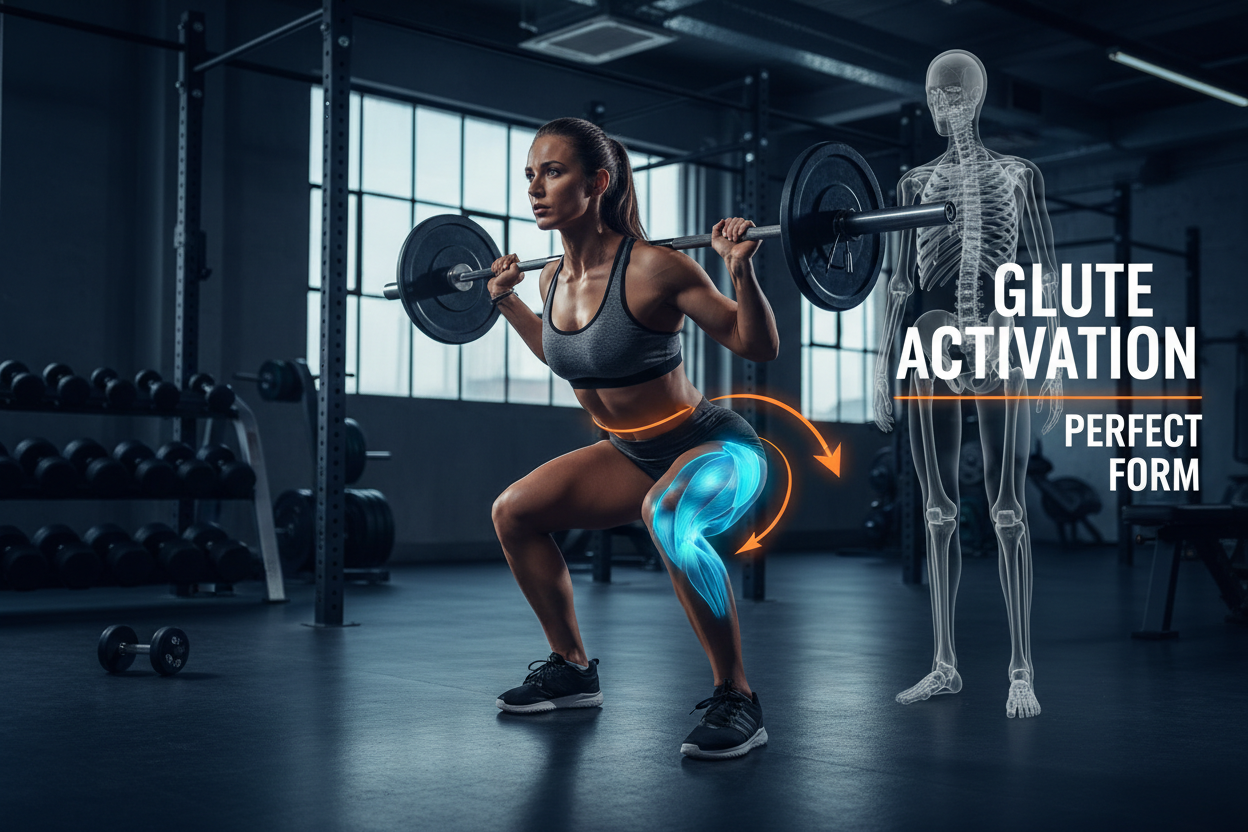
Stop Wasting Time: The Real Blueprint for Building Stronger, Bigger Glutes
Everyone wants to know the secret to building a powerful posterior chain, but the fitness industry often clouds the truth with flashy, ineffective movements. If you are tired of endless kickbacks with light resistance bands and want actual hypertrophy, you have to prioritize mechanics and heavy resistance. The answer to your search isn't a magic pill; it is biomechanics. The single best exercise for bigger glutes is arguably the barbell hip thrust, but relying on just one movement is a mistake. True development comes from hitting the muscle group through three specific mechanisms: metabolic stress, mechanical tension, and muscle damage.
Building significant muscle mass requires you to move heavy loads through a full range of motion. While squats and deadlifts are fantastic compound movements, they often recruit a significant amount of quad and hamstring muscle, sometimes leaving the glutes as secondary movers. To fix this, you need a routine that forces the gluteus maximus to take the brunt of the work. Let's break down the movements that actually change your physique.
The King of Glute Isolation: The Barbell Hip Thrust
If you look at the electromyography (EMG) data, the barbell hip thrust consistently shows the highest levels of glute activation. This is because the movement places the point of maximal tension exactly where the glutes are shortest (fully contracted). Unlike a squat, where the tension is highest at the bottom (when the glutes are stretched), the hip thrust keeps the tension on the glutes at the top of the movement.
For many lifters, this is the best exercise for bigger glutes simply because it allows for massive progressive overload without being limited by lower back strength. To perform this correctly, set up a bench against a wall so it doesn't slide. Sit on the floor with your upper back against the bench and roll a loaded barbell over your hips. Using your glutes, drive your hips toward the ceiling until your body forms a straight line from shoulders to knees. The key here is to keep your chin tucked and your ribs down; looking up at the ceiling often causes the lower back to arch, which shifts the tension away from the glutes.
My Personal Battle with "Glute Amnesia"
I spent the first few years of my training career obsessed with back squats. I thought if I just squatted heavier, my glutes would naturally catch up. I was wrong. I ended up with impressive quadriceps and a strong lower back, but my glutes remained flat and underactive. It wasn't until I swallowed my pride and started incorporating hip thrusts and dedicated accessory work that I saw changes. I had to drop the weight significantly and focus entirely on the mind-muscle connection. It felt ridiculous at first, struggling with lighter weights to feel the contraction, but that period of recalibration was the turning point for my physique.
Lengthening the Muscle: Romanian Deadlifts (RDLs)
While the hip thrust works the muscle in the shortened position, you also need to train the glutes while they are lengthened. This is where the Romanian Deadlift (RDL) shines. It is one of the best exercises for big glutes because it creates massive amounts of mechanical damage—the good kind that signals muscle growth.
When performing an RDL, imagine you are trying to close a car door with your butt. Keep a slight bend in your knees, but do not turn it into a squat. Push your hips back as far as they can go while the barbell slides down your thighs. The moment your hips stop moving back, the range of motion is over. Going lower than that usually just rounds the lower back. You should feel a deep stretch in your hamstrings and glutes. The soreness you feel the next day from these is usually intense, which is a sign that you have successfully targeted the muscle fibers.
Unilateral Training: The Bulgarian Split Squat
We cannot discuss lower body development without addressing imbalances. Most people have one side that is stronger than the other. If you only do bilateral movements (using both legs at once), the dominant side will always take over. The Bulgarian Split Squat is notoriously difficult, but it is non-negotiable for serious growth.
To make this more glute-dominant, take a slightly longer stance and lean your torso forward slightly (about 30 to 45 degrees). This hip flexion stretches the glute more than an upright torso, which targets the quads. Lower yourself until your back knee hovers just above the ground, then drive back up through the front heel. This movement targets the gluteus medius and minimus as well, which aids in hip stability and creates that "shelf" look on the upper glutes.
The Role of Progressive Overload and Nutrition
You can have the perfect selection of exercises, but if you are using the same 20-pound dumbbells for six months, your body has no reason to change. Progressive overload is the engine of hypertrophy. You must gradually increase the weight, reps, or improve your form over time. Track your lifts. If you hip thrusted 135lbs for 10 reps last week, aim for 11 reps this week or bump the weight to 140lbs. Small increments compound over time into massive strength gains.
Furthermore, you cannot out-train a diet that lacks building blocks. Muscle tissue is metabolically expensive; your body won't build it if you are in a severe calorie deficit or lacking protein. Aim for a sufficient protein intake spread throughout the day to support muscle protein synthesis. Without fuel, all that heavy lifting just leads to fatigue rather than growth.
Structuring Your Routine
A well-rounded glute program doesn't need to be complicated. A solid session might look like this: Start with a heavy compound lift like the Hip Thrust (3-4 sets of 8-10 reps). Follow that with a lengthening movement like the RDL (3 sets of 10-12 reps). Finish with a unilateral movement like lunges or split squats, and perhaps a high-repetition burnout exercise like 45-degree hyperextensions. Consistency with these core movements will yield far better results than constantly switching exercises every week to "confuse" your muscles.
Common Questions About Glute Training
How often should I train my glutes to see results?
Most people see the best results training glutes 2 to 3 times per week. This frequency allows you to hit the muscles hard while still giving them 48 hours to recover and grow between sessions.
Can I build glutes without heavy weights?
Bodyweight exercises can improve muscle tone and endurance, but for significant size increases (hypertrophy), external load is usually necessary. Weights provide the mechanical tension required to stimulate muscle fibers to grow larger.
Why do I feel squats in my legs but not my glutes?
This is common and often boils down to anatomy and form. If you have long femurs or a dominant anterior chain, your quads will take over. Widening your stance and ensuring you hit proper depth can help, but incorporating isolation movements like hip thrusts is often required to fully wake up the glutes.