The 45-Minute Full Glute Workout Gym Vets Actually Swear By
I’ve spent the last decade in commercial gyms, and nothing kills progress faster than the 5:00 PM rush. You walk in with a plan, but the hip thrust machine has a line three people deep, and someone is doing bicep curls in the only squat rack. To get a high-quality full glute workout gym session in under an hour, you have to stop training like an influencer and start training like an athlete.
My philosophy is simple: if it doesn’t involve a heavy barbell or a pair of dumbbells that make you sweat just looking at them, it’s probably fluff. We are here to build mechanical tension, not just ‘feel the burn’ with a piece of latex wrapped around our ankles. This routine is designed to get you in, move some serious weight, and get you out before the pre-workout crowd takes over every square inch of the floor.
Quick Takeaways
- Focus on three primary movement patterns: the hinge, the thrust, and the unilateral drive.
- Prioritize free weights over specialized machines to avoid waiting in lines.
- Keep rest periods between 90 and 120 seconds for maximum strength recovery.
- Intensity beats volume; three heavy sets are better than six ‘pump’ sets.
- Have a backup plan for every exercise in case the rack is occupied.
Why Your Current Glute Day Takes Too Damn Long
Most people fail at glutes at the gym because they treat their workout like a buffet. They do a little bit of everything—cables, machines, bands, and floor work—thinking more variety equals more growth. In reality, you’re just wasting time transitioning between equipment. I’ve watched lifters spend 20 minutes just setting up a cable kickback station, only to move a weight that wouldn't challenge a toddler. That’s not training; that’s administrative work.
The harsh reality is that commercial gyms are designed for throughput, not necessarily for your personal gains. If you are waiting 15 minutes for a specific hip thrust pad or a specialized piece of equipment, you are losing the metabolic momentum of your session. By simplifying your approach to three or four heavy movements, you eliminate the ‘setup tax’ and focus your energy where it belongs: on the eccentric and concentric phases of a heavy lift. I stopped doing 8-exercise circuits years ago, and my posterior chain has never looked or felt stronger.
When you strip away the fluff, you realize that the gluteus maximus is the largest muscle in your body. It is built for power. It doesn't need ‘confusion’; it needs load. If you aren't adding weight to the bar every few weeks, you aren't growing. Period.
The 3 Core Movements Every Glute Day Gym Workout Needs
To build a world-class posterior, you need to master the mechanical hierarchy. You don't need 50 different angles; you need to master the glute day gym workout fundamentals. Every effective session should revolve around a heavy hinge, a vertical or horizontal thrust, and a unilateral stability movement. This covers the muscle from every functional angle without requiring you to hog half the gym equipment.
First is the hinge. Think Romanian Deadlifts (RDLs). This targets the glutes in a stretched position, which is a massive driver for hypertrophy. Second is the thrust. Whether it’s a barbell hip thrust or a glute bridge, this provides peak tension at the shortened position. Finally, you need unilateral work like Bulgarian Split Squats or Lunges. These force the glute medius to stabilize the pelvis, giving you that ‘shelf’ look while fixing strength imbalances. For a deeper dive into the science, check out this definitive guide to glute growth.
I’ve tested this hierarchy against high-volume ‘pump’ routines, and the results aren't even close. Heavy compounds allow for progressive overload in a way that isolation work simply cannot match. If you can RDL 225 pounds for reps, your glutes have no choice but to grow. If you’re just doing 15-pound cable kickbacks, you’re just spinning your wheels.
Is the Best Glute Trainer Just a Barbell?
In my experience, the best glute trainer isn't a fancy $5,000 selectorized machine; it's a high-quality Olympic barbell. Specifically, a bar with decent knurling—like a Rogue Ohio Bar or a Rep Fitness Deep Knurl—allows you to maintain a grip during heavy RDLs without your hands giving out before your glutes do. Machines often lock you into a fixed range of motion that might not fit your hip anatomy. A barbell allows for natural micro-adjustments in your stance and toe angle.
I’ve used the fancy glute-drive machines at big-box gyms, and while they are convenient, they often bottom out or have a resistance curve that feels ‘off’ at the top. With a barbell, the weight is the weight. There’s no friction from pulleys or cables to mess with the tension. Plus, a barbell and a stack of iron plates are almost always available if you’re willing to work in a squat rack or a deadlift platform.
Structuring Your Full Glute Workout Gym Plan
Here is the exact 45-minute full glute workout gym plan I use when I’m short on time. We are aiming for an RPE (Rate of Perceived Exertion) of 8 or 9 on every working set. That means you should finish each set feeling like you could have done maybe one or two more reps, but no more.
- Barbell Hip Thrusts: 3 sets of 8-10 reps. Focus on a 2-second hold at the top and a 3-second controlled descent. If the rack is busy, use a pre-loaded barbell or a heavy dumbbell.
- Romanian Deadlifts (RDLs): 3 sets of 10-12 reps. Keep the bar close to your shins and stop once your hips stop moving backward. Don't reach for the floor; reach for the wall behind you.
- Bulgarian Split Squats: 3 sets of 8-10 reps per leg. Lean your torso forward at a 45-degree angle to shift the focus from the quads to the glutes.
- Optional Finisher: 2 sets of 15-20 kettlebell swings or 45-degree back extensions.
Rest for exactly 2 minutes between the big lifts. If you find this routine too advanced or you're just starting out, I recommend looking at the beginner glute workout I give to friends. It uses similar principles but scales the technical difficulty down so you don't wreck your lower back trying to ego-lift a barbell.
The key here is intensity. If you are scrolling on your phone between sets, you aren't training hard enough. Put the phone in your locker, set a stopwatch, and focus on the mind-muscle connection. You should be struggling to walk to your car after that third set of split squats.
What to Do When Your Favorite Equipment Is Taken
The biggest obstacle to a full glute workout gym session is the guy sitting on the bench press for 45 minutes. When the squat racks are full, don't just stand there. Pivot. Almost every barbell movement has a dumbbell or kettlebell equivalent that can be done in a quiet corner of the gym.
If the hip thrust station is taken, grab the heaviest dumbbell you can find and do ‘B-Stance’ RDLs or heavy Goblet Squats. You can even find a clear spot on the floor, grab a large exercise mat for home gym style training, and perform heavy single-leg glute bridges. The floor is your friend. I’ve had some of my best workouts using nothing but a pair of 80-lb dumbbells and a small patch of floor space.
Don't be the person who gives up and goes home because the Smith machine is occupied. Adaptability is a trait of a seasoned lifter. If you have a heavy weight and a way to move it through a hinge or thrust pattern, you are making progress. I once did an entire glute day with a single 100-lb sandbag because the gym was undergoing renovations—and it was one of the most brutal sessions of my life.
Cooling Down and Transitioning to Home Workouts
Recovery starts the second you finish your last rep. I’m not a big fan of long-winded stretching sessions, but a few minutes of pigeon pose and hip flexor stretches can help prevent that ‘tight’ feeling the next day. More importantly, look at your setup. If you find yourself skipping the gym because the commute or the crowds are too much, it might be time to invest in some basic home gear.
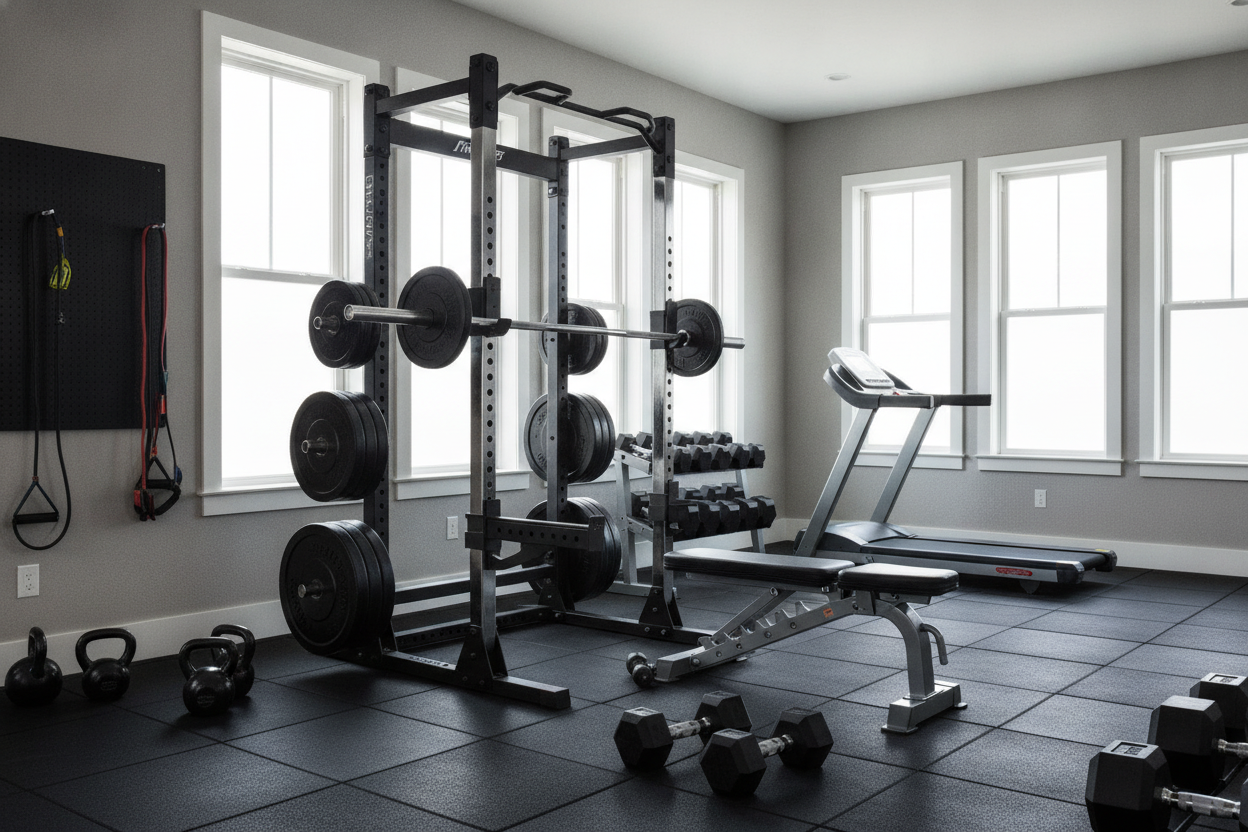
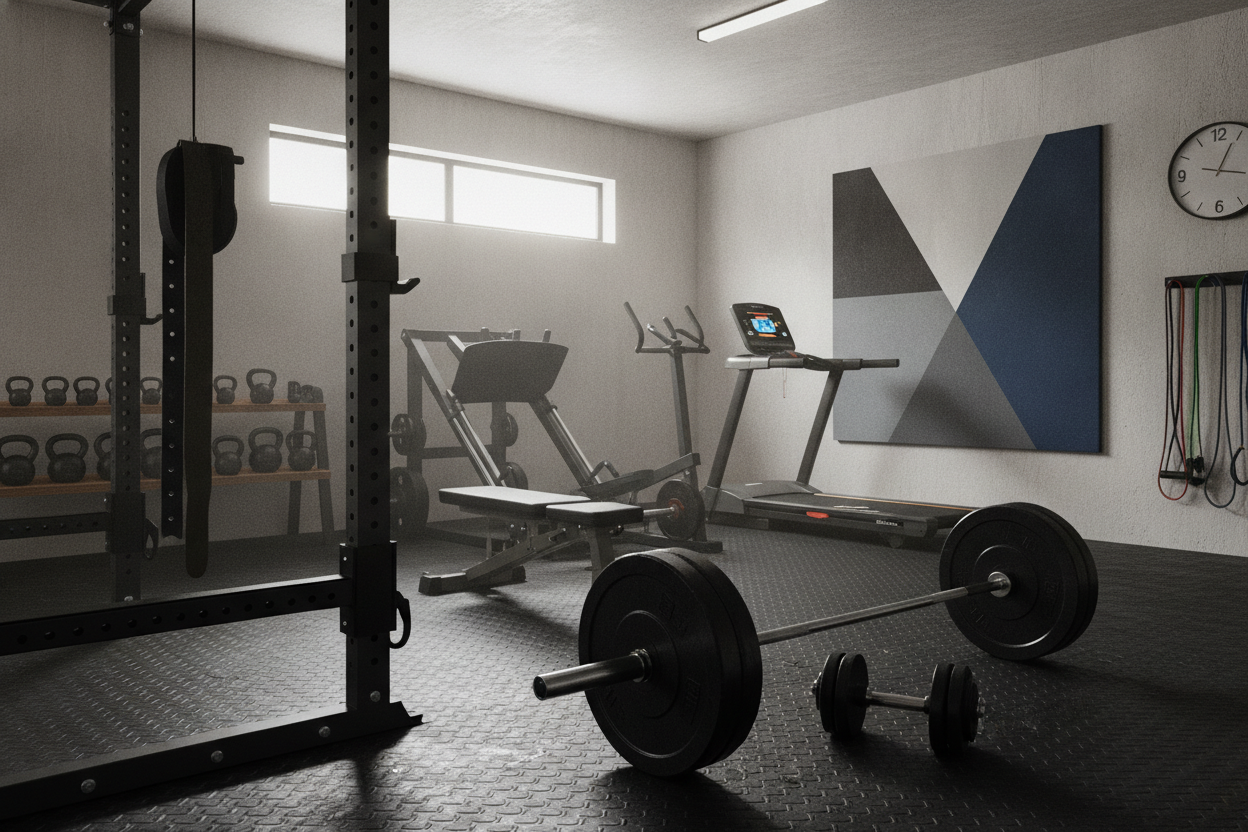
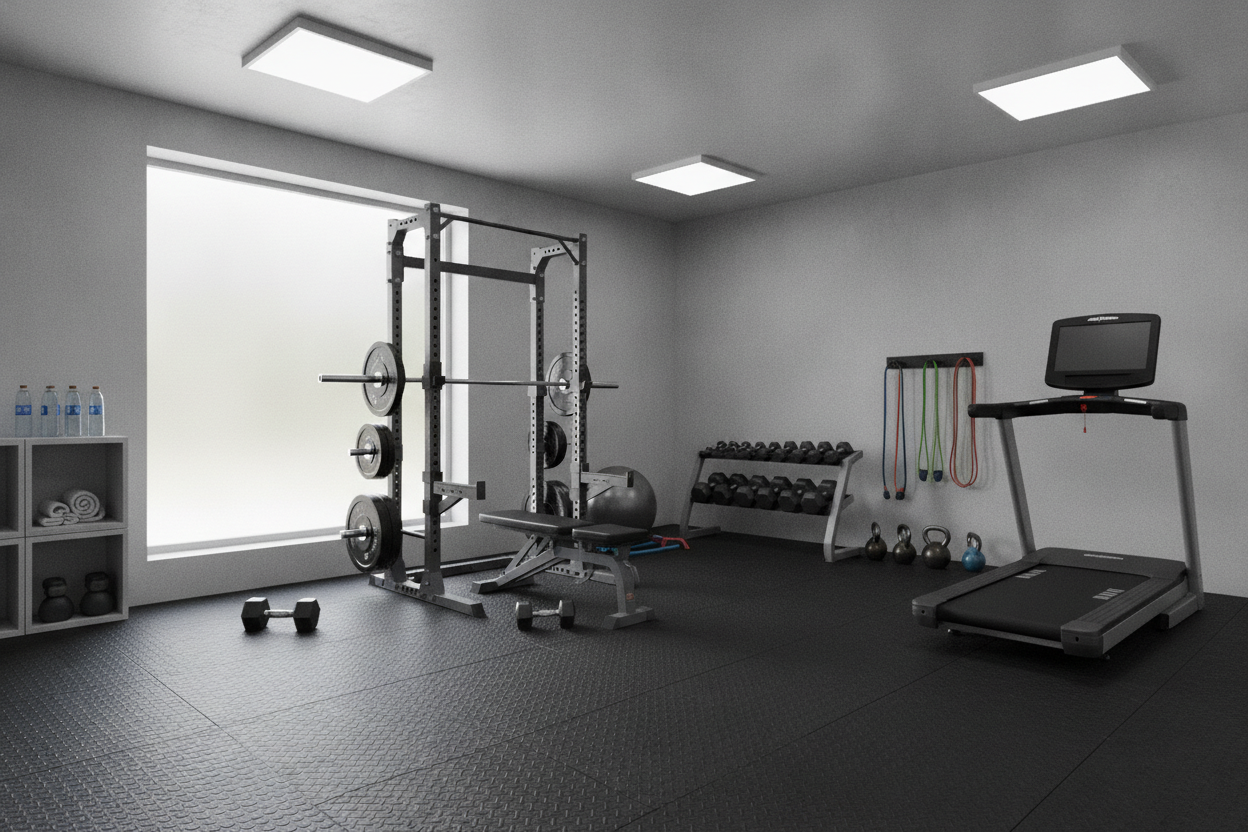
You don't need a full commercial setup to maintain your gains. A solid set of adjustable dumbbells and some high-quality gym flooring for home workout spaces can give you a sanctuary for those days when the commercial gym feels like a circus. I’ve moved about 40% of my accessory training to my garage, and my consistency has skyrocketed because of it.
My personal experience? I spent years thinking I needed every machine in the gym to see results. I wasted time on seated hip abductions and cable pull-throughs that did nothing but make me sweat. When I finally committed to heavy barbells and high-intensity unilateral work, my strength doubled in six months. I also realized that having a small space at home for those ‘emergency’ workouts saved my progress more times than I can count. Don't let a crowded gym be your excuse for a flat posterior.
FAQ
How many times a week should I train glutes?
For most people, two times a week is the sweet spot. This allows for 48-72 hours of recovery between sessions, which is crucial since we are hitting them with heavy compound movements. Any more than three times usually leads to diminished returns and hip fatigue.
Do I need a lifting belt for glute day?
Only if you are going very heavy—think 85% of your 1-rep max or higher. A belt helps with intra-abdominal pressure, but you shouldn't rely on it to fix bad form. Master the brace first, then add the belt for your top sets of RDLs or squats.
What if my gym doesn't have a hip thrust machine?
Use a standard bench and a barbell. Use a thick pad or a rolled-up yoga mat to protect your hips. If the benches are taken, use a 12-inch or 18-inch plyo box. It’s actually more stable than most commercial benches anyway.