The 30-Degree Trick That Fixes Stalled upper body weights exercises
I remember staring at my 50-pound dumbbells last year, genuinely annoyed. I had hit 12 reps on the flat bench for three weeks straight, but the 55s felt like lifting a small car. My progress on upper body weights exercises had hit a wall, and my left shoulder was starting to provide a rhythmic 'click' every time I lowered the weight. I was stuck in the flat-plane trap.
The solution wasn't buying heavier plates or a new pre-workout. It was simpler: I moved the bench pin up one notch. By shifting from a flat plane to a slight 15-to-30-degree incline, I bypassed the joint pain and woke up muscle fibers that had been napping for a decade. If you are tired of the same old plateaus, it is time to stop thinking about how much you lift and start thinking about the angle at which you lift it.
- Small angle shifts (15-30 degrees) target the clavicular pec head better than steep inclines.
- Adjustable benches provide more training variety than most single-use weight exercises for upper body.
- Chest-supported movements eliminate the 'cheat' momentum that stalls back growth.
- Changing the angle allows you to train around nagging joint issues without losing intensity.
The Problem With Flat-Pressing Everything
Most of us start our journey with the flat barbell bench press. It is the gold standard, the ego-booster, the 'how much ya bench' movement. But doing all your exercises for upper body with weights on a strictly flat plane is a recipe for a physique that looks unfinished and shoulders that feel like they are full of broken glass. When you only press flat, you are overworking the sternal head of the pec and putting a massive amount of shear force on the rotator cuff.
I have seen it in my own garage gym and dozens of others. You get strong on the flat bench, but your upper chest looks hollow, and your shoulders start to roll forward. This happens because the flat plane doesn't allow for the natural 'scapular upward rotation' that your shoulders actually want. By staying flat, you are essentially pinning your shoulder blades against the vinyl and forcing the joint to do work it wasn't designed to handle alone. Neglecting those upper-chest fibers doesn't just look bad; it creates a structural weakness that will eventually stop your strength gains dead in their tracks.
Why Angle Manipulation Beats Buying More Plates
I see guys on forums all the time asking if they should buy a set of 100-lb dumbbells to break a plateau. My answer? Not yet. You don't need more gravity; you need better biomechanics. When you adjust your bench to a slight incline—I am talking 15 to 30 degrees—you radically alter the tension curve. A 60-lb dumbbell at a 30-degree angle often feels significantly heavier at the top of the movement than a 70-lb dumbbell on a flat bench because of how the muscle fibers are aligned with the resistance.
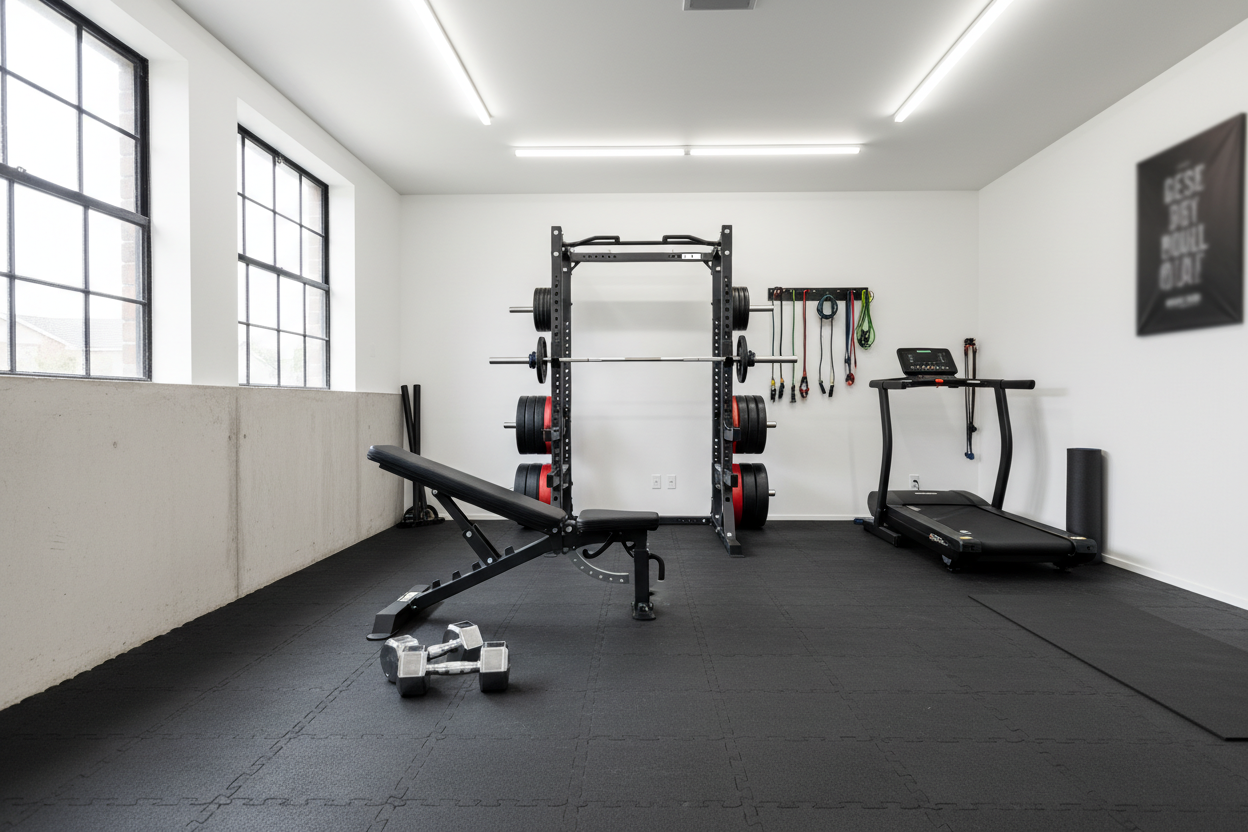
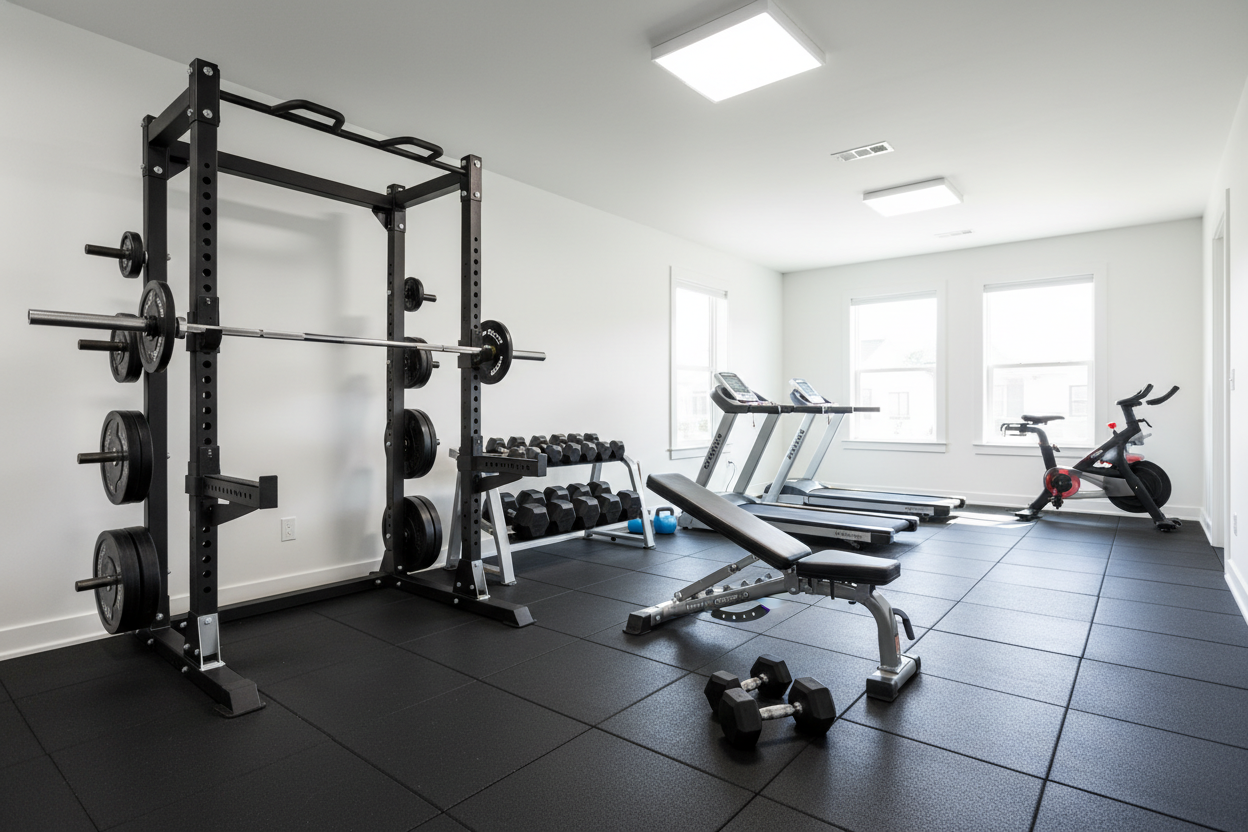
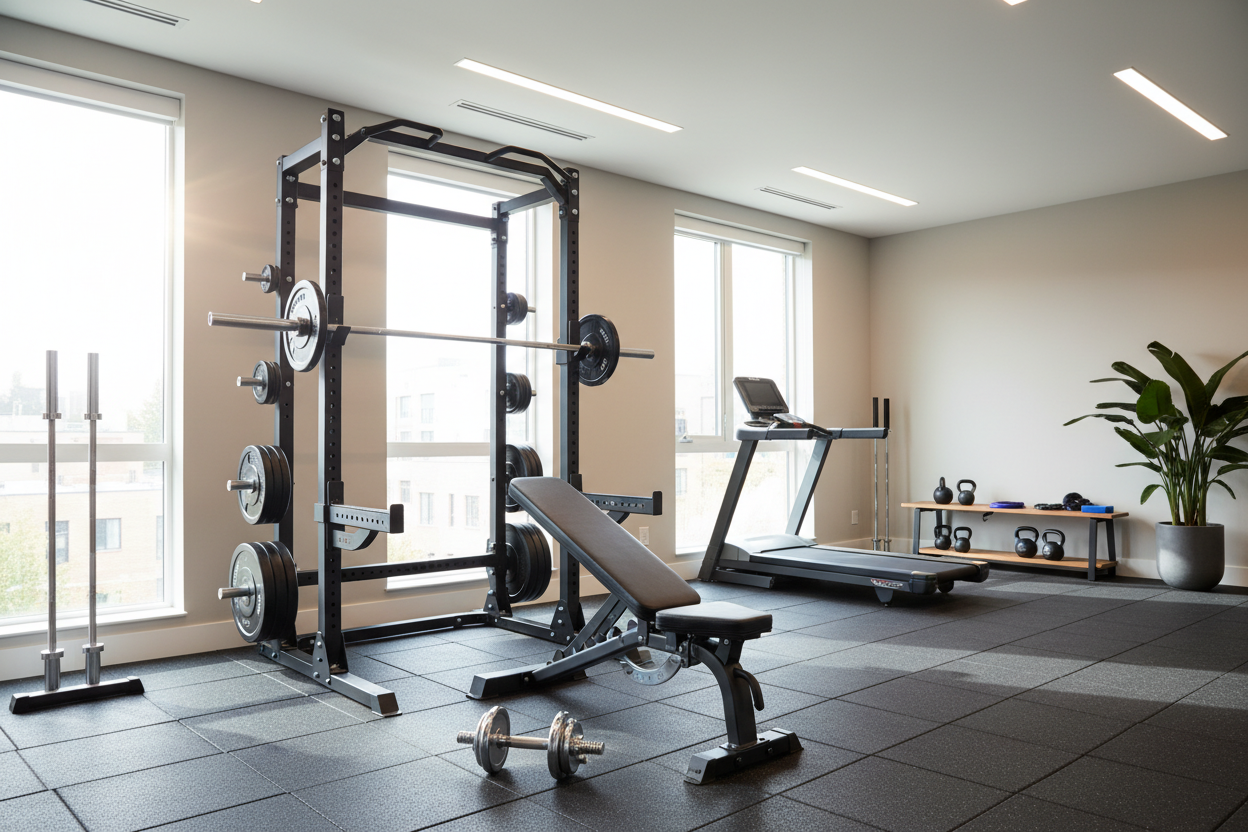
This is where gear quality matters. You can't do this safely on a cheap, fixed-position bench from a big-box store. You need something like the Gxmmat Adjustable Weight Bench, which offers the specific, incremental 'notches' required for micro-adjustments. A bench that only has 'flat, 45, and 90' is useless for this trick. You want those subtle 15 and 30-degree options. These slight shifts allow you to find the 'pain-free' path for your shoulders while keeping the tension exactly where you want it: on the muscle, not the connective tissue. It turns basic weights for upper body into precision tools.
3 Incline Tweaks for Your Core Pushing Movements
If you want to see immediate changes in your chest and shoulder development, stop doing 'Shoulder Press' and 'Chest Press' as two separate, unrelated things. Think of them as a spectrum. I start my heavy pressing at a 15-degree incline. This is the 'sweet spot' for the upper chest. It feels like a flat press, but the pump in your upper pecs will be unmistakable. From there, move to 30 degrees for your secondary movement. This is where the transition from chest to front deltoid really begins, and it is usually where people are weakest.
For the final heavy push, I go to a high incline—around 60 to 75 degrees. This is far superior to a strict 90-degree overhead press for most people. A 90-degree press often forces you to arch your lower back aggressively just to clear your head with the bar. By backing off just one notch, you can keep your spine neutral and actually drive more weight. If you are training solo in a garage, I highly recommend using the Gxmmat X6 Power Rack Weight Bench Package. Having those safety spotter arms means you can actually push these high-angle presses to failure without the fear of wearing a barbell as a necklace. The rack gives you the stability to focus entirely on the mechanical tension of the lift.
Don't Forget the Pulls: Chest-Supported Rows
Most people think of an adjustable bench as a pressing tool, but it is actually the best back-builder in your gym. If you are doing exercises with weights for upper body and your lower back is always the first thing to give out, you are leaving gains on the table. Standard bent-over rows are great, but your spinal erectors often fatigue before your lats do. This is where the chest-supported row comes in. Flip that bench around, set it to a 45-degree incline, and lay face-down on it.
By stabilizing your torso against the pad, you eliminate all momentum. You can't 'hip-hinge' the weight up. This forces your rhomboids and lats to do every ounce of the work. As discussed in The Best exercises for the upper body Move You, Not The Weight, the goal is to move the muscle, not just move the iron from point A to point B. When you are locked into that bench, you'll find that you probably have to drop your row weight by 20%. That is a good thing. It means the weight is finally going where it belongs instead of being absorbed by your lower back and hamstrings.
Putting It Together: A Simple Multi-Angle Routine
To build a routine that actually works, stop thinking in terms of 'flat days' and 'shoulder days.' Instead, try an 'Angle Ladder.' Start your workout with a low-incline dumbbell press (15 degrees), move to a moderate incline fly (30 degrees), and finish with a high-incline neutral grip press (60 degrees). This hits every possible fiber in the pushing chain. Pair this with chest-supported rows at a 45-degree angle, and you have a complete upper body session that doesn't require a dozen different Weight Lifting Machines. An adjustable bench and a set of dumbbells are more versatile than a $5,000 circuit of commercial equipment.
Consistency is key, but so is balance. While you are crushing these new angles for your chest and back, don't let your lower body fall behind. You should be pairing this routine with a dedicated leg day, perhaps following a guide like Leg Exercises Weight Training The Blueprint For Total Lower Body Power to ensure your total body strength stays proportional. A massive upper body on 'chicken legs' isn't just a meme; it is a recipe for poor athletic performance and future injury. Use the 30-degree trick to fix your upper body stalls, but keep the rest of the engine running hot too.
My Personal Lesson: The 'Stack' Mistake
I have to be honest: I didn't always own a high-quality adjustable bench. Years ago, I tried to 'hack' my flat bench by propping one end up on a stack of two 45-lb bumper plates. It worked for about two sets. On the third set of heavy dumbbell presses, the bench shifted, the plates slid, and I went sideways. I ended up with a bruised rib and a very expensive hole in my garage drywall. I learned the hard way that when you are dealing with heavy weight exercises for upper body, stability is non-negotiable. Buy a bench that is rated for at least 600 lbs (user weight plus weights) and has a wide base. Your ribs will thank you.
FAQ
Is a 15-degree incline really different from a flat bench?
Yes. Research shows that even a 15-degree tilt significantly increases the activation of the clavicular (upper) head of the pectoralis major while reducing the strain on the shoulder capsule compared to a perfectly flat press.
Can I do these exercises with a barbell?
You can, but dumbbells are usually better for angle manipulation. Dumbbells allow your wrists and elbows to follow a more natural, slightly arched path, which is much easier on the joints when you are working at various inclines.
How do I know if my bench is at the right angle?
Most quality benches have degree markings on the frame. If yours doesn't, a 30-degree angle is usually the second or third notch up from flat. If your front delts start to burn more than your chest, you have probably gone too high—back it down one notch.