The 3 Rules That Turn Painful Pulling Into Good Stretching
I remember the first time I tried to touch my toes after a heavy squat session. My hamstrings felt like guitar strings tuned three octaves too high. I yanked, I bounced, and I ended up more locked up than when I started. Most lifters treat good stretching like a wrestling match with their own anatomy, and that is exactly why it never works.
Real mobility isn't about force; it's about convincing your nervous system to stop panic-braking every time you move into a deep range of motion. If you are tired of feeling like a rusted hinge, you need to change how you approach stretching flexibility exercises.
Quick Takeaways
- Stop the force: If you are grimacing, your muscles are contracting, not lengthening.
- Surface stability: A hard, slippery floor makes your body brace for impact.
- Breathe from the belly: Short chest breaths keep you in a 'fight or flight' state.
- Open the front: Your pecs and hip flexors are likely the real culprits behind your bad posture.
Why Yanking on Cold Muscles Backfires
Your body has a built-in safety switch called the 'stretch reflex.' When you pull a muscle too hard or too fast, your muscle spindles send a frantic signal to the spinal cord. The response? The muscle contracts to prevent what it perceives as an impending tear. When you 'yank' on a cold hamstring, you aren't lengthening it; you are actually teaching it to tighten up even more to protect itself.
I see guys in the gym all the time bouncing at the bottom of a toe-touch. They think they are getting deeper, but they are just triggering that reflex over and over. You cannot bully your nervous system into being flexible. You have to coax it. Think of it like trying to pet a stray cat—if you lung at it, it runs. If you sit still and wait, it eventually yields.
Rule 1: Your Body Needs to Feel Safe to Yield
You can't achieve a deep release if your brain thinks you're about to fall or get hurt. I spent years trying to stretch on a thin, cheap towel over a polished concrete garage floor. Every time I tried to sink into a split, my feet would slide, my knees would ache from the hard ground, and I’d subconsciously brace my core. This bracing kills the stretch.
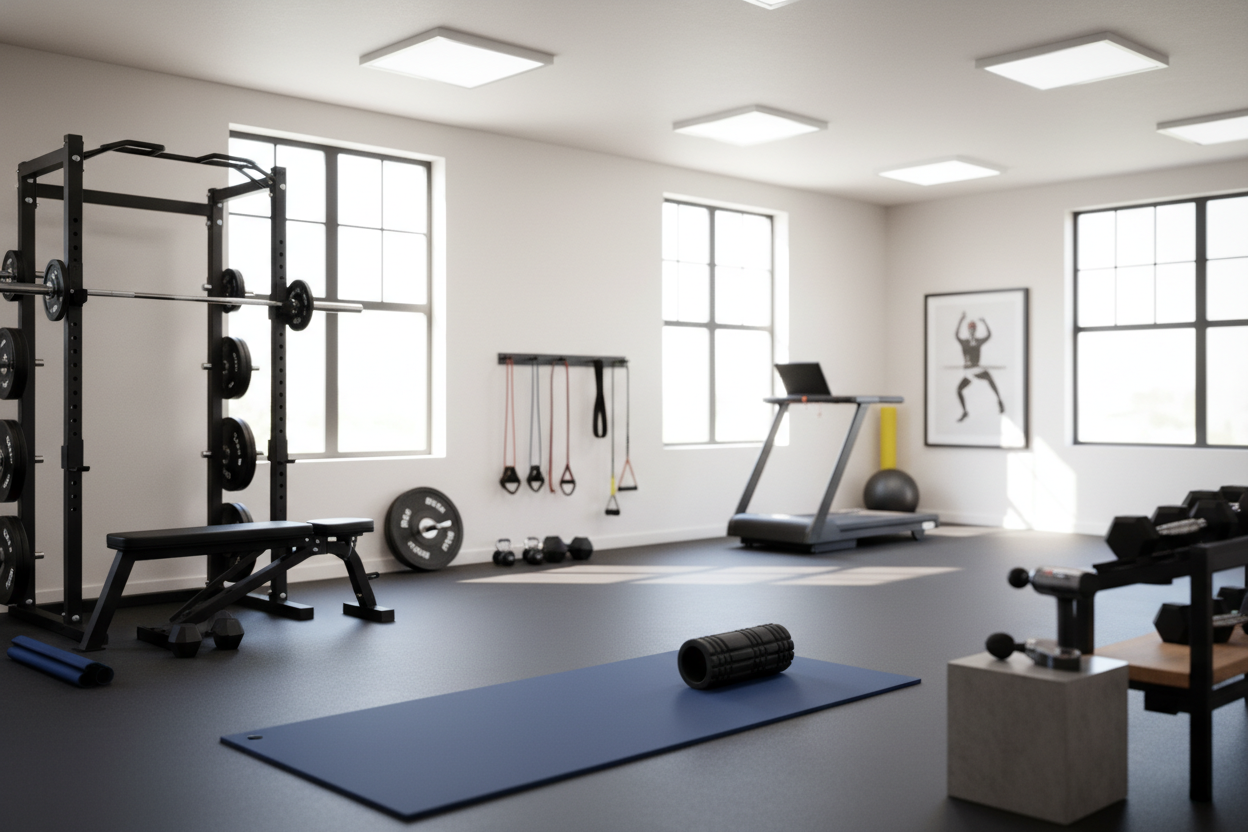
To get a real release, you need a surface that offers both grip and cushion. Having a dedicated 6x8ft exercise mat in your gym creates a 'safe zone' where you can sprawl out without your elbows digging into the slab. When your body feels stable and cushioned, the subconscious bracing stops, and the muscle finally feels safe enough to let go.
Rule 2: Stop Ignoring the Front of Your Body
Lifters are obsessed with their hamstrings. But if you spend your mornings at a desk and your evenings on a bench press, your real problems are in the anterior chain. Your pecs, anterior delts, and hip flexors are constantly shortened. This pulls your shoulders forward and tilts your pelvis, making your hamstrings feel 'tight' simply because they are being pulled taut like a cable.
Instead of just touching your toes, you need to prioritize chest stretching exercises to reverse that 'computer hunch.' Opening up the front of the body allows your skeleton to sit back into a neutral alignment. When your ribcage isn't being pulled down by tight pecs, your back and hamstrings don't have to work nearly as hard just to keep you upright.
Rule 3: Breathe Through the Panic Response
When you enter a deep stretch, your body often enters a minor state of panic. Your heart rate climbs, and you start taking shallow breaths. This is the sympathetic nervous system taking over. To get into a state of good stretching, you have to manually override this using diaphragmatic breathing. Long, slow exhales signal to the parasympathetic nervous system that everything is fine.
I use this specifically when tackling deep hip mobility exercises like the pigeon pose. If I catch myself holding my breath, I know I've gone too deep. I back off 10%, take a deep belly breath, and exhale for a count of six. That exhale is the magic moment where the muscle spindle actually relaxes and allows for new range of motion.
My 3 Go-To Stretching Flexibility Exercises
If you only have ten minutes after a workout, don't waste them on twenty different movements. Focus on these three high-ROI stretches. First, the Couch Stretch for your hip flexors. Second, the Doorway Pec Stretch to fix your posture. Third, a 90/90 Hip Flow. These three cover the most common 'stuck' points for anyone who lifts heavy.
To do these right, set up a recovery zone with a large yoga mat so you have enough room to transition between movements without stepping off onto the cold floor. I personally keep my mat rolled out in a corner of the garage as a visual reminder. If the space is ready, I'm 100% more likely to actually use it instead of just heading straight for the shower.
Personal Experience: The Ego-Stretch Mistake
A few years back, I was obsessed with getting a 'flat' pancake stretch. I had a buddy push on my back while I was cold. I felt a sharp 'zip' in my inner thigh. I didn't tear anything major, but I couldn't squat without pain for a month. It was a classic case of forcing a range of motion my body wasn't ready to support. Now, I never stretch to the point of pain. If it feels like a 'pulling' sensation, I'm good. If it feels like a 'stabbing' or 'tearing' sensation, I'm done. Listen to the feedback, or your body will eventually scream loud enough to make you listen.
FAQ
How long should I hold a stretch?
Forget the 10-second rule. Aim for 2 minutes. It takes about 90 seconds for the nervous system to stop the initial 'panic' and actually allow the tissue to change.
Should I stretch before or after lifting?
Dynamic movement before, static stretching after. You want your muscles warm and reactive before a heavy set, not relaxed and sleepy.
Why do my muscles feel tighter the day after stretching?
You probably went too hard. If you trigger a massive inflammatory response by over-stretching, the muscle will tighten up to protect the micro-tears. Back off the intensity.