
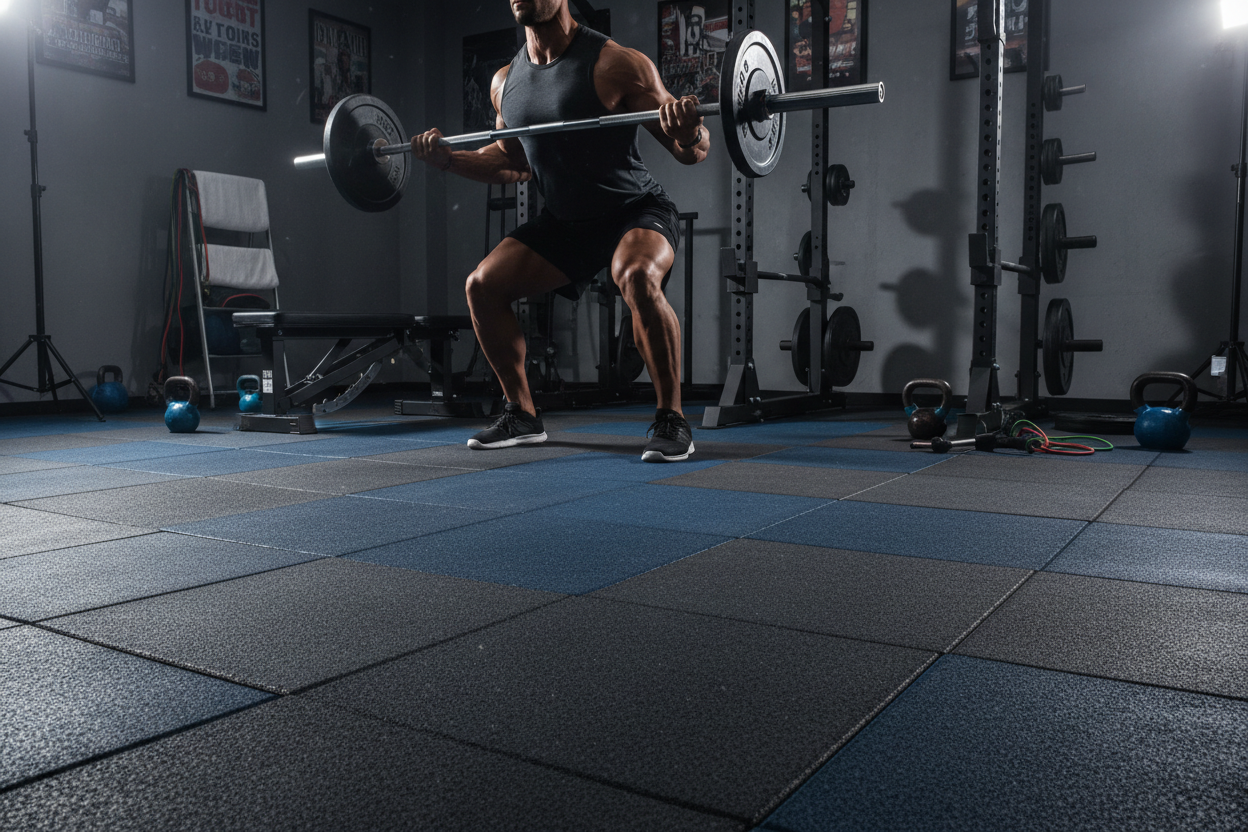
Synthetic Gym Floors Explained: Stop Ruining Your Foundation
There is nothing quite like the heart-dropping sound of a 45-pound bumper plate slipping from your grip and crashing directly onto bare concrete. Whether you are battling cracked foundation slabs, echoing noise that wakes up the whole house, or joints that ache after every plyometric session, your flooring is often the most overlooked piece of gym equipment.
Upgrading to high-quality synthetic gym floors is the ultimate game-changer for serious home athletes. In this guide, we will break down exactly what you need to know about materials, sizing, and installation to help you build a safer, quieter, and more professional training space.
Key Takeaways
- Ultimate Protection: Shields your subfloor from heavy barbell drops and heavy machine gouging.
- Joint Health: Offers superior shock absorption compared to bare concrete or standard household flooring.
- Moisture Resistance: Non-porous materials prevent sweat and humidity from causing mold or warping.
- Versatility: Available in interlocking tiles, heavy-duty rolls, and standalone mats to fit any room shape.
Choosing the Right Synthetic Sports Flooring
Not all rubber or vinyl is created equal. When evaluating synthetic flooring for sports, your primary focus should be matching the material and thickness to your specific training style.
Material Matters: Rubber vs. PVC
For heavy strength training, vulcanized or recycled rubber is the gold standard. It absorbs massive amounts of kinetic energy, making it ideal for powerlifting. On the other hand, PVC (polyvinyl chloride) synthetic sports flooring offers a slightly firmer surface with excellent traction, making it a favorite for agility drills, plyometrics, and multi-purpose athletic courts.
Thickness and Impact Ratings
If your routine consists mostly of yoga, dumbbells, and light kettlebells, a 1/4-inch to 3/8-inch synthetic gym floor will serve you perfectly. However, if you are dropping heavy deadlifts or Olympic lifts, you need at least 1/2-inch to 3/4-inch thickness. Skimping on thickness is the number one reason home gym owners end up with damaged foundations.
Space Planning: Garages vs. Basements
North American home gyms typically live in two places: the garage or the basement. Each presents unique challenges for flooring installation.
Handling Moisture and Temperature Shifts
Basements are notorious for trapping moisture, while uninsulated garages experience wild temperature swings from summer to winter. A premium synthetic sports floor is designed to expand and contract slightly without buckling. If you are installing in a damp basement, we highly recommend a dimpled underlayment beneath your synthetic gym flooring to allow trapped concrete moisture to evaporate, preventing mildew.
Durability and Maintenance
One of the biggest advantages of moving away from carpet or bare wood is the ease of maintenance. High-quality synthetic floors are engineered to take a beating and wipe down in seconds.
Long-Term Wear Patterns
Unlike natural wood that requires refinishing or cheap foam that tears under the weight of a power rack, dense synthetic options resist compression over time. To keep it looking pristine, a simple weekly mop with a pH-neutral cleaner is all it takes. Avoid harsh bleach or ammonia, which can break down the synthetic compounds and cause the color to fade or the material to dry out and flake.
From Our Gym: Honest Take
When we outfitted our 400-square-foot testing garage last spring, we opted for 3/8-inch rolled synthetic gym flooring. The installation was a weekend project that required a lot of elbow grease and a heavy-duty utility knife. The grip is phenomenal; my chalked lifters feel completely planted during heavy squats, and the noise reduction when dropping dumbbells is night and day.
However, I will be completely honest about the initial caveat: the new gym smell. Because it is a heavy-duty synthetic product, it off-gassed a distinct rubbery odor for the first three weeks. We had to leave the garage door open with fans running to clear it out. Also, because we live in a region with hot summers, the rolled flooring expanded slightly in July, causing a minor ripple near the wall. If I were to do it again, I would leave a slightly larger expansion gap around the perimeter.
Frequently Asked Questions
Is synthetic gym flooring better than horse stall mats?
While horse stall mats are a cheap and thick alternative, purpose-built synthetic flooring is generally superior for indoor gyms. It is manufactured to tighter tolerances (meaning no tripping hazards at the seams), has a more uniform texture, and undergoes a process to significantly reduce the strong sulfur smell common in agricultural mats.
Can I install a synthetic sports floor over carpet?
It is highly discouraged. Placing synthetic mats or tiles over plush carpet creates an unstable, squishy foundation. This is dangerous for heavy lifting and can cause interlocking tiles to unlock under pressure. Always remove the carpet or lay down a rigid plywood subfloor first.
How do I clean my synthetic floor after a sweaty workout?
For daily maintenance, a quick sweep or vacuum handles dust and chalk. For sweat and grime, use a damp mop with water and a few drops of mild dish soap or a specialized rubber floor cleaner. Never soak the floor, as water can seep through the seams if they are not fully sealed.


