Stop Wasting Time on Kickbacks: The Real Science of Glute Growth
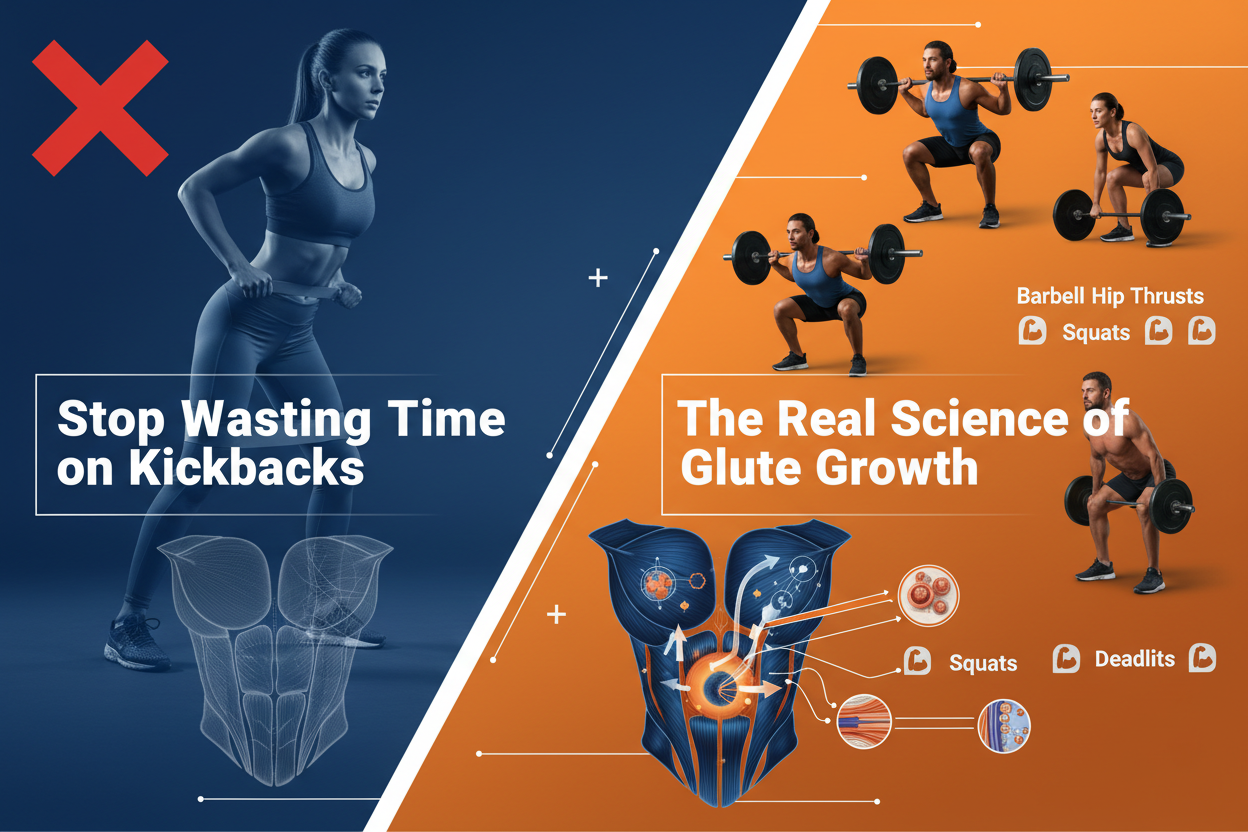
If you walked into a gym five years ago, you likely saw people focusing exclusively on squats. Walk into one today, and you might see endless variations of banded kickbacks and awkward cable movements. The pendulum has swung too far in the other direction. If you want the short answer on what actually works, here it is: The barbell hip thrust is mechanically the best exercise for building glutes due to its ability to load the muscle in the shortened position, but it cannot stand alone. To maximize development, you must pair it with a deep squat variation and a heavy hinge movement like the Romanian deadlift.
There is a massive difference between exercises that make your glutes "burn" and exercises that actually tear muscle fibers to stimulate growth. A high-rep band workout might feel difficult, but mechanical tension—heavy weight moved through a full range of motion—is the primary driver of hypertrophy. Let’s strip away the influencer fluff and look at how to construct the best glute building workout based on biomechanics and real-world results.
My struggle with "feeling the burn"
Early in my training career, I fell into the sensation trap. I spent months prioritizing high-repetition isolation movements because I could feel a distinct burning sensation in the target muscle. I thought the more it hurt during the set, the more it would grow. After six months, my strength hadn't budged, and my physique looked exactly the same. I was confusing metabolic stress (the burn) with mechanical tension.
The breakthrough happened when I stopped chasing the pump and started chasing numbers. I swapped the ankle weights for a barbell. I focused on adding five pounds to my hip thrust and deadlift every week. It was humbling to do fewer reps, but the results were undeniable. Within a few months of heavy compound lifting, I saw more progress than I had in the previous year of "toning" exercises. This experience cemented my understanding that the best workout to build glutes isn't the one that leaves you sweaty and sore; it's the one that makes you stronger over time.
The undisputed king: The Barbell Hip Thrust
When analyzing the best exercise to build glutes, we have to look at peak tension. Most lower body movements, like squats and lunges, place the hardest part of the lift at the bottom, where the glutes are stretched. The hip thrust is unique because the hardest part of the movement is at the top, where the glutes are fully contracted (shortened).
This creates a distinct stimulus that other compound lifts miss. Because your knees remain bent, your hamstrings are largely taken out of the equation (active insufficiency), forcing the glutes to do the heavy lifting. If you are serious about size, the hip thrust needs to be the centerpiece of your routine. You can load this movement heavier than almost anything else. Aim for a rep range of 8 to 12, pausing for a split second at the top of every rep to ensure momentum isn't doing the work for you.
Lengthened position: Squats and Deadlifts
While the hip thrust is fantastic, relying on it exclusively is a mistake. The best glute exercises to build muscle must also challenge the muscle when it is stretched. This is where the squat and the hinge come into play.
Deep squats (whether high-bar, low-bar, or goblet) stretch the glute max under significant load. The deeper you go, the more glute activation you get. If you cut your depth short, you are mostly training your quads. Similarly, Romanian Deadlifts (RDLs) are non-negotiable. They train the hip extension pattern with a focus on the eccentric (lowering) portion. Control the weight on the way down for three seconds, feel the deep stretch in your hamstrings and glutes, and drive your hips forward. These movements cause the most muscle damage, which is a necessary component of growth.
Unilateral training to fix imbalances
You cannot have the best glute building exercises in your arsenal without including single-leg work. Most people have one side that is stronger than the other. If you only do bilateral movements (two legs at once), the dominant side will take over, leading to asymmetry.
Bulgarian Split Squats and reverse lunges are the best exercises for bigger glutes when it comes to unilateral training. The Bulgarian Split Squat, in particular, allows for a massive range of motion. To bias the glutes, lean your torso forward slightly and keep your front shin relatively vertical. If you stay upright, you'll target more quads. These are grueling, but they ensure that every fiber of the muscle is recruited without your lower back becoming the limiting factor.
Structuring the best workout for building glutes
Knowing the exercises is only half the battle. You need to arrange them in a way that manages fatigue and prioritizes strength. A random assortment of movements won't yield results. The best glute building workout should follow a hierarchy: heavy compounds first, followed by unilateral work, finishing with high-rep isolation.
Here is a sample structure that covers all bases:
- A. Compound Lift (Shortened Position): Barbell Hip Thrust - 3 sets of 8-10 reps (Heavy)
- B. Compound Lift (Lengthened Position): Romanian Deadlift or Deep Squat - 3 sets of 8-12 reps
- C. Unilateral Movement: Glute-Biased Bulgarian Split Squats - 3 sets of 10-12 reps per leg
- D. Metabolic Stress/Isolation: 45-Degree Hyperextensions (Round the back to target glutes) - 2 sets of 15-20 reps
This sequence works because you hit the heaviest, most stable movement first. By the time you get to the isolation work at the end, your central nervous system is fatigued, so lighter, high-rep work is safer and more effective.
The role of progressive overload
You can have the best workout to build glutes on paper, but if you use the same 20-pound dumbbell for six months, you will not grow. Muscle is an adaptation to stress. If the stress doesn't increase, the adaptation stops. You must track your lifts. If you did 135lbs for 10 reps last week, try for 11 reps this week, or bump the weight to 140lbs. This principle, known as progressive overload, is infinitely more important than confusing your muscles with new exercises every session.
Frequency matters
Hitting glutes once a week usually isn't enough for optimal hypertrophy. The glutes are a large, resilient muscle group that can handle significant volume. Most trainees see better results training them 2 to 3 times per week. This doesn't mean you need to destroy yourself every session. You might have one heavy day focusing on the hip thrust and another day focused on higher-rep lunges and abduction work.
Nutrition: The silent partner
No list of the best exercises for bigger glutes can save you if you aren't eating enough. Building tissue requires energy. You need to be in a slight caloric surplus, or at least at maintenance, with sufficient protein intake (roughly 0.7 to 1g per pound of body weight). If you are perpetually dieting and trying to shrink yourself, your glutes will not have the building blocks required to grow. Fuel your training, lift heavy, and be patient.
Frequently Asked Questions
How often should I train glutes to see maximum results?
For most natural lifters, training glutes 2 to 3 times per week is the sweet spot. This frequency allows for sufficient volume to stimulate growth while providing enough recovery time between sessions. Training them every day typically leads to overtraining and diminished returns.
My quads always take over during glute exercises, what should I do?
This is usually a form or positioning issue. To bias the glutes, focus on keeping a vertical shin during lunges and split squats, and lean your torso forward slightly to increase hip flexion. For squats, a wider stance can sometimes help recruit more glute musculature compared to a narrow stance.
Do I have to lift heavy weights to build glutes?
Yes, generally speaking. While you can build some muscle with lighter weights and high reps (near failure), heavy loads (6-12 rep range) create high mechanical tension, which is the most efficient driver of muscle growth. A combination of heavy compounds and lighter isolation work usually yields the best physique changes.