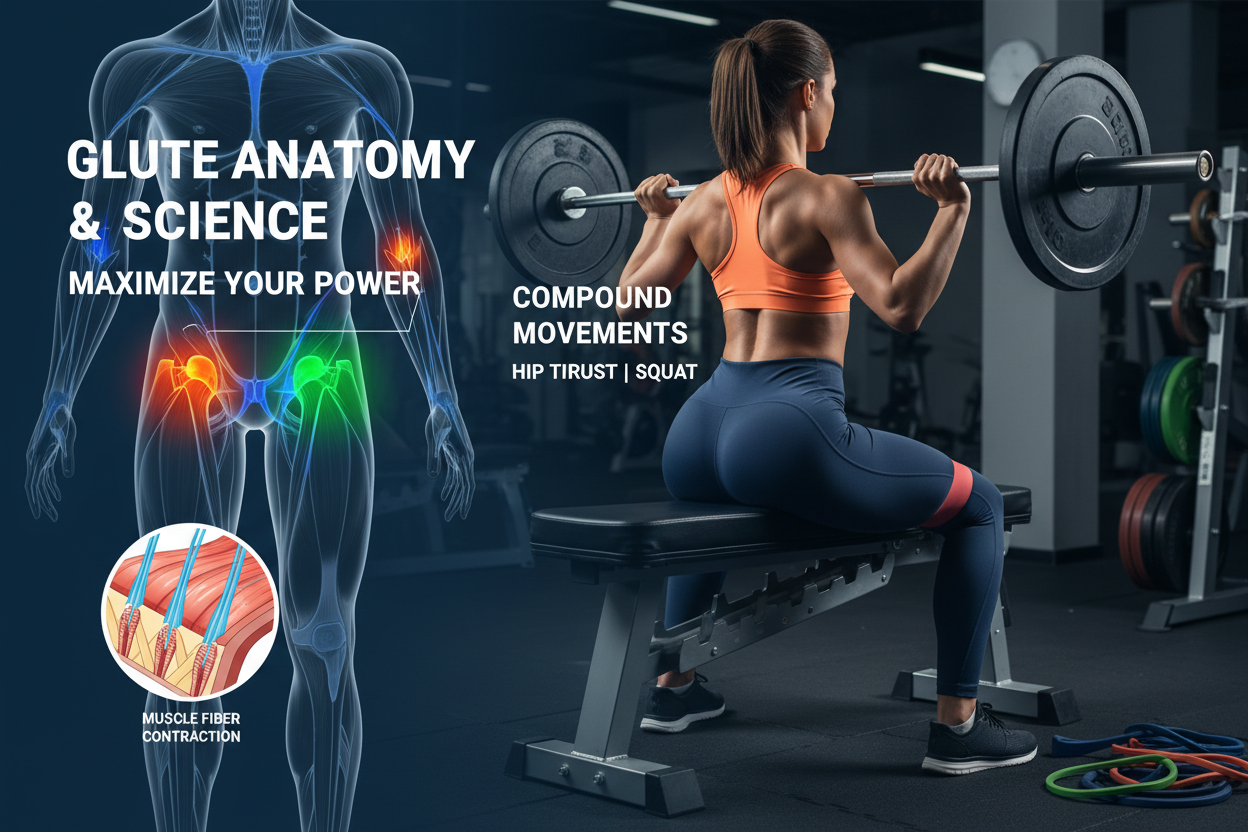
Stop Wasting Time on Kickbacks: The Real Science of Building Stronger Glutes
You want to know exactly how to tone glutes without spending hours in the gym doing exercises that don't yield results. The short answer is straightforward: you must build muscle. The firm, lifted look most people aspire to isn't achieved by doing high-repetition bodyweight exercises until you feel a burn; it comes from hypertrophy (muscle growth) combined with a body fat percentage that allows that muscle to show. To see real changes, you need to prioritize progressive overload on compound movements like hip thrusts, squats, and deadlifts, while eating enough protein to support tissue repair.
Many fitness enthusiasts get stuck in a cycle of endless cardio or light resistance work, thinking this will sculpt their physique. Unfortunately, muscle tissue requires significant mechanical tension to adapt and grow. If you are not challenging the muscle with heavier loads or increasing intensity over time, your physique will likely remain the same.
My Journey from Cardio to Heavy Lifting
I spent the early years of my fitness journey terrified of heavy weights. I bought into the idea that lifting heavy would make me look bulky, so I stuck to running and doing hundreds of unweighted leg lifts. I was chasing toned glutes, but all I ended up with was a "pancake" look—flat and undefined. My legs were smaller, sure, but I had zero shape. It wasn't until I reluctantly walked into the weight room and started deadlifting that my body composition actually changed. I remember the first time I pulled significantly more than my body weight; not only did I feel empowered, but my jeans also started fitting differently in all the right places. That experience taught me that shape comes from strength, not starvation or endless repetition.
Understanding the "Tone" Myth
The phrase toning glutes is a bit of a misnomer in the physiological world. Muscles do not go from "soft" to "hard" or "bulky" to "toned." Muscles either shrink (atrophy) or grow (hypertrophy). When someone says they want to tone up, they usually mean they want to see more muscle definition and less body fat.
To achieve this, you have to stimulate the gluteus maximus, medius, and minimus to grow. This requires resistance training. If you are in a calorie deficit to lose fat but aren't lifting heavy enough to signal your body to keep its muscle, you will likely lose muscle mass along with the fat, resulting in a smaller but softer version of your current self.
The Hierarchy of Glute Exercises
Not all exercises are created equal. For maximum efficiency, your routine should revolve around compound movements that allow you to move the most weight safely. These exercises target the posterior chain effectively and trigger the hormonal responses necessary for growth.
The Hip Thrust
The hip thrust is often considered the gold standard for glute development. Unlike squats, which place a heavy load on the quads and lower back, the hip thrust isolates the glutes in their shortened position (when the hips are fully extended). This creates immense tension where you want it most. Focus on keeping your chin tucked, your ribs down, and driving through your heels. A common mistake is hyperextending the lower back at the top; stop when your hips align with your shoulders and knees.
Squats and Lunges
While the hip thrust is great for the shortened position, you also need to work the muscle in the lengthened position. Deep squats and reverse lunges stretch the glute fibers under load. This causes micro-tears in the muscle tissue, which is the catalyst for repair and growth. If you struggle to feel your glutes during squats, try widening your stance slightly and pointing your toes out, or opt for a goblet squat which encourages an upright torso and greater depth.
The Hinge Pattern (Deadlifts)
Romanian Deadlifts (RDLs) are non-negotiable for a complete lower body. They target the hamstrings and the lower glutes. The movement pattern here is a hinge, not a squat. Imagine trying to close a car door with your backside while holding a heavy weight. Keep your shins vertical and push your hips back as far as possible. The stretch you feel at the bottom is where the magic happens.
Progressive Overload: The Secret Sauce
You cannot use the same 15-pound dumbbells for a year and expect your body to change. The principle of progressive overload dictates that you must continually increase the demands on the musculoskeletal system. This can be done in several ways:
- Increasing the weight lifted.
- Increasing the number of reps with the same weight.
- Slowing down the tempo (time under tension).
- Decreasing rest periods between sets.
Keep a logbook. If you squatted 135 pounds for 8 reps last week, try for 9 reps this week, or bump the weight to 140 pounds for 8 reps. Small, incremental wins compound over months to create substantial physical changes.
Nutrition and Recovery
Training provides the spark, but nutrition provides the fuel. You can have the best workout program in the world, but if you aren't eating enough protein, your body cannot repair the muscle tissue you broke down during your session. Aim for a high-protein diet that includes lean meats, eggs, dairy, or plant-based alternatives like tofu and lentils.
Furthermore, growth happens when you rest, not when you train. Overtraining is a common pitfall. Hitting your glutes with high volume every single day prevents recovery and can actually halt progress. A frequency of two to three times per week is optimal for most people. This gives the muscle fibers 48 to 72 hours to repair and rebuild stronger than before.
Mind-Muscle Connection
It sounds abstract, but the ability to mentally connect with the muscle you are working is backed by science. Many people are "quad-dominant," meaning their thigh muscles take over during leg exercises. To fix this, perform activation exercises before your heavy lifts. Movements like banded clamshells or glute bridges done with bodyweight can help "wake up" the neural pathways. When you move to your heavy sets, focus intensely on squeezing the glutes to move the weight rather than just going through the motion.
Building a strong, powerful lower body takes patience. It requires a shift in mindset from burning calories to building strength. By focusing on heavy compound lifts, eating for recovery, and staying consistent, you will move past the frustration of plateauing and finally achieve the results you work for.
Frequently Asked Questions
How long does it take to see results in my glutes?
Visual changes typically take about 6 to 8 weeks of consistent training and proper nutrition. However, you should feel strength increases—like being able to lift heavier weights—within the first 3 to 4 weeks, which is a sign that muscle adaptation is occurring.
Can I tone my glutes without weights?
You can make initial progress with bodyweight exercises, especially if you are a beginner, but eventually, you will plateau. To continue toning glutes and changing their shape significantly, you need external resistance (weights or strong bands) to provide the necessary stimulus for muscle growth.
Will lifting heavy make my legs look bulky?
No, getting bulky is extremely difficult and requires years of dedicated hypertrophy training and a massive caloric surplus. Lifting heavy will simply build the muscle density required for a firm, athletic look rather than a bulky one.