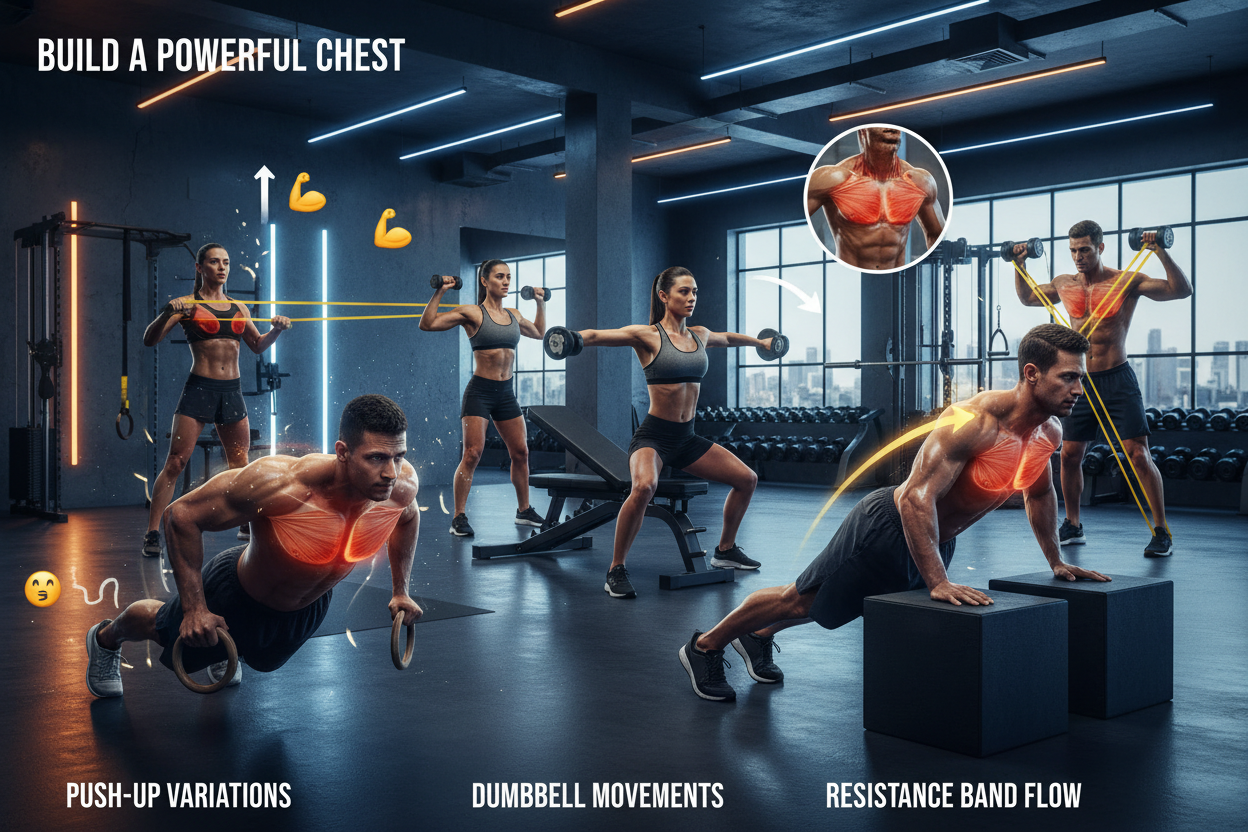
Stop Wasting Chest Day: The Gym Routine That Actually Works
Building a thick, well-defined chest is often the primary goal for anyone stepping into the weight room. It creates that coveted V-taper physique and contributes significantly to upper body strength. However, walking into the weight room without a plan usually leads to occupied benches, disjointed sets, and mediocre results. To truly stimulate hypertrophy, you need a strategy that targets the pectoral muscles from every angle using the right intensity and volume.
I remember clearly when I hit my first major plateau. I had been training for about two years, religiously hitting the flat bench press every Monday. I thought adding weight to the bar was the only metric that mattered. Despite my numbers creeping up, my physique didn't reflect the effort. My shoulders rolled forward, my joints ached, and my upper chest was virtually non-existent. It wasn't until I stopped ego-lifting and started prioritizing a complete range of motion and varied angles that I saw real growth. I realized that a proper gym for chest development isn't just about the heaviest dumbbells; it's about how you use the tools available to maximize muscle fiber recruitment.
Understanding the Anatomy of a Pump
Before diving into the specific movements, you have to understand what you are trying to build. The pectoralis major is a large, fan-shaped muscle with two main heads: the clavicular (upper) and sternocostal (middle/lower). To build a complete shelf, you cannot rely on a single plane of motion. If you stick strictly to flat benching, you end up with bottom-heavy pecs and a flat upper chest.
Effective chest exercises gym veterans swear by always include movements that stretch the muscle fibers under load and contract them fully. The goal is to damage the muscle fibers (micro-tears) so they repair larger and stronger. This requires a mix of heavy compound lifts and targeted isolation work.
The Compound Foundation
Your workout should almost always start with a compound movement. This is where you can move the most weight while your energy levels are highest. The Barbell Bench Press remains the standard, but it requires strict form to be effective. Retract your scapula (pinch your shoulder blades together) to protect your rotator cuffs and isolate the pecs. Keep your feet planted firmly to drive power through your legs.
However, the flat bench isn't the only player. Many lifters find that the Incline Dumbbell Press is actually superior for aesthetic growth. Dumbbells allow for a greater range of motion than a barbell, letting you bring the weights lower for a deeper stretch and bring them closer together at the top for a harder squeeze. This is arguably one of the most good chest exercises at gym setups because it specifically targets that stubborn upper chest area while fixing muscle imbalances between your left and right sides.
The Importance of Angles
If you have access to adjustable benches, use them. A low incline (15 to 30 degrees) is often the sweet spot. It hits the clavicular head without recruiting too much front deltoid. If you go too steep, the exercise becomes a shoulder press. Varying this angle every few weeks can provide a novel stimulus to the muscle, keeping your progress from stalling.
Isolation and the Squeeze
Once the heavy lifting is done, you need to transition to isolation movements. This is where you pump blood into the muscle and focus on the mind-muscle connection. The Cable Crossover is exceptional here. Unlike free weights, where gravity dictates the resistance curve, cables provide constant tension throughout the entire movement.
Set the pulleys high to target the lower pecs or low to target the upper pecs. The key here is not heavy weight; it is control. Imagine you are hugging a large tree barrel. Keep a slight bend in your elbows and focus on bringing your inner elbows together rather than just your hands. This visualization helps engage the pectorals rather than the biceps.
Another staple in the repertoire of chest workouts to do at the gym is the Machine Chest Fly (Pec Deck). It removes the stability requirement, allowing you to push to absolute failure safely. This is an excellent finisher to exhaust every last muscle fiber.
The "Chest #Gym" Culture vs. Reality
We have all seen the social media posts—the obligatory chest #gym selfie with perfect lighting. While motivating, these posts often obscure the reality of hard training. Real growth comes from ugly reps, sweat, and grimacing faces. It comes from controlling the negative (eccentric) portion of the lift. If you are just bouncing the bar off your chest to look strong for the 'gram, you are cheating yourself out of gains and risking injury.
Focus on a tempo of 3-1-1: three seconds down, one second pause at the bottom, and one second explosive push up. This time-under-tension is what drives hypertrophy, not just the number written on the side of the dumbbell.
Structuring Your Routine
When planning your chest day exercises at gym sessions, volume management is key. You don't need twenty different exercises. You need 3 to 4 exercises executed with high intensity. Here is a sample structure that covers all bases:
- Barbell Bench Press: 4 sets of 6-8 reps (Strength and mass focus)
- Incline Dumbbell Press: 3 sets of 8-12 reps (Upper chest hypertrophy)
- Weighted Dips: 3 sets of 10-15 reps (Lower chest and triceps)
- Cable Flyes or Pec Deck: 3 sets of 15-20 reps (Metabolic stress and pump)
This routine ensures you are hitting the muscle from the top, middle, and bottom. It balances heavy loads with metabolic stress. Finding the right chest exercise gym equipment is usually easy, as these are staple machines found in almost every fitness center, from garage gyms to high-end clubs.
Common Mistakes to Avoid
The most frequent error is over-reliance on the front deltoids. If your shoulders are sore the next day but your chest isn't, your form is likely off. Keep your chest up and shoulders back. Another issue is half-reps. Partial reps yield partial results. Unless you are using a specific advanced technique, aim for full range of motion on every repetition.
Rest is the final piece of the puzzle. Your chest muscles don't grow while you are training; they grow while you sleep and eat. Hitting chest three times a week with high volume will likely lead to burnout. For most natural lifters, hitting chest twice a week with at least two days of rest in between provides the optimal balance between frequency and recovery.
Frequently Asked Questions
How often should I train my chest for maximum growth?
For most intermediate lifters, training chest twice a week is the sweet spot. This frequency allows you to accumulate enough volume to stimulate growth while providing adequate time (48-72 hours) for the muscle fibers to repair and recover between sessions.
What should I do if I feel the bench press mostly in my shoulders?
This usually indicates that your shoulder blades are not retracted or your elbows are flaring out too wide (90 degrees). Pinch your shoulder blades together against the bench to create a stable base, and tuck your elbows slightly toward your ribcage (about 45 to 75 degrees) to shift the load onto the pectorals.
Are push-ups effective if I already go to the gym?
Yes, push-ups are an excellent finisher or a way to add volume without heavy joint stress. They allow the scapula to move freely, which is great for shoulder health, and can be easily weighted or elevated to mimic the intensity of other gym movements.