Stop Waiting for the Perfect Gym Equipment to Start Lifting
I have spent way too many nights at 2 AM with fourteen browser tabs open, comparing the tensile strength of power bars I couldn't afford. It is a sickness. We tell ourselves that if we just find the perfect gym equipment, the motivation will follow, the PRs will happen automatically, and we will finally look like the people in the marketing photos. Meanwhile, your gym bag is growing a layer of dust in the corner of the garage.
The truth is, your muscles do not care about the brand name stamped on your plates. They care about tension and consistency. If you are waiting for a pristine, color-coordinated setup before you start your first set of squats, you are not training—you are interior decorating. It is time to stop the scroll and start moving iron.
Quick Takeaways
- Analysis paralysis kills progress more than a lack of gear ever will.
- Every piece of equipment, no matter how expensive, eventually rusts or squeaks.
- A basic rack, a decent bar, and heavy plates are 90% of what you need.
- Protecting your floor is the only 'luxury' that is actually a necessity.
- Start small and upgrade your setup as you get stronger.
The Trap of the Instagram Dream Gym
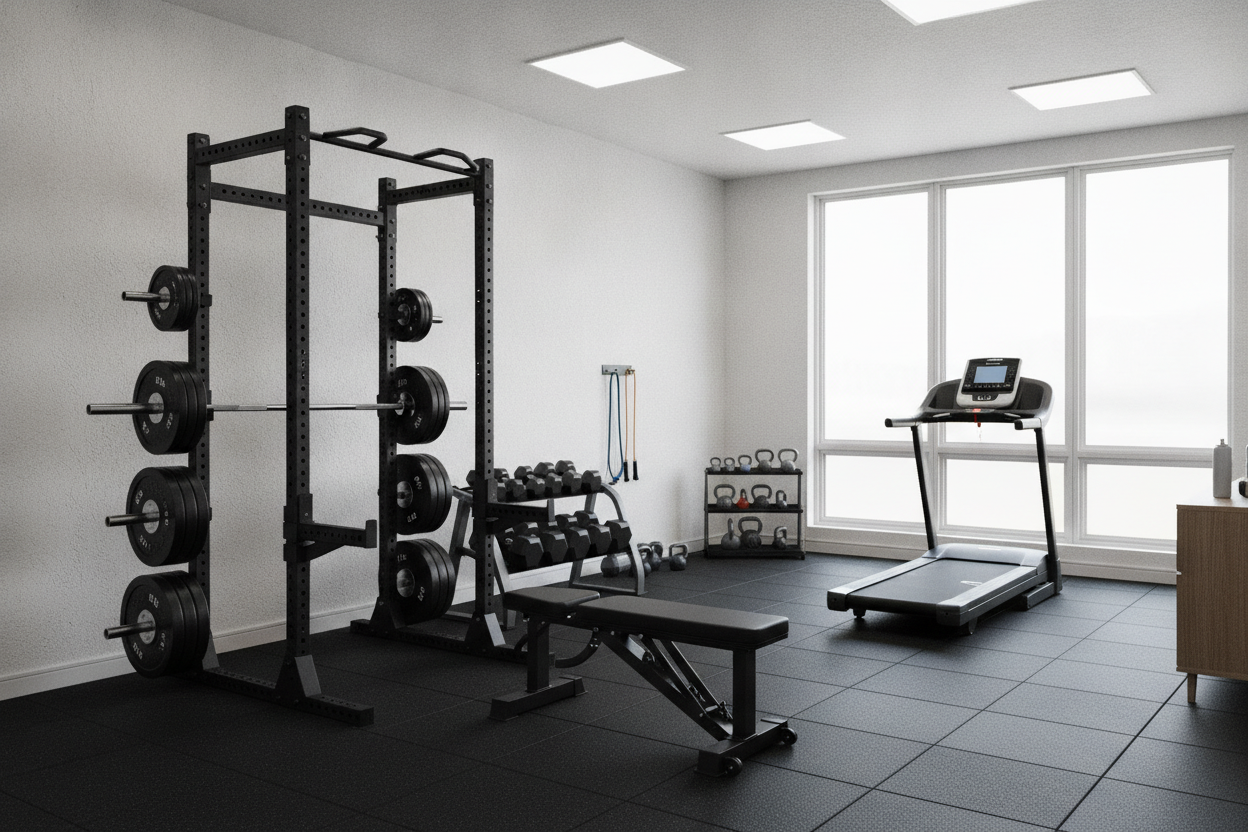
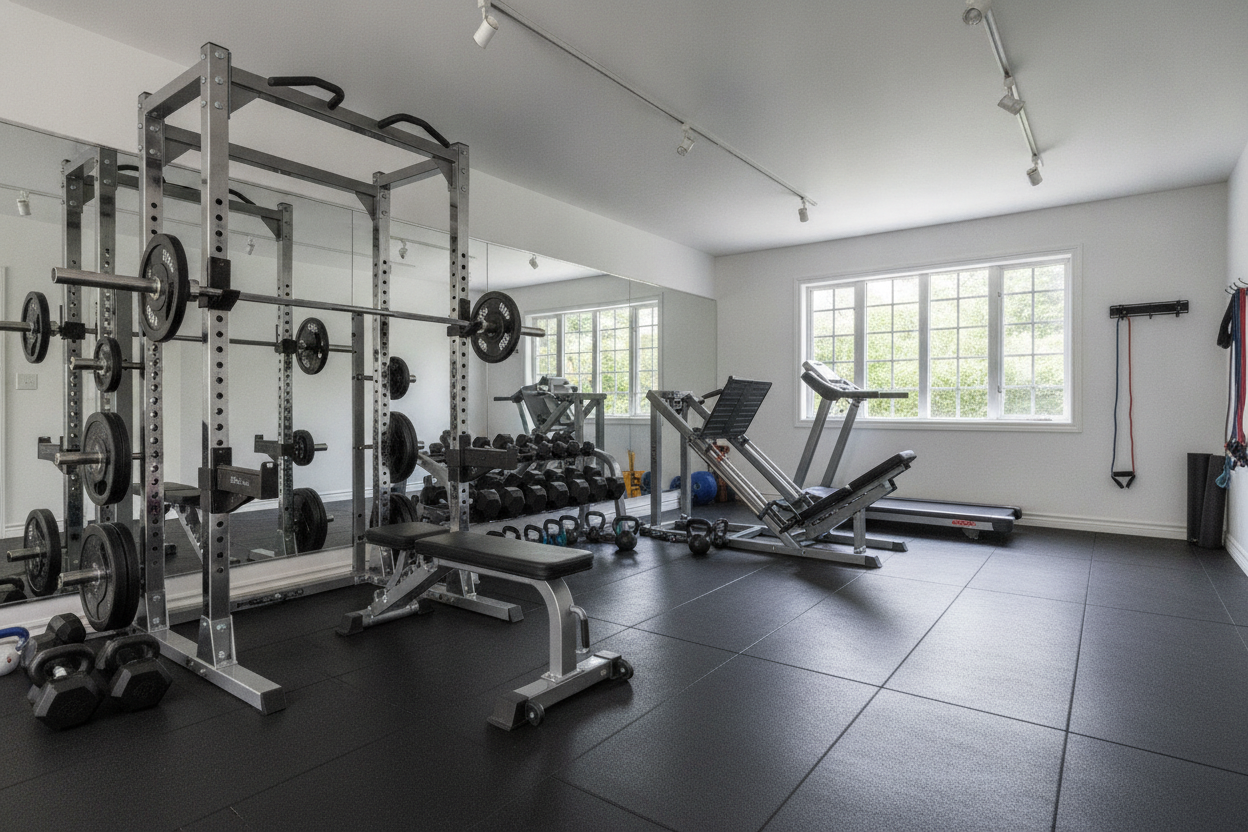
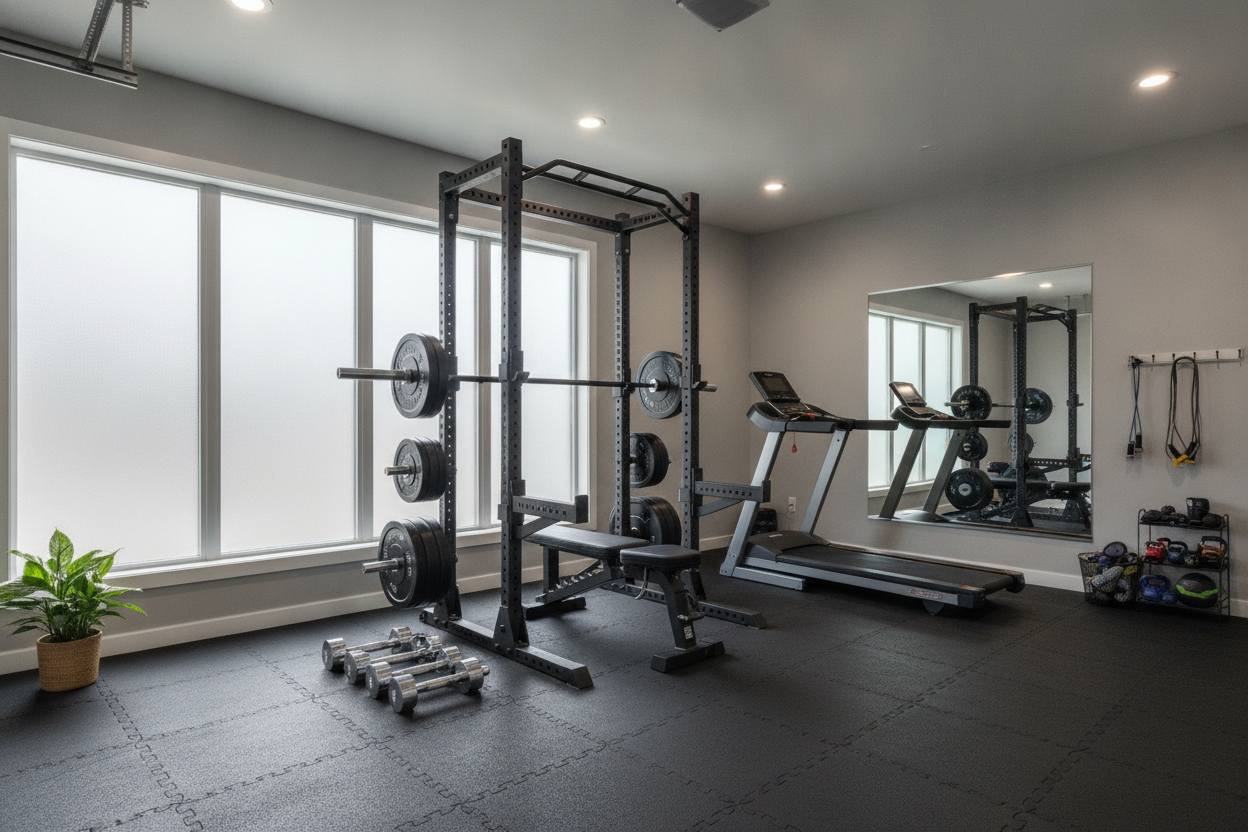
We have all seen them: those immaculate garage gyms on Instagram with custom neon signs, wall-to-wall turf, and $8,000 racks that look like they belong in a professional sports facility. They are beautiful, sure, but they are also a trap. Seeing those setups makes you feel like your 6x8 ft corner of the basement isn't 'ready' yet. You start thinking you need the perfect workout equipment before you can even consider yourself a lifter.
Social media has turned home gym building into a hobby that is separate from actually working out. People spend months researching the 'best' cable crossover machine instead of just doing pull-ups on a doorway bar. This obsession creates a mental barrier. You tell yourself, 'I’ll start my program once the high-temp bumpers arrive.' Spoiler alert: they arrive, and then you realize you 'need' a specific bench. It is a cycle of procrastination masked as preparation. Real strength isn't built in a showroom; it is built in a messy, cramped space where you actually put in the work.
Why the Perfect Gym Equipment Doesn't Actually Exist
I have tested everything from $50 Craigslist specials to $1,500 specialty bars. Here is the secret the manufacturers won't tell you: there is no such thing as a perfect piece of gear. Every barbell has a trade-off. A bar with aggressive knurling is great for heavy deadlifts, but it will cheese-grater your shins if your technique is off. A rack with 1-inch holes might have more attachments, but 5/8-inch holes are often more standard for the accessories you actually want.
Even the highest-end gear fails eventually. I have seen 'indestructible' urethane plates chip and 'rust-proof' cerakote bars show oxidation after one humid summer in a garage. If you are waiting for a flawless, maintenance-free setup, you will be waiting forever. Gear is a tool, not a trophy. It is supposed to get scratched. It is supposed to lose that factory shine. The moment you accept that your equipment will eventually be beat-up and ugly, you free yourself to actually use it hard. A squeaky pulley or a slightly bent plate doesn't stop a workout; only your attitude does.
The Only Three Pieces of Iron You Need Today
If you want to get strong, you need to strip away the noise. You don't need a 12-station functional trainer or a vibrating recovery platform. You need the equipment that actually matters: a squat rack, an Olympic barbell, and a pile of weight. That is the holy trinity of strength. Everything else is just a garnish.
The rack needs to be sturdy—look for 11-gauge steel and a weight capacity of at least 1,000 lbs, even if you only squat 135 right now. You want something that won't wobble when you re-rack a heavy set. For the barbell, don't buy the cheapest one at the big-box store. A decent 20kg bar with a 28.5mm diameter and a 190,000 PSI tensile strength will last you a decade. Finally, get enough plates to actually challenge yourself. You don't need fancy calibrated steel disks; old-school cast iron works just fine. If you have these three things, you have zero excuses left.
Protecting Your Foundation (And Your Joints)
The only thing I’ll tell you to buy before you even get the rack is flooring. If you drop a 45-lb plate on bare concrete, you’re going to have a bad time. Not only will you crack your foundation, but the vibration is terrible for your joints over time. You don't need a professional-grade platform right away. A simple 6x8ft exercise mat or a couple of horse stall mats from a tractor supply store will do the trick. It dampens the noise, saves your equipment from getting dinged up, and gives you a stable surface to plant your feet. It is the most boring purchase you will make, but it is the one that keeps your house from falling apart.
How to Build Your Setup Over Time Without Going Broke
The biggest mistake I see is people buying a 'full gym bundle' for $5,000 on a credit card. They get twenty pieces of equipment and only use three of them. The smart way to do this is modular. Buy the bare minimum first. Spend your money on a high-quality bar because that is the piece you touch every single rep. Everything else can be upgraded later. Use the money you saved to hunt for home gym equipment deals on things like dumbbells or adjustable benches.
As you get stronger, your needs will change. Maybe you’ll realize you hate back squats but love front squats, so you buy a safety squat bar. Maybe you find that your grip is the limiting factor, so you invest in some chalk and a better set of collars. By building slowly, you ensure that every piece of gear in your gym has a purpose. You aren't just hoarding iron; you are curating a toolkit. My gym started with a rusty bar and two 45s. Five years later, it is a fortress, but those original 45s are still there, doing the exact same job they did on day one.
Stop Scrolling and Start Sweating
At some point, the research has to end. You can read every review on the internet, but none of them will add an inch to your arms or ten pounds to your bench. The guy training in a shed with a rusted bar and a homemade rack is going to out-lift the guy with the pristine, unused Rogue setup every single time. Buy the gear that fits your budget, clear out a space in the garage, and get to work. The iron doesn't care how much you paid for it, and neither should you. Close the tabs. Pick up the weight.
My Honest Mistake: The Craigslist Rack
I once bought a 'bargain' power rack off Craigslist for $100. It looked fine in the photos, but when I got it home, I realized the holes were spaced four inches apart. I couldn't find a comfortable height for my bench press—it was either too high to unrack safely or so low that I was doing half-reps. I spent six months struggling with it before I finally admitted I’d wasted my money. I should have just bought a basic, standard rack from the start. Lesson learned: buy the right basics, and you won't have to buy them twice.
FAQ
Can I lift on carpet?
Technically yes, but it sucks. Carpet is squishy, which makes you unstable during heavy lifts like squats. It also traps sweat and starts to smell like a locker room within a month. Put a hard mat or plywood over it if you have to.
Is used gym equipment safe?
Usually, yes. Just check for structural cracks in welds or deep rust that compromises the metal. A little surface rust on a barbell is fine; a cracked frame on a squat rack is a hard pass.
How much space do I really need?
A standard Olympic bar is 7 feet long. You need at least 8 or 9 feet of width to load plates comfortably. A 6x8 ft footprint is the bare minimum for a rack and some movement space.