Stop Waiting for Equipment: Why a Multi Purpose Rack Is the Only Home Gym Investment You Need
You want to build serious strength, but you are tired of the commercial gym shuffle. We have all been there—standing awkwardly with a towel and water bottle, waiting for the only squat rack to open up while someone uses it for bicep curls. If you are ready to bring your training home, the solution isn't a pile of random dumbbells or a flimsy treadmill. The answer lies in a single, robust piece of engineering: the multi purpose rack gym. This isn't just about having a place to rack a barbell; it is about creating a safe, versatile ecosystem that replaces 90% of the machines you find in a commercial facility.
The Anchor of Your Training Space
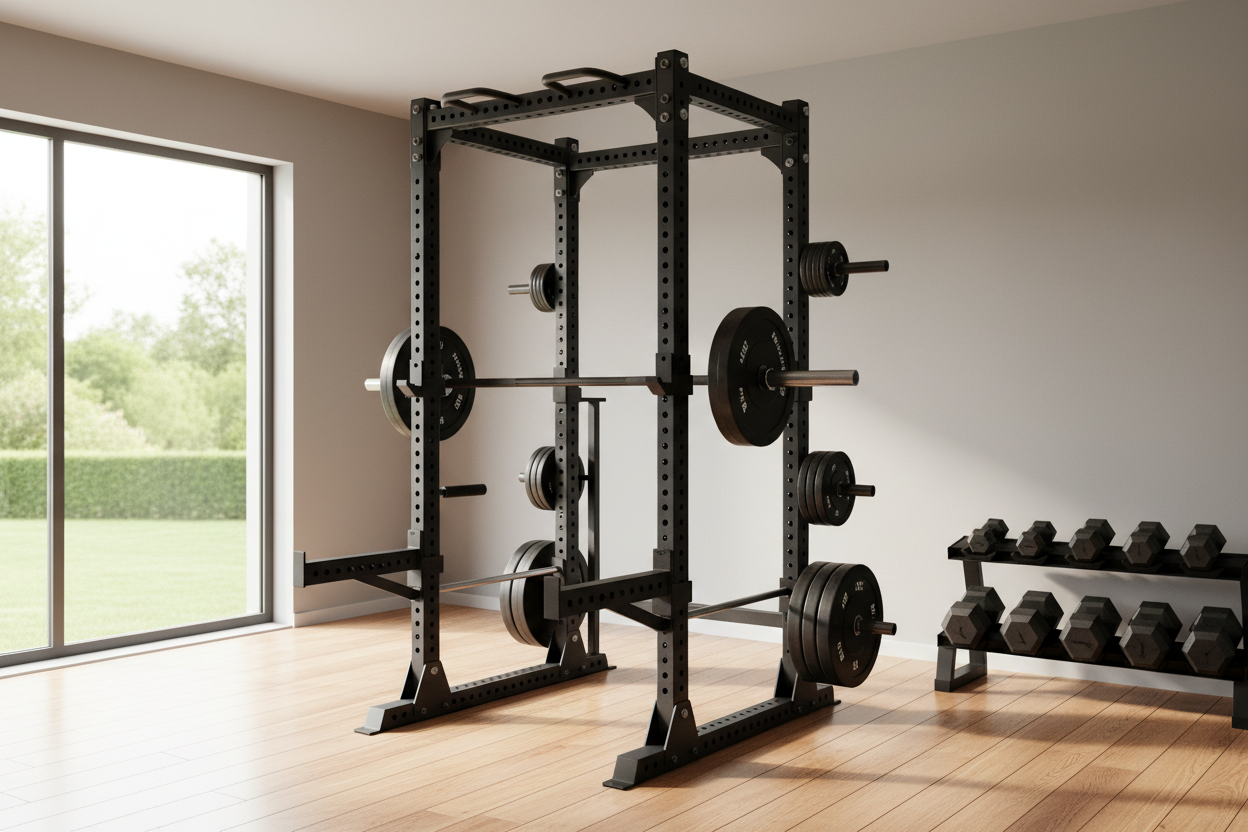
A multi purpose rack gym serves as the central hub for almost every effective resistance training movement. Unlike a standard squat stand, which consists of two vertical posts, a multi-purpose rack (often called a power cage or power rack) offers a four-post or six-post enclosure. This structure provides stability that independent stands simply cannot match. When you step inside the cage, the equipment surrounds you, offering a defined training area that feels professional and secure.
The primary function is obvious: it holds the weight for squats, overhead presses, and bench presses. However, the "multi purpose" aspect comes into play with the attachments and the frame's capability. Modern racks are designed with modularity in mind. You are not just buying steel uprights; you are buying a base that supports pull-up bars, dip stations, cable pulley systems, and landmine attachments. This versatility transforms a 4-foot by 4-foot footprint into a comprehensive strength station.
My Wake-Up Call with Home Safety
I learned the value of a high-quality rack the hard way. When I first started assembling a garage gym, I tried to save money by purchasing independent squat stands. They were cheap, light, and easy to move. For a few months, they worked fine. Then came a heavy bench press session. I was training alone, pushing for a new personal record. On the final rep, my triceps gave out.
Because I didn't have a cage with safety pins, the bar came down on my chest, and I had to do the "roll of shame"—rolling a loaded Olympic barbell down my torso to my hips so I could sit up. It was painful, embarrassing, and frankly, dangerous. That afternoon, I sold the stands and ordered a proper multi purpose rack gym with heavy-duty safety spotter arms. The difference in confidence was immediate. Knowing that a steel safety bar will catch the weight if I fail allows me to train to failure safely, something I could never do with my old setup.
Expanding the Ecosystem: Attachments and Variety
One of the biggest misconceptions about home gyms is that you lose the variety of machine exercises. This is where the modern rack shines. Manufacturers have realized that people want to do lat pulldowns, tricep pushdowns, and rows without buying separate, bulky machines. By adding a cable crossover or a lat tower attachment to the back of your rack, you instantly gain access to isolation movements that are crucial for hypertrophy and rehabilitation.
Standard Attachments to Look For
- J-Hooks: These hold the barbell. Look for hooks lined with ultra-high molecular weight (UHMW) plastic to protect the knurling on your bar.
- Safety Straps or Pins: These are your lifeline. Straps are often preferred because they protect the barbell from metal-on-metal contact if you drop a lift, and they can be set at varying heights for rack pulls.
- Pull-Up Bar: Most racks come with a straight bar, but a multi-grip bar offers different hand positions to target the back and biceps from various angles.
- Dip Bars: These usually attach to the uprights. They are excellent for chest and tricep development and can be removed easily when not in use.
Beyond these basics, you can get creative. Landmine attachments allow for rotational core work and rows. Jammer arms simulate machine presses. Even resistance band pegs can be added to the bottom of the frame to accommodate dynamic effort training. The rack evolves as your training evolves.
Space Efficiency and Footprint
A common objection to installing a rack is the size. It looks massive in photos. In reality, a multi purpose rack gym is incredibly space-efficient. It utilizes vertical space rather than spreading out across the floor. Most standard racks have a footprint of roughly 48 inches by 48 inches. Considering the functionality packed into that square footage, the return on floor space is higher than any other piece of fitness equipment.
For those with tight spaces, like a spare bedroom or a single-car garage, flat-foot racks or wall-mounted folding racks are viable options. A folding rack can collapse against the wall when not in use, allowing you to park a car or use the room for other purposes. However, if you have the space for a full cage, the added stability and lack of setup time make it the superior choice. You never have to unfold it; it is always ready for work.
Durability and Long-Term Value
Fitness equipment varies wildly in quality. You will see racks made with 2x2 inch steel tubing and others with 3x3 inch tubing. The gauge (thickness) of the steel matters immensely. For a piece of equipment that will hold hundreds of pounds over your face, you generally want 11-gauge or 12-gauge steel. A rack built to these specifications is a lifetime investment.
Think about the cost of a gym membership. Between initiation fees, monthly dues, and the gas money spent driving back and forth, the costs add up quickly. A high-quality rack might seem like a steep upfront cost, but it pays for itself within two to three years. More importantly, it retains its value. High-end gym equipment has a robust resale market. If you ever decide to sell it, you can often recoup a significant portion of your initial spend.
Ultimately, the decision to invest in this equipment is a commitment to your own consistency. Removing the friction of travel and wait times eliminates excuses. The rack stands in your home as a silent reminder to put in the work.
Frequently Asked Questions
Do I need to bolt my rack to the floor?
While bolting the rack down provides maximum stability, especially for kip movements or heavy band work, many modern "flat-foot" racks are designed to be stable without bolting. If you plan on using heavy weights or dynamic movements, securing it to a lifting platform or the concrete is the safest option.
What is the minimum ceiling height needed for a home gym rack?
Most standard racks are between 80 and 90 inches tall. You should aim for at least 6 to 12 inches of clearance above the rack if you plan to do pull-ups so your head doesn't hit the ceiling. Many manufacturers offer "short" versions of their racks specifically for basements with low ceilings.
Can I assemble a rack by myself?
Yes, one person can assemble a rack, but it is significantly easier and safer with two people. The uprights are heavy and can be awkward to balance while trying to insert bolts. If you are working alone, build it close to its final location to avoid moving the heavy structure later.