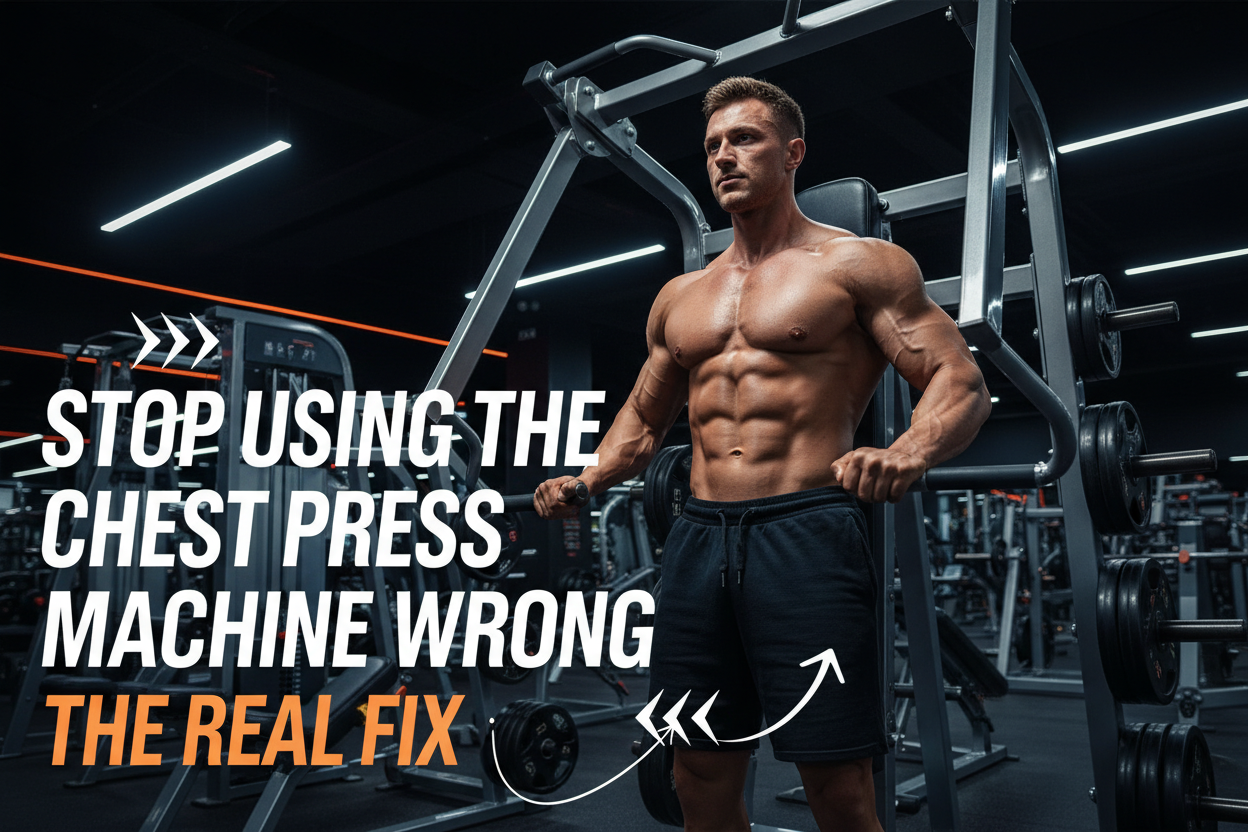
Stop Using the Chest Exercises Machine Wrong (The Real Fix)
You walk into the gym, bypass the crowded bench press stations, and head straight for the machines. It feels safer, easier, and just as effective, right? Not necessarily. While selecting a **chest exercises machine** seems straightforward, most lifters unknowingly sabotage their gains before they even complete the first rep.
The debate between free weights and machines is old, but the science is clear: machines offer superior stability. Stability allows for greater output force from the target muscle without stabilizing muscles failing first. However, if your seat height is off by two inches, or your elbow path is wrong, you aren't training your chest—you're grinding your front delts into dust. Let’s fix your mechanics and turn those machines into hypertrophy tools.
Key Takeaways: Mastering Machine Workouts
- Stability Equals Growth: Machines remove the need to balance the weight, allowing you to push closer to true muscular failure safely.
- Seat Height is Critical: On pressing machines, handles must align with the mid-chest (nipple line), not the shoulders.
- The Big Three: The most effective rotation includes the Seated Chest Press (overload), Pec Deck (shortened position), and Cable Crossover (lengthened position).
- Control the Negative: Machines often have friction; fight the resistance on the way back to maximize time under tension.
Why Your Machine Setup Matters
Many gym-goers treat chest workout machines like lounge chairs. They sit, grab the handles, and push. This passive approach is why you might feel the burn in your shoulders rather than your pecs.
To get the most out of any workout chest machine, you must manually set your scapular retraction. Even though the seat back is there, you need to pinch your shoulder blades together and drive them into the pad. This creates a stable platform and exposes the pectoral fibers to the load while protecting the shoulder joint.
Top Machines That Work Chest (And How to Use Them)
1. The Seated Chest Press
This is the staple chest workout machine gym goers gravitate toward. It mimics the bench press but removes the risk of dropping a bar on your neck. The goal here is mechanical tension.
The Fix: Look at your hand placement. If your elbows are flared out at 90 degrees, you are putting immense stress on the rotator cuff. Tuck your elbows slightly (about 45 degrees). Adjust the seat so the handles are roughly at nipple height. If you feel it in your traps, the seat is likely too low.
2. The Pec Deck (Machine Fly)
Among the different chest machines, the Pec Deck is king for the "shortened position"—the point where your hands meet. Free weight flys lose tension at the top; the Pec Deck maintains it.
The Fix: Don't try to clap your hands. Focus on driving your biceps together. Keep a slight bend in your elbows and imagine hugging a large tree barrel. This visualization prevents the triceps from taking over the movement.
3. Cable Crossovers
While technically a pulley system, this falls under the umbrella of machines for chest at gym setups. It offers the most versatility regarding angles.
The Fix: Step forward enough to keep tension on the cable even at the start of the rep. If the weight stack touches down between reps, you are losing the constant tension advantage that cables provide.
Common Mistakes on Weight Machines for Chest
Ignoring the Eccentric
Chest gym equipment often has inherent friction. It's easy to push the weight out and let it slam back down. You are missing half the growth potential. Control the weight on the way back for a 3-second count. The machine stabilizes the path, so you have no excuse not to control the tempo.
Ego Lifting on the Stack
Just because you can pin the stack on a pec workout machine doesn't mean you should. Machine mechanics vary wildly between brands (Technogym vs. Hammer Strength vs. Cybex). A plate on one is not a plate on another. Ignore the number. Focus on the stimulus.
My Training Log: Real Talk
I need to be honest about my relationship with the chest exercises machine. For years, I avoided them because I thought they were "soft." Then I injured my rotator cuff trying to bench heavy without a spotter.
I switched to a plate-loaded Hammer Strength press, and the first thing I noticed wasn't the pump—it was the friction. On specifically older machines, there's this gritty, sticky point halfway through the rep where the lever arm catches slightly. It drove me insane.
I learned that on these older machines, you can't just power through that sticky spot explosively or you lose your scapular retraction. I had to slow my rep speed down drastically to keep the movement fluid. That accidental adjustment—slowing down to navigate a rusty hinge—gave me the best pectoral contraction I'd felt in years. Now, even on brand new smooth machines, I replicate that "rusty hinge" tempo. It forces you to own every inch of the rep range.
Conclusion
Chest workout machines are not a downgrade from free weights; they are a different tool for a specific purpose: hypertrophy through stability. By adjusting your seat, controlling your tempo, and selecting the right machines that work chest fibers through a full range of motion, you can build a dense, powerful upper body without ever touching a barbell.
Frequently Asked Questions
Can I build a big chest using only machines?
Absolutely. Your muscles do not know if you are holding a barbell or a machine handle; they only understand tension. As long as you apply progressive overload (adding weight or reps over time) on weight machines for chest, you will see significant growth.
What is the best chest machine for the upper pecs?
The Incline Lever Press is generally superior. It mimics the incline bench press path. Alternatively, setting the cables to the lowest position and performing "low-to-high" flys is excellent for targeting the clavicular (upper) head of the pecs.
How often should I use chest machines?
You can train chest 1-2 times per week. Because chest machines in gym environments offer more stability and generally cause less systemic fatigue than heavy free weights, you might find you can recover slightly faster, potentially allowing for higher volume training sessions.